



Burr Walnut Longcase
Burr walnut longcase clocks combine striking grain patterns with precise horology, offering a commanding focal point for any interior.
Burr Walnut Longcase
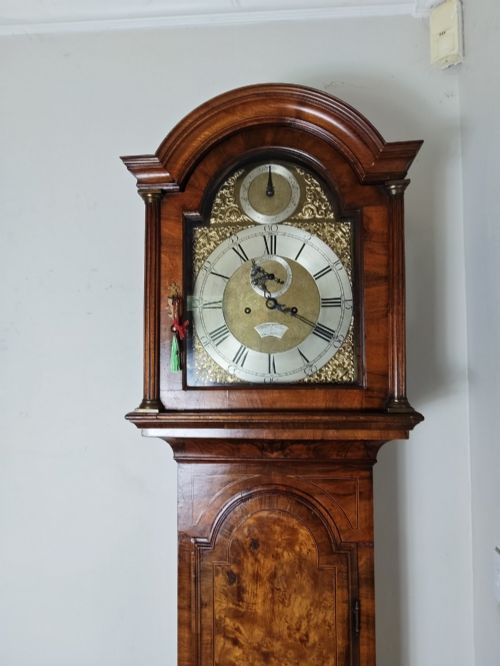
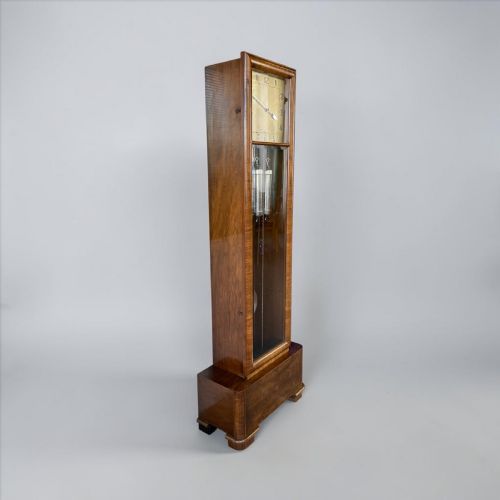
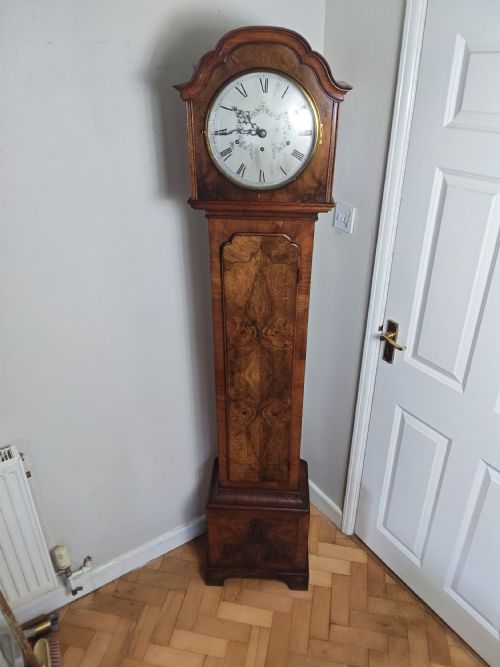
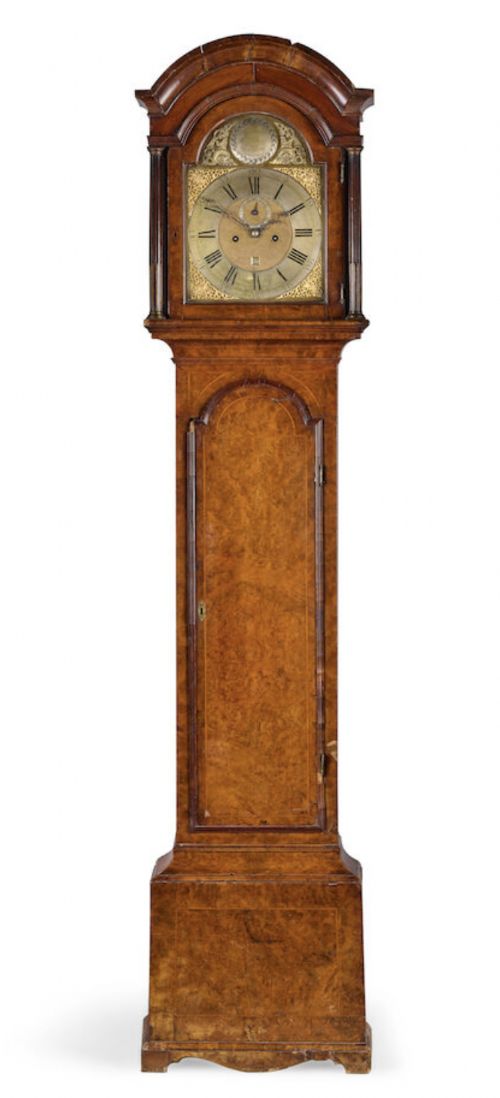
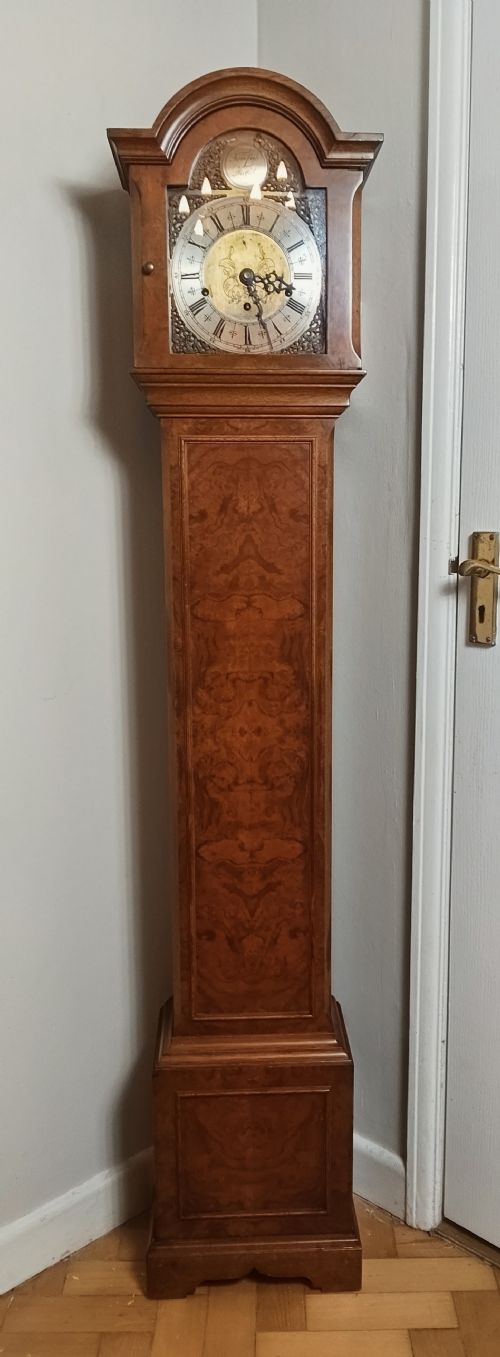
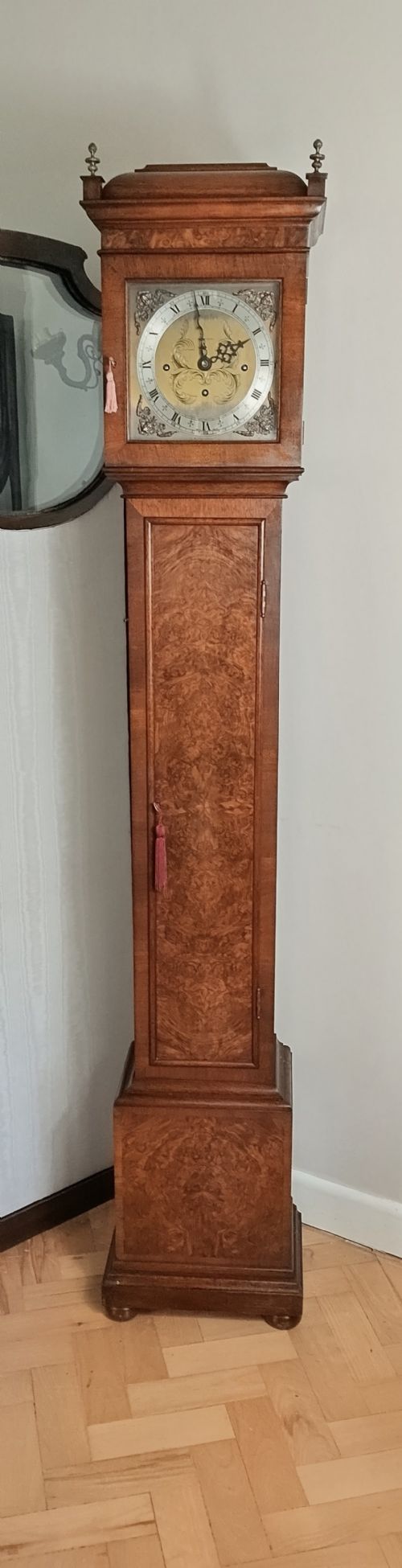
Burr walnut longcase clocks represent some of the most sophisticated timepieces produced from the late seventeenth century onwards. When searching for a burr walnut longcase, buyers encounter grand proportions from the Georgian and earlier periods alongside more compact twentieth-century revivals.
The inventory on this page spans from the seventeenth century through to the mid-twentieth century, featuring full-sized grandfather clocks, smaller grandmother clocks, and dwarf variants. Cabinet makers utilised rich walnut timbers to create tall pendulum cases designed to house intricate brass movements.
Early examples date back to the 1600s and 1700s, constructed by notable London makers, while later twentieth-century iterations incorporate musical chimes and multiple weights. Collectors evaluate these floor clocks based on the preservation of the original wooden case and the complexity of the dial.
Materials and construction methods
Cabinet makers selected highly figured burr walnut veneers, applying them in geometric patterns such as quarter-veneering across the tall trunk doors. These decorative wooden skins were laid over solid foundational timbers like oak, creating rich, swirling grain textures that caught the ambient light.
Interior mechanics rely on heavy brass plates, steel pivots, and glass access panels to protect the dial and pendulum swing. Metal components were meticulously cast and hand-finished by master horologists, often featuring engraved brass dials with silvered chapter rings.
Burr Walnut Longcase Retail Price Guide 2026
Typical asking prices for burr walnut longcase among the pieces listed under this phrase on Sellingantiques today, from the lower quarter to the upper quarter. They describe what is for sale here now, not the wider market.
Some makers added moonphase indicators to track lunar cycles alongside the hours.
Factors determining quality
The distinction between standard examples and the finest pieces rests upon the depth and figuring of the burr walnut veneer and the integrity of the cabinet work. Superior pieces exhibit symmetrical grain alignment across the entire trunk door rather than mismatched patches of timber.
Horological excellence separates exceptional clocks from ordinary ones, determined by the original signature of the maker on the brass dial and the sophistication of the movement. Clocks featuring quarter-chiming mechanisms, musical cylinders, or moonphase indicators demonstrate greater technical ambition from the workshop.
Windmills and Wightman·Thomas Vernon·Henry Massy·Edin Burgis·Langley Bradley·Edward East·Edward Stanton·Joseph Saer·Joseph Windmills·Bentley London·James Drury·Joseph Oxley·George Tyler·Gustav Becker
The Burr Walnut Longcase Glossary
- Burr walnut
- A specialised timber harvested from the abnormal growth knots of walnut trees, yielding intricate, swirling grain patterns. Cabinet makers prized this material for high-status furniture surfaces.
- Longcase clock
- A tall, weight-driven pendulum clock housed in a protective wooden floor cabinet. These timepieces are frequently referred to as grandfather clocks.
- Grandmother clock
- A scaled-down version of the traditional longcase clock, typically produced during the twentieth century. These smaller floor clocks fit comfortably in rooms with lower ceilings.
- Quarter-chiming
- A mechanical movement complication that plays musical notes every fifteen minutes. Systems often include multiple weights to power the chime trains.
- Chapter ring
- The metallic outer ring on a clock face displaying the hour numerals. These rings are commonly engraved and silvered on better quality movements.
Burr Walnut Longcase: Frequently Asked Questions
How do I wind a longcase clock?
Winding requires using a crank key to raise the weights suspended inside the trunk. Care must be taken not to over-wind the movement.
Most eight-day movements require winding once a week, while thirty-hour versions need daily attention.
Where should I place a longcase clock?
Position the clock against a sturdy interior wall away from direct sunlight and heating vents. Temperature fluctuations can affect the wood and the pendulum.
The floor must be completely level to ensure the pendulum swings evenly and the clock keeps accurate time.
What is the difference between a grandfather and grandmother clock?
Grandfather clocks are the standard full-size floor models measuring over six feet tall. Grandmother clocks are noticeably shorter variants.
The smaller grandmother style became particularly popular during the twentieth-century revival periods listed in the inventory.
How do I identify an eighteenth-century movement?
Examine the brass dial plate for engraved spandrels in the corners and the signature of the maker. Early dials are often square before arched top plates became standard.
Movement plates from this era were hand-cut and finished by individual craftsmen rather than manufactured by automated machinery.