

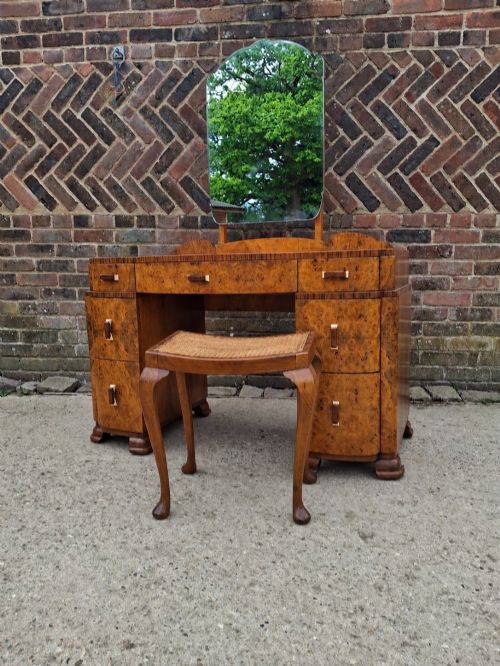
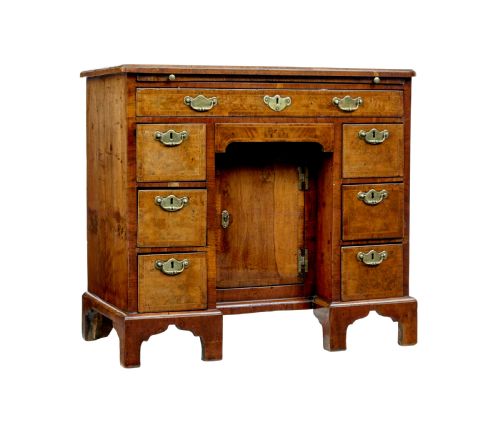
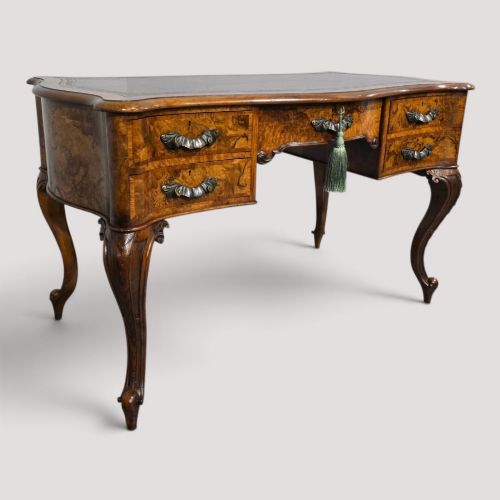
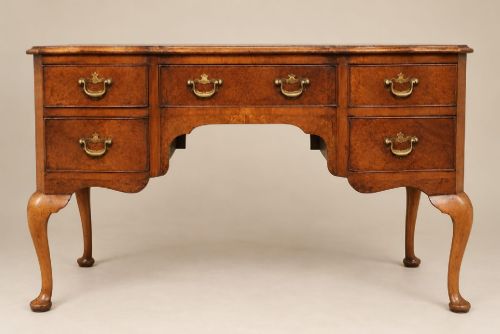

Burr Walnut Kneehole
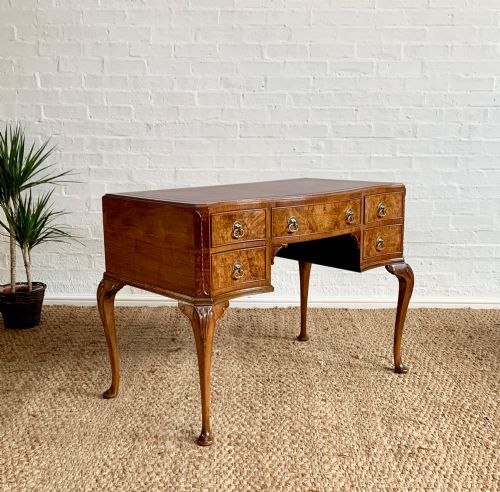
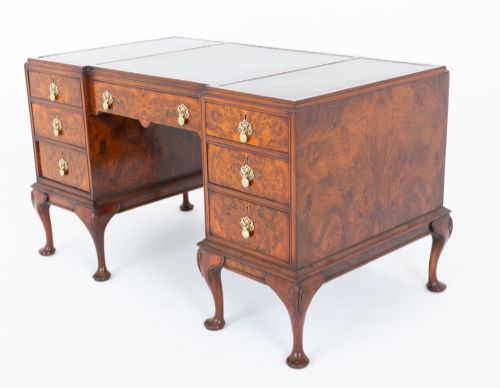
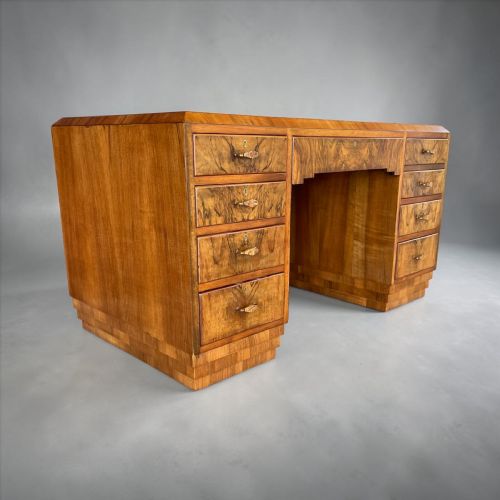
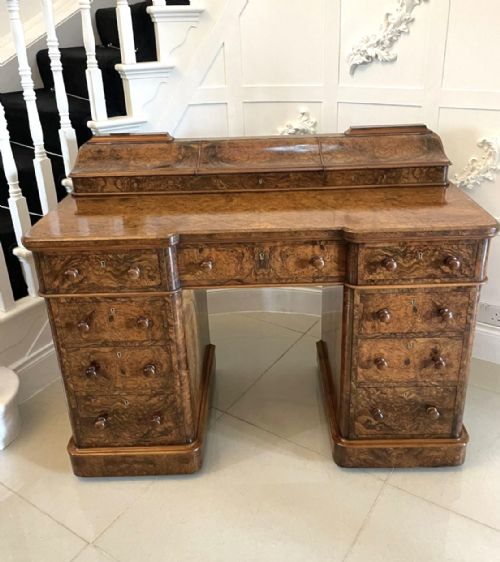
These burr walnut kneehole desks and tables offer compact workspace lined with drawers, bringing figured timber grain into a study or bedroom.
Burr Walnut Kneehole
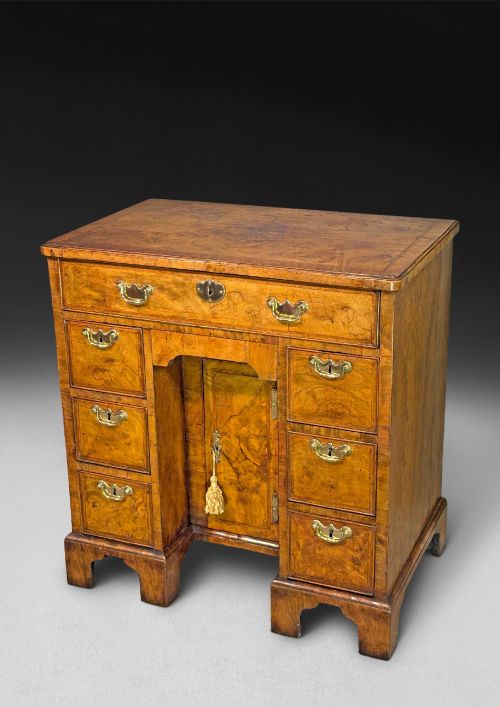
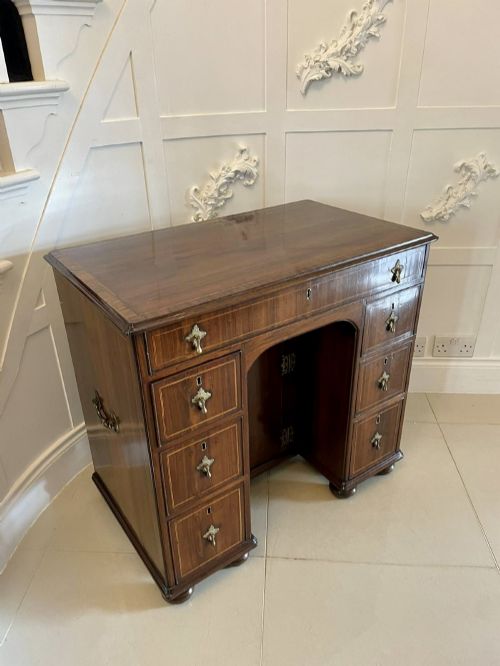
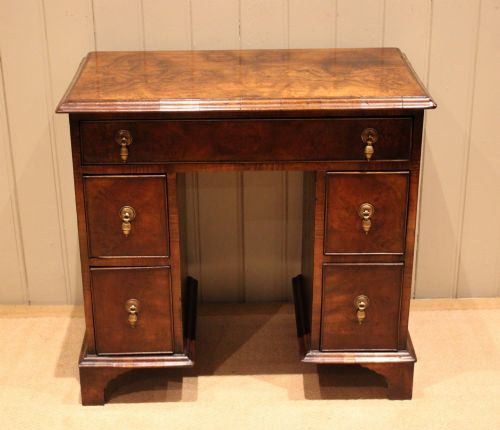
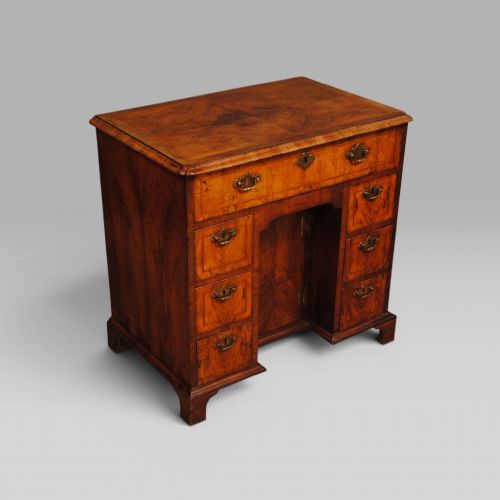
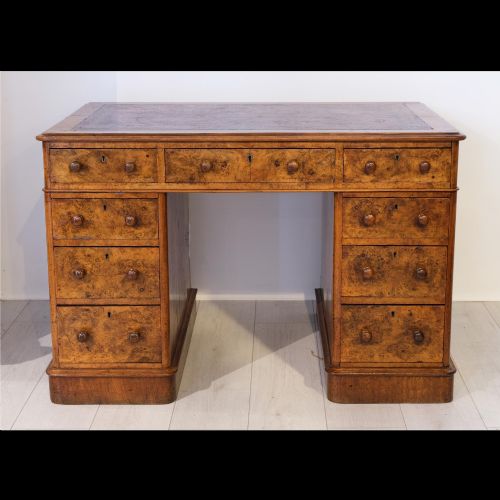
A burr walnut kneehole is a compact writing desk or dressing table featuring a central recess flanked by pedestals of smaller drawers. The form appears most frequently in 18th century pieces and later revivals from the Victorian, Edwardian, and 1930 periods.
The layout typically incorporates a long central drawer above the kneehole, with a small concealed cupboard or drawer set deep within the recess. Versions range from early Georgian examples to Queen Anne style designs and 20th century interpretations.
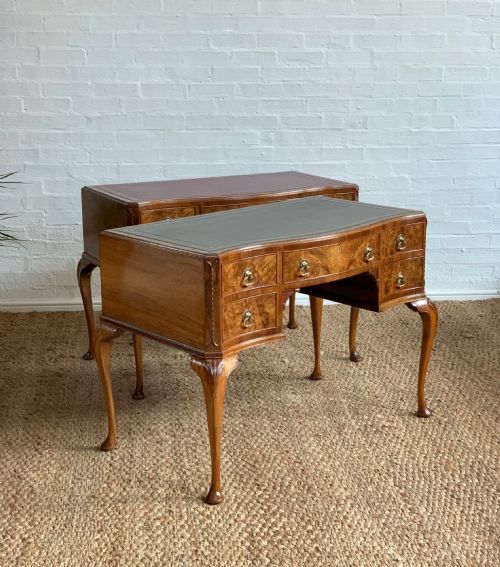
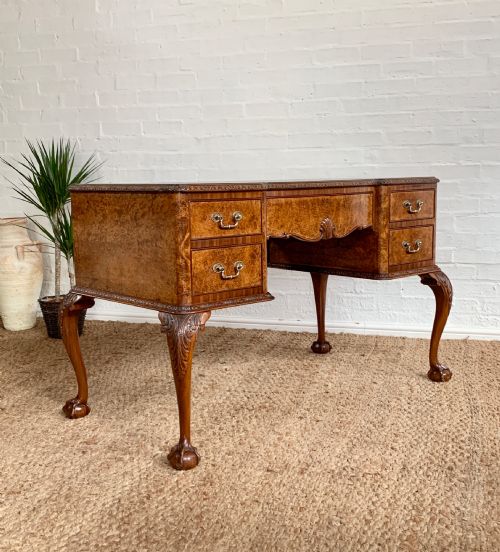
Makers adapted the form for various rooms, producing ladies writing desks, dressing chests, and lowboys alongside traditional pedestal desks. Walnut and burr walnut veneer dominate the selection, often accompanied by oak framing and leather writing surfaces.
How they were made
Cabinetmakers applied highly figured burr walnut veneer over stable carcase timbers such as oak and pine to create rich patterns across the drawer fronts and top surfaces. Crossbanding and string inlay frequently frame the primary panels.
Brass hardware, including drop handles and escutcheons, secures the drawers and complements the dark tones of the wood. Some later writing desks incorporate green tooled leather inserts set directly into the wooden top.
Burr Walnut Kneehole Retail Price Guide 2026
Typical asking prices for burr walnut kneehole among the pieces listed under this phrase on Sellingantiques today, from the lower quarter to the upper quarter. They describe what is for sale here now, not the wider market.
Many kneehole desks hide a secret little cupboard deep in the leg space, perfect for stashing midnight letters.
What varies in quality
The choice of veneer grain and the precision of the matching across drawer fronts separate standard production from exceptional pieces. Finely figured burr walnut requires skilled sawing and placement to create symmetrical patterns.
Construction details such as drawer linings in oak and the retention of original brass hardware indicate higher workshop standards. The crispness of carved details on Queen Anne and Georgian style pieces also marks the tier of craftsmanship.
Maple & Co.·Wylie & Lochhead Glasgow·Druce & Co. Baker St. London
The Burr Walnut Kneehole Glossary
- Kneehole
- A desk or table featuring a central recess for the legs, with banks of drawers on either side. This configuration allows a seated user to work close to the writing surface.
- Burr walnut
- Timber taken from a growth deformity on a walnut tree, yielding complex, swirling grain patterns. Cabinetmakers slice this wood into thin veneers for decorative furniture surfaces.
- Crossbanding
- A border of veneer laid around the main panel of a top or drawer front with the grain running at right angles to the centre. This technique frames the figured wood.
- Lowboy
- A small table with drawers, often standing on four legs, used as a dressing table or side table. The form relates closely to early kneehole designs.
- Dressing chest
- A low chest of drawers equipped with a writing space or mirror, functioning as a precursor to the modern dressing table. Many examples adopt the kneehole arrangement.
Burr Walnut Kneehole: Frequently Asked Questions
What is a kneehole desk?
A kneehole desk is a compact form of writing table featuring a central recessed space for the user's legs, flanked by two pedestals of drawers.
Most examples include a long drawer above the kneehole and smaller drawers down each side, often concealing a small central cupboard at the back.
How do I tell an 18th century piece from a revival?
Eighteenth century pieces display construction methods, timber ageing, and handle configurations characteristic of the Georgian and Queen Anne eras.
Revival pieces from the Victorian, Edwardian, and 1930 periods frequently utilise machine-cut dovetails and modern secondary timbers alongside traditional veneer work.
Were these desks used for writing or dressing?
The form served both purposes depending on the specific interior arrangement and the period of manufacture.
Many pieces operate as writing desks with leather or wood surfaces, while others function as dressing tables equipped with companion chests and compartments.
How do I care for burr walnut veneer?
Burr walnut requires stable humidity levels and protection from direct sunlight to prevent the timber and veneer from drying out.
Regular dusting with a dry cloth and occasional application of appropriate furniture wax keeps the polished surface nourished.