


Burr Walnut Glass
Burr walnut glass items bring together richly figured timber and glazed display, uniting Victorian and Art Deco design.
Burr Walnut Glass
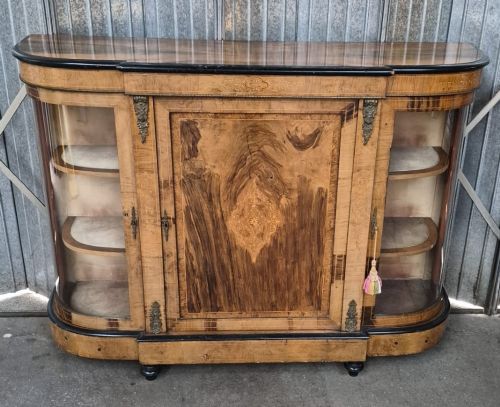
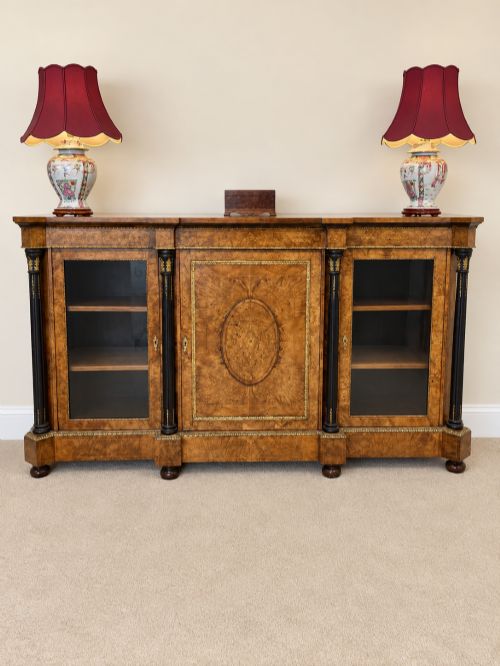
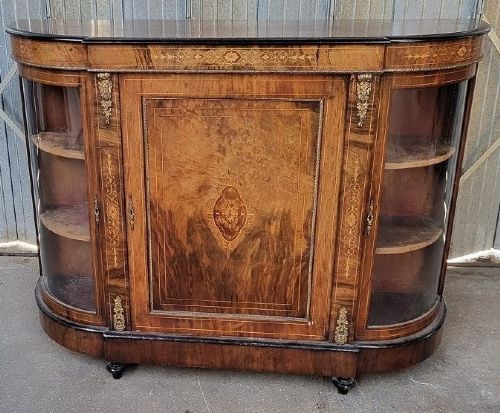
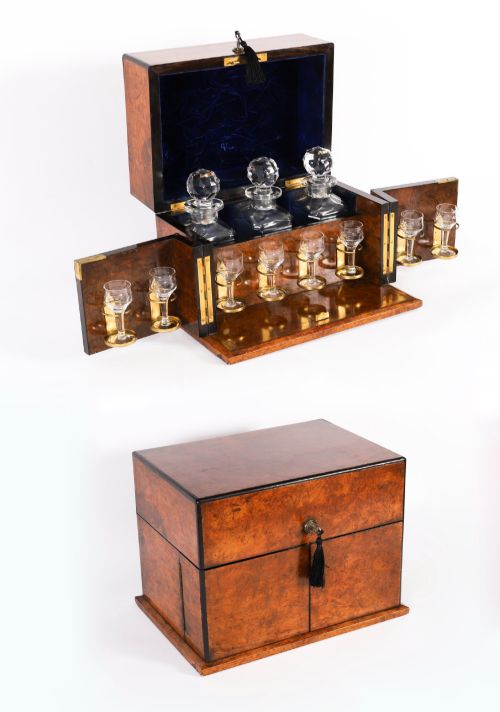
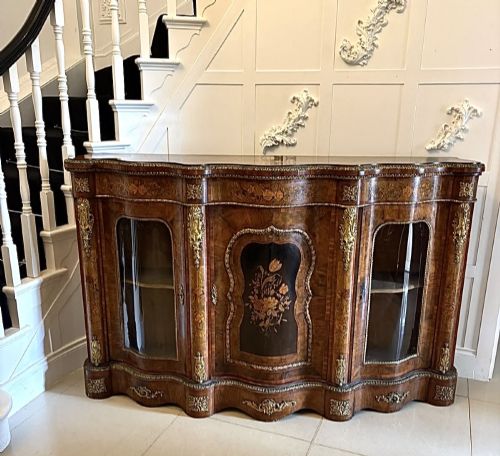
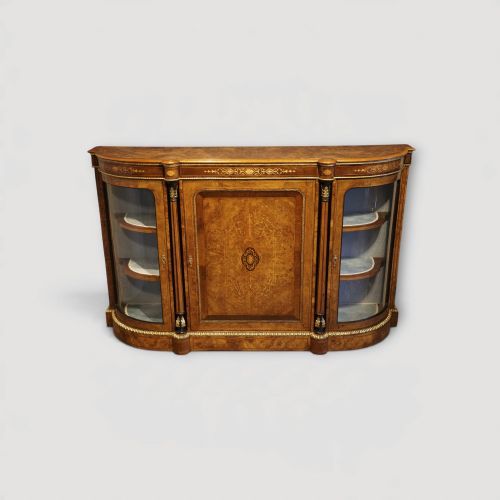
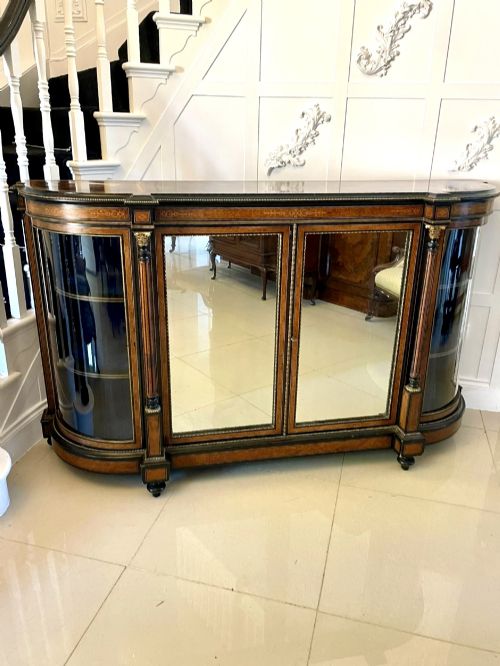
When you search for burr walnut glass, you encounter furniture designed to showcase and store prized possessions, principally credenzas, display cabinets, and pier cabinets. These pieces span the Victorian period, the Edwardian era, and the nineteen thirties, with Victorian examples appearing most frequently.
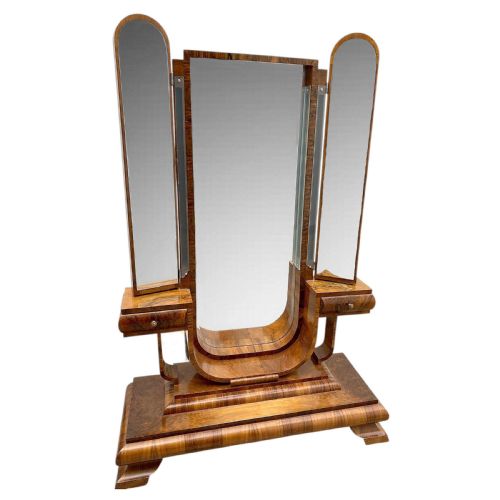
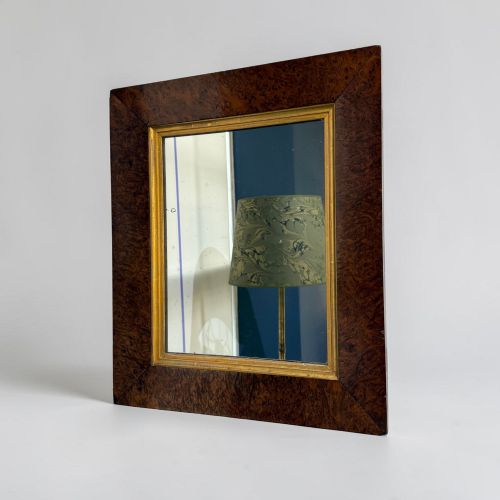
The dominant forms are glazed cabinets and credenzas equipped with glass doors or panels. Alongside these, you find wall mirrors, cheval mirrors, and occasional writing desks incorporating wood and glass elements.
How they were made
Cabinet makers utilised burr walnut veneers, prized for their swirling, knotty grain patterns, applied over solid carcases of timber. These surfaces were frequently enhanced with marquetry inlays, floral designs, or contrasting ebonised wood details.
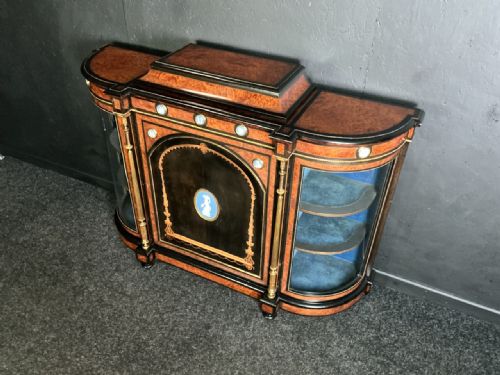
Metal mounts in ormolu and brass provide structural and decorative accents, framing glass panels on cabinet doors. Interior velvet or fabric linings often complement the glazed display compartments.
Burr Walnut Glass Retail Price Guide 2026
Typical asking prices for burr walnut glass among the pieces listed under this phrase on Sellingantiques today, from the lower quarter to the upper quarter. They describe what is for sale here now, not the wider market.
Listings span the Victorian period, Edwardian era, and nineteen thirties, uniting glazed display cabinets, credenzas, mirrors, and writing desks.
What varies in quality
The sophistication of the timber veneer defines the upper tier of these pieces, where densely figured burr walnut covers entire surfaces with balanced grain movement. Inferior examples rely on plainer walnut or sparse inlay work.
Mounting and hardware distinguish finer productions, notably cast ormolu mounts and precise brass detailing rather than plain wooden framing. The integration of curved glass and marquetry inlay further separates standard items from exhibition pieces.
The Burr Walnut Glass Glossary
- Burr walnut
- A timber veneer sliced from the knotty growths of walnut trees, yielding intricate and swirling patterns. This grain is the defining visual characteristic of these pieces.
- Credenza
- A low cabinet, often fitted with glass doors and central shelving, originating in the Victorian period for the display of porcelain and ornaments. Ormolu mounts frequently embellish the corners.
- Pier cabinet
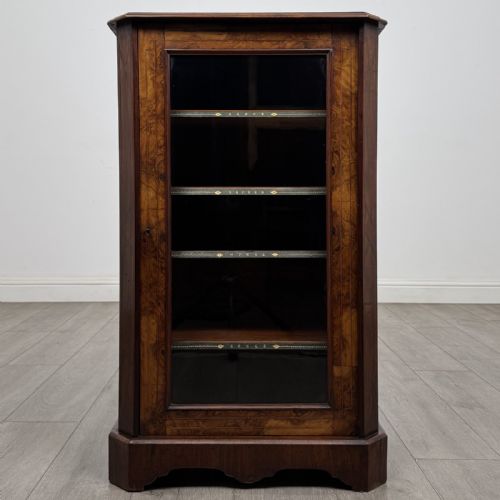
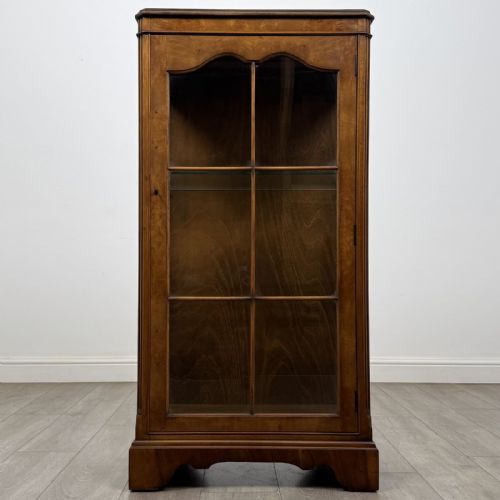
- A narrow display cabinet designed to fit wall spaces between windows, usually featuring a single glazed door. They are heavily represented among Victorian items.
- Ormolu
- Gilded bronze used for decorative mounts and furniture trim. It provides bright metallic contrast against dark burr walnut timber.
- Marquetry
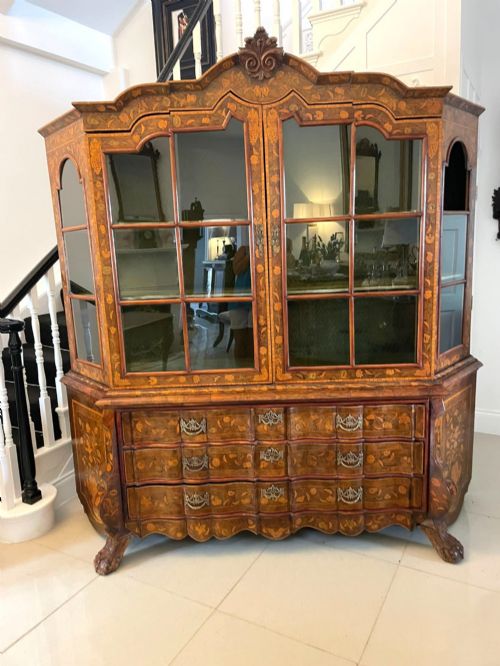
- Inlaid wood pieces arranged to form pictorial or geometric patterns on the surface. Floral motifs are common in nineteenth century Dutch-influenced designs.
Burr Walnut Glass: Frequently Asked Questions
Where should I place a display cabinet?
These cabinets suit drawing rooms or dining spaces where glazed doors protect books or ceramics from dust while keeping them visible.
Position them away from direct sunlight to prevent the walnut veneer and interior velvet linings from fading over time.
How do I care for burr walnut furniture?
Dust the burr walnut surfaces regularly with a soft, dry cloth to prevent accumulation in the intricate grain crevices. Avoid chemical polishes, using only traditional beeswax sparingly to maintain the sheen.
Keep the timber away from extreme temperature fluctuations and radiators to prevent the veneer from lifting or cracking.
What is the difference between a pier cabinet and a credenza?
A pier cabinet is tall and narrow, built to stand against a specific wall pier or narrow space between windows. It typically has a single glazed door and houses tiered shelves.
A credenza is a low, wide sideboard designed for broader walls, often featuring central glass doors flanked by curved side cabinets.
How do I distinguish Victorian pieces from Art Deco examples?
Victorian burr walnut items tend to feature ornate ormolu mounts, floral marquetry, and curved silhouettes associated with revival styles. They often incorporate velvet linings and elaborate brass details.
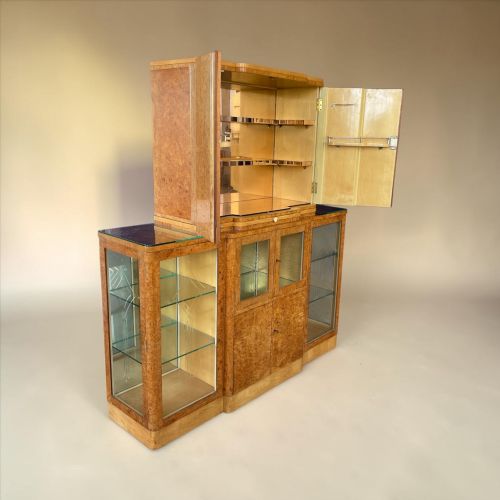
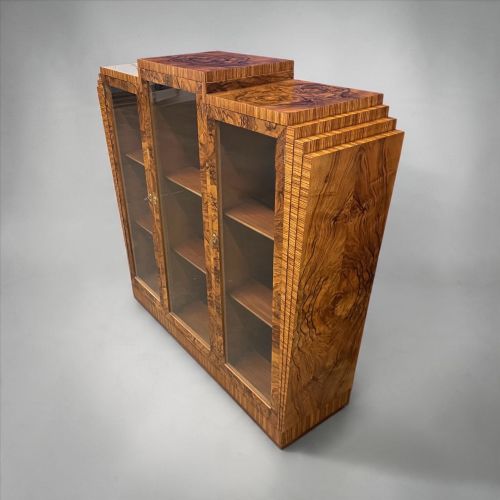
Art Deco pieces from the nineteen thirties favor clean geometric lines, skyscraper pedestals, and minimal ornamentation, pairing burr walnut with glass and burr elm.