





Burr Walnut Entry Table
A burr walnut entry table brings remarkable grain patterns and warmth to a hallway, offering an immediate focal point.
Burr Walnut Entry Table
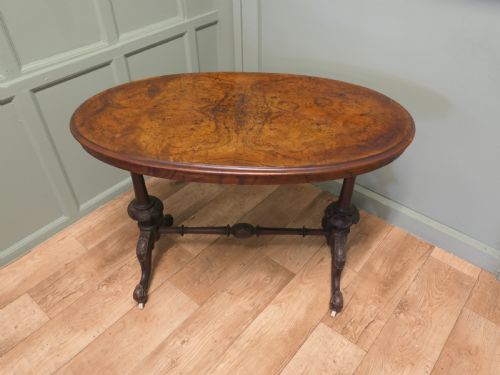
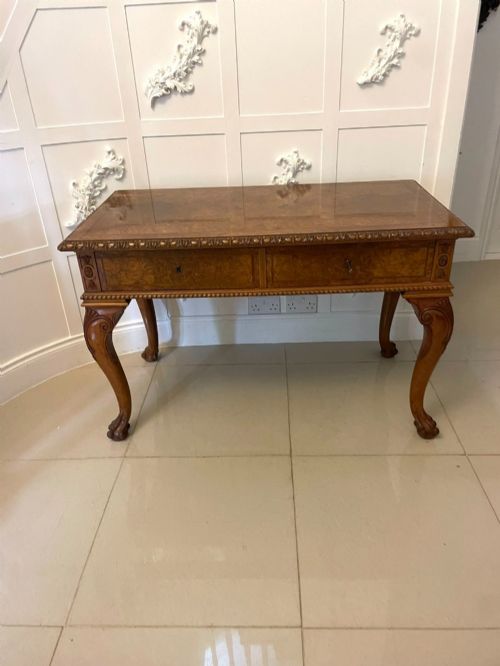
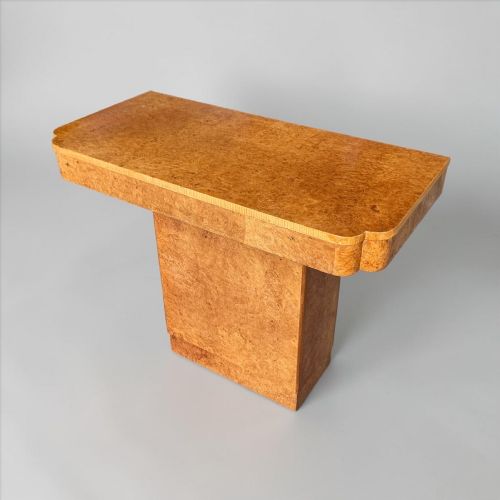
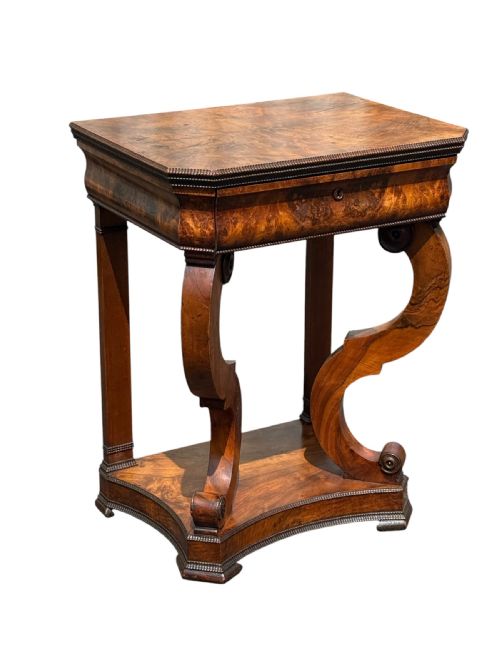
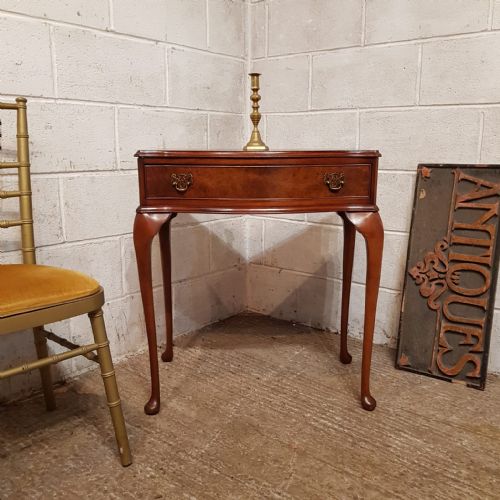
A burr walnut entry table is typically encountered as a console, hall or side table designed to sit against a wall in a narrow space. The forms span the nineteenth century through the Art Deco era and the nineteen-twenties, incorporating revival styles such as Queen Anne.
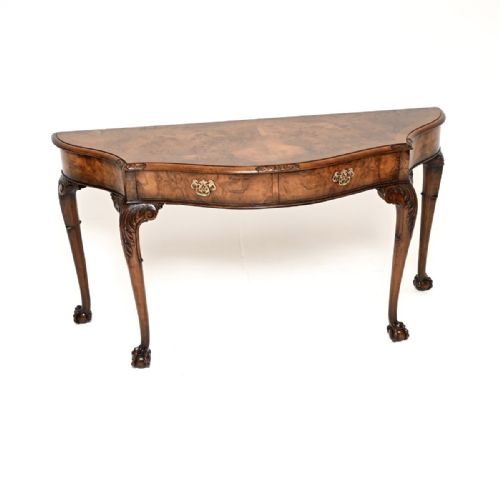
Buyers will find pieces ranging from serpentine and bow-fronted console tables to low boys and card tables. Many examples date from the nineteen-twenties and utilise rich veneers to create striking surfaces in domestic hallways.
Materials and construction
These tables rely heavily on burr walnut veneer applied to a solid wood carcase to showcase the swirling, knotty grain patterns of the timber. Supplementary materials like brass hardware appear on drawers or mounts.
Cabinetmakers shaped these pieces into diverse silhouettes, including serpentine and bow-fronted designs, sometimes pairing the wood with marble tops or incorporating carved details.
Card tables among these entries hide folding mechanisms so a hallway surface can transform for an evening game.
Quality and craftsmanship
Quality in a burr walnut entry table rests primarily on the selection and matching of the veneer across the top and front surfaces. Symmetry and depth of figure separate standard production from finer cabinetmaking.
The sophistication of the silhouette, such as clean Art Deco lines or crisp Queen Anne revival carving, dictates the visual success of the piece.
Hille·Maple and Co.·Epstein and Co
The Burr Walnut Entry Table Glossary
- Burr walnut
- A wood veneer taken from the growth growths or burls of a walnut tree. It produces highly figured, swirling patterns rich in movement and tone.
- Console table
- A table designed to stand against a wall, frequently fixed or supported by two front legs. These fit narrow circulation spaces like halls and entrances.
- Side table
- A small functional table meant to stand against a wall or beside furniture. They appear in various periods with drawers or folding tops.
- Queen Anne style
- A decorative style characterised by cabriole legs and curved lines. It experienced revivals during the late nineteenth and early twentieth centuries.
Burr Walnut Entry Table: Frequently Asked Questions
What is a burr walnut entry table?
It is a decorative hall or console table finished with highly figured burr walnut veneer, designed to furnish narrow spaces.
These pieces function as practical surfaces for post and keys while establishing a strong decorative statement near an entrance.
How do I care for burr walnut?
Keep the wood away from direct sunlight and excessive heat sources to prevent the veneer from drying out or fading.
Regular polishing with appropriate wax maintains the lustre of the grain without building up heavy residues.
Are these tables suitable for small hallways?
Many examples are specifically shaped with shallow depths, such as serpentine or bow-fronted formats, to fit restricted spaces.
Console and side tables rest flush against the wall, leaving walkways clear while providing a useful surface top.
How do I distinguish between periods?
Nineteenth-century examples often lean towards French Louis Philippe or Victorian proportions with heavier timber construction.
Tables from the nineteen-twenties and nineteen-thirties frequently showcase geometric Art Deco lines or lighter Queen Anne revival forms.