

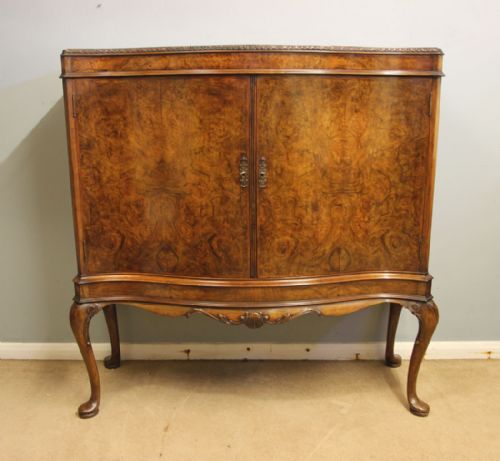
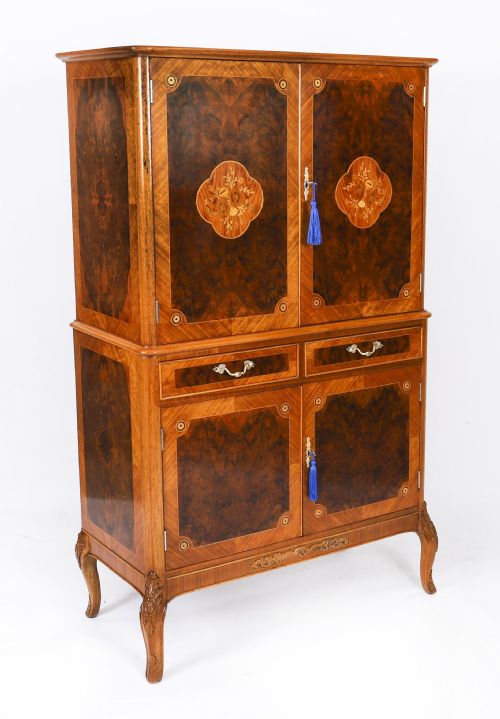


Burr Walnut Drinks Cupboard
A burr walnut drinks cupboard brings rich figured grain and purposeful interior fittings into a room, serving as a dedicated home bar for entertaining.
Burr Walnut Drinks Cupboard
A burr walnut drinks cupboard is a specialised piece of furniture designed for storing glassware, bottles, and bar accessories. These cabinets range from dedicated cocktail cabinets and dry bars to fitted side cabinets, display cabinets, and linen cupboards adapted for hospitality.
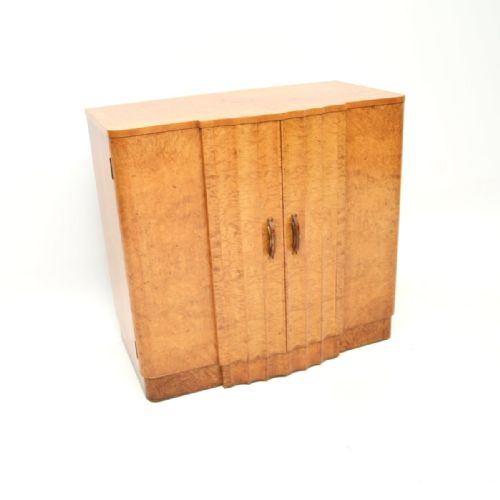
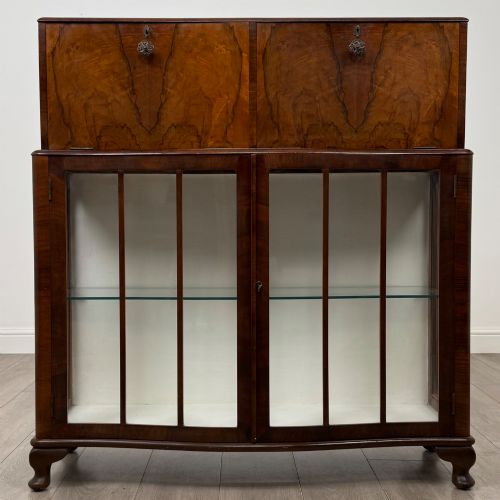
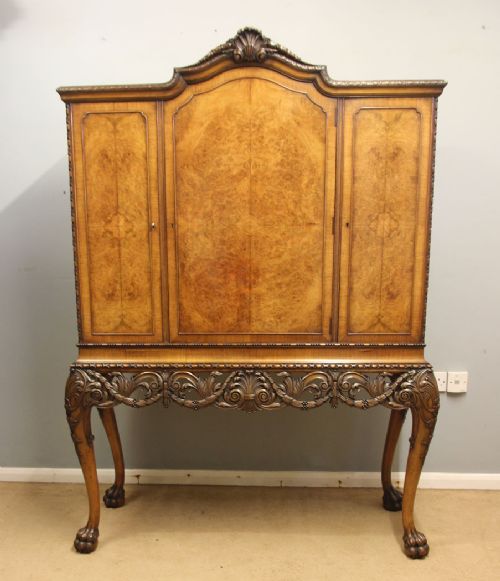
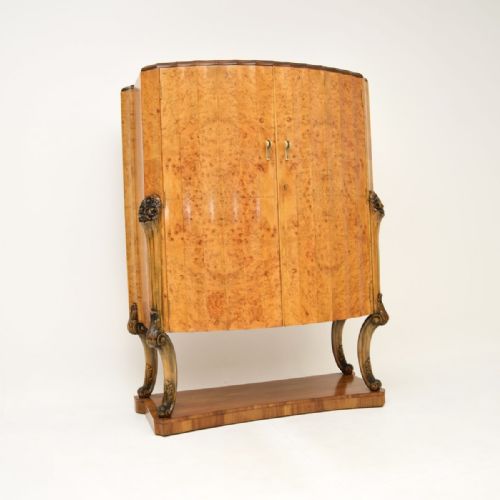
The pieces seen here span multiple eras, with strong representation from the 1920s and 1930s Art Deco period, alongside Edwardian and 19th-century Victorian examples. Buyers most frequently encounter 1930s Art Deco cocktail cabinets featuring symmetrical veneers and drop-down preparation flaps.
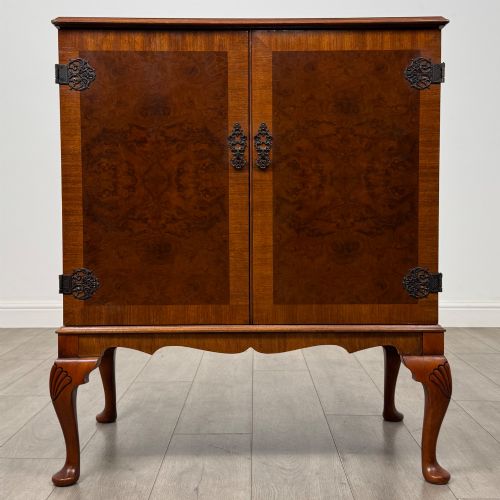
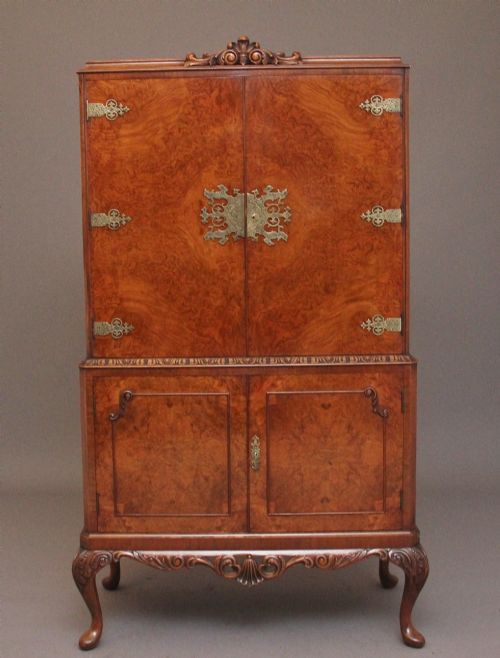
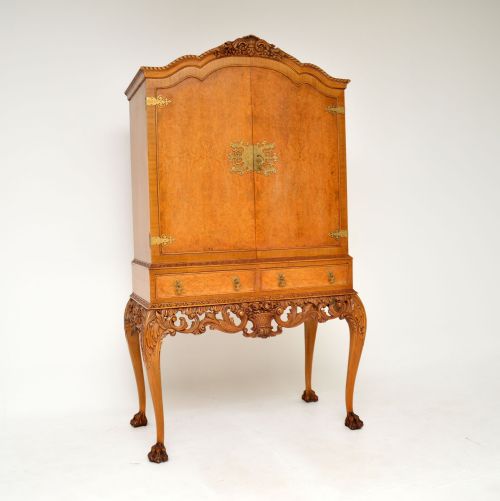
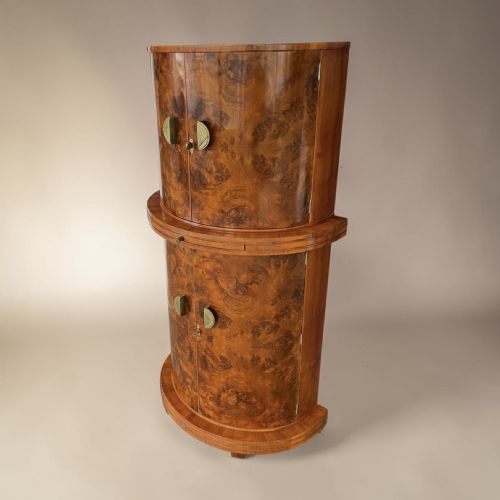
Stylistic influences vary across the selection, drawing upon Queen Anne Revival, William and Mary style, Victorian French Revival, and geometric Art Deco forms. Cabinets appear in various configurations, including double bow fronts, three-door sideboards, corner units, and tall drinks chests.
How they were made
Cabinet makers utilised wood veneer and burr walnut veneer applied over solid timber carcases to create striking, highly figured surface patterns. The swirling burr growth provides the primary visual impact on the exterior doors and drop-down fronts.
Construction incorporates secondary woods alongside brass hardware, mirrored glass panels, and occasionally marble tops on 19th-century pieces. Interiors often feature fitted shelving, pull-out slides, and designated compartments designed specifically for holding bottles and glassware.
The hidden bottle compartments in 1930s cocktail cabinets prove that previous generations took their evening martinis very seriously.
What varies in quality
Quality in these cabinets rests upon the selection and book-matching of the walnut veneers across the facade. Pieces exhibiting continuous, symmetrical grain patterns throughout show superior craftsmanship compared to simpler veneered surfaces.
The complexity of the interior joinery and original fittings distinguishes standard storage from top-tier cocktail cabinets. Fitted interiors with pull-down mixing slides, internal lighting mechanisms, and specialised bottle racks reflect higher workshop standards.
Harry and Lou Epstein·Epstein·Hille·Waring and Gillow
The Burr Walnut Drinks Cupboard Glossary
- Burr walnut
- A veneer sliced from the distorted growth or burl of a walnut tree. This wood displays intricate, swirling grain patterns highly prized for cabinet fronts.
- Veneer
- A thin layer of finely figured wood glued to a stable timber base. This technique allows makers to display decorative grain without risking the warping associated with solid exotic timbers.
- Art Deco
- A design style prominent in the 1920s and 1930s characterised by streamlined geometric forms, symmetry, and modern materials. Cabinets from this movement often feature bold curved fronts and striking veneer layouts.
- Queen Anne Revival
- A traditional furniture style popular in the early 20th century that reinterprets 18th-century English forms. Pieces often incorporate cabriole legs and restrained, elegant proportions.
- Dry bar
- An interior compartment within a cabinet equipped for serving drinks without a running water supply. These spaces typically include mirrored backs, glass shelving, and preparation surfaces.
Burr Walnut Drinks Cupboard: Frequently Asked Questions
How do I use a cocktail cabinet?
A cocktail cabinet functions as a self-contained home bar, typically featuring a drop-down flap that serves as a mixing shelf. Bottles stand securely on interior shelves while glassware sits behind glass doors or within dedicated racks.
Lower cupboards and drawers provide ample storage for extra bottles, cocktail shakers, and bar accessories. Many 1930s examples include pull-out slides for lemon slicing and glass preparation.
How do I tell Art Deco from Edwardian cabinets?
Art Deco cabinets, predominantly dating from the 1930s, display bold geometric lines, rounded double bow fronts, and symmetrical waterfall veneer patterns. They focus heavily on modern entertaining and cocktail preparation.
Edwardian pieces tend to follow earlier revival styles such as Queen Anne or William and Mary, featuring cabriole legs, brass drop handles, and more traditional upright cupboard proportions.
What is burr walnut?
Burr walnut comes from a tree growth abnormality that produces dense clusters of bud knots. When sliced into thin veneers, this wood reveals complex, swirling patterns that resemble swirling clouds or eyes.
Cabinet makers apply these decorative veneers symmetrically across the front doors to create dramatic visual symmetry that defines high-end case furniture.
Where should I place my drinks cabinet?
Position your drinks cupboard in a dining room, living room, or study where you frequently host guests. Ensure the room maintains stable humidity and temperature to protect the delicate walnut veneers and internal mirror glass.
Allow sufficient clearance around the cabinet to fully open drop-down flaps and side doors without obstructing movement in the space.