


Burr Walnut China Cupboard
A burr walnut china cupboard brings rich wood grain and glazed display space into a room, offering both character and practical storage.
Burr Walnut China Cupboard
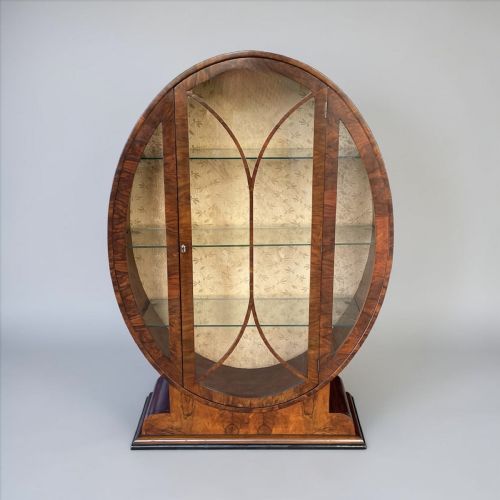
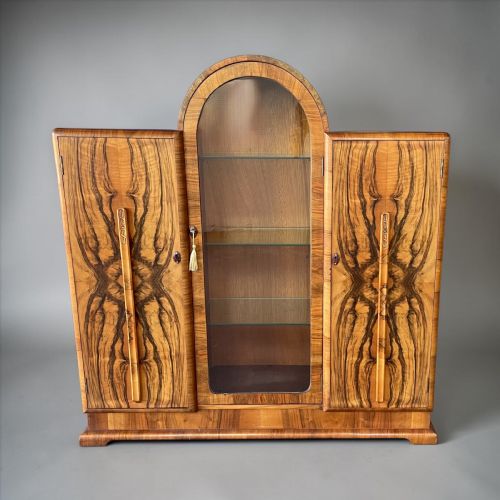
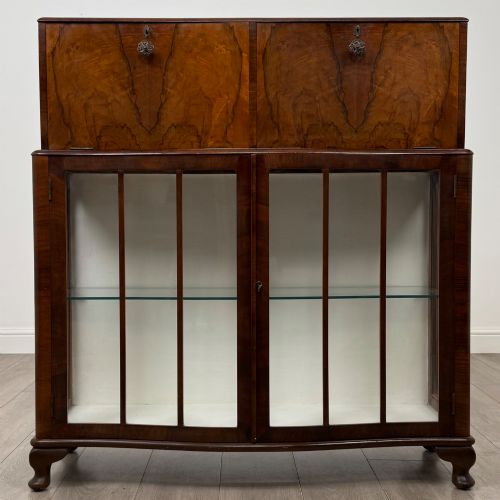
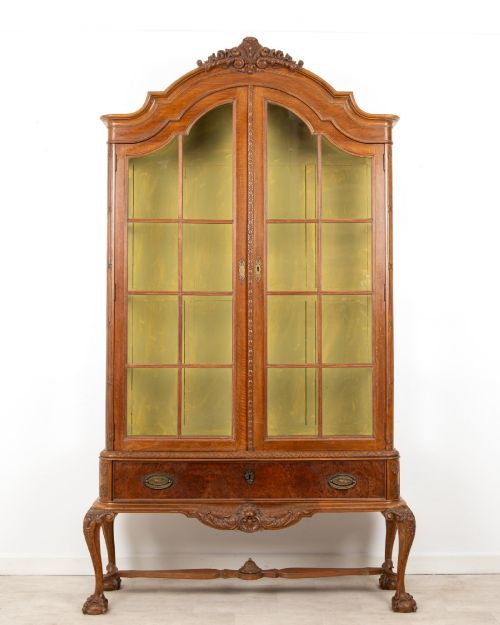
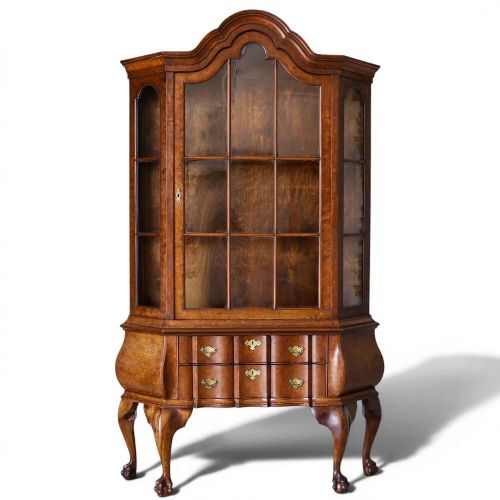
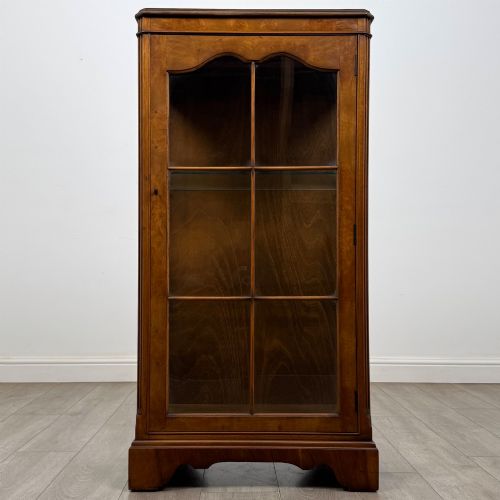
A burr walnut china cupboard draws the eye with its distinctive swirling grain patterns and glass-fronted upper sections. These pieces span periods from the nineteenth century into the twentieth, encompassing Victorian, Edwardian, and Art Deco designs.
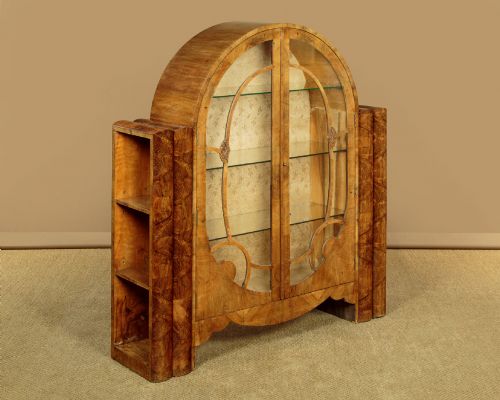
The selection on this page ranges from corner cabinets and bow-front side units to large glazed bookcases and circular or octagonal display pieces. Buyers frequently encounter Art Deco examples alongside revival styles like Queen Anne and Dutch Baroque.
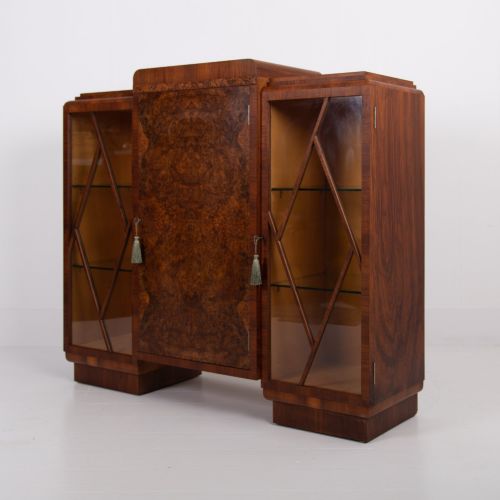
Makers and cabinet-makers utilised figured walnut veneers to create striking visual symmetry across the doors and panels. Whether standing on a separate base or fitted as a full cabinet, each form prioritises the exhibition of prized possessions.
Distinctions in quality
Quality rests upon the choice of burr veneer and how skilfully the grain matches across the opening doors. Superior examples display continuous, balanced patterns that demonstrate the maker's eye for natural timber design.
Construction integrity shows in the fit of the glazed doors, the stability of the stand or base, and the refinement of any ormolu mounts or brass fittings. Finer pieces maintain crisp carving and tight joints that withstand decades of use.
Materials appearing across the inventory include burr walnut veneer, glass, brass, fabric, and ormolu mounts.
Epstein
The Burr Walnut China Cupboard Glossary
- Burr walnut
- A thin slice of wood taken from a growth deformity on a walnut tree. This wood produces complex, swirling patterns highly prized in cabinet-making.
- Ormolu
- Gilded bronze mounts applied to furniture for decoration. These metal details appear frequently on nineteenth-century pieces to accent the walnut woodwork.
- Marquetry
- Inlaid pieces of wood fitted together to form decorative pictures or patterns. Dutch examples often utilise this technique with floral motifs.
Burr Walnut China Cupboard: Frequently Asked Questions
What periods do these cabinets come from?
The pieces span the nineteenth and twentieth centuries, including Victorian, Edwardian, and Art Deco eras alongside earlier revival styles.
Craftsmanship and silhouette shifted across these decades, moving from ornate nineteenth-century mounts to streamlined twentieth-century geometric forms.
How were these cabinets used?
These pieces served to store and display fine china, glassware, and treasured ornaments behind protective glass doors.
The upper glazed sections kept dust away from delicate items while keeping them visible in principal rooms.
How do I identify Art Deco examples?
Art Deco pieces from the nineteen-thirties often feature geometric shapes such as circular, octagonal, or oval silhouettes.
These designs emphasise clean lines and smooth surfaces that let the burr walnut grain provide the primary decoration.
Are corner cabinets available?
Several options are designed specifically to fit into room corners, maximising floor space while offering display capacity.
These corner units appear in various period styles, including Dutch-influenced designs and twentieth-century interpretations.