


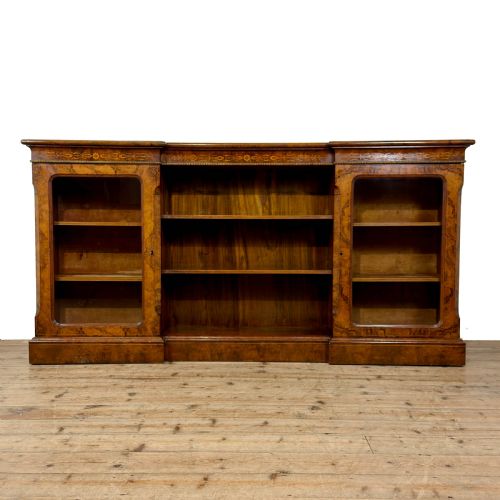
Burr Walnut Breakfront Cabinet
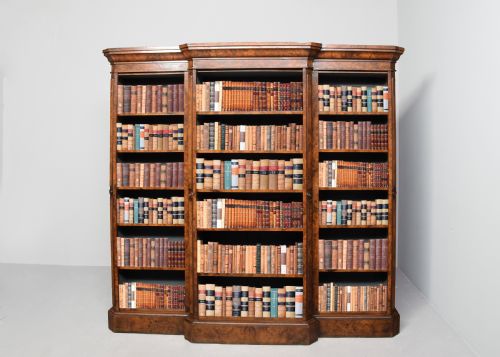
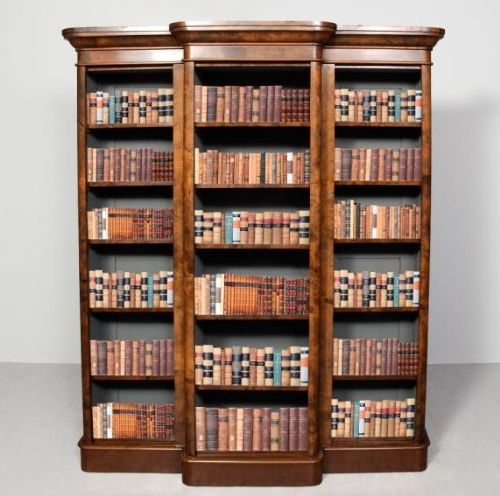
These burr walnut breakfront cabinet examples combine rich, swirling veneers with projection and recess, offering a grand architectural statement for a serious interior.
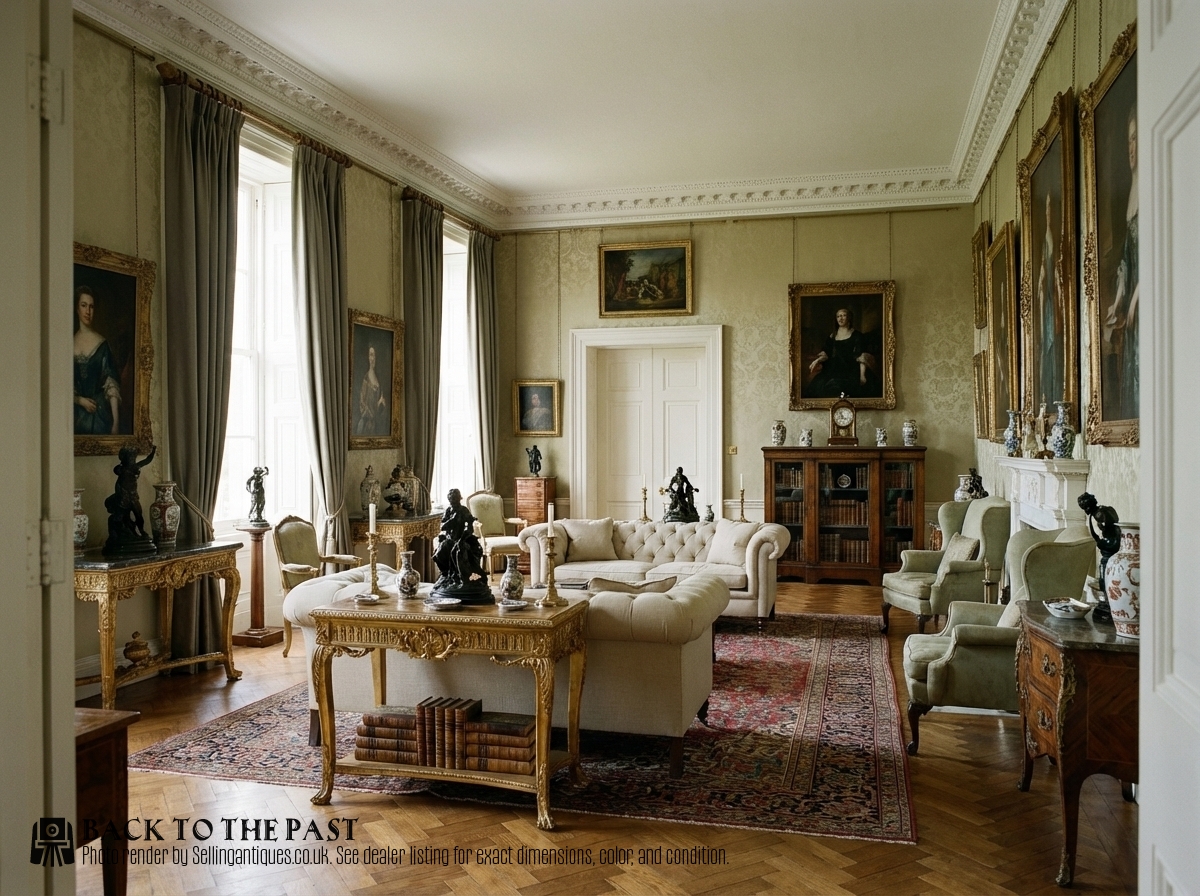
Burr Walnut Breakfront Cabinet
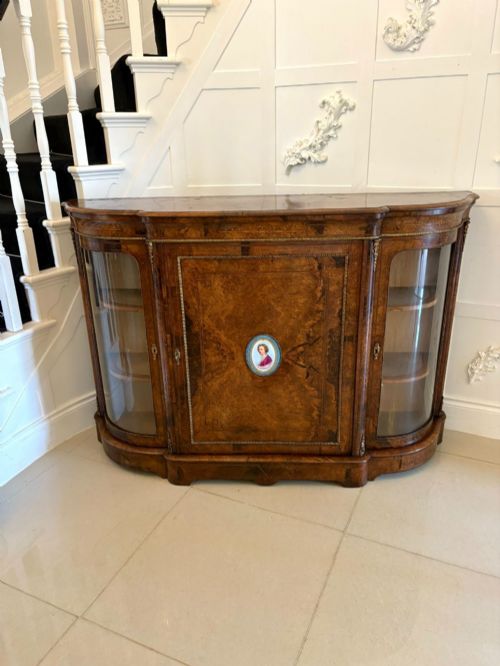
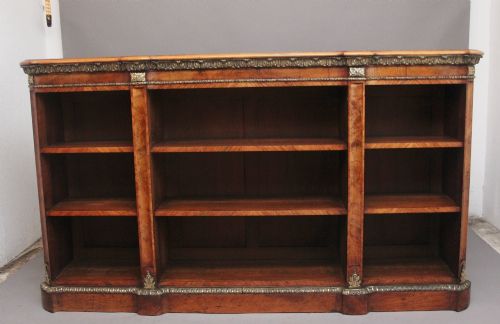
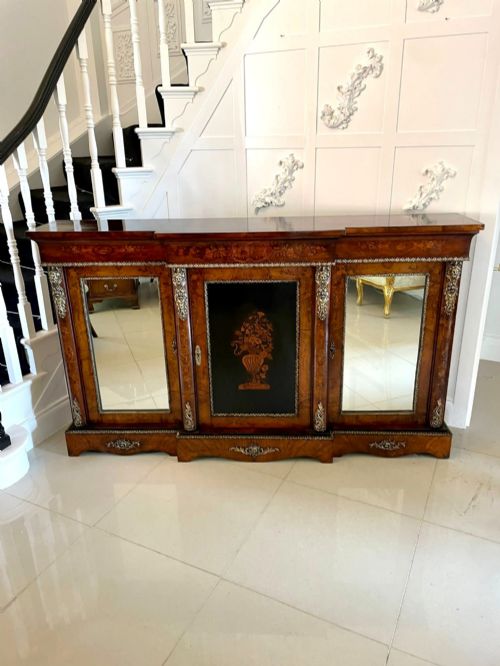
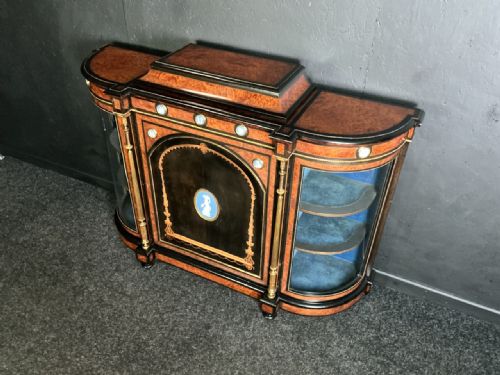
A burr walnut breakfront cabinet presents a distinctive multi-section facade where the central portion projects forward from the flanking wings. This architectural layout creates depth and visual rhythm along a wall, making it a commanding presence in any room. The form appears primarily across Victorian periods alongside later revivals, serving as grand storage or display furniture.
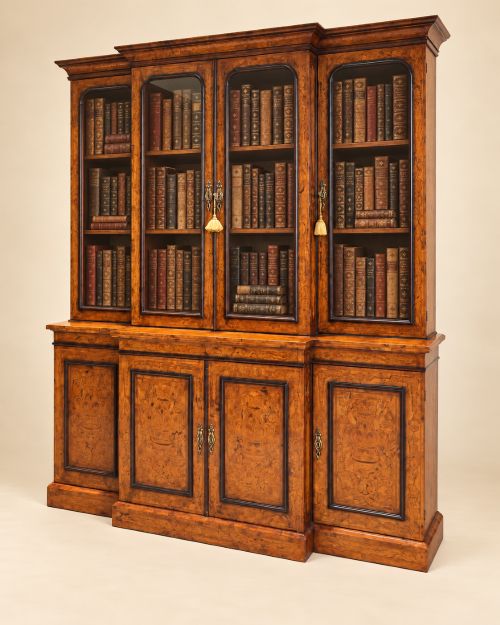
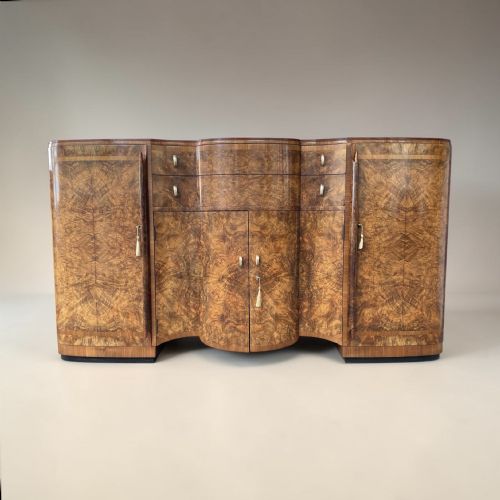
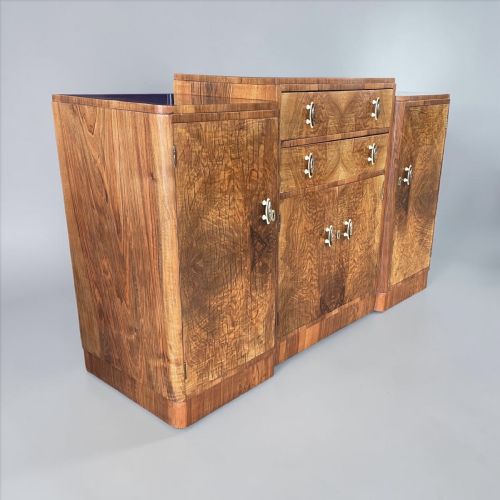
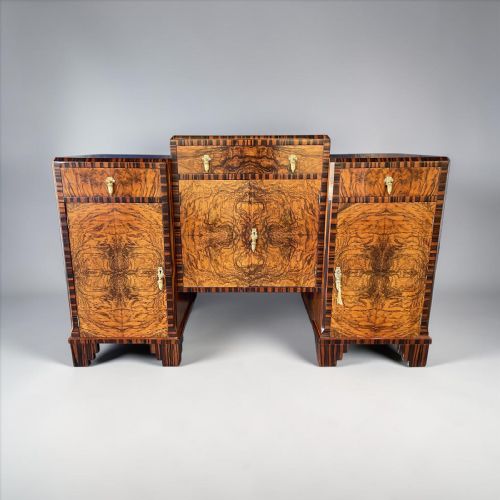
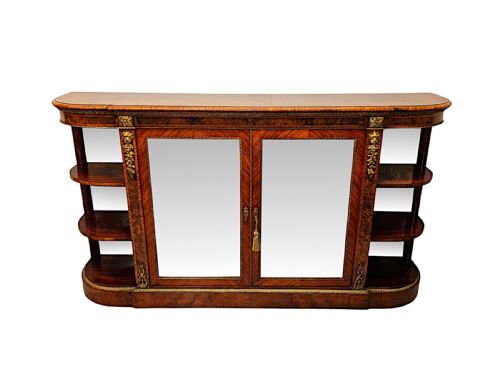
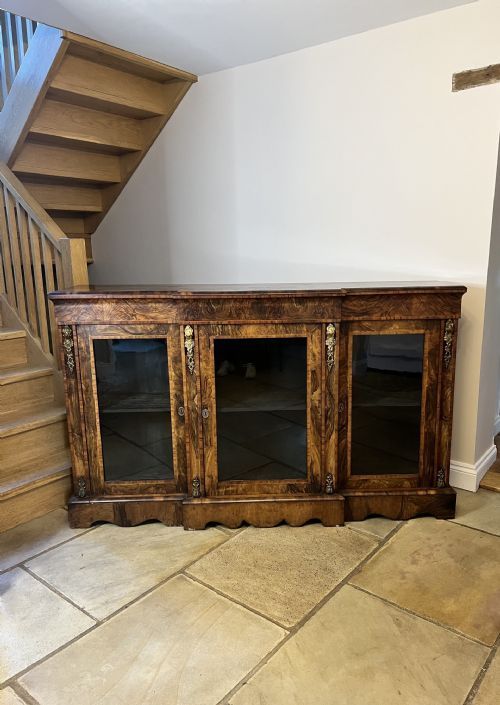
Buyers seeking this phrase encounter a rich mix of credenzas, open bookcases, and glazed display cabinets. Victorian pieces dominate the selection, bringing substantial proportions and intricate craftsmanship. Alongside these, occasional Art Deco sideboards and revival pieces appear to offer alternative interpretations of the format.
How They Were Made
Cabinet makers utilised highly figured burr walnut veneers applied over solid carcases to achieve swirling, organic grain patterns across the front. These veneers required careful matching, often creating symmetrical book-matched panels across doors and drawer fronts. Tradesmen enhanced these rich wooden surfaces with contrasting stringing in boxwood or satinwood.
Metal mounts in ormolu and gilt bronze frequently frame the doors and highlight the breakfront geometry. Glazed panels, porcelain plaques, and marquetry inlay provide further decorative enrichment, while internal adjustable shelves offer practical utility within the grand exterior.
Some nineteenth-century makers concealed secret writing drawers inside their grand credenzas, offering a private desk tucked behind the swirling burr walnut.
What Varies In Quality
The distinction between ordinary and exceptional pieces rests upon the selection and matching of the burr walnut veneer. Superior examples display dense, lively figuring that flows continuously across the breakfront sections, whereas lesser items use flat or disjointed grain. The complexity of the marquetry and the crispness of the cast ormolu mounts further separate standard production from master craftsmanship.
Structural complexity also dictates the tier of the piece, particularly regarding multi-section breakfronts with fitted interiors such as secretaire drawers. The integration of high-status elements like Sevres porcelain plaques or stamped maker signatures elevates a piece well above domestic utility into the realm of exhibition quality.
Maurice Adams·Johnstone And Jeanes·Gillows·Gillow
The Burr Walnut Breakfront Cabinet Glossary
- Breakfront
- A piece of furniture where the central section projects forward from the flanking sides. This layout creates architectural depth and divides long elevations into distinct visual bays.
- Burr Walnut
- Wood harvested from the wart-like growths on walnut trees, yielding highly decorative, swirling grain patterns. It is sliced into thin veneers for application onto premier furniture surfaces.
- Ormolu
- Gilt bronze mounts used to decorate the corners, friezes, and borders of nineteenth-century cabinets. The technique involves applying a mercury and gold amalgam to bronze.
- Credenza
- A low cabinet, frequently enclosed by doors and mounted with ormolu, originating as a sideboard. Victorian iterations often incorporate central mirrored sections or glazed display spaces.
- Marquetry
- The art of forming decorative patterns using fitted pieces of various coloured veneers. Craftsmen employ woods like boxwood and satinwood to create floral or geometric motifs.
Burr Walnut Breakfront Cabinet: Frequently Asked Questions
How do I clean burr walnut veneer?
Dust regularly with a soft, dry cloth to prevent grit accumulation on the delicate surface. Avoid modern silicone polishes that build up residue and instead use a quality beeswax sparingly.
Keep these cabinets away from direct sunlight and radiators to prevent the underlying timber from drying and the veneer from lifting.
Where should I place a breakfront cabinet?
Position the piece against a long, flat wall where the projecting central section can catch natural light and display its grain. Ensure the room has stable humidity levels to protect nineteenth-century glues and veneers.
Allow sufficient clearance for doors to open fully, particularly on multi-section bookcases and credenzas with wide wings.
Are the shelves adjustable?
Many Victorian and later breakfront bookcases feature removable timber shelves supported by adjustable wooden racks or metal pins. This adaptability allows the interior to accommodate oversized folios and mixed collections.
Older credenzas and sideboards often feature fixed internal shelving designed specifically for china, glassware, or linens.
How do I identify Victorian pieces?
Examine the construction methods, timber choices, and secondary woods visible on the interior and backboards. Victorian examples frequently utilise dense burr walnut veneers combined with heavy brass hardware, ormolu mounts, and hand-cut dovetails.
Stylistic markers such as Aesthetic Movement motifs or Sevres-style porcelain plaques often point directly to mid-nineteenth-century British workshops.