


Burr Walnut Bedside Lockers
Burr walnut bedside lockers bring warmth and striking grain patterns to the bedside, offering enclosed storage with distinct character.
Burr Walnut Bedside Lockers
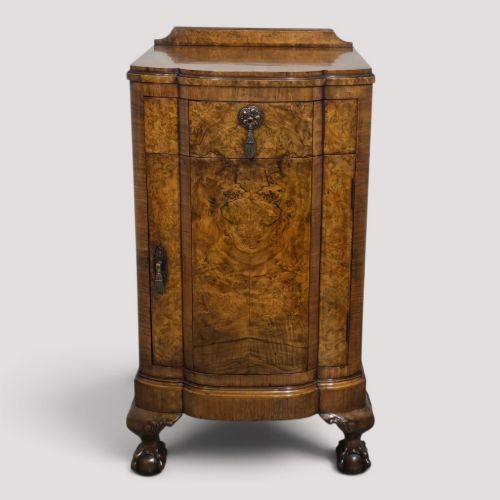
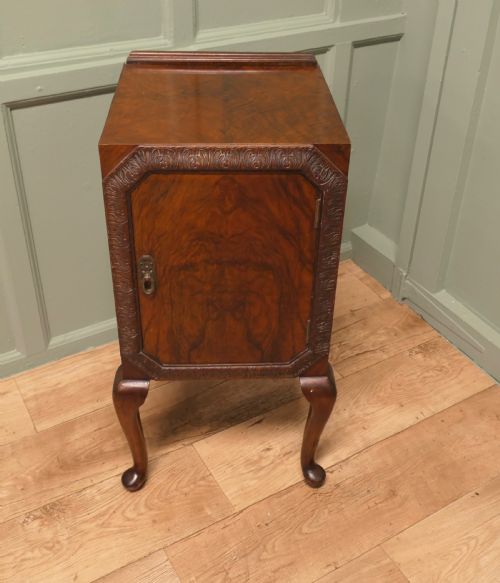
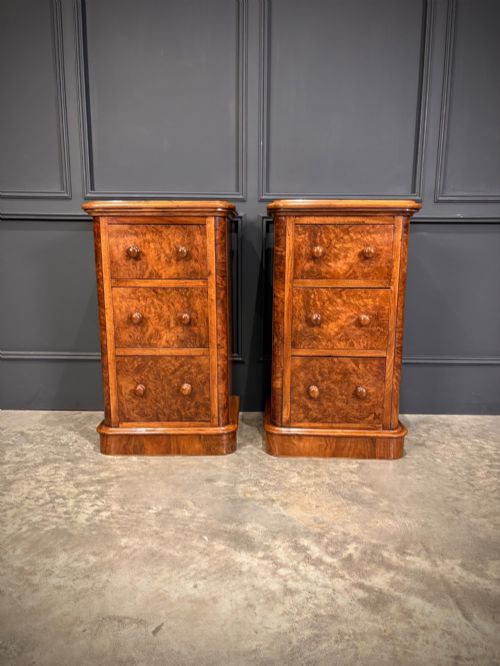
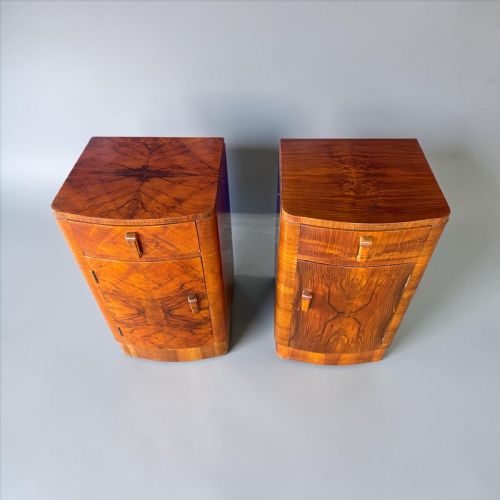
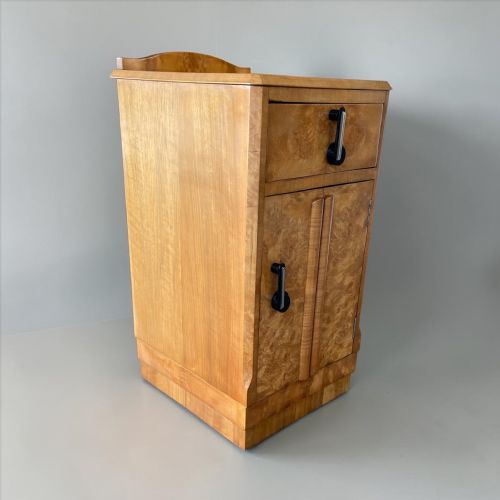
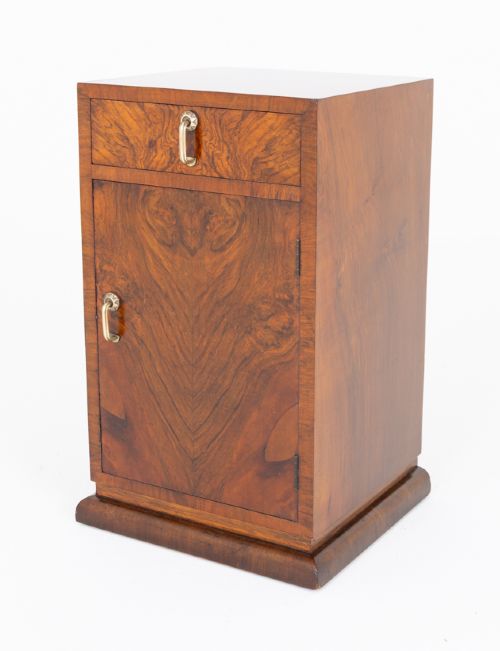
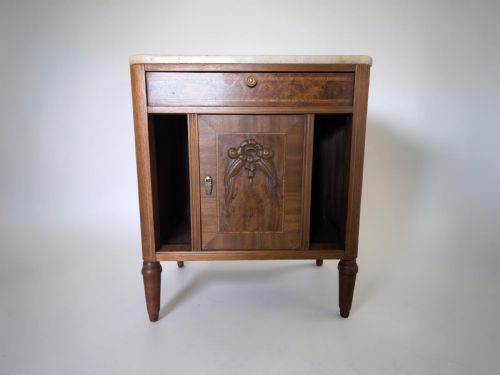
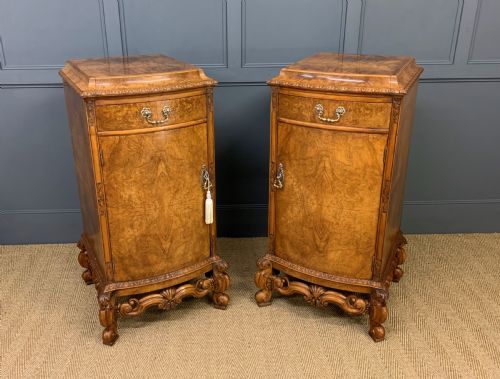
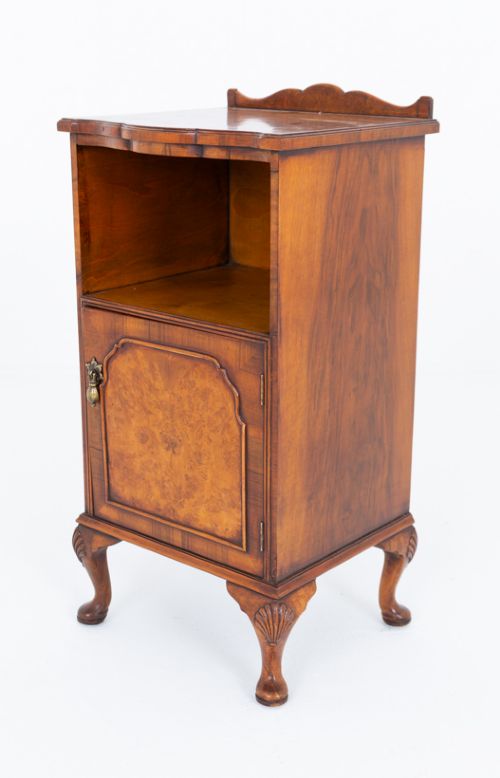
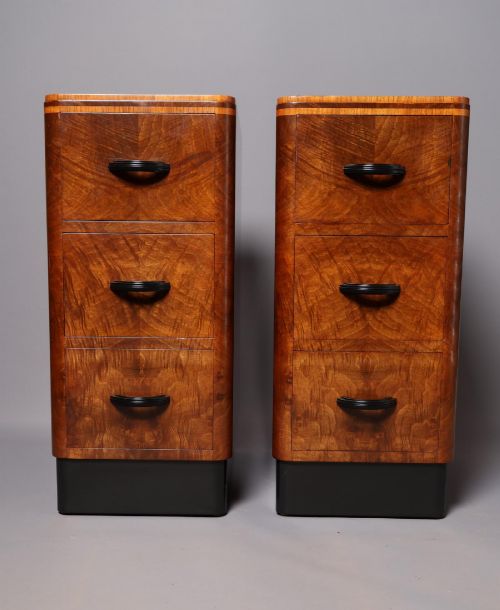
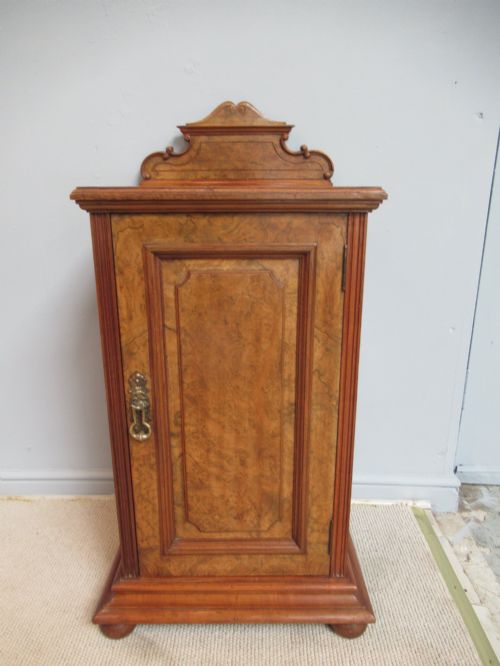
Burr walnut bedside lockers are compact bedroom pieces designed to sit beside a bed while providing convenient storage behind a door or within small drawers. When you search for burr walnut bedside lockers, you encounter a range of forms including pedestal cupboards, bedside chests of drawers, and drum-shaped cabinets. The pieces listed across this page span multiple eras, showing the enduring appeal of the timber from the Victorian period through the Edwardian years and into Art Deco designs.
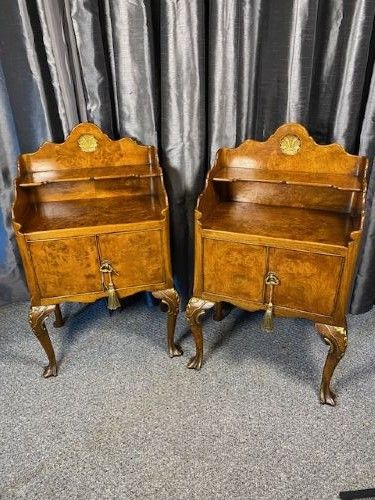
Victorian examples often display rich figuring, sometimes with military-style brass binding or bowfront shapes, while later twentieth-century interpretations lean towards streamlined surfaces. You will find single cabinets alongside matched pairs, offering flexibility for different bedroom layouts. The underlying construction generally relies on sturdy secondary woods like pine, faced with decorative veneers to create the characteristic patterned exterior.
How they were made
Cabinet makers utilised thin slices of burr walnut veneer applied over stable base timbers such as pine or solid walnut to achieve decorative surfaces without risking major warping. The characteristic swirling grain patterns come from the knotty growths of the walnut tree, sliced and matched carefully across the door panels and top surfaces. Workshops combined traditional joinery for the carcase with decorative elements like brass handles, hinges, and occasional banding in contrasting woods.
Finishing involved hand-polishing with shellac to bring out the depth and lustre of the burr figure. Structural elements inside the lockers, including drawer linings and shelving, received simpler treatments while maintaining solid construction standards.
What varies in quality
Quality in these pieces rests primarily on the selection and matching of the burr walnut veneer across the main visual surfaces. Superior examples feature symmetrical grain patterns that flow seamlessly across drawer fronts and doors, demonstrating the maker's eye for detail.
The choice of secondary timbers and the precision of the joinery further distinguish finer pieces from standard utilitarian items. Details such as original brass hardware, well-fitted drawers, and stable door alignments separate superior lockers from more basic productions.
Maple and Co
The Burr Walnut Bedside Lockers Glossary
- Burr walnut
- A decorative wood veneer taken from the knotted growth of a walnut tree. It produces intricate, swirling grain patterns highly valued in fine cabinet making.
- Pedestal cupboard
- A tall, narrow freestanding cabinet with a single door enclosing interior space. These units provide useful height beside taller bed frames.
- Pot cupboard
- A traditional term for a small bedside cabinet originally designed to house a chamber pot. They typically feature a cupboard door and sometimes a small upper drawer.
- Bowfront
- A convex, outwardly curved front profile seen on certain chests and lockers. This shape softens the room's angles and enhances the visual impact of the veneer.
- Brass bound
- A method of reinforcing cabinet corners and edges with brass strips and protective mounts. This detail originates from campaign furniture designed for travel.
Burr Walnut Bedside Lockers: Frequently Asked Questions
What is a bedside locker?
A bedside locker is a small enclosed cabinet designed to sit beside a bed for personal storage. These pieces typically feature a cupboard door or small drawers to keep items hidden.
Historically, they served practical functions like holding wash accessories or chamber pots before modern plumbing became standard. Today, they function as stylish tables with the added benefit of concealed storage.
How do I date a piece?
Dating burr walnut bedside lockers involves examining construction methods, hardware styles, and overall design characteristics. Victorian examples often show turned legs, panelled doors, or brass campaign mounts, while Edwardian and Art Deco pieces exhibit cleaner lines and different veneer treatments.
Secondary woods inside the drawers and the type of fixings used provide further clues to the manufacturing decade. Comparing the piece against known stylistic periods helps narrow down its age.
Are pairs common?
Matched pairs appear frequently among Victorian and Edwardian listings because bedrooms traditionally utilised twin bedside tables. Finding two identical lockers requires careful searching, as many were separated over the decades.
Pairs often command greater interest from collectors who wish to balance a bed setup symmetrically. Slight variations in grain pattern are normal since natural wood veneers are unique.
How do I care for burr walnut?
Burr walnut requires gentle maintenance to preserve the delicate veneer and polished finish. Keeping pieces away from direct sunlight and strong heat sources prevents the wood from drying out or fading.
Dusting with a soft, dry cloth is usually sufficient for daily upkeep. Applying a quality beeswax occasionally helps nourish the wood and maintain its subtle sheen.