
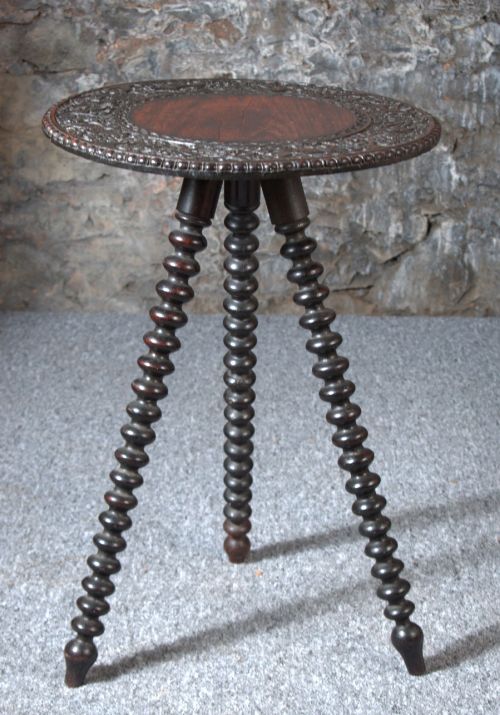


Burmese Wood Carving
These burmese wood carving pieces combine intricate sculptural depth with dense native timbers, forming striking additions to period interiors.
Burmese Wood Carving
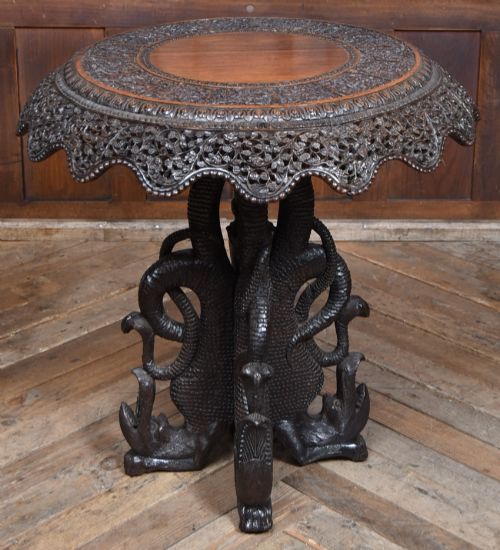
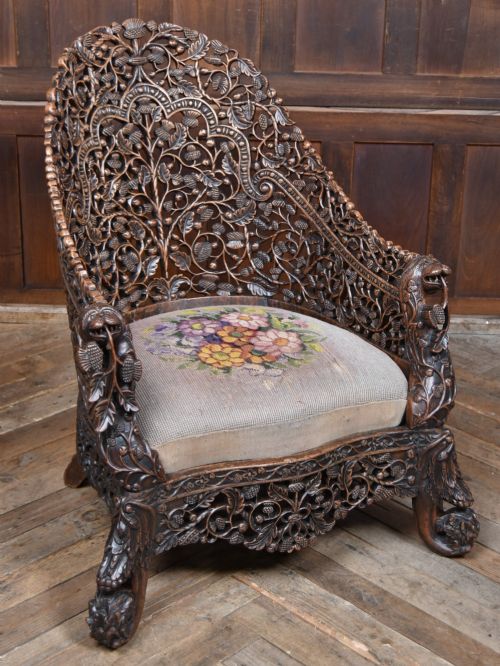
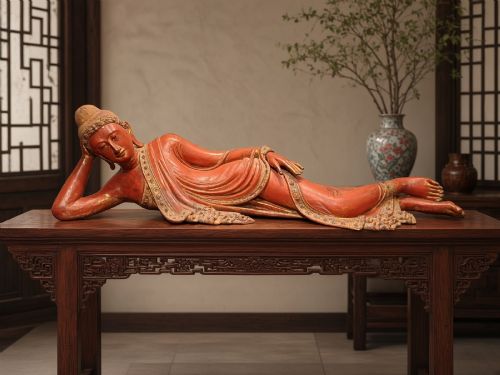
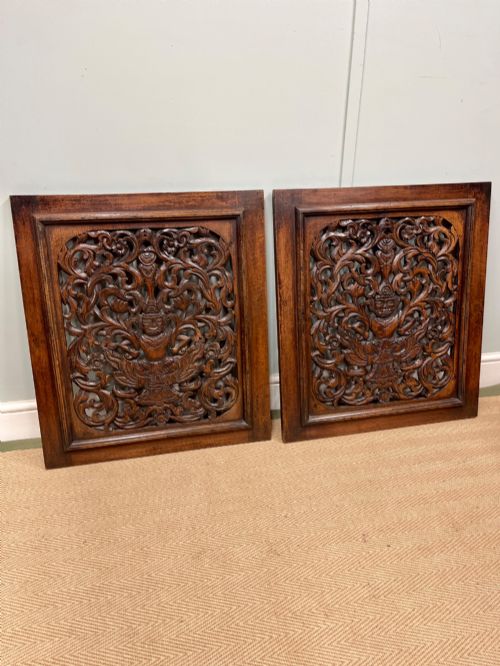
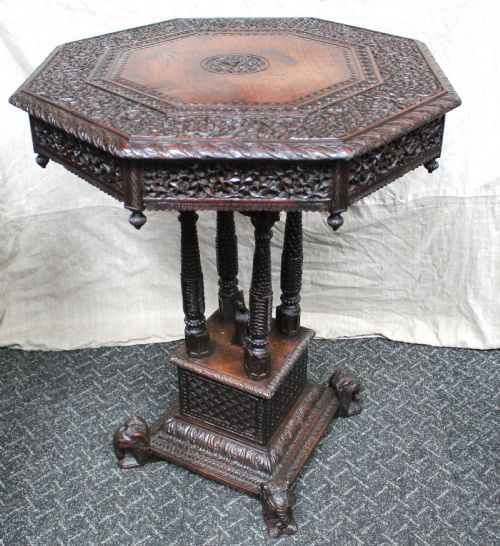
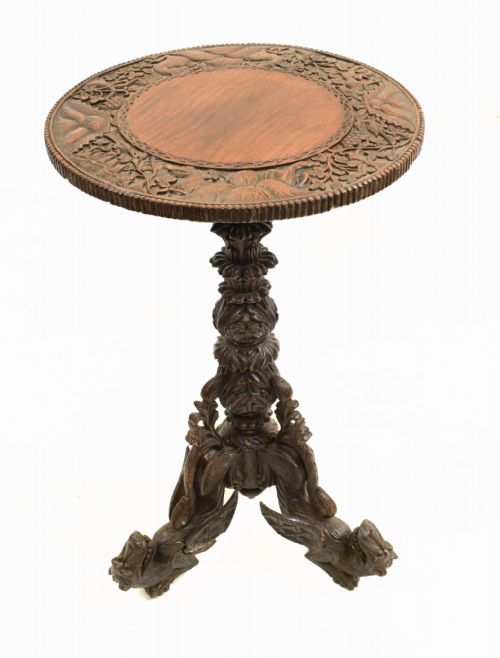
A burmese wood carving typically manifests as functional furniture or religious sculpture, spanning side tables, occasional tables, armchairs, and figurative statues. The domestic items frequently incorporate detailed motifs of figures, foliage, and animals.
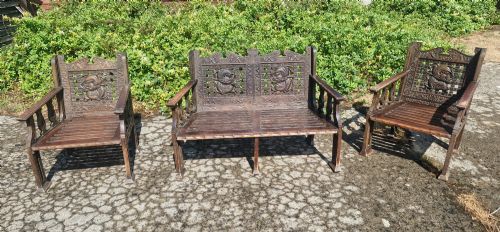
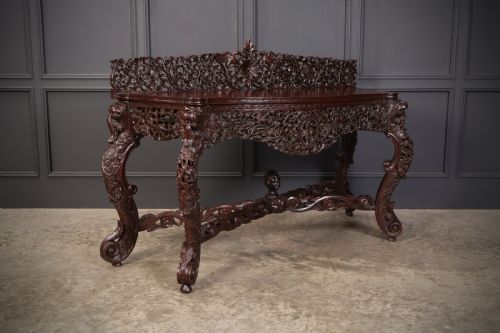
Most examples encountered on this page date from the nineteenth century, reflecting colonial influences and traditional craftsmanship. The selection encompasses diverse forms from small occasional tables to substantial console tables and seating suites.
Originating from Southeast Asia, these objects showcase distinct regional styles including Anglo-Burmese and Victorian gothic revival crossovers. Buyers encounter everything from wall brackets and screens to elaborate temple chairs and buffets.
Materials and Methods
Artisans utilised dense hardwoods such as teak, padauk wood, and general hardwood as the structural foundation for deep relief work. These heavy timbers provided the necessary stability for intricate undercutting and high-relief ornamentation.
Surface decoration frequently incorporated gold leaf, brass accents, and polychrome lacquer to highlight specific architectural or figurative details. The application of lacquer and gilding protected the timber while adding visual splendour to Buddha sculptures and temple panels.
Several items combine traditional Buddhist motifs with unexpected British conservatory aesthetics, proving that Victorians loved a carved monkey.
Judging Quality and Execution
The distinction between standard and superior pieces lies in the crispness and depth of the chisel work across the timber. Master carvers achieved remarkable dimensionality in foliage and figures, whereas lesser examples present shallow, uniform texturing.
Selection of the raw timber significantly influences the overall character, with dense padauk wood offering a finer grain and richer natural tone than standard utility woods. Preserved gilding and intact polychrome finishes further elevate the integrity of figurative works.
The Burmese Wood Carving Glossary
- Padauk wood
- A dense, heavy tropical hardwood prized for its reddish hue and durability. Artisans favoured this timber for intricate nineteenth-century furniture and tables.
- Tip top table
- A table featuring a hinged top that pivots to a vertical position when not in use. This mechanism allowed for compact storage in period rooms.
- Gilt wood
- Timber treated with a thin layer of gold leaf or gold paint applied to the surface. This technique illuminated religious sculptures and decorative furnishings.
- Nat
- A traditional spirit worshipped in Burma alongside Buddhism. Figures of these entities appear in hand-carved statuary and temple panels.
- Polychrome
- The practice of decorating architectural elements or sculptures in several colours. Artisans utilised pigmented layers to bring life to carved animal and human figures.
Burmese Wood Carving: Frequently Asked Questions
How do I identify a nineteenth-century piece?
Nineteenth-century examples display deep, hand-carved relief work executed in heavy tropical timbers like padauk or teak. Tool marks and natural patina accumulated over decades provide reliable indicators of age.
Constructive methods from this era often rely on traditional joinery rather than modern metal fasteners. Examining the underside and secondary woods helps confirm the period of origin.
Where were these carved items placed?
Domestic furniture such as occasional tables, side tables, and armchairs occupied principal reception rooms in colonial and country houses. Wall brackets and screens served to divide spaces or display ornaments.
Religious carvings including Buddhas and Nats originated in temples or household shrines. These figurative works held devotional significance before entering the secular antique market.
What defines Anglo-Burmese style?
Anglo-Burmese design merges traditional Southeast Asian carving techniques with European furniture forms popular during the Victorian period. This fusion produced side tables and seating suites tailored for British domestic tastes.
The resulting objects pair native motifs like elephants and dense foliage with conventional Western furniture skeletons. This cross-cultural aesthetic flourished during the nineteenth century.