



Colonial Teak Standing Lamp
These colonial teak standing lamp pieces combine dense tropical timbers with functional lighting, bringing warm character and historic craftsmanship into a room.
Colonial Teak Standing Lamp
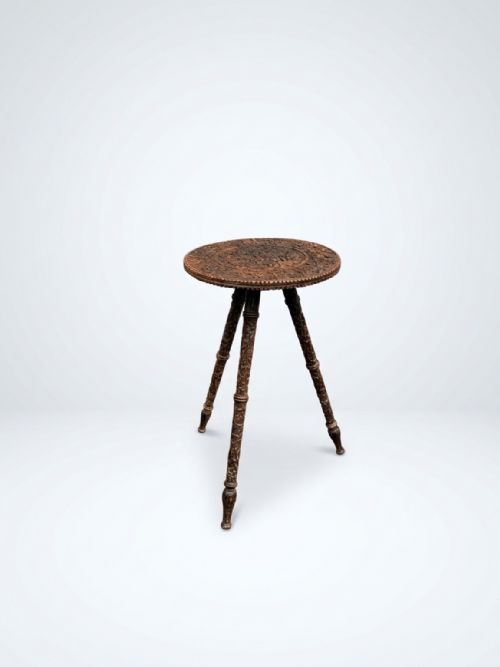
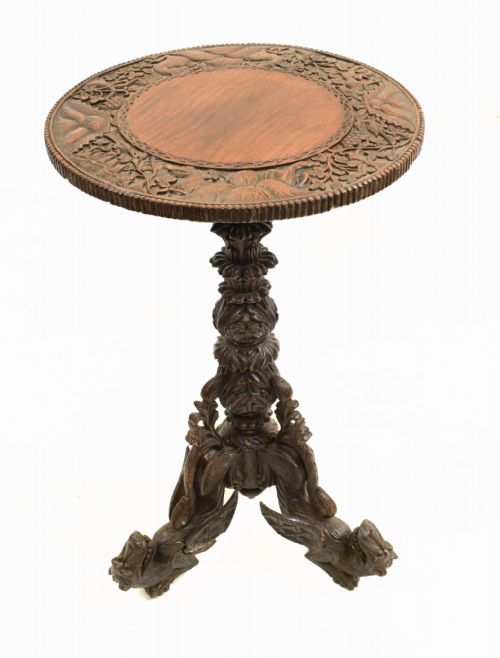
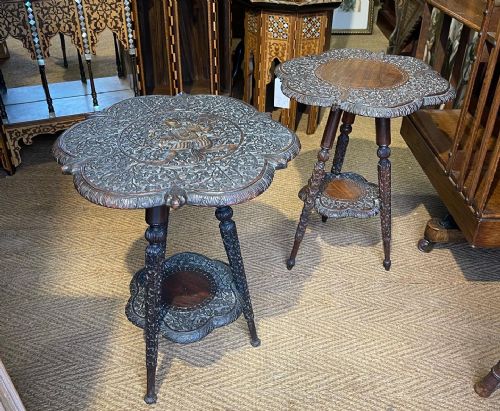
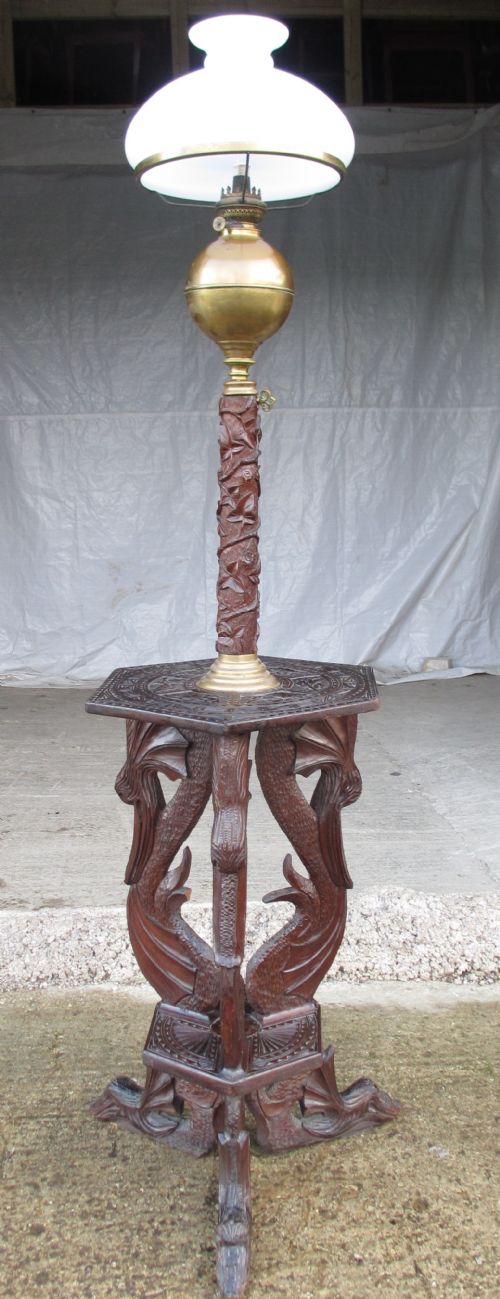
When you search for a colonial teak standing lamp, you encounter items associated with Anglo-Indian, Anglo-Burmese, and wider colonial traditions. The listings here primarily reflect related forms such as carved lamp tables, occasional tables, and adjustable oil lamps rather than standard upright floor lamps.
The objects span the Victorian era, the nineteenth century, and the early twentieth century, specifically appearing across dates from eighteen seventy to nineteen twenty. You will most frequently meet carved wooden tables that served practical household lighting functions during the colonial period.
How they were made
Maker workshops utilised dense tropical timbers including teak, padouk, and rosewood, which were shaped into robust furniture frames. These hardwoods lent themselves to deep, intricate hand carving across the surfaces and edges.
Metal and glass components frequently complemented the timber work, particularly in adjustable oil lamp fittings incorporating brass and glass elements. Folding mechanisms also appear in the construction of specific lamp tables from the period.
Listings feature items spanning the Victorian era and the early twentieth century, constructed from teak, padouk, rosewood, brass, and glass.
What varies in quality
The depth and crispness of the hand carving distinguish finer examples from simpler production, reflecting the skill of the artisan. Superior pieces exhibit well-defined floral and geometric motifs across the teak or padouk surfaces.
The integration of secondary materials such as brass fittings and glass oil reservoirs dictates the overall refinement of the piece. Stability in folding mechanisms and the original condition of adjustable elements also separate standard items from superior specimens.
The Colonial Teak Standing Lamp Glossary
- Anglo-Indian
- Pertaining to furniture made in India during the British period, often combining European forms with local carving techniques. These items frequently utilise native hardwoods such as teak.
- Padouk
- A heavy, durable reddish-brown tropical hardwood used in colonial furniture making. It provides a dense base for intricate hand carving.
- Occasional table
- A small, movable table designed for a specific, intermittent use such as holding a lamp or book. They are common forms within nineteenth-century household furnishing.
- Adjustable oil lamp
- A lighting device with a mechanism to alter the height or position of the burner. These fixtures often feature brass and glass components mounted on wooden stands.
Colonial Teak Standing Lamp: Frequently Asked Questions
What is a colonial teak standing lamp?
A colonial teak standing lamp generally refers to nineteenth-century and early twentieth-century lighting furniture from British colonial regions. These pieces often combine sturdy tropical hardwoods with functional brass and glass lamp fittings.
Items in this category frequently overlap with carved lamp tables and occasional tables designed to support oil lamps. The craftsmanship reflects Anglo-Indian and Anglo-Burmese aesthetic traditions.
How were these lamps used historically?
These items served as functional lighting and display furniture in colonial households. Their stable wooden surfaces accommodated heavy oil lamps used before widespread electrification.
Many designs incorporated folding actions or adjustable heights to suit the practical needs of the room. They functioned as movable furniture pieces placed beside seating areas.
What materials are typical for these pieces?
The primary material is teak, alongside other dense tropical hardwoods like padouk and rosewood. These timbers were selected for their strength and suitability for deep carving.
Secondary materials include brass for mechanical adjustments and glass for oil reservoirs. Together, these elements created durable items built to withstand tropical climates.
How do I date an antique lamp table?
Dating relies on examining the construction methods, materials, and stylistic markers recorded across Victorian and early twentieth-century examples. Clues appear in the complexity of the hand carving and the design of any metal fittings.
Makers working in the nineteenth and early twentieth centuries employed specific joining techniques and hardware styles. Comparing the wood finish and overall form helps place the piece within periods like the eighteen nineties or nineteen tens.