


Burmese Teak Carving
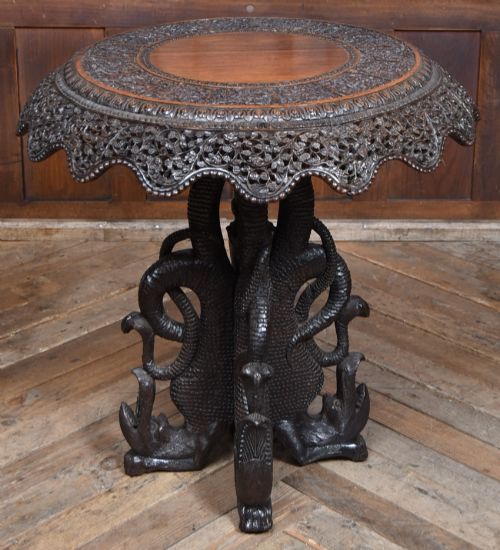
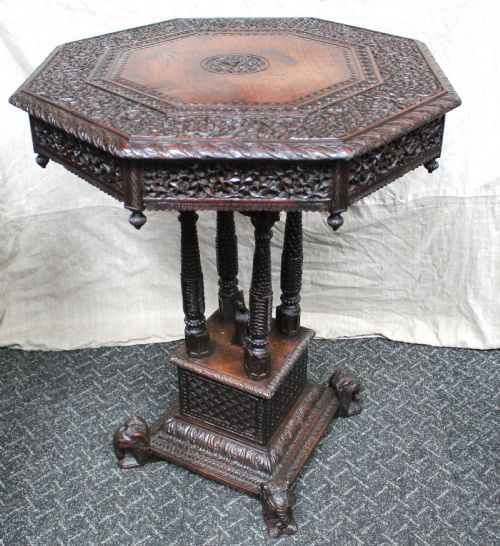
These burmese teak carving pieces bring deep relief work and dense foliage into a room through tables, chairs, and panels.
Burmese Teak Carving
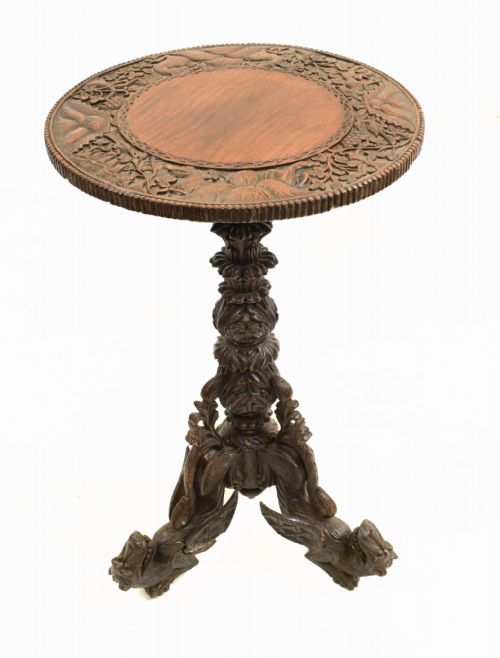
A burmese teak carving search brings up heavily decorated furniture and architectural elements originating from Myanmar, alongside Anglo-Indian or Anglo-Burmese colonial hybrids. Buyers encounter side tables, occasional tables, tip-top tables, and console tables most frequently, often featuring dense figural or floral relief.
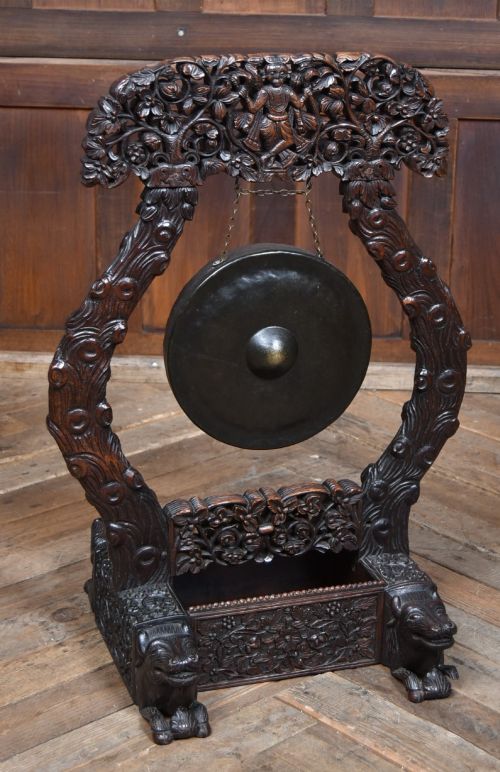
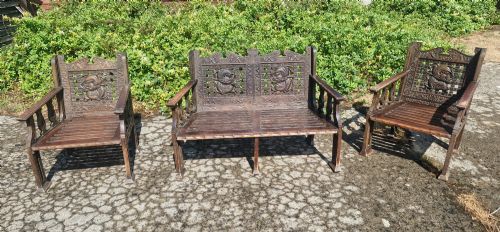
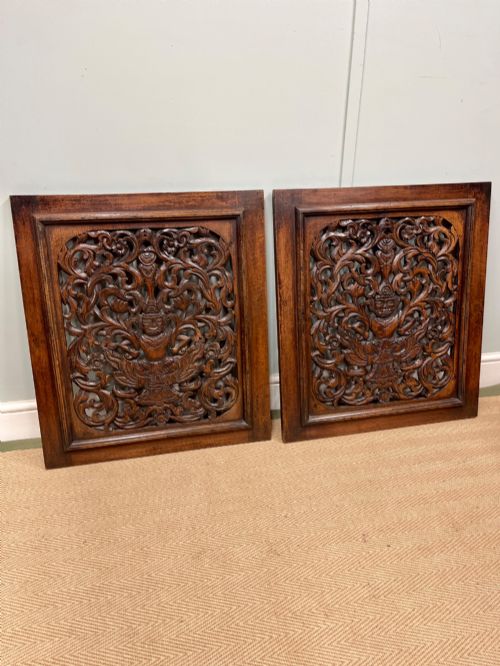
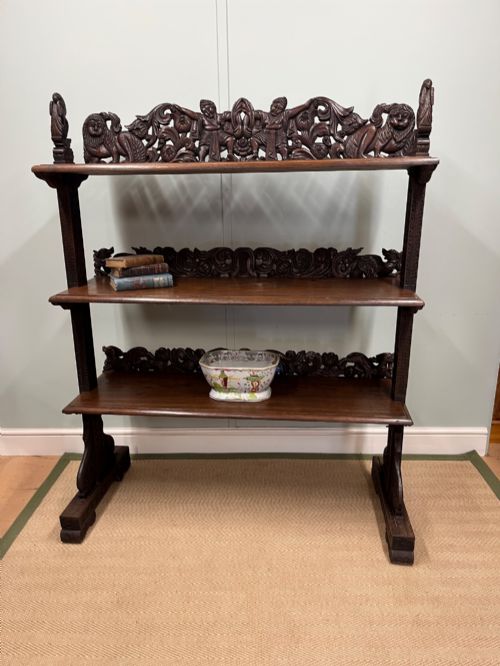
Seating forms also appear, ranging from occasional armchairs and temple chairs to folding chairs and three-piece conservatory suites. Smaller decorative objects complete the range, including wall panels, screens, wall brackets, tiered buffets, specimen chests, and gongs.
The objects span the nineteenth century, from eighteen-forty through to nineteen-twenty, with Victorian period examples also represented. Earlier pieces from the eighteenth century occasionally surface, showcasing polychrome surfaces alongside traditional woodwork.
Materials and construction
Makers utilised dense tropical timbers, predominantly teak and hard woods, occasionally incorporating padouk alongside brass, bronze, and bone details. Surfaces sometimes received applications of gold leaf or polychrome paint to accentuate specific figural elements.
Constructors relied upon deep hand-carving techniques to create high-relief scenes involving figures, animals, and foliage across tables, screens, and seating frames. Folding mechanisms and adjustable components appear in specific utility items like magazine stands and folio racks.
Elephants occasionally double as furniture supports, lifting small tables on their backs with surprising architectural dignity.
Judging the work
Depth and precision of the chisel work dictate the standard of the carving, separating flat, mechanical decoration from deeply undercut, fluid foliage and dynamic figures. The crispness of animal and human forms, such as elephants, monkeys, and peacocks, reveals the hand of a more skilled carver.
Selection of the timber and the integrity of the joinery influence the standing of a piece, particularly in complex forms like tip-top tables, multi-tiered buffets, and folding chairs. Original surface treatments, including traces of gold leaf or early polychrome, add significant character compared to stripped or heavily restored timber.
The Burmese Teak Carving Glossary
- Tip-top table
- A table with a hinged top that tilts into a vertical position when not in use. This mechanism allowed for easier storage against walls in nineteenth-century rooms.
- Anglo-Burmese
- A style describing furniture made in Burma for the British colonial market, or produced in Britain using Burmese design motifs. These pieces often blend local carving traditions with Western furniture forms.
- Whatnot
- An open set of slender shelves used for displaying ornaments and small objects. They typically feature multiple tiers supported by turned or carved uprights.
- Padouk
- A heavy, durable hardwood with a reddish tint, utilised in fine cabinetmaking. It provides a stable base for intricate carving work.
- Console table
- A table designed to be fixed against a wall, frequently supported by decorative brackets or carved legs. They often appear in entrance halls and reception rooms.
Burmese Teak Carving: Frequently Asked Questions
What rooms suit these carved tables?
Occasional tables and side tables fit well as accent pieces in living rooms or studies. Their dense surface detail works best against neutral backgrounds where the carving stands out.
Tip-top tables offer flexibility because they can fold flat and stand against a wall when floor space is required. Console tables and wall brackets suit hallways and narrow spaces.
How should I care for teak carving?
Dust the deep recesses regularly with a soft-bristled brush to prevent dirt accumulation in the intricate relief work. Avoid placing the timber near direct heat sources or strong sunlight to prevent drying and splitting.
Apply a microcrystalline wax sparingly if the wood appears dry, avoiding any areas with original polychrome or gold leaf. Gentle maintenance preserves the natural patina of the hardwood.
What is an Anglo-Burmese chair?
An Anglo-Burmese chair combines traditional British seating forms with heavy Burmese wood carving. These pieces often feature elaborate animal or floral motifs executed in teak.
They served as statement seating in nineteenth-century colonial homes and parlours. The frames rely on solid hardwood construction to support the extensive relief work.