





Buddhist Wooden Figure
A buddhist wooden figure brings centuries of contemplative presence into a room, carved from timber and finished with lacquer, gold leaf or pigment.
Buddhist Wooden Figure
When you search for a buddhist wooden figure, you are looking at hand-carved sculptures of deities, guardians and immortals originating from Chinese, Burmese and Tibetan traditions. These pieces span periods from the eighteenth century through the Edwardian era and the early twentieth century, reflecting diverse regional artistry.
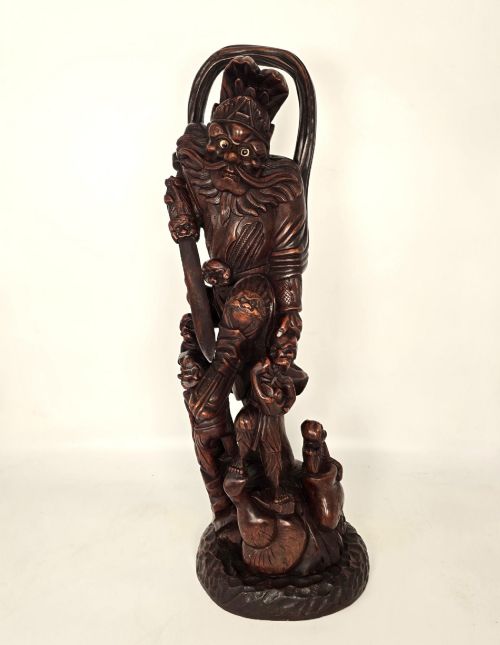
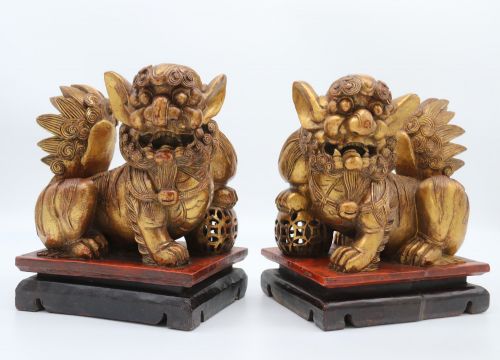
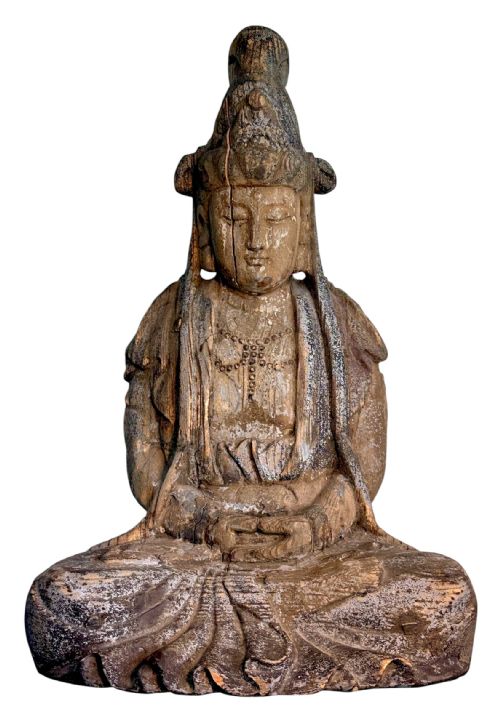
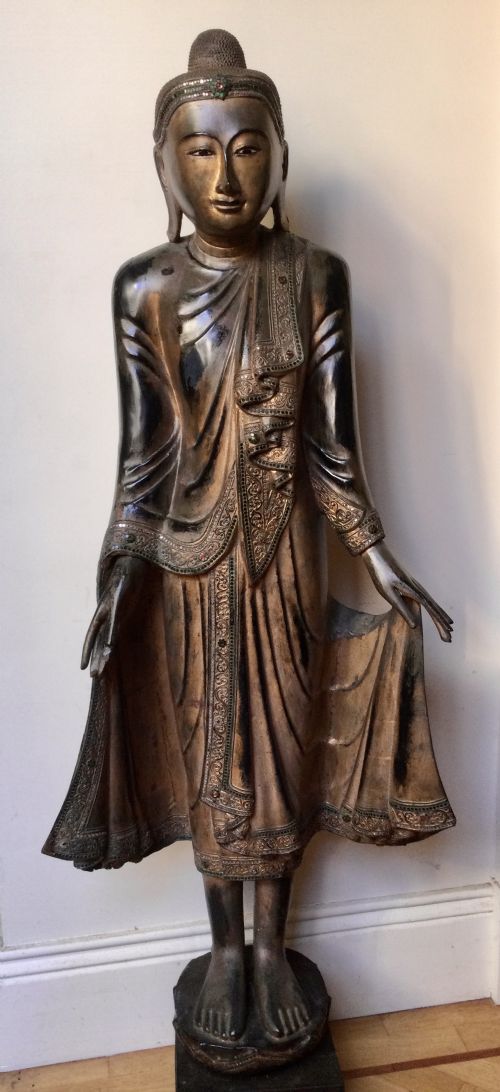
The versions you are most likely to meet on this page range from monumental Guardian Kings and serene Buddhas to pairs of temple lions and figures of Guanyin or Quan Yin. They appear in various sizes, utilising solid timber bodies designed to command space.
Makers shaped these forms to serve devotional or decorative functions within temples, domestic shrines and scholar spaces. Their survival across these centuries demonstrates both their cultural significance and the enduring appeal of traditional carving.
How they were made
Carvers shaped these sculptures from dense woods and hardwoods, utilising traditional hand tools to define drapery, facial expressions and anatomical details. The grain of the timber often dictates the flow of the carving, visible beneath subsequent surface treatments.
Artisans applied layers of lacquer, gold leaf, polychrome paint and glass inlay to enhance the visual weight and spiritual resonance of the figures. Gilt surfaces catch the light, while polychrome pigments highlight robes and ornamentation.
Construction techniques involved single-block carving or multi-piece joinery for larger statues, ensuring stability across centuries of environmental change. Surviving surfaces bear the marks of both original application and long-term handling.
Buddhist Wooden Figure Retail Price Guide 2026
Typical asking prices for buddhist wooden figure among the pieces listed under this phrase on Sellingantiques today, from the lower quarter to the upper quarter. They describe what is for sale here now, not the wider market.
Listings feature items from the eighteenth century, nineteenth century, Edwardian period and early twentieth century, spanning Chinese and Burmese traditions.
What varies in quality
The preservation of original surface finishes, such as gold leaf, lacquer and polychrome pigment, heavily influences the character of a piece. Traces of ancient gilding and paint reveal the original opulence intended for the temple or shrine.
Scale and ambition also separate standard domestic items from monumental works intended for major architectural settings. Larger guardian figures and detailed groupings require greater structural mastery from the workshop.
The Buddhist Wooden Figure Glossary
- Guanyin
- A bodhisattva associated with compassion, frequently rendered in Chinese wood sculpture holding attributes like a lotus or vial. These figures often display serene expressions and flowing robes.
- Lokapala
- A Guardian King stationed at the four cardinal directions to protect the realm, typically depicted in elaborate armour and dynamic poses. Their powerful stances differentiate them from seated Buddhas.
- Gilt wood
- Timber surfaces coated with a thin layer of gold leaf or gold powder applied over a prepared ground. This technique adds luminosity to the sculpture.
- Polychrome
- Painted in several colours, utilising pigments applied directly to the wood or over a gesso layer. This finish brings realism and decorative richness to statues.
- Lacquer
- A durable finish derived from tree sap, built up in multiple layers and sometimes carved or pigmented. It protects the underlying wood and provides a deep gloss.
- Glass inlay
- Small pieces of coloured or mirrored glass embedded into the wooden surface to represent jewels or decorative borders. This catches ambient light in dimly lit shrines.
Buddhist Wooden Figure: Frequently Asked Questions
What is a buddhist wooden figure?
It is a hand-carved sculpture depicting a Buddha, bodhisattva, guardian or immortal, created for devotional or decorative purposes.
These pieces utilise woods such as hardwood, finished with lacquer, gold leaf or paint, originating from traditions across China, Burma and Tibet.
How were these figures used?
They served as focal points for meditation, prayer and offerings within temples, monasteries and private domestic shrines.
Larger guardian statues were often placed near entrances to protect sacred spaces, while smaller figures sat on altars or scholar desks.
How do I live with one?
Place the sculpture away from direct sunlight, intense heat sources and rapid humidity shifts to protect the wood and surface finishes.
Allow the piece adequate space to breathe and display it on a stable surface where its carved details can be appreciated.
How can I tell periods apart?
Dating relies on stylistic markers, tool marks, the composition of the wood and the ageing patterns of lacquer or polychrome paint.
Eighteenth-century pieces often display deeper, more robust carving traditions, while Edwardian and early twentieth-century works reflect transitional export and regional styles.