


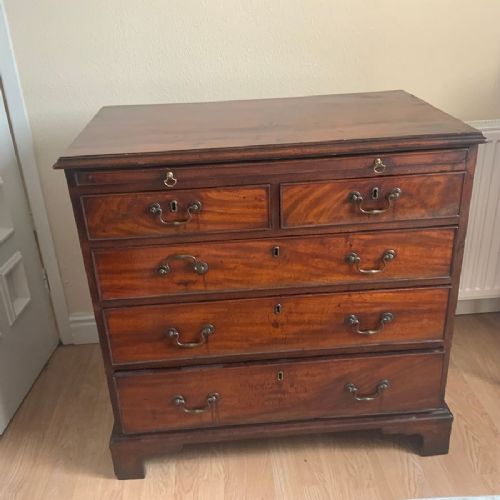

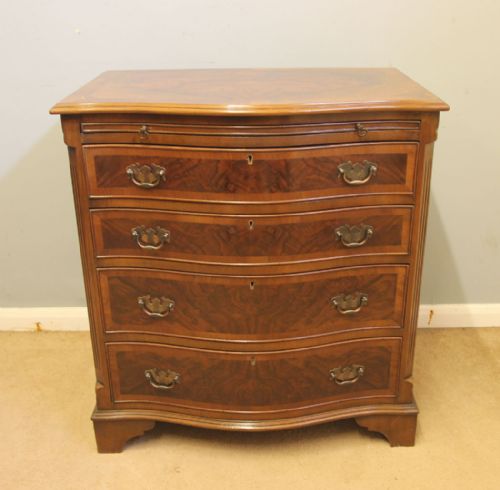


Brushing Slide Tallboy
A brushing slide tallboy provides a pull-out surface tucked into a tall stacked chest, offering hidden writing space in a compact footprint.
Brushing Slide Tallboy
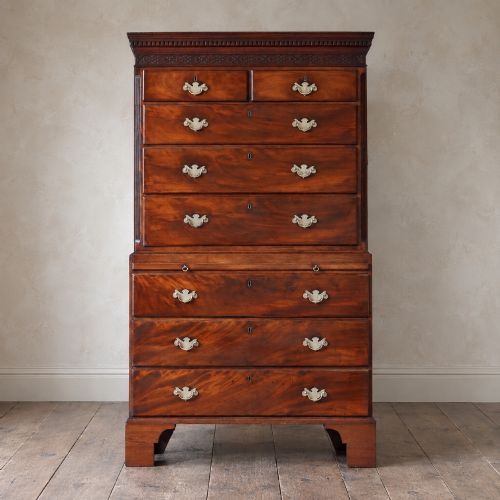
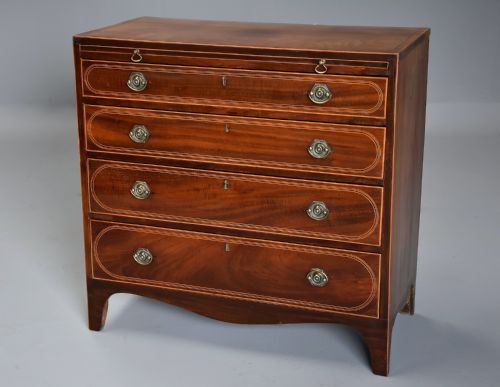
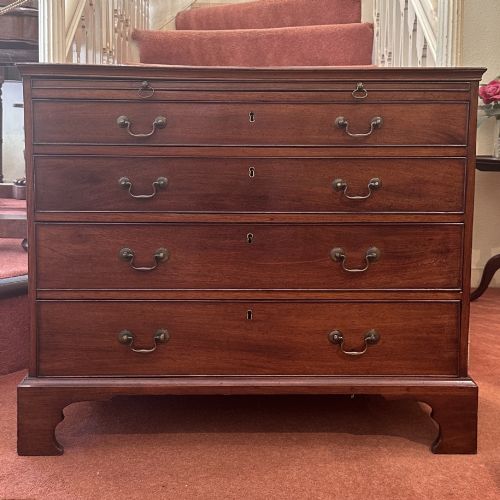
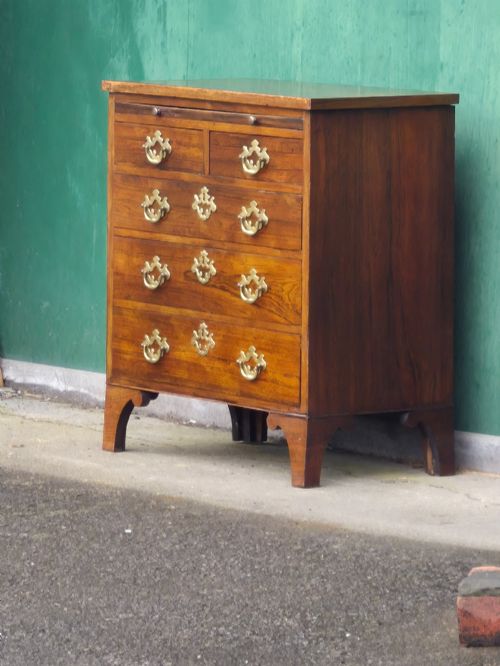
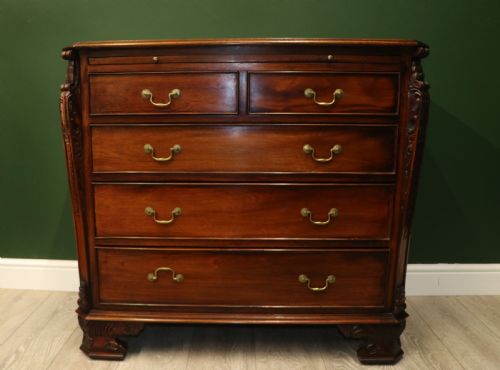
A brushing slide tallboy combines a chest on chest form with a pull-out shelf, often referred to as a bachelors chest or tallboy in the evidence. You will most frequently encounter Georgian examples built during the eighteenth century.
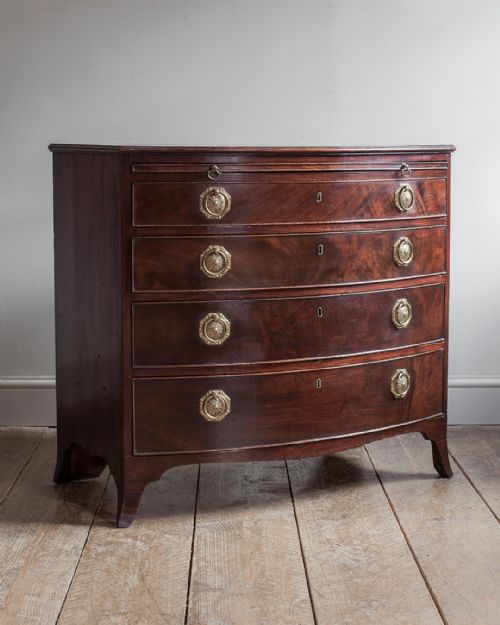
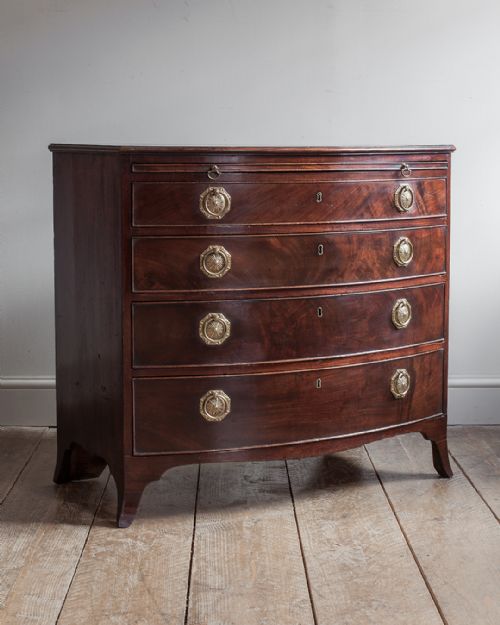
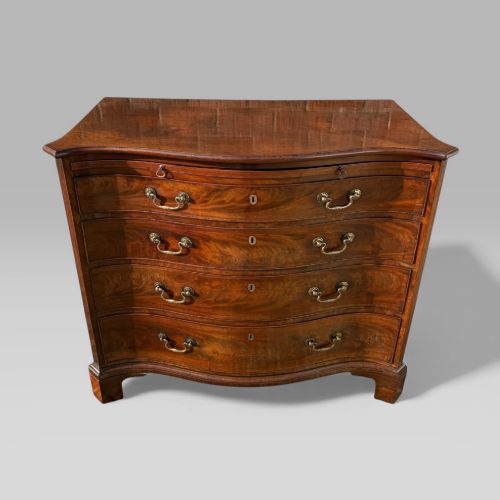
The layout typically positions the sliding shelf just below the top tier of drawers, creating a convenient ledge for writing or folding garments without cluttering the main surface.
Distinctions in quality
Superior examples display careful timber selection, matching grain patterns across successive drawer tiers and incorporating secondary woods like satinwood inlay. Finer pieces maintain crisp proportions, particularly on serpentine or bow front formats.
Construction integrity in the sliding mechanism and dovetail joints dictates the grade of the piece, separating standard workshop output from higher status commissions.
Secret drawers occasionally hide behind the main compartments, designed to guard personal correspondence and small valuables.
Druce & Co
The Brushing Slide Tallboy Glossary
- Brushing slide
- A pull-out wooden shelf integrated into the furniture frame, traditionally used for dusting clothes or writing.
- Tallboy
- A tall chest of drawers formed by stacking one cabinet directly on top of another, also known as a chest on chest.
- Caddy top
- A raised, moulded tabletop profile commonly found on mid-eighteenth century case furniture.
- Serpentine
- A gently undulating curved front shape that requires advanced woodworking skill to execute properly.
- Flame mahogany
- A distinct timber figure displaying fiery, branching patterns derived from branch forks.
Brushing Slide Tallboy: Frequently Asked Questions
What is a brushing slide used for?
The slide serves as a temporary horizontal shelf, historically used for brushing clothes or as a writing surface.
It tucks discreetly beneath the upper drawers when not in use, preserving the clean lines of the chest.
How do tallboys differ from standard chests?
Tallboys consist of two separate sections stacked vertically, creating a taller storage unit with a smaller floor footprint.
This double-carcass design makes them heavier and easier to move in two distinct parts.
Which woods are most common?
Mahogany and walnut dominate the surviving examples, often highlighted with figured veneers and subtle inlay.
Oak frequently appears internally for drawer linings and structural framing.
How to spot a Georgian period piece?
Look for hand-cut dovetails, timber shrinkage, and traditional brass hardware fixed with handmade pins.
Proportions and secondary timbers offer further clues to an eighteenth-century origin.