








Brown Woodland Oil Painting
A brown woodland oil painting brings the quiet depth of forest floors and leafy canopies straight into a room.
Brown Woodland Oil Painting
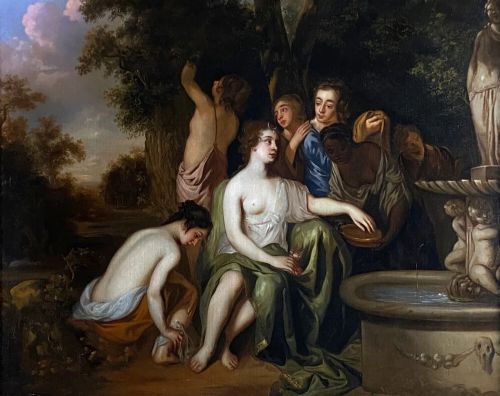
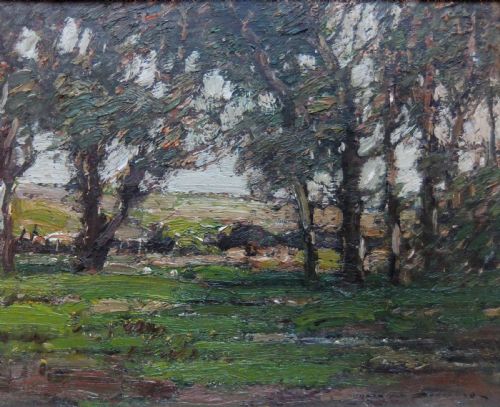
A brown woodland oil painting captures natural forest scenes through earthy pigments and layered brushwork. These works range from seventeenth-century classical compositions to Victorian naturalism and twentieth-century pastoral views.
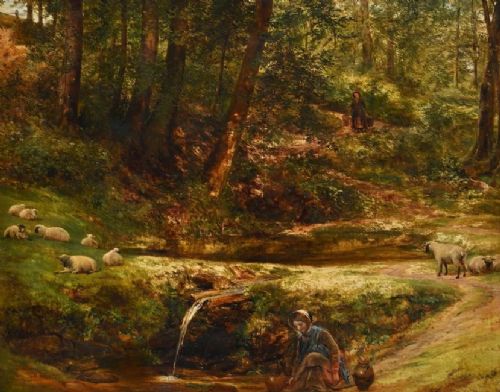
The selections span canvas and panel supports, often set within gilded wood frames that complement the deep umbers and greens of the forest floor. Common subjects include timber hauling, wooded paths, and quiet rivers beneath leafy boughs.
Buyers encounter Victorian landscapes alongside Edwardian regional views and mid-century pastoral scenes. Each piece records a distinct approach to capturing light filtering through ancient trees.
Materials and technique
Painters built these works using oil paint applied to prepared canvas or wood panels. The medium allowed artists to achieve rich tonal gradations, from deep shadow in the undergrowth to highlights on tree trunks.
Makers utilised traditional pigments to render the earthy palette characteristic of woodland scenes. Frames of gilded wood frequently completed the presentation, adding a warm metallic border to the dark canvas.
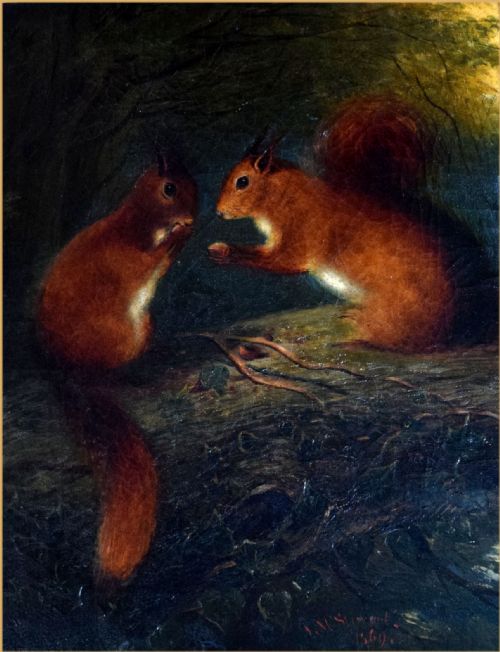
Several canvases manage to squeeze an impressive number of woolly sheep and red squirrels right into the middle of serious artistic forests.
What separates the finest works
Quality rests in the handling of light and the precision of the brushwork across the canopy and forest floor. Stronger pieces demonstrate a confident control of tone that creates genuine depth within the trees.
The integration of the subject with its frame further distinguishes the examples. Finer canvases retain their original structural tension and surface varnish without heavy restoration.
Sir Peter Lely·Richard Redgrave·William Mellor·John Wright Oakes·Abraham Hulk Jnr·Frederick Golden Short·Ernest Higgins Rigg·Herbert Royle·Lester Sutcliffe·Walter Emsley·Kershaw Schofield·James Malcolm Stewart
The Brown Woodland Oil Painting Glossary
- Oil on canvas
- A painting medium where pigment suspended in drying oil is applied to stretched woven fabric. This combination provides a flexible and durable surface that holds rich texture.
- Oil on panel
- A technique where the artist paints directly onto a prepared wooden board rather than fabric. Panels offer a rigid surface that often preserves fine brush detail exceptionally well.
- Gilded wood
- Timber coated with a thin layer of gold leaf or metallic powder, commonly used for traditional picture frames. It enhances the visual warmth of darker landscape compositions.
- Barbizon School
- A mid-nineteenth-century French art movement focused on tonal realism and direct observation of nature. Its ethos influenced landscape painters across Europe who sought naturalistic woodland subjects.
- Impressionist Realism
- An approach combining realistic draftsmanship with the loose brushwork and atmospheric light study of the impressionists. It appears in several regional British landscape works.
Brown Woodland Oil Painting: Frequently Asked Questions
How do I date a woodland oil painting?
Examine the canvas preparation, the style of the wooden stretcher, and the framing materials used by the maker. Stylistic markers such as Victorian naturalism or mid-century pastoral execution also provide clear chronological clues.
Signatures, artist registry records, and exhibition labels on the reverse often confirm the exact decade of creation.
Where should I hang a dark landscape?
These works suit rooms with controlled natural light where the rich umber tones can absorb and reflect subtle illumination. Placing them against neutral wall colours allows the deep forest palette to stand out.
Keep canvases away from direct sunlight and excessive moisture to protect the oil paint and the underlying support.
What is the difference between canvas and panel?
Canvas provides a woven texture that responds well to heavier impasto brushwork and expands slightly with humidity changes. Wood panels offer a completely rigid surface that prevents cracking in the paint layer over long periods.
Both supports were common across different periods, though panel works often point towards specific regional or cabinet-sized traditions.
How do I care for antique oil paint?
Dust the surface gently with a soft, dry brush and avoid using any liquid cleaners or chemical solvents on the pigment. Maintaining a stable indoor temperature prevents the canvas or panel from warping.
Professional conservators should handle any structural repairs or removal of aged surface varnish.