
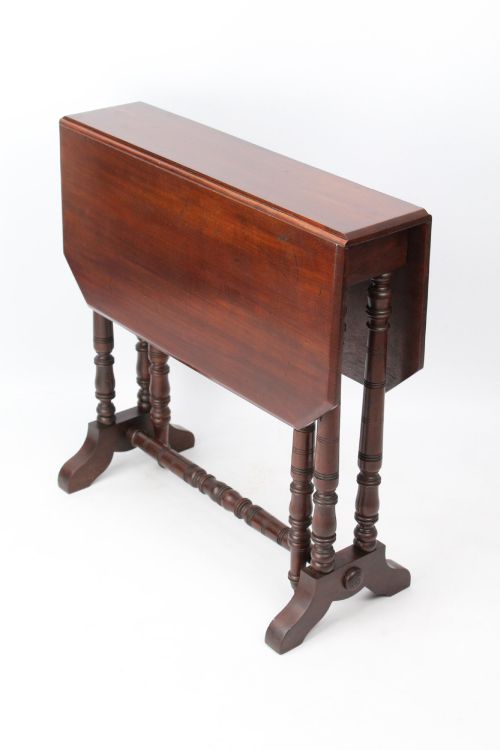


Brown Wooden Sutherland Table
A brown wooden sutherland table is a folding drop leaf table that saves space in any room, and these historic examples bring practical charm to daily living.
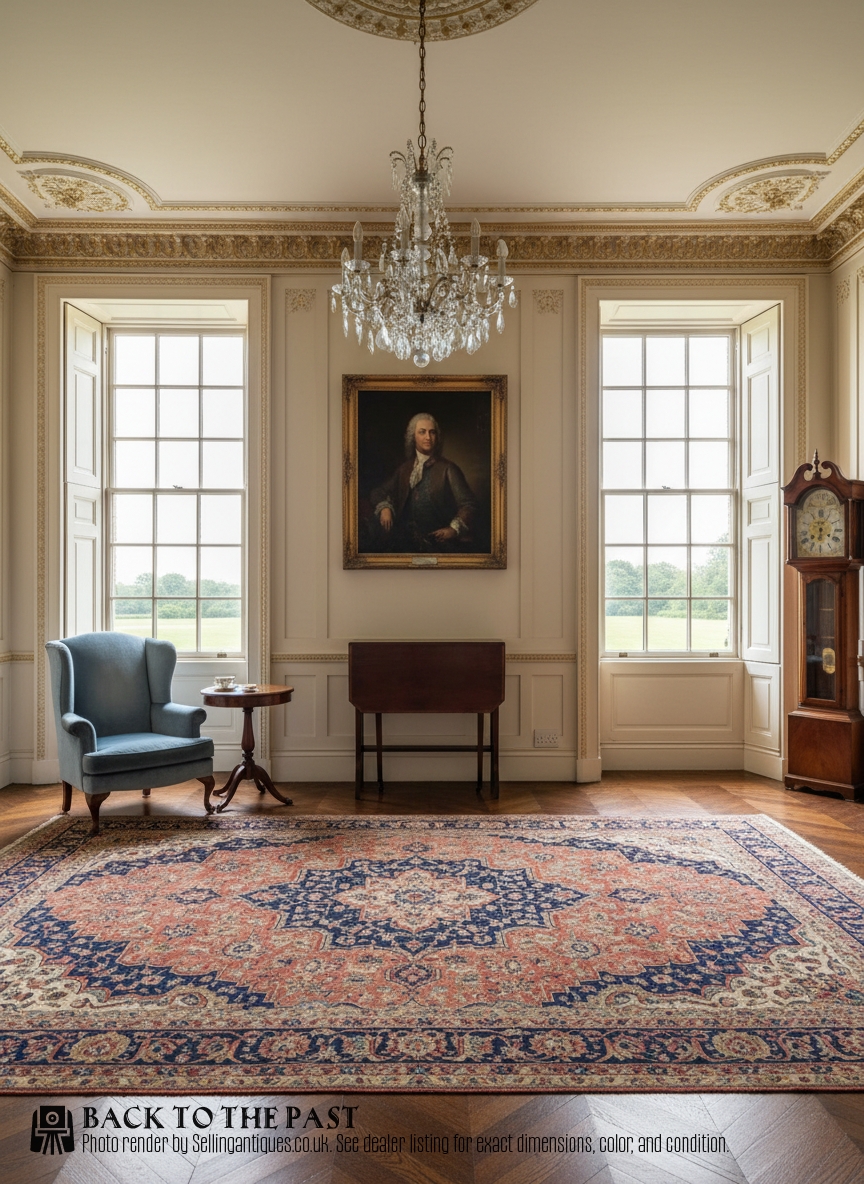
Brown Wooden Sutherland Table
When you search for a brown wooden sutherland table, you encounter compact drop leaf furniture designed to fold flat when not in use. These pieces function primarily as occasional, tea, side, or coffee tables within domestic interiors.
The selections span from the Victorian and Edwardian eras into the early twentieth century. Most examples you meet here are Edwardian or Victorian creations shaped from rich timber.
Makers constructed these tables with hinged flaps supported by pivoting gate legs, allowing the surface area to expand quickly. The evidence shows forms ranging from small baby sutherlands to double-flap tea tables.
Materials and construction
Cabinet makers utilised solid timbers and veneers, predominantly mahogany and walnut, alongside burr walnut for decorative grain patterns. Workshops incorporated contrasting woods such as boxwood and satinwood for delicate stringing and inlay work.
Structural stability relies on pivoting gate legs that swing outward to support the folding leaves. Brass hinges and fittings frequently secure the movable joints and support the folding mechanism.
The listings show mahogany and walnut as the primary woods, spanning Victorian, Edwardian, and Arts and Crafts periods.
Judging quality and craftsmanship
The division between standard pieces and finer examples rests on timber selection and decorative detail. Superior items display figured mahogany or burr walnut paired with crisp satinwood inlay and boxwood banding.
Engineering precision distinguishes better tables through the smooth operation of the gate leg action and the tight fit of the folding leaves when lowered. Subtle differences in proportion, from small tea tables to larger dining versions, reflect the care taken by the original workshop.
The Brown Wooden Sutherland Table Glossary
- Sutherland table
- A type of narrow drop leaf table with particularly slender gate legs supporting the flaps. It was designed to fold into a very small footprint against a wall.
- Drop leaf table
- A table with a fixed central section and hinged flaps that fold down at the sides. Raising the flaps and securing the legs expands the usable surface.
- Gate leg
- A leg hinged to swing outward like a gate to support a drop leaf table top. This pivoting design bears the weight of the extended flap.
- Inlay
- A decorative technique where contrasting materials are set into recesses flush with the wood surface. Edwardian makers often used boxwood and satinwood for this purpose.
- Stringing
- A narrow line of contrasting wood inlaid into the timber surface to create linear borders. It outlines panels on tabletops and legs.
Brown Wooden Sutherland Table: Frequently Asked Questions
How do you fold a sutherland table?
You lift each drop leaf upward and swing the pivoting gate leg outward from beneath the frame until it locks into a vertical position supporting the edge.
To close the table, you swing the gate leg back toward the centre and lower the leaf so it hangs vertically at the side.
What room works best for a sutherland table?
These tables suit sitting rooms and drawing rooms where floor space changes throughout the day. Their narrow profile when folded allows them to sit neatly against a wall as an occasional piece.
When guests arrive or tea is served, you simply raise the leaves to create a functional surface for cups or books.
How do I date a sutherland table?
You look at the timber choice, decorative vocabulary, and overall proportions recorded in the piece. Victorian examples often feature solid walnut or mahogany with simpler lines.
Edwardian interpretations frequently incorporate satinwood inlay, boxwood stringing, and lighter wood tones associated with the revival styles of that period.
Are sutherland tables sturdy enough for daily use?
The structural stability depends on the integrity of the pivoting gate leg hinges and the central frame joints. Properly constructed examples distribute weight effectively across the extended legs when the leaves are raised.
Care should be taken not to place excessive heavy weight on the outer edges of the folding leaves.