
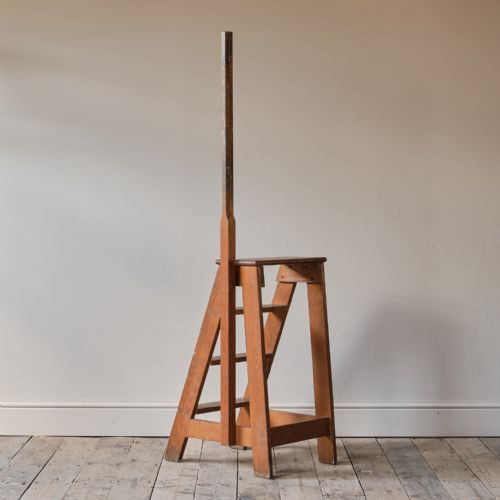
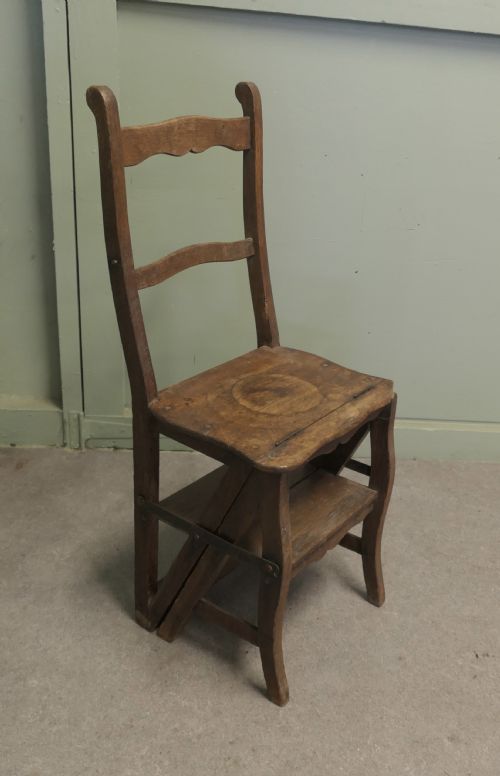


Brown Wooden Library Ladder
Brown wooden library ladder pieces bring functional architectural climbing aids into domestic rooms, offering both utility and traditional character.
Brown Wooden Library Ladder
A brown wooden library ladder provides access to high bookshelves and tall volumes while adding period character to a room. These pieces range from simple utilitarian steps to clever metamorphic furniture.
The selections available here span the nineteenth and early twentieth centuries, encompassing Georgian, Victorian, and Edwardian eras. Forms vary from folding steps and library chairs to spiral steps and shop ladders.
Oak and mahogany predominate among the woods, often joined by pine and fruitwood alongside iron and brass hardware. Pieces appear in distinct styles including Gothic Revival, French Country, and Regency.
Materials and Construction
Cabinet makers utilised dense hardwoods like oak, mahogany, and fruitwood to build sturdy frames capable of supporting weight. Pine served for more rustic or utilitarian workshop and shop examples.
Metal fittings in iron and brass provided hinges, folding mechanisms, and structural reinforcement for metamorphic and folding designs. Leather inserts occasionally topped individual treads for grip and refined appearance.
Periods represented span the Georgian, Victorian, Edwardian, and early twentieth-century eras.
Assessing Quality and Design
Quality rests in the precision of the joinery and the ingenuity of folding or metamorphic mechanisms. Superior examples combine mechanical reliability with refined timber selection and decorative detailing.
The integrity of the original hardware and the preservation of the timber surface determine the distinction between standard utilitarian items and finer cabinet-made examples.
The Brown Wooden Library Ladder Glossary
- Metamorphic furniture
- Pieces designed to transform from one form of furniture into another, such as a chair converting into a set of steps. This dual purpose appealed to Georgian and Victorian interior planning.
- Tread
- The horizontal surface of a step upon which a foot is placed. These can occasionally feature leather inserts.
- Gothic Revival
- An architectural and decorative style drawing inspiration from medieval design. It frequently incorporates pointed arches and heavy timber construction.
- Folding steps
- Portable sets of stairs hinged to collapse for compact storage when not in use. They balance vertical reach with floor space economy.
Brown Wooden Library Ladder: Frequently Asked Questions
How do metamorphic library steps work?
Metamorphic pieces utilise hidden hinges and pivoting joints to shift configuration between an armchair or stool and a flight of steps. The transition relies on balanced weight distribution and precise carpentry.
Owners can convert the furniture swiftly depending on whether seating or upper shelf access is required. This clever engineering defines much of the ingenuity found in period library furniture.
What woods were commonly used?
Cabinet makers predominantly relied on sturdy hardwoods like oak and mahogany for formal library settings. Softer woods such as pine and fruitwood appeared in more rustic, regional, or utilitarian contexts.
Metal components in brass and iron supplemented the wooden structures to provide functional support for hinges and folding actions.
How do I date a wooden ladder?
Dating relies on observing construction techniques, wood species, and stylistic indicators such as Gothic Revival or Regency motifs. Nineteenth-century pieces often display hand-cut joinery details and specific hardware fixings characteristic of their era.
Comparing the proportion and finish with documented period examples helps narrow down the decade of manufacture.
Can these ladders still be used daily?
Many sturdy wooden examples remain entirely functional for reaching high shelves in homes and libraries. Assessing the stability of the joints and hinges ensures safe operation before climbing.
Careful placement on even flooring protects the antique timber and maintains the stability of folding or upright frames.