


Vintage Library Stairs
Vintage library stairs offer functional elevation with period timber presence, built to reach high shelves in private rooms and substantial collections.
Vintage Library Stairs
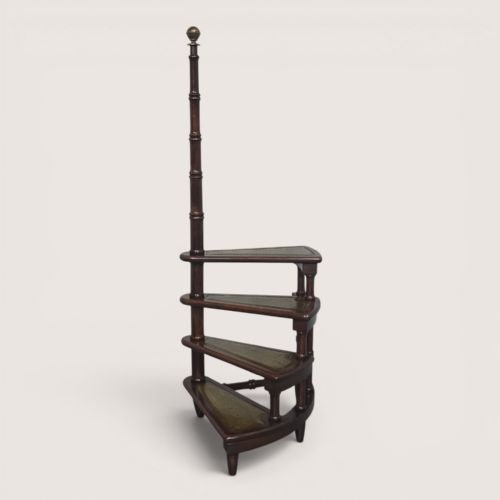
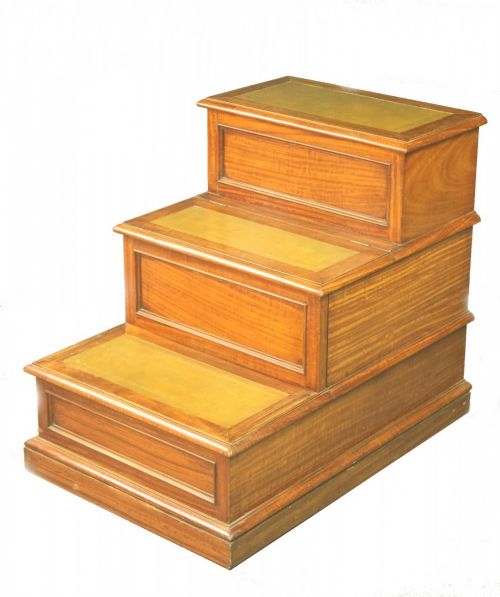
Vintage library stairs bring traditional vertical access into domestic spaces, appearing across periods from Victorian examples to pieces dated from the 1920s and 1930s. The selection spans standard library steps, tall library ladders, bed steps, and spiral library steps with turned supports.
Buyers most frequently encounter mahogany and oak constructions, sometimes detailed with leather-topped treads or satinwood. These forms range from flight configurations to compact spiral designs intended for domestic libraries and study rooms.
How they were made
Craftsmen built these steps primarily using solid mahogany, oak, and satinwood timbers, often incorporating brass hardware and leather inserts on the treads. Joinery techniques varied between traditional flight structures and spiral arrangements supported by turned timber uprights.
Makers integrated practical elements such as contrasting hide treads to cushion footing and protect the underlying wood during frequent use.
Recorded object forms include conventional flight steps, bed steps, tall ladders, and spiral stairs with turned supports.
What varies in quality
Quality rests in the choice of timber and the complexity of the form, distinguishing simple utility ladders from sophisticated spiral configurations with leather-topped treads. Mahogany and satinwood examples often show finer cabinet-making standards than utilitarian oak alternatives.
The sophistication of the turning on supports and the precise integration of leather treads demonstrate the maker's hand, separating standard domestic items from more substantial pieces designed for serious collections.
The Vintage Library Stairs Glossary
- Library Steps
- A set of portable wooden stairs designed to reach high bookshelves. These items range from simple flights to complex folding and spiral arrangements.
- Bed Steps
- Small multi-tiered wooden steps historically placed beside high beds. They share construction methods with library stairs and often feature leather inserts.
- Tread
- The horizontal flat surface of a step where one places a foot. In these pieces, treads are frequently inset with coloured leather for grip and decoration.
- Satinwood
- A pale, hard timber utilised for decorative furniture and fine stairs. It provides a distinct golden contrast to darker woods like mahogany.
Vintage Library Stairs: Frequently Asked Questions
What is the difference between library steps and library ladders?
Library steps utilise a self-supporting flight with rigid treads and handrails or side supports for stable ascent.
Library ladders provide a vertical or angled climbing frame that leans against shelving units to reach elevated heights.
Why do some treads have leather tops?
Leather-topped treads provided a softer, non-slip surface for footing while protecting the underlying hardwood from scuffs during frequent climbs.
This material choice also added a refined decorative finish that matched the desk accessories and book bindings found in traditional rooms.
How do I date a set of library stairs?
Dating relies on identifying the prevailing timber choices, construction techniques, and stylistic markers associated with periods like the Victorian era or the 1920s and 1930s.
Heavier proportions often point to 19th-century work, while later pieces sometimes incorporate lighter woods and alternative turning styles.
Can these stairs still be used practically?
Most sturdy vintage stairs remain completely functional for reaching upper shelves when placed on a level surface.
Delicate or spiral formats require careful consideration of weight distribution and balance during use.