
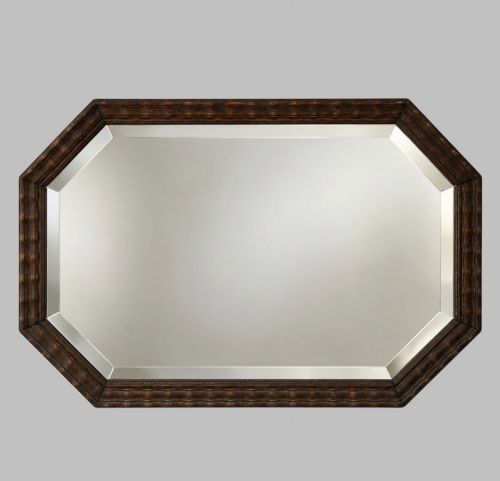
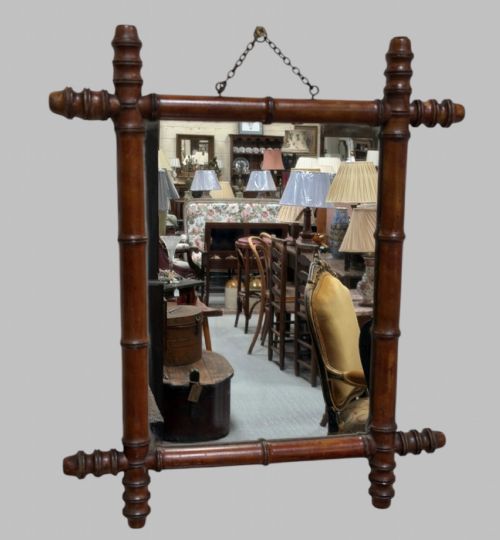
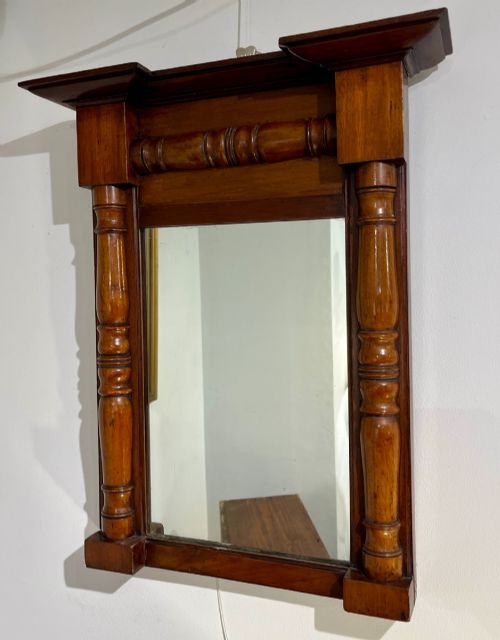
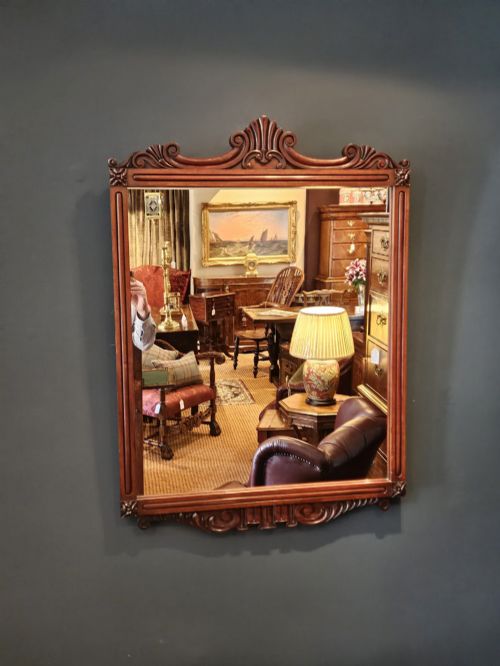


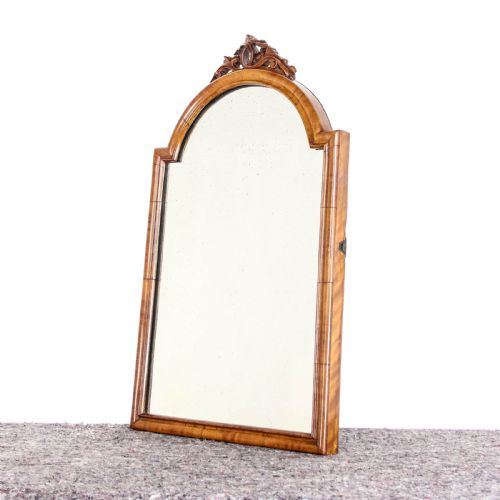

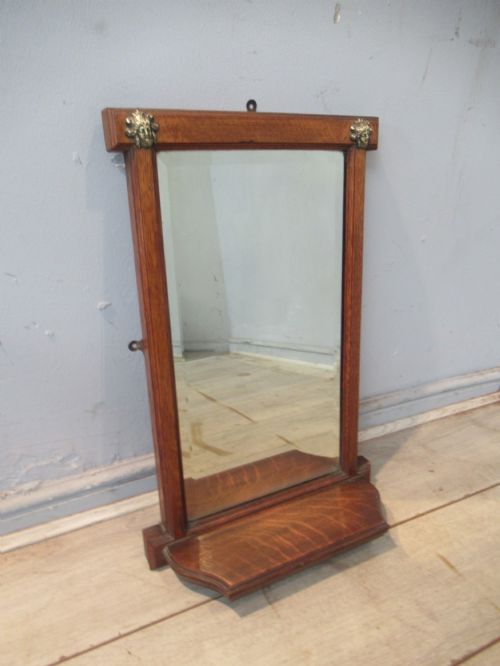
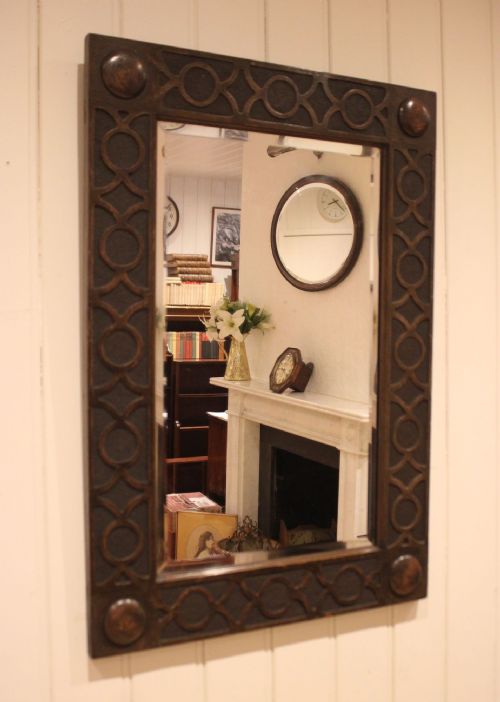


Brown Wooden Hanging Mirror
A brown wooden hanging mirror brings warmth and depth to a hallway or room, offering simple reflection set in timber.
Brown Wooden Hanging Mirror
A brown wooden hanging mirror is a functional piece for domestic spaces, designed to hang on a wall and constructed primarily from timber such as oak, mahogany, walnut or rosewood. When you search for a brown wooden hanging mirror, you encounter pieces spanning from the seventeenth century through the Victorian and Edwardian eras up to Art Deco designs.
The most common forms on this page include wall mirrors, pier mirrors and specific hanging designs equipped with shelves or hooks for cloakrooms and bathrooms. These items range from plain oak frames to inlaid mahogany and figured burr walnut constructions.
How they were made
Frames are constructed from solid and veneered timbers including walnut, mahogany and oak, frequently utilising glass plates with bevelled edges or original mercury plates. Joinery techniques vary from simple mitred corners to intricate fretwork and carved mouldings.
Specialist treatments involve oyster veneering, faux bamboo shaping, and the incorporation of brass details or giltwood highlights to enhance the wooden structure.
Several mirrors imitate bamboo using carved wood, bringing botanical whimsy to Victorian hallways.
What varies in quality
The grade of timber and the choice of veneer dictate the initial visual impact, with figured burr walnut and rich mahogany sitting at the higher end of the scale. Fretwork precision and the clarity of the mirror glass or survival of original mercury plates further distinguish finer examples.
Construction methods such as hand-cut dovetails, refined carving, and the integrity of the original backing boards indicate superior craftsmanship compared to plain or heavily restored utilitarian pieces.
Waring and Gillow
The Brown Wooden Hanging Mirror Glossary
- Pier mirror
- A tall mirror designed to hang on the wall between windows, often positioned above a pier table. These pieces frequently feature carved wooden frames and lower brackets.
- Fretwork
- Thin wood cut into decorative patterns using a fretsaw, commonly seen on eighteenth-century and Edwardian mirror frames. This technique creates intricate openwork designs.
- Oyster veneer
- Slices cut transversely from small branches to produce circular grain patterns, popular during the seventeenth century. The resulting pieces resemble oyster shells arranged across the surface.
- Mercury plate
- An older type of mirror glass backed with a tin-mercury amalgam, producing a slightly dappled reflection. This historical glazing method appears on earlier mirrors.
- Burr walnut
- Timber taken from a tree growth featuring swirling, knotty grain patterns that create decorative surfaces. Cabinet makers prized this wood for high-status frames.
Brown Wooden Hanging Mirror: Frequently Asked Questions
How do I hang a heavy wooden mirror safely?
Ensure you locate a wall stud or use appropriate heavy-duty wall anchors rated for the weight of the timber frame. Heavy mirrors require robust fixings attached securely to the hanging points on the reverse.
Check that the wire, chain or brackets on the back of the frame are structurally sound before hanging the piece at eye level.
What rooms suit a wooden hanging mirror best?
Hallways, bathrooms and cloakrooms benefit greatly from these mirrors, especially variants that incorporate shelves or key hooks. They provide a practical surface for daily routines while warming up smaller spaces.
Living rooms and bedrooms often feature larger overmantel or pier mirrors to reflect light and add architectural interest to plain walls.
How can I tell an Edwardian mirror from a Victorian one?
Victorian mirrors often display heavier, darker timber frames with robust carving, horseshoe shapes or ornate mahogany construction. Edwardian examples tend to show lighter oak or inlaid mahogany with simpler geometric or neoclassical lines.
Examining the backboards, fixings and glass bevelling can also help narrow down the period of manufacture.
Should I clean the wooden frame with polish?
Apply wax rather than modern liquid polishes to feed the dry timber and maintain the patina developed over the centuries. Buff gently with a soft cloth to remove dust without stripping the finish.
Keep moisture away from the mirror plate edges to prevent moisture from seeping behind the glass and damaging the backing.