
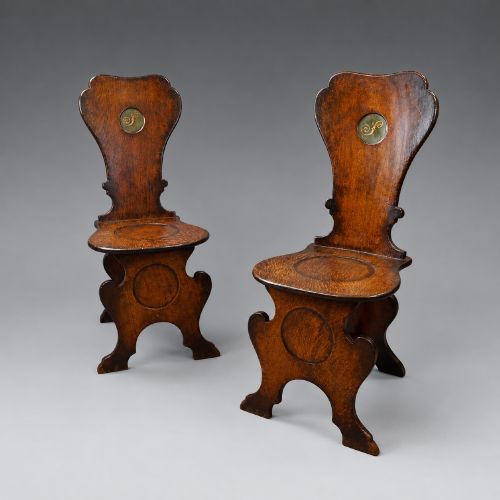
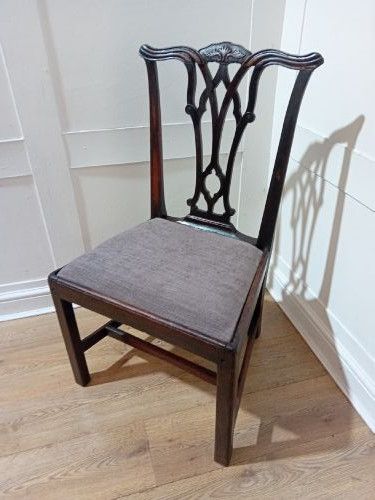
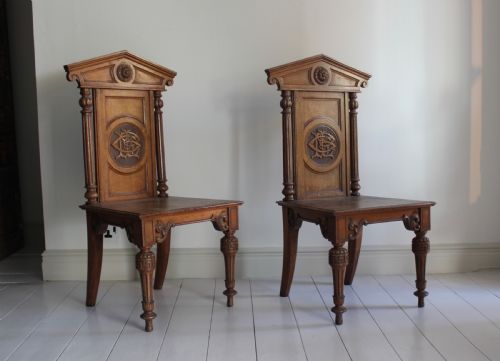

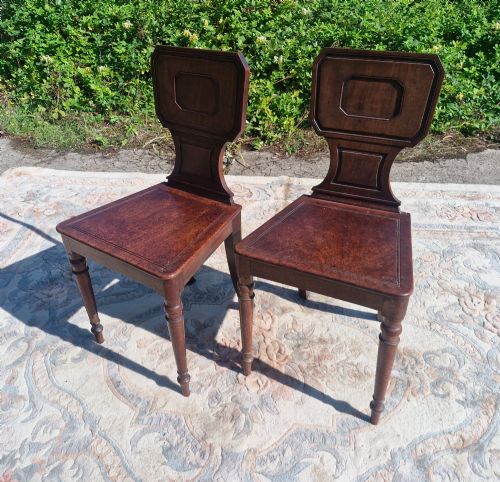
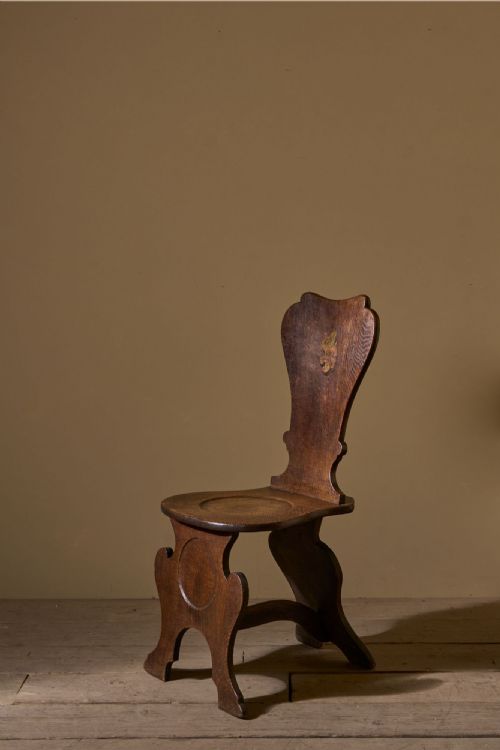
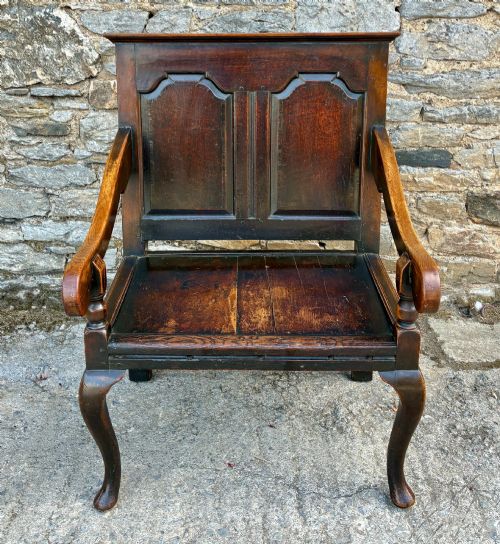
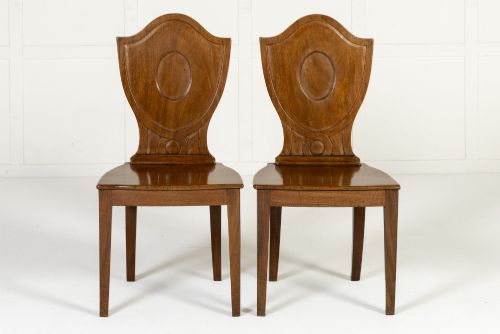
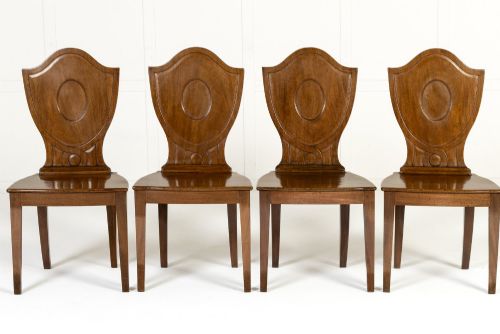
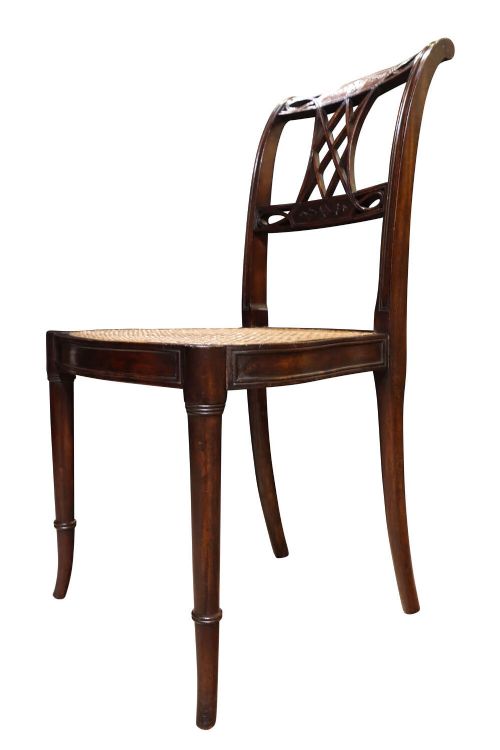
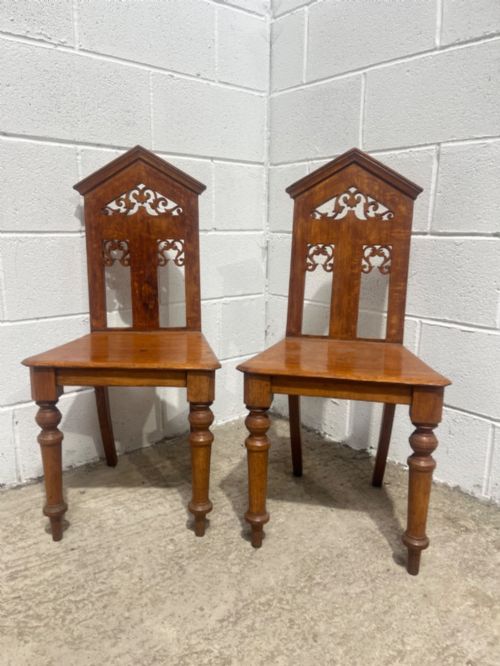
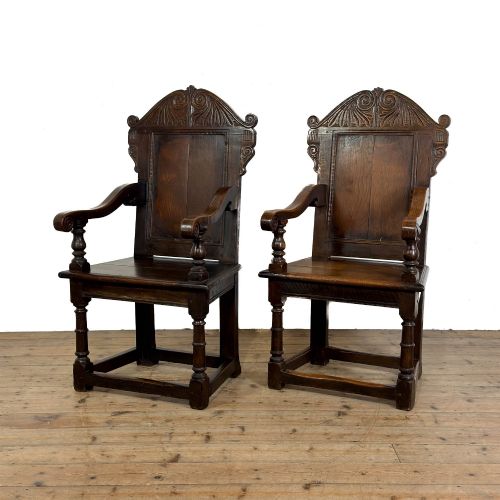
Brown Wooden Hall Chairs
Brown wooden hall chairs are sturdy timber seats designed for corridors and entranceways, offering both practical utility and striking period character.
What Brown Wooden Hall Chairs Are
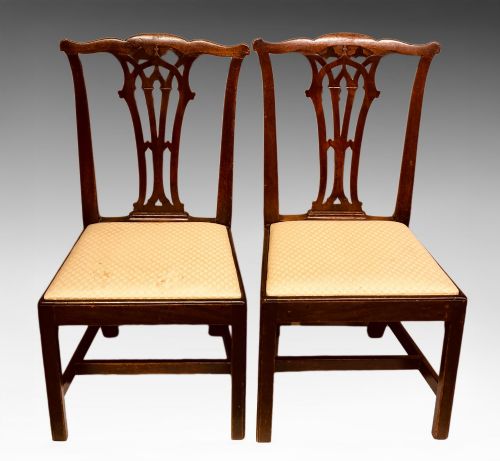
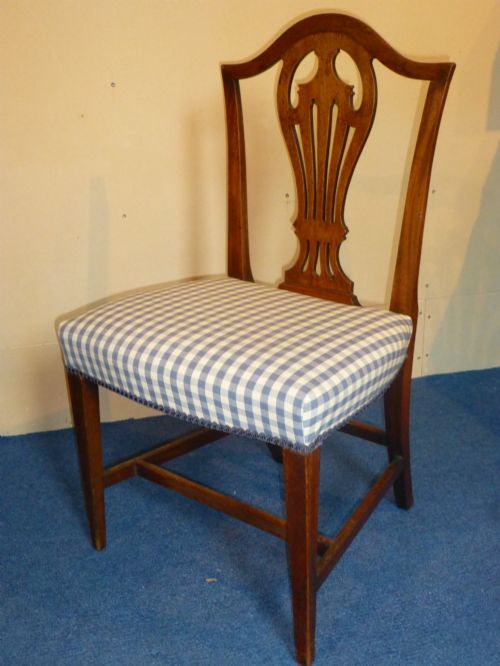
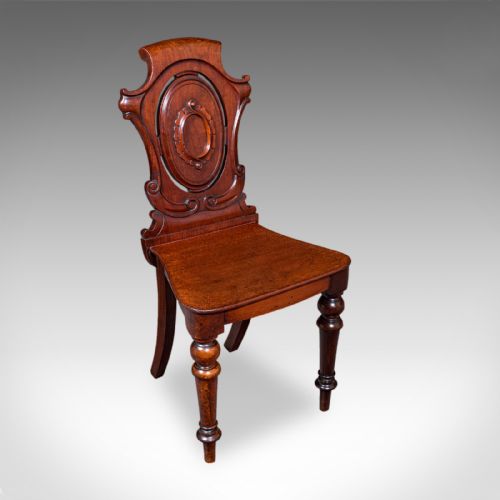
Brown wooden hall chairs are robust seating options traditionally placed in entrance halls and corridors, appearing here in forms from the Victorian, Edwardian, and nineteenth-century periods. These items typically function as side chairs or specialised hall chairs designed for occasional use rather than prolonged lounging.
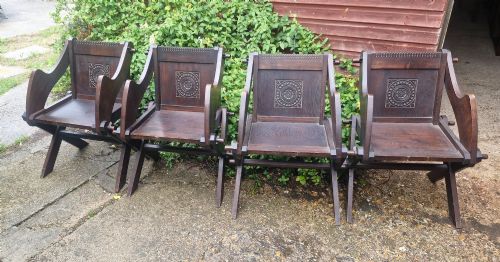
The selections available on this page include examples spanning the nineteenth century through the early twentieth century. Buyers encounter distinct styles such as Gothic Revival and English Country Vernacular alongside standard Victorian pieces.
Makers utilised various traditional timbers to construct these items, resulting in distinct regional and period characteristics. The forms range from simple rush-seated country models to heavily ornamented church chairs.
How They Were Made
Cabinet makers constructed these brown wooden hall chairs using solid timbers such as oak, mahogany, elm, and pitch pine. These dense materials provided the necessary structural integrity for furniture subjected to heavy daily use in busy entranceways.
Construction techniques varied according to the specific regional style and period, incorporating turned wooden elements, carved details, and rush seating woven directly onto frames. Metal components like brass sometimes appeared as functional or decorative fixtures.
Retail Price Guide 2026
Typical UK retail prices for brown wooden hall chairs, calculated from the Sellingantiques database of over a million retail prices indexed since 2003. This retail price guide relies exclusively on Sellingantiques data; no external sources or auction records are used, so the figures do not describe the wider market.
Listings feature items from the Victorian, Edwardian, and nineteenth-century periods constructed in oak, mahogany, elm, and pitch pine.
What Varies in Quality
The standard of a brown wooden hall chair rests upon the selection of timber and the ambition of its carving. Dense hardwoods like mahogany and figured oak display superior grain patterns compared to utilitarian softer woods.
Execution of period details, such as Gothic Revival tracery or the tightness of a rush seat, dictates the distinction between standard utility furniture and high-status decorative seating.
The Brown Wooden Hall Chairs Glossary
- Hall Chair
- A rigid wooden seat traditionally positioned in an entranceway for visitors waiting briefly, usually featuring a solid wooden back and no arms. These chairs often displayed family crests or decorative carving.
- Gothic Revival
- An architectural and design movement drawing inspiration from medieval forms, characterised by pointed arches, trefoils, and heavy carved ornamentation. This style dominated much of nineteenth-century church and domestic furniture production.
- English Country Vernacular
- A style of domestic furniture made by regional tradesmen using local materials like elm and rush without adherence to high-style metropolitan fashions. These pieces emphasise functional construction and straightforward utility.
- Rush Seating
- A traditional method of weaving dried marsh rushes tightly around a wooden seat frame to create a durable, textured surface. This technique frequently appears on vernacular chairs.
Frequently Asked Questions
Where were hall chairs placed?
These chairs stood in entrance halls, corridors, and vestibules of period homes to accommodate visitors waiting briefly.
Their upright proportions ensured they occupied minimal floor space while making a formal statement upon entry.
Are these chairs comfortable for daily use?
Historical hall chairs were designed primarily for upright posture and brief seating rather than long hours of relaxation.
Most feature solid wooden seats or taut rush weaves without upholstery.
How do I identify Gothic Revival chairs?
Gothic Revival pieces display architectural motifs such as pointed arches, quatrefoils, and heavy linear framing borrowed from medieval buildings.
These elements appear carved directly into the wooden backs of the seats.
What woods were commonly used?
Cabinet makers utilised domestic and imported hardwoods and softwoods depending on the desired finish and regional traditions.
Oak, mahogany, elm, and pitch pine appear regularly across these listings.