



Brown Wooden File Drawers
Brown wooden file drawers organise correspondence and paperwork with practical utility, bringing rich timber grains and period craftsmanship straight into modern workspaces.
Brown Wooden File Drawers
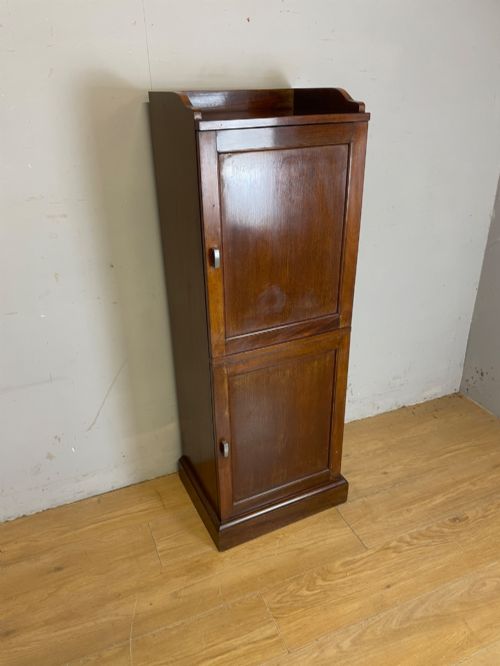
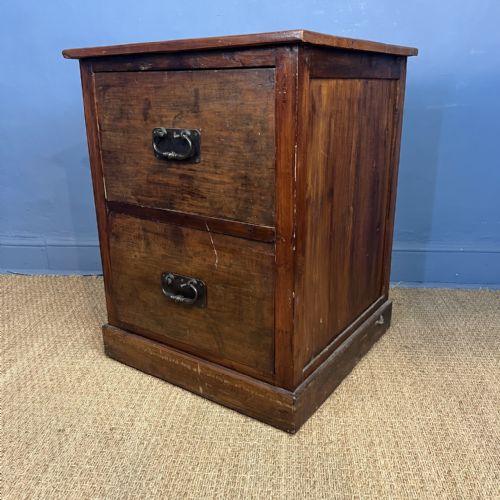
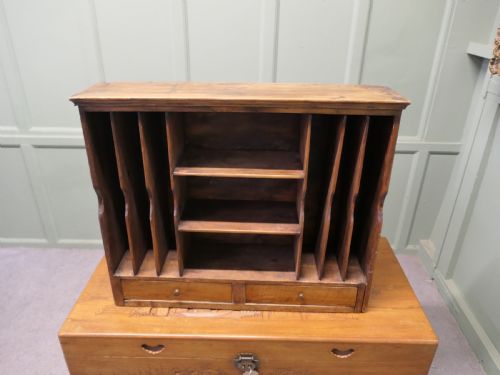
Brown wooden file drawers encompass a variety of organisational forms, ranging from compact desktop desk organisers and music cabinets to tall banks of drawers and office filing cabinets. These pieces serve the practical purpose of sorting documents, letters and card indexes while displaying the warmth of traditional timber.
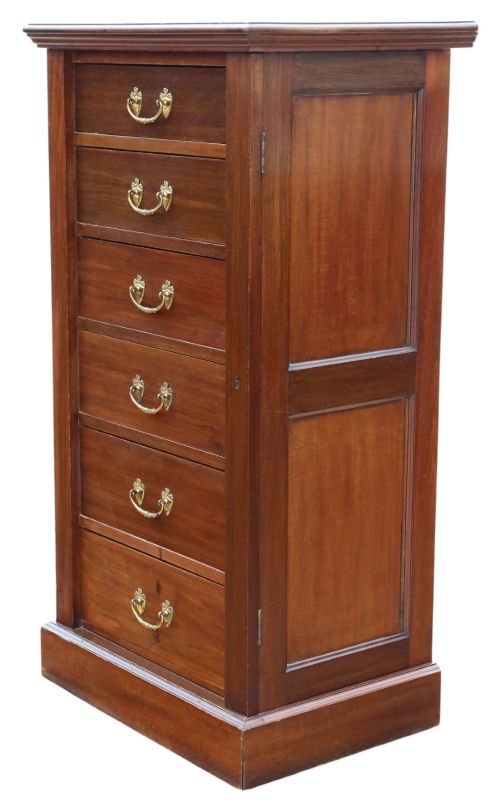
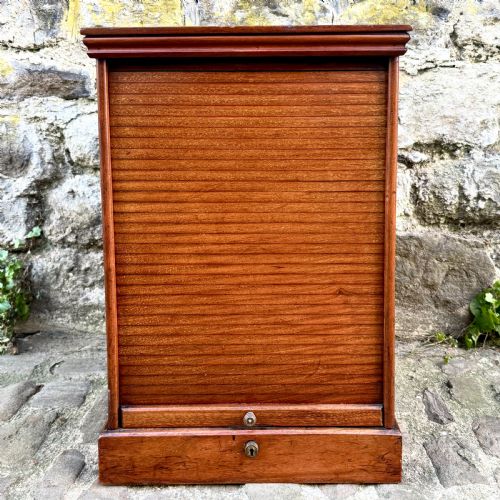
The selections span multiple periods, including Victorian, Edwardian, Arts and Crafts, and Art Deco eras, alongside industrial utility and French country styles. Common formats on this page include mahogany Wellington chests, oak tambour front units, and pine collectors cabinets.
Materials extend across mahogany, oak, walnut, pine, teak, and rosewood, frequently paired with brass hardware and inlay work. Such variety reflects the utilitarian and commercial demands of offices, libraries and workshops from the nineteenth century into the nineteen-thirties.
Materials and Construction Techniques
Construction relies on solid hardwoods and softwoods such as mahogany, oak, walnut and pine, sometimes enhanced by inlay wood and brass handles. Makers utilised these durable timbers to withstand daily commercial and domestic retrieval of files.
Specialised mechanisms define these items, including tambour fronts, patent letter file systems, and graduated drawer configurations. Joinery methods suit the heavy loads of paper archives, prioritising structural resilience in office environments.
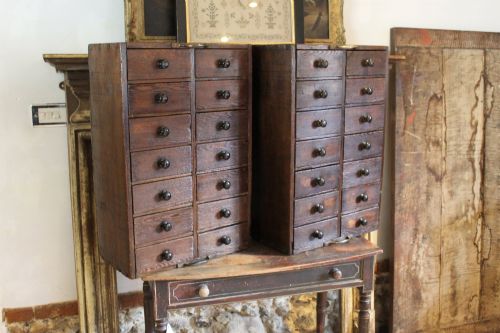
Some cabinets feature up to sixty-six tiny drawers designed to hold everything from library index cards to watchmaker components.
Evaluating Quality and Craftsmanship
Superior examples exhibit refined timber selection, such as figured mahogany, rich walnut or polished oak, combined with intact period brass handles and smooth mechanical actions like working tambour doors or patent filing mechanisms. Lesser pieces display simpler secondary timbers or plain pine without sophisticated joinery details.
The distinction between standard office utility items and top-tier pieces lies in the subtlety of the design, such as Edwardian inlay work or specific maker attribution. Original surface patination and integrity of internal dividers elevate an ordinary filing unit to a distinguished collector piece.
D Napier And Sons·Amberg·Shannon
The Brown Wooden File Drawers Glossary
- Wellington Chest
- A tall, narrow chest of drawers secured by a hinged locking side bar that fastens over the drawer edges. This form originates from the nineteenth century and often houses multiple shallow drawers.
- Tambour Front
- A flexible shutter door constructed from narrow vertical strips of wood glued to a canvas backing, sliding smoothly in a track. This mechanism conceals office filing drawers when closed.
- Bank of Drawers
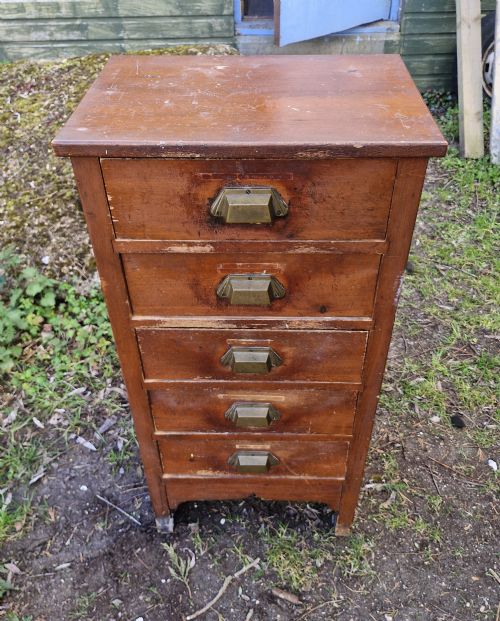
- A multi-drawer cabinetry unit designed for industrial, shop or office storage, holding large quantities of documents or small items. These structures range from compact desktop sets to towering workshop banks.
- Card Filing Set
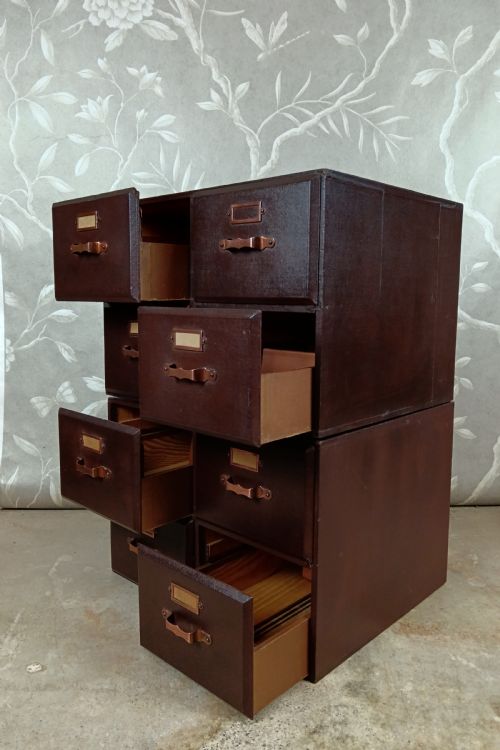
- A specialised cabinet housing index cards or library references in small, uniform compartments. These pieces reflect early twentieth-century administrative organisation.
- Campaign Chest
- A modular chest built in sections with recessed brass handles and corner brackets, designed for easy transport by travellers. Examples in pitch pine or mahogany serve domestic and commercial storage.
Brown Wooden File Drawers: Frequently Asked Questions
What are brown wooden file drawers?
Brown wooden file drawers are period storage units built from timbers like mahogany, oak and walnut to sort correspondence, cards and documents.
They appear in forms ranging from desktop organisers and music cabinets to tall filing cabinets and banks of drawers.
How do I date these file drawers?
Dating relies on timber choices, hardware styles and construction techniques characteristic of periods from the Victorian era through the nineteen-thirties.
Details such as brass handles of the period, patent mechanisms and Edwardian inlay offer clear chronological markers.
How were these cabinets used originally?
These cabinets served offices, libraries, shops and architectural studios to maintain orderly archives of letters, music sheets and index cards.
Specialist systems like tambour doors and card index trays kept working documents secure and accessible.
How do I incorporate them into a modern interior?
These pieces provide functional surface space and enclosed storage for home offices, studies or living areas.
Their rich timber tones and brass hardware complement both traditional workspaces and contemporary minimalist rooms.