
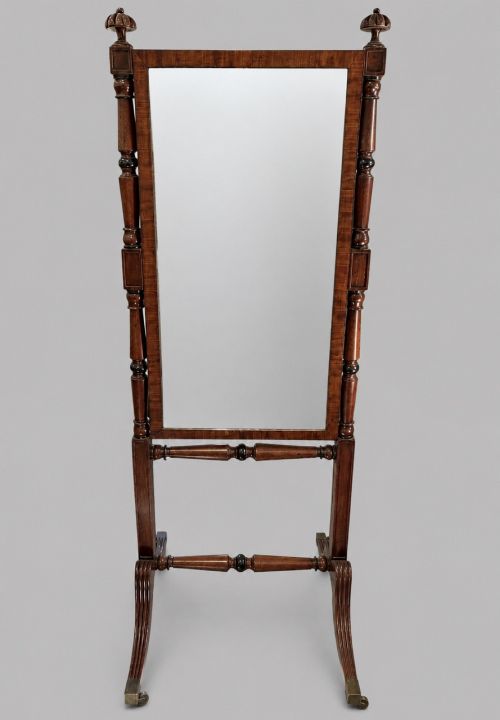
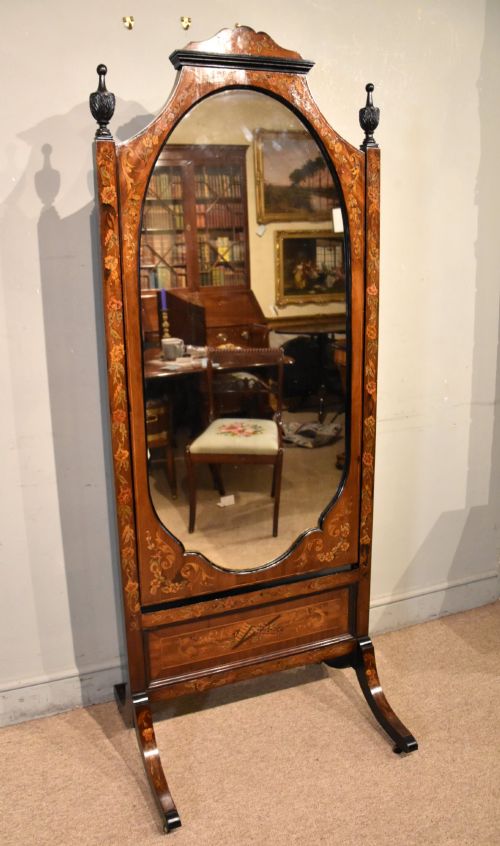
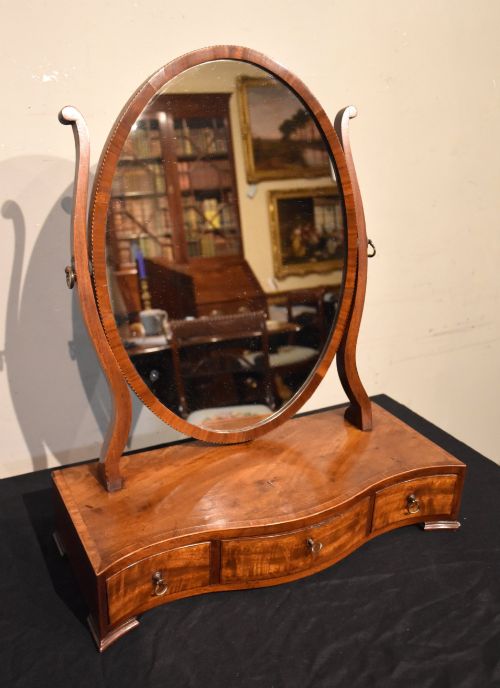
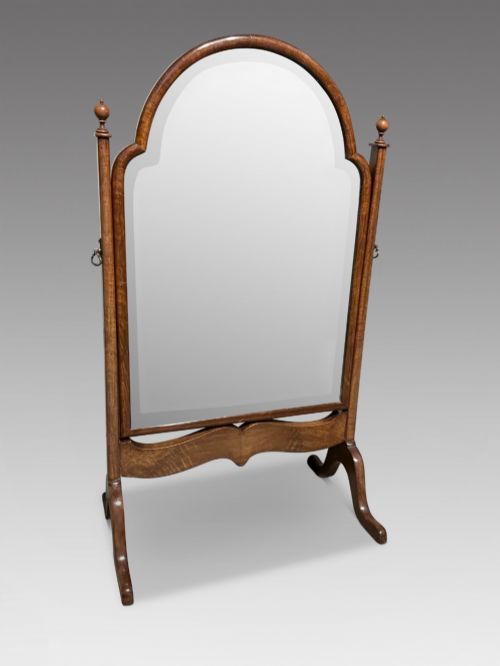
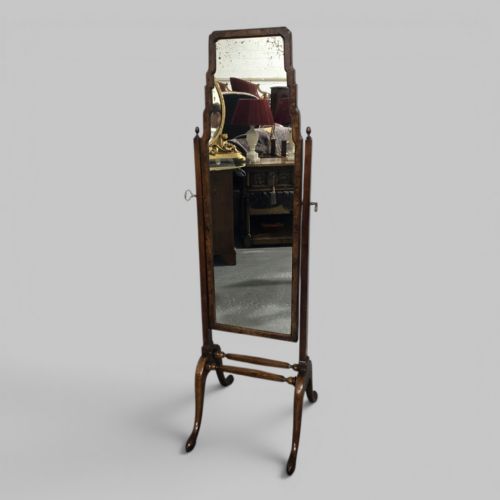
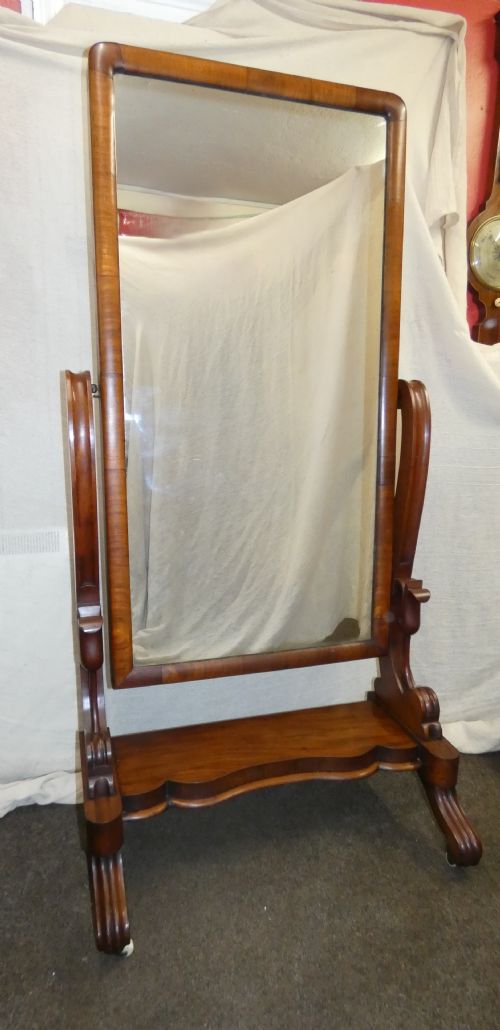
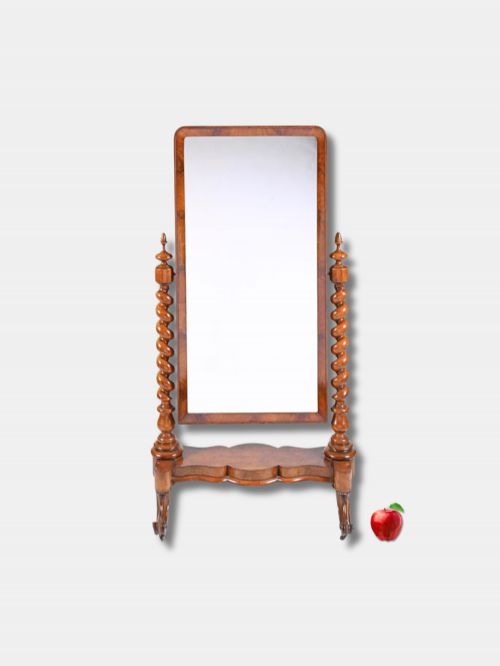
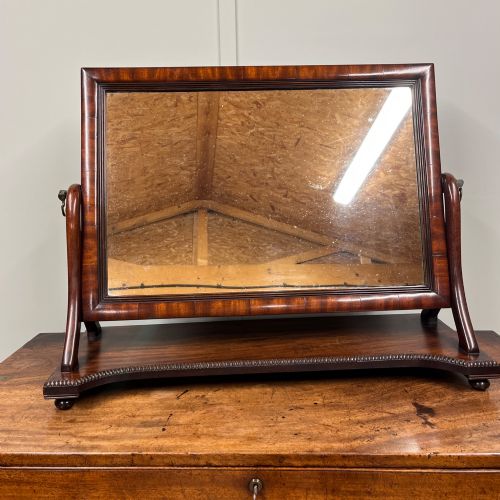
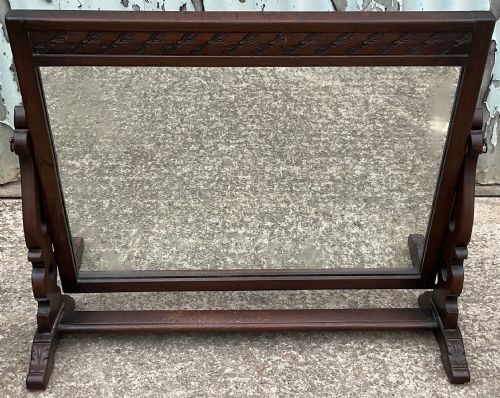
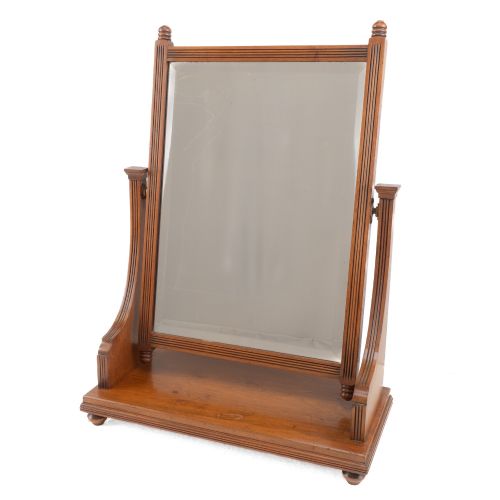


Brown Wooden Cheval Mirror
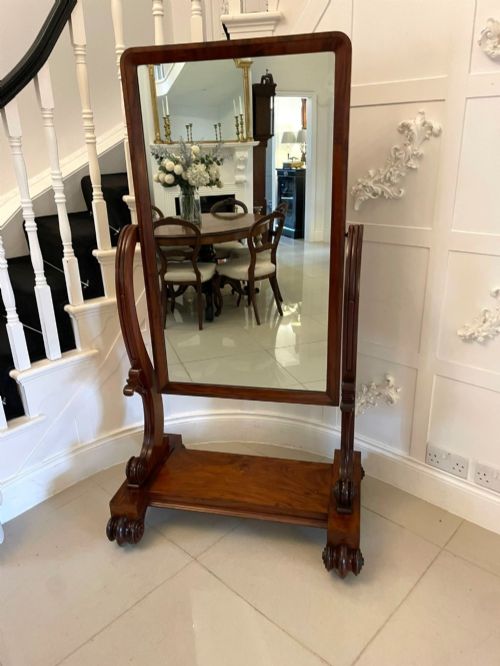
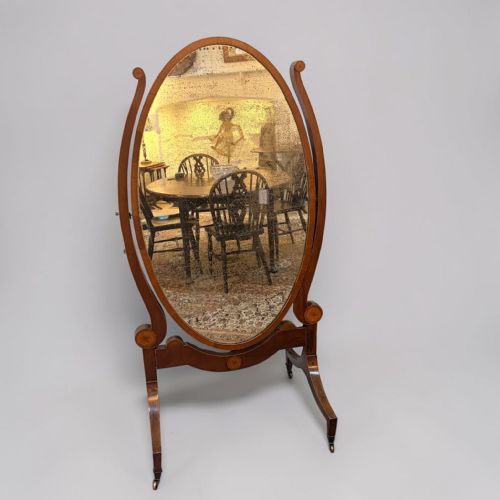
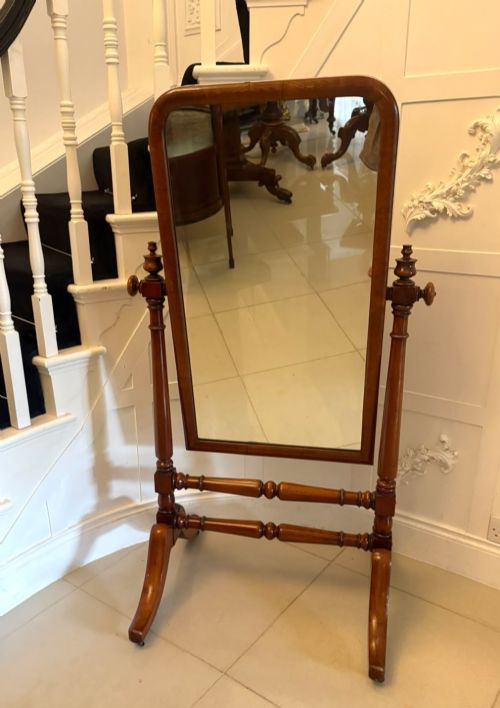
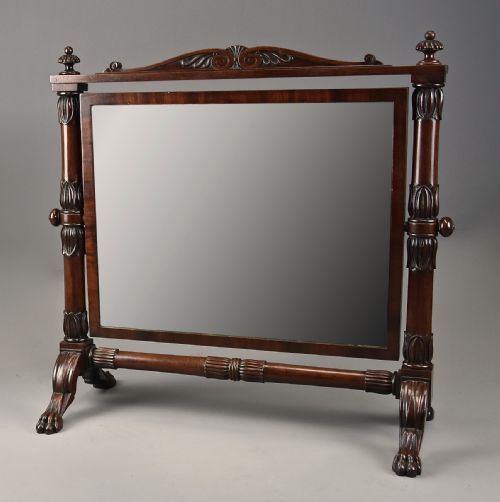
A brown wooden cheval mirror stands ready to tilt your full reflection, offering both utility and warm timber grain to a dressing room.
Brown Wooden Cheval Mirror
A brown wooden cheval mirror is a freestanding full-length glass plate held within a pivoting frame, designed to tilt easily for a complete view of attire. The pieces gathered under this phrase range from grand floor-standing frames to smaller table-top dressing variants.
While many take the full floor-standing cheval format, the search also encompasses related dressing table and toilet mirrors sharing the same pivoting timber construction. Each piece brings functional movement and period craftsmanship into a bedroom or hallway.
How they were made
Cabinet makers utilised dense hardwoods such as mahogany, walnut, and oak to construct the sturdy standing frames and pivoting arms. Cuban mahogany and burr walnut frequently appear, selected for their rich grain and capacity to take a fine polish.
Brass fittings, including adjustable screw pins and candle sconces, provide the mechanical pivot points that allow the glass to tilt smoothly. Marquetry inlay and carved decorative details adorn more elaborate frames, reflecting the prevailing styles from George III to the Arts and Crafts movement.
Listings feature woods spanning mahogany, Cuban mahogany, walnut, burr walnut, and oak, alongside brass and marquetry inlay.
What varies in quality
The weight and stability of the supporting frame dictate the overall substance of the piece, separating robust floor-standing structures from lighter, more utilitarian makes. Heavier timber bases and well-balanced pivot mechanisms ensure the glass remains securely positioned at any angle.
Subtlety of carving, the richness of the wood grain, and the quality of the brass hardware set the finer examples apart. Secondary details such as inlaid marquetry and original mirror glass further distinguish standard utility mirrors from high-status workshop pieces.
P & MA Nicholson
The Brown Wooden Cheval Mirror Glossary
- Cheval mirror
- A freestanding full-length dressing mirror mounted on a pivoting frame between two upright pillars. The term derives from the French word for horse, referencing the four-legged trestle base.
- Toilet mirror
- A smaller dressing glass designed to sit upon a table or chest of drawers rather than stand independently on the floor. These often incorporate small storage drawers within their wooden bases.
- Swing mirror
- An alternative term for any mirror plate hung on pivots within a frame to allow tilting. They appear in both full-length floor formats and smaller table-top designs.
- Barley twist
- A type of turned wooden support resembling a twisted rope, popular in furniture design during the seventeenth century and revived in later Victorian pieces. It adds textural depth to the uprights of a mirror frame.
- Marquetry inlay
- Decorative patterns formed by fitting contrasting pieces of wood veneer into a prepared surface. This technique embellishes the frames of finer period mirrors.
Brown Wooden Cheval Mirror: Frequently Asked Questions
What is the difference between a cheval mirror and a toilet mirror?
A cheval mirror is a tall, freestanding glass designed to stand directly on the floor and show your full outfit. A toilet mirror is much smaller and intended to sit upon a dressing table or chest of drawers.
While both share the same pivoting mechanism to tilt the glass, their scale and primary placement in a room differ completely.
How do I date a wooden cheval mirror?
Dating relies on observing the timber species, framing style, and construction methods. Nineteenth-century pieces frequently utilise solid mahogany or walnut with turned uprights or brass pivot hardware.
Earlier Georgian and Regency examples show finer proportions and distinct carving styles, while Edwardian and later twentieth-century pieces often feature simpler oak or walnut frames.
Are these mirrors stable on carpets?
Most floor-standing cheval mirrors rely on sturdy four-legged trestle bases or heavy feet to distribute their weight evenly. Placing them on a firm surface or low-pile rug ensures the pivoting frame remains balanced.
Heavier Victorian and Georgian mahogany frames offer a solid footprint that prevents wobbling when the glass is tilted.
Can the mirror glass be adjusted?
Yes, the defining feature of a cheval mirror is its pivoting frame, held by adjustable side screws or brass pins. Tightening or loosening these fixtures allows you to tilt the glass to your preferred angle.
Original hardware often uses thumb screws or decorative brass knobs designed for hand adjustment.