


Brown Wooden Block
These brown wooden block pieces span utilitarian chopping blocks, hat forms and desk accessories built from sturdy timbers.
Brown Wooden Block
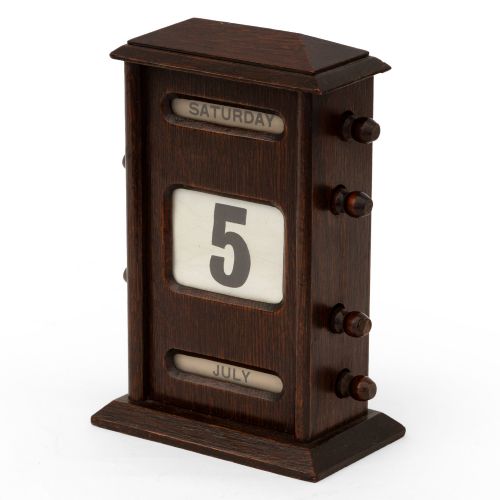
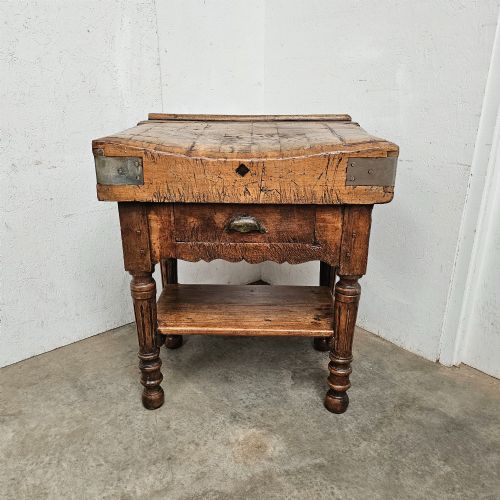
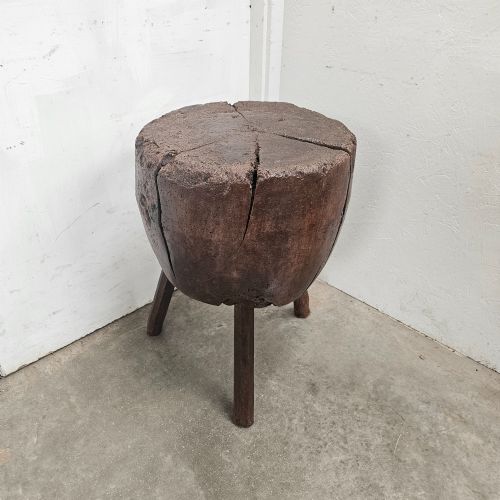
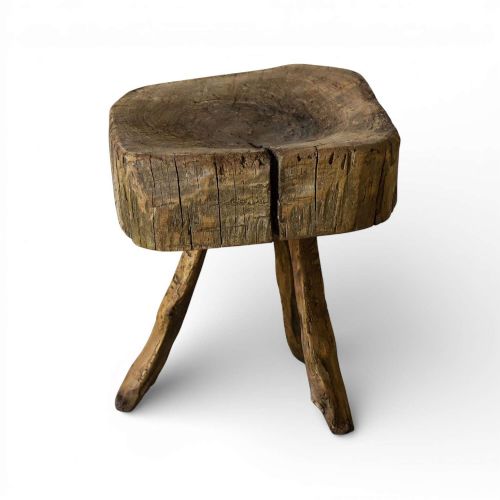
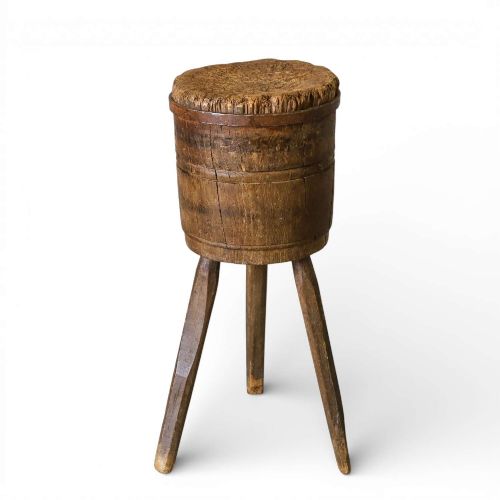
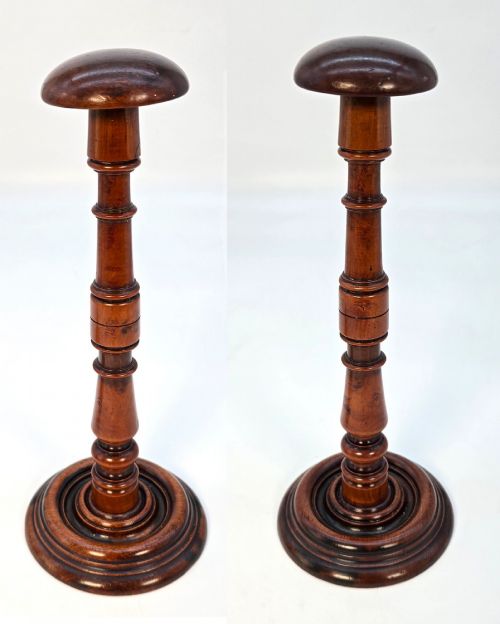
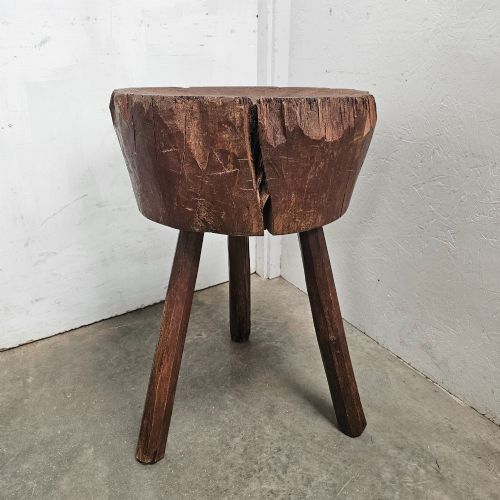
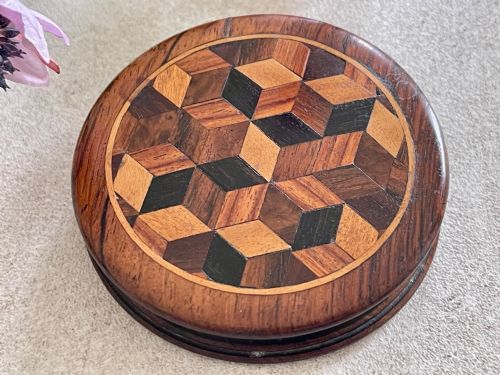
A brown wooden block covers a diverse group of objects ranging from heavy butchers blocks and game blocks to milliner hat blocks, wig stands and desk calendars. These items emerge primarily from the eighteenth, nineteenth and early twentieth centuries in styles spanning rustic farmhouse, French provincial, folk art and Victorian vernacular.
The version most likely to be met on this page is a French or English beech, oak or elm chopping block or hat block, often shaped by practical use in workshops, kitchens and rural trade. Other forms include carved wooden milliner heads, desk accessories and block front chests of drawers displaying figured walnut or mahogany.
How they were made
Craftsmen utilised dense hardwoods such as beech, oak, elm, walnut and yew wood to ensure durability in items intended for heavy daily labour or precise trade work. Metal brass fittings, iron pulleys or carved details frequently complement the timber bodies.
Joinery methods rely on solid wood construction, turned shapes on hat blocks, and hand-carved elements seen in folk art milliner heads and printing stamps. Surfaces retain the natural grain of the hardwood alongside patination accumulated through years of workshop or domestic service.
Listings feature oak, beech, elm and walnut across nineteenth-century and early twentieth-century periods.
What varies in quality
Quality rests in the integrity of the original timber, the honesty of the wear and the retention of original bases or legs, such as gnarled supports on rustic chopping blocks. Pieces that preserve their uncompromised working character stand apart from heavily altered examples.
The clarity of hand-carved detail in milliner heads or folk art items and the sophistication of joinery in block front furniture separate standard utility pieces from finer decorative expressions.
The Brown Wooden Block Glossary
- Butchers block
- A heavy timber chopping surface constructed to withstand repeated striking from cleavers and heavy preparation work. These pieces usually employ thick end-grain or side-grain beech and oak.
- Hat block
- A turned wooden form utilised by milliners to shape and size hats during manufacture. Beech is a common material for these robust sculptural items.
- Block front
- A cabinetmaking term describing a drawer front divided vertically into three panels, with the two outer sections raised and the central section recessed. This form appears on Georgian and Victorian chests of drawers.
- Treen
- Small handmade wooden household objects created before the widespread use of cheap ceramics and plastics. Examples include biscuit cutters and snuff boxes.
- Game block
- A heavy wooden mounting block used in rural settings for preparing game birds and animals. They typically exhibit dense hardwood construction in elm or beech.
Brown Wooden Block: Frequently Asked Questions
What is a butchers block used for?
These heavy wooden surfaces served in kitchens and butcher shops for chopping meat and preparing food.
Today they function as kitchen islands, preparation tables or decorative display items in rustic interiors.
How do you date a wooden hat block?
Dating relies on the turned profile, the species of timber utilised, and any maker stamps or workshop marks.
Earlier examples often show simpler hand-turned execution while twentieth-century versions reflect changing headwear fashions.
Are wig stands and milliner heads the same?
Wig stands were traditionally carved to hold and display powdered wigs in the eighteenth century.
Milliner heads served a later practical purpose in hat making and display during the Victorian and Edwardian eras.
How do you care for an old wooden block?
Maintenance involves applying food-safe oils to dry chopping blocks to nourish the grain.
Finished decorative pieces like hat blocks or desk calendars require simple dusting and protection from direct sunlight and moisture.