

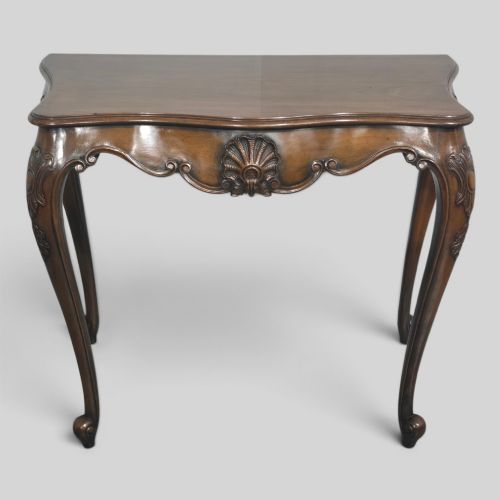
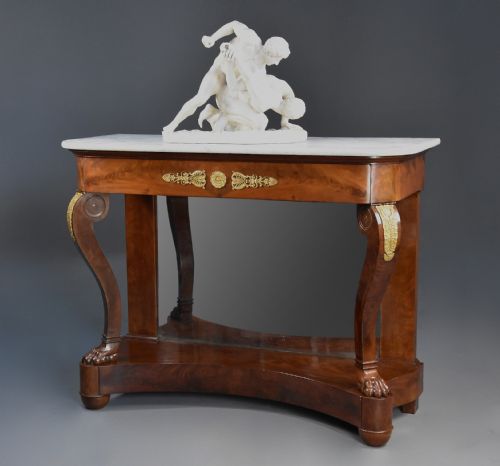
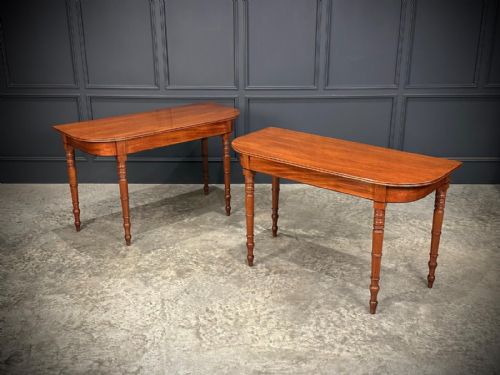
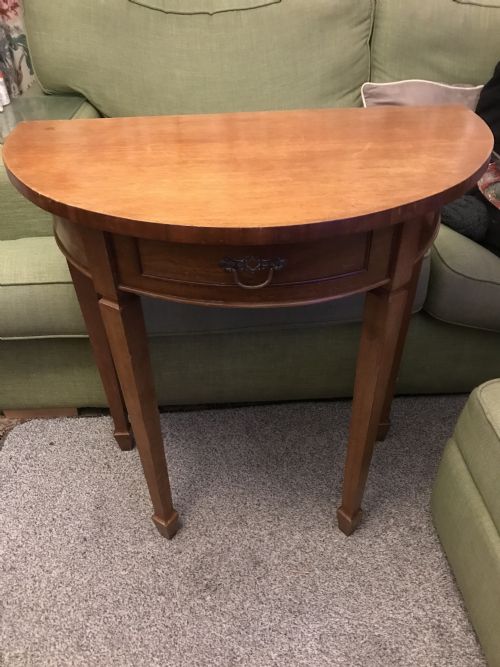
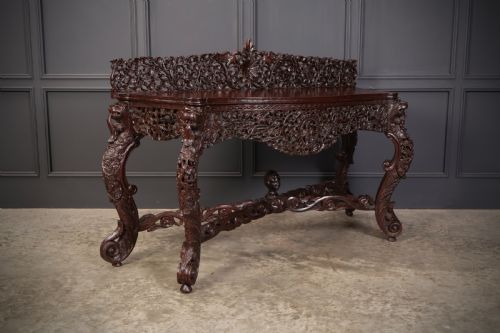


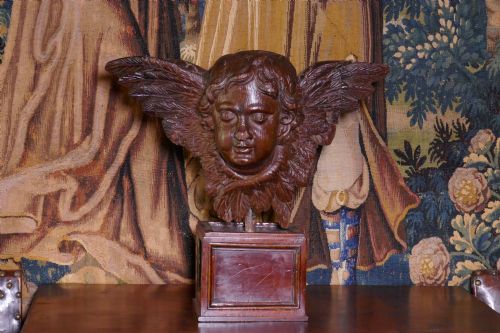
Brown Wood Wall Console
These brown wood wall console pieces bring architectural presence to a hallway, spanning mahogany, walnut, and marble across multiple centuries.
Brown Wood Wall Console
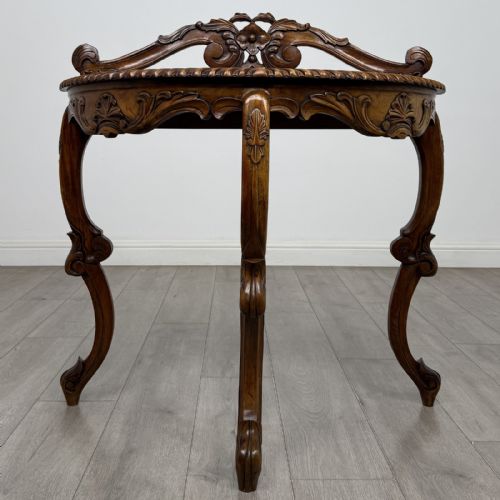
A brown wood wall console serves primarily as a decorative and functional surface in halls and principal rooms, anchoring spaces with classical proportions. Buyers seeking a brown wood wall console encounter various forms, including demi-lune side tables, architectural wall brackets, and serving tables.
The selections span distinct historical periods from the eighteenth century through the twentieth century, with nineteenth-century mahogany and walnut examples appearing frequently. Makers and workshops from these eras utilised specific regional designs, producing English George III, Regency, and French Louis Philippe iterations.
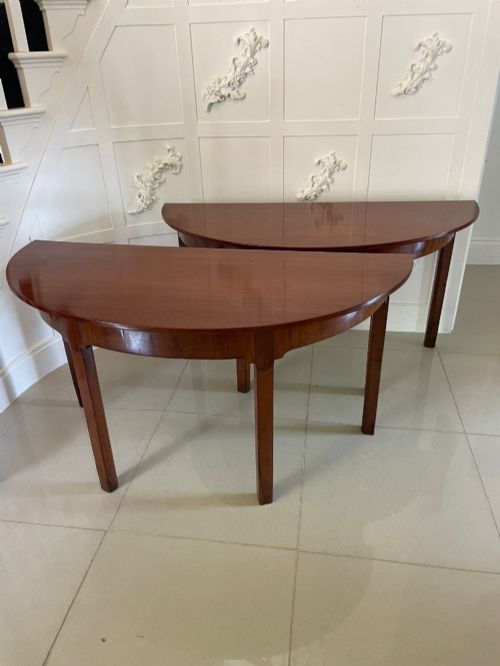
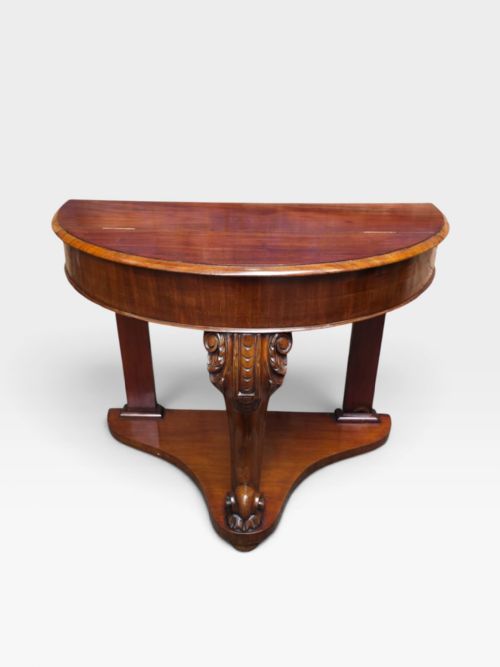
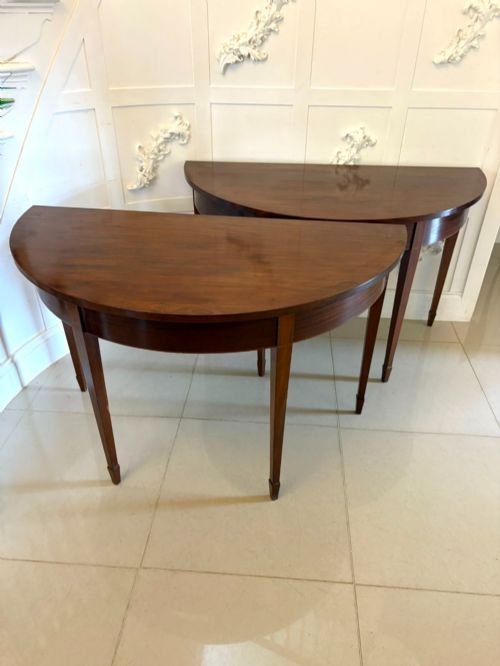
Many items incorporate semi-circular demi-lune shapes designed to sit flush against partition walls, often accompanied by matched mirrors or supporting shelves. These foundational forms provide both surface utility and distinct period character to contemporary interiors.
Materials and Construction
Cabinet makers relied heavily on dense tropical hardwoods, notably figured mahogany and walnut, selected for stability and rich natural grain patterns. Surfaces frequently display intricate marquetry inlay, crossbanding, and polished finishes that highlight the underlying timber.
Many structural examples integrate heavy stone elements, pairing carved wooden bases with polished marble tops for added weight and visual contrast. Wall brackets and elaborate consoles often showcase detailed hand-carved ornamentation executed in solid timber.
Brown Wood Wall Console Retail Price Guide 2026
Typical asking prices for brown wood wall console among the pieces listed under this phrase on Sellingantiques today, from the lower quarter to the upper quarter. They describe what is for sale here now, not the wider market.
Listings feature eighteenth-century walnut and nineteenth-century mahogany consoles alongside twentieth-century revival interpretations.
Evaluating Craftsmanship
Superior execution shows in the precision of joinery and the selection of timber veneers, where grain patterns mirror symmetrically across the surface. Lesser examples rely on simpler construction methods and lack the refined carving depth seen in master workshops.
The integration of secondary materials, such as finely cast brass mounts, intact marble slabs, and original hardware, elevates the standing of an individual piece. Condition and originality of the polished surface finish remain central to establishing the integrity of any antique console.
Epstein and Co·Edward and Roberts·Luigi Frullini
The Brown Wood Wall Console Glossary
- Demi-lune
- A half-moon shape common in eighteenth and nineteenth-century side and console tables. This geometry allowed furniture to stand against flat walls without projecting excessively into narrow hallways.
- Console table
- A table designed to be fixed against a wall, frequently supported by wall brackets or decorative legs rather than standing independently. They often served as serving tables or display surfaces in grand reception rooms.
- Marquetry
- The art of applying decorative veneer pieces to a structure to form intricate geometric or pictorial designs. Craftsmen utilised contrasting timbers like satinwood and walnut to achieve varied tonalities.
- Crossbanding
- A border technique where veneer strips are applied across the grain of the main surface. This detail frames the primary timber and indicates careful cabinet making.
- Wall bracket
- A projecting architectural support attached directly to a wall to hold sculptures, vases, or smaller decorative objects. These items often feature elaborate hand-carved wooden scrolls and figures.
Brown Wood Wall Console: Frequently Asked Questions
How do I style a console table?
Place the console against a prominent wall in an entrance hall or living room, using the surface for lamps or decorative objects. Pairing the table with a matching wall mirror creates a cohesive focal point.
Ensure proportions match the scale of the surrounding wall space, keeping pathways clear of obstruction.
Where were console tables traditionally placed?
These pieces traditionally occupied entrance halls, corridors, and formal reception rooms where space remained limited. Their wall-mounted or semi-circular designs allowed them to function efficiently in circulation areas.
They often stood between windows or beneath large wall mirrors to reflect light.
How do I identify a George III console?
George III pieces typically feature classical mahogany construction, crisp hand carving, and precise geometric inlay work. Proportions adhere to strict classical symmetry established during the eighteenth century.
Look for refined details such as spade feet and crossbanded tabletops.
What maintenance do antique wood consoles require?
Protect antique wood surfaces by avoiding direct sunlight and maintaining stable indoor humidity levels. Regular dusting with a soft, dry cloth preserves the polished finish.
Occasional applications of appropriate wax maintain the moisture balance of vintage timber without building up heavy residues.