

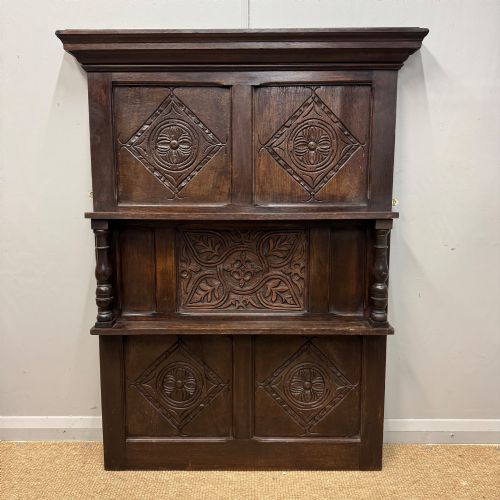
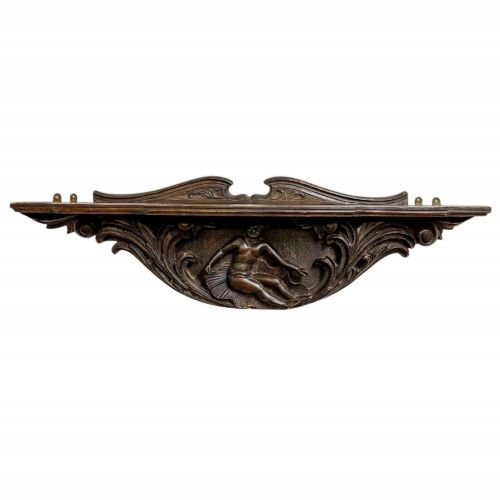


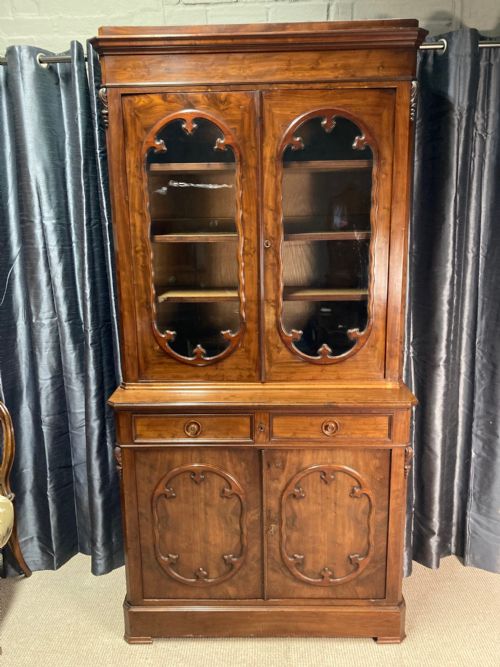
Gothic Carved Wooden Shelf
These gothic carved wooden shelf pieces bring robust architectural character and dark timber grain into a room, offering both display space and period presence.
Gothic Carved Wooden Shelf
A gothic carved wooden shelf brings architectural presence to a wall, taking forms such as wall brackets, overmantel panels, pediments and hanging shelves. When you search for a gothic carved wooden shelf, you encounter pieces that translate heavy church and cathedral stonework into domestic timber furniture.
The selections span several centuries, with nineteenth-century Victorian Gothic Revival and Aesthetic Movement interpretations appearing alongside earlier eighteenth-century examples and early twentieth-century variations. These items range from simple oak hanging ledges to elaborate limewood brackets and rosewood mirror frames with integrated shelves.
Beyond straightforward wall shelves, the category encompasses related forms like overdoor pediments, corner brackets and bookcase integrations that share the same dark carved aesthetic. Oak and rosewood dominate the material palette, providing the dense foundation necessary for crisp tracery, linenfold panels and deep mouldings.
Materials and construction
Makers relied primarily on hardwoods such as oak, rosewood and limewood, which responded well to deep hand-choking and undercut carving. Oak provided structural strength for larger overmantels and brackets, while limewood allowed artisans to execute intricate foliage and figural details without splitting.
Secondary materials like brass fixtures, bevelled glass and ebonised wood accents appear on specific Victorian and Aesthetic Movement iterations. Joinery techniques relied on traditional pegging, mortise-and-tenon joints and heavy backboards designed to support the downward thrust of wall-mounted loads.
Gothic Carved Wooden Shelf Retail Price Guide 2026
Typical asking prices for gothic carved wooden shelf among the pieces listed under this phrase on Sellingantiques today, from the lower quarter to the upper quarter. They describe what is for sale here now, not the wider market.
Object forms include wall brackets, hanging shelves, overmantel panels, pediments and standing bookcases from the nineteenth and early twentieth centuries.
Evaluating quality and execution
Quality rests entirely in the crispness and depth of the hand carving, where sharper undercuts and distinct tool marks separate master craftsmanship from mechanical reproduction. Superior examples display thoughtful grain selection that enhances rather than fights the carved motifs.
Structural integrity also dictates value, particularly in how securely the shelf plate joins the back bracket or corbel. Pieces that retain their original brass hanging loops, unpolished timber patination and stable joints represent the higher tier of surviving examples.
Luigi Frullini
The Gothic Carved Wooden Shelf Glossary
- Gothic Revival
- An architectural and decorative style popular during the nineteenth century that revived medieval pointed arches, tracery and heavy timber forms. It drew direct inspiration from medieval ecclesiastical buildings.
- Corbel
- A structural piece of stone or timber jutting from a wall to carry a superincumbent weight. In shelving, it serves as the primary load-bearing bracket beneath the horizontal ledge.
- Limewood
- A pale, fine-grained wood favoured by carvers because it lacks pronounced grain pattern and cuts easily in any direction. It permitted extraordinary sculptural detail in Victorian wall brackets.
- Overmantel
- A decorative framework placed directly above a fireplace mantel, frequently incorporating mirrors, panels and integrated shelves. These pieces anchored the decorative scheme of a Victorian reception room.
- Ebonised wood
- Timber treated with chemical stains or black finishes to imitate expensive ebony. This technique gained immense popularity during the Aesthetic Movement and late Victorian periods.
- Tracery
- Ornamental stone or woodwork openwork with branching lines, commonly found in gothic windows and replicated in miniature on shelf friezes and panels.
Gothic Carved Wooden Shelf: Frequently Asked Questions
How do I clean carved oak and rosewood?
Dust intricate carved recesses regularly using a soft natural-bristle brush to prevent dirt accumulation in the deep undercuts. Avoid modern silicone polishes, which build up a sticky residue and attract dust into the grain.
Feed dry antique timber periodically with a traditional beeswax polish applied sparingly and buffed thoroughly with a clean cloth to maintain a natural lustre.
How do I date a Victorian gothic shelf?
Examine the backboards, fixing methods and saw marks to determine age, as nineteenth-century pieces often show circular or pit-saw marks rather than modern straight-line machine cutting. The presence of hand-cut screws, hand-forged hanging loops and dense native oak or imported rosewood points directly to the Victorian era.
Stylistic cues also help; tighter geometric tracery and heavier proportions generally indicate earlier Victorian Gothic Revival work, while lighter ebonised finishes suggest later Aesthetic Movement influence.
Where should I place a wall bracket shelf?
These architectural shelves work best mounted at eye level or above doorways and mantelpieces where their three-dimensional carvings catch sidelong light. Avoid placing antique timber in direct sunlight or above active heat sources, which causes wood to dry out and split.
Pair them with complementary period objects such as small bronzes, antique clocks or glassware to make the most of their display surface.