




Brown Wood Trinket Drawers
These brown wood trinket drawers offer clever miniature storage and fine cabinetmaking on a small scale, built for serious collectors.
Brown Wood Trinket Drawers
When you search for brown wood trinket drawers, you encounter miniature furniture, decorative boxes, and small chests originating across several centuries. The pieces on this page span the seventeenth, eighteenth, and nineteenth centuries, including Georgian and Victorian examples.
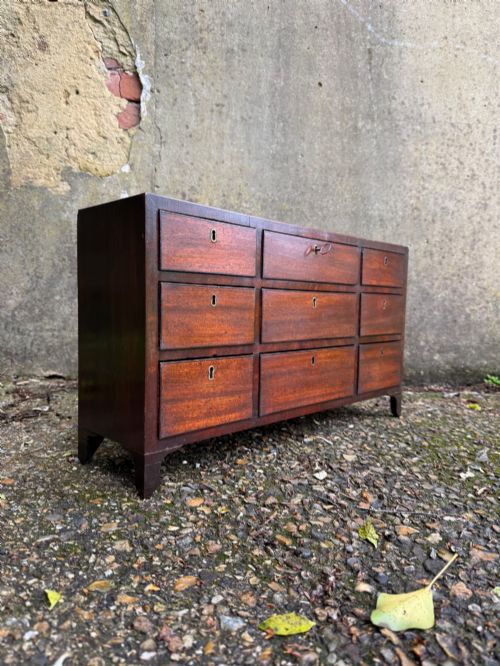
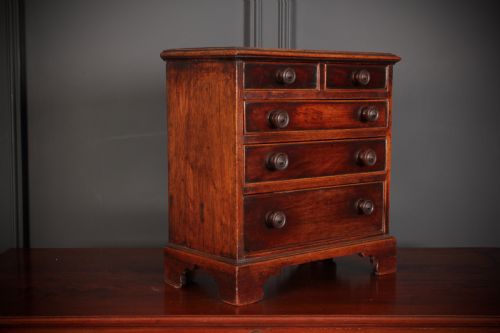
The most common forms you meet are miniature chests of drawers, table boxes, and apprentice chests. These items range from simple Welsh oak table boxes and coffor bach pieces to refined bow-fronted mahogany miniatures.
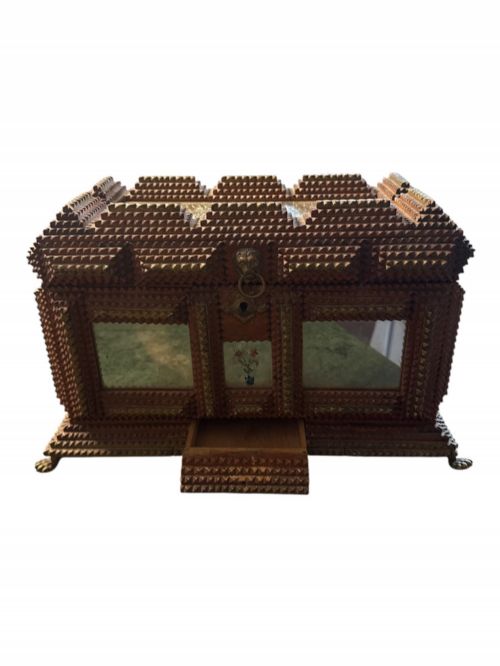
Makers produced these smaller items in varied regional styles, such as Victorian folk art and tramp art boxes. You also find specialised pieces incorporating glass and brass details alongside mother of pearl inlay.
How they were made
Cabinetmakers built these miniature chests and boxes using solid woods like mahogany, oak, and pine, often selecting burr veneer and amboyna for decorative impact. The use of dense hardwoods provided the structural stability needed for tiny drawers and close-fitting lids.
Workshops embellished the wooden surfaces with brass fittings, glass elements, and mother of pearl inlay. Folk art and tramp art pieces demonstrate distinct carving and layering techniques applied to humble materials.
Current listings span periods from the seventeenth century through the late Victorian era, featuring mahogany, oak, amboyna, and pine.
What varies in quality
Quality rests in the precision of the miniature joinery and the selection of timber veneers. Pieces featuring figured amboyna or matched mahogany show greater ambition than plain utility items.
The refinement of hardware, such as fine brass pulls and careful mother of pearl inlay, distinguishes high-status apprentice pieces from simpler regional boxes.
The Brown Wood Trinket Drawers Glossary
- Coffor bach
- A small Welsh coffer or chest fitted with a drawer, traditionally used as a marriage chest or keepsake box. These miniature oak pieces often date to the eighteenth century.
- Apprentice chest
- A small-scale chest of drawers supposedly created by a craftsman to demonstrate skill before joining a guild. They replicate full-size furniture with exact joinery.
- Tramp art
- A form of folk art where makers chipped and notched scrap wood, often from cigar boxes, into layered geometric patterns. These items date primarily to the Victorian era.
- Bow front
- A convex curved front facade seen on certain miniature chests. This curved profile requires advanced woodworking skill to execute at a small scale.
- Amboyna
- A highly prized, richly figured wood derived from the Pterocarpus indicus tree. Cabinetmakers utilised its burr veneer for luxury small furniture.
Brown Wood Trinket Drawers: Frequently Asked Questions
What were miniature chests used for?
These small chests served to store jewellery, documents, and precious trinkets on dressing tables. Wealthy households also used them to display cabinetmaker skill.
Makers constructed them with working drawers identical to full-sized furniture, making them practical for organising small valuables.
How do I date a wooden box?
Dating relies on identifying timber choices, construction methods, and hardware styles associated with specific eras like the Georgian or Victorian periods. Oak is more common in seventeenth-century pieces, while mahogany dominates the later Georgian and nineteenth-century examples.
Secondary woods inside the drawers provide additional clues to the geographic origin and age of the piece.
Are apprentice pieces genuine?
Many small chests carry the tradition of being apprentice pieces, though historians note that cabinetmakers also made them as salesman samples or luxury toys. Regardless of the exact workshop origin, they represent high-level miniature carpentry.
Examining the dovetails and drawer linings helps confirm the period of manufacture.
How do I care for antique wood?
Protect antique wood by keeping pieces away from direct sunlight and maintaining stable room humidity. Sudden temperature changes cause timber to warp and veneers to lift.
Apply traditional wax sparingly and buff gently with a soft cloth to preserve the natural patina.