
Brown Wood Sideboard Server
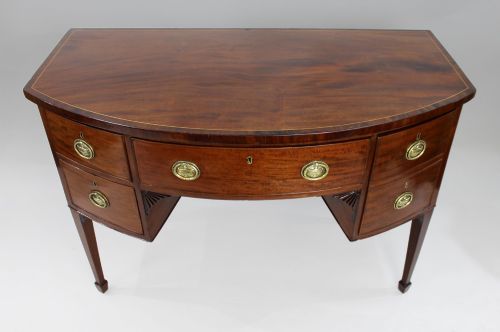
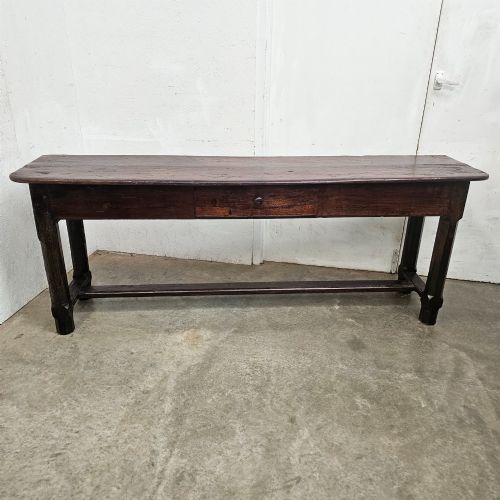
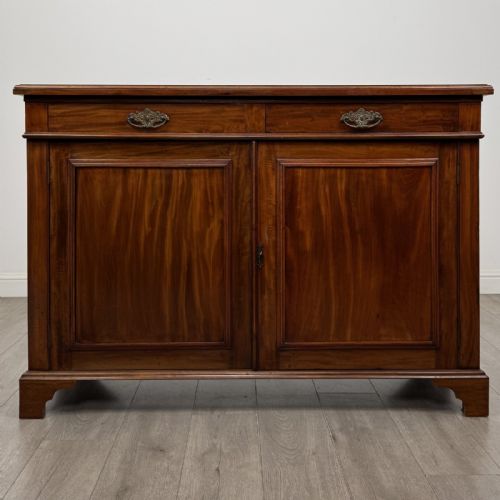
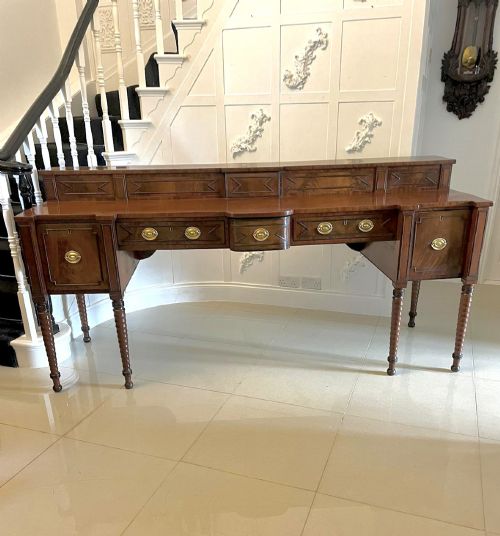
These brown wood sideboard server pieces bring practical storage and period character into a room.
Brown Wood Sideboard Server
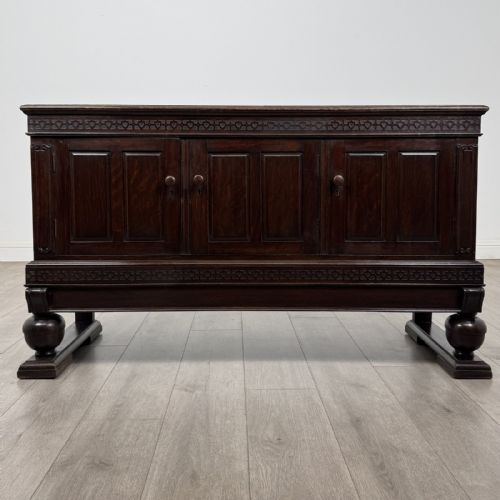
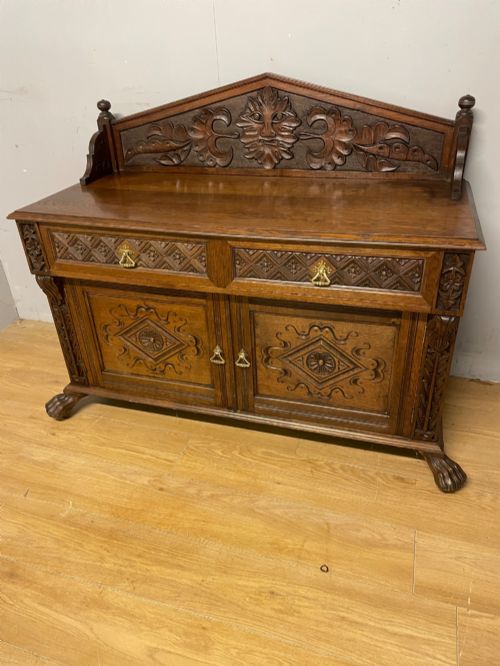
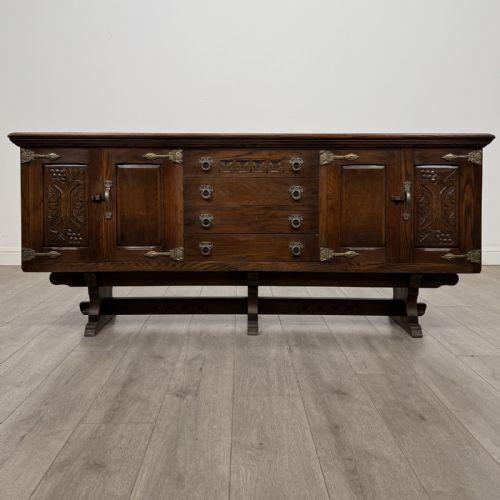
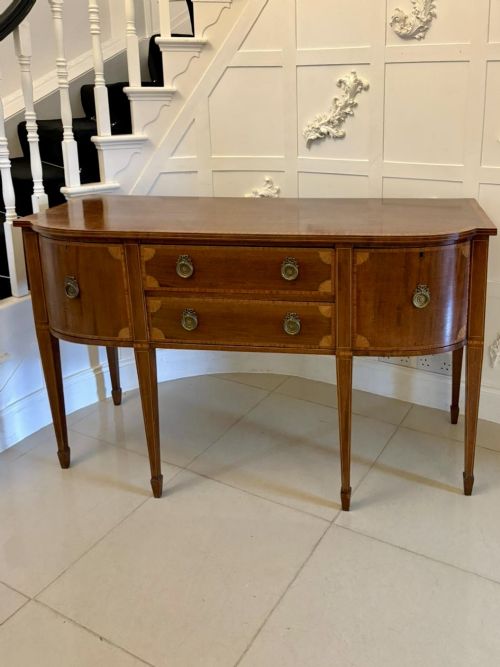
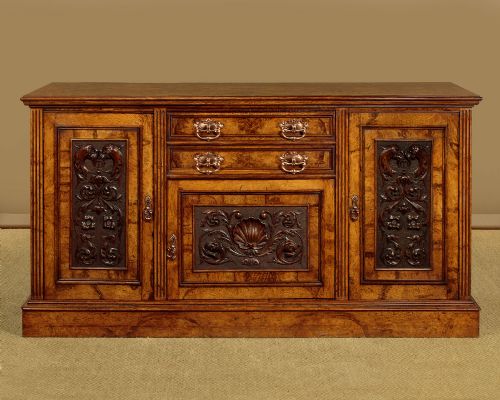
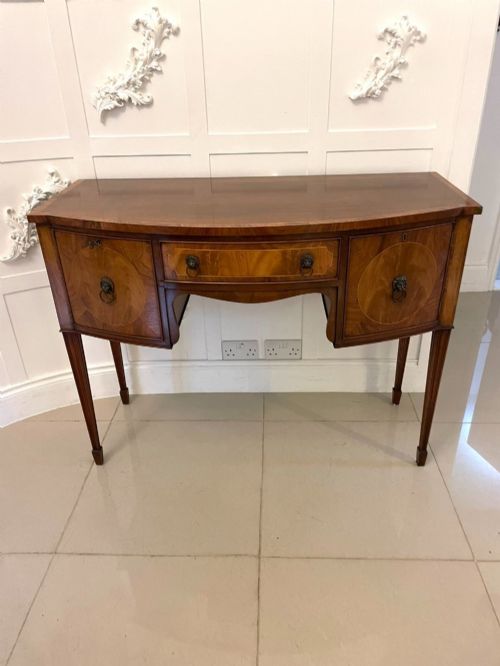
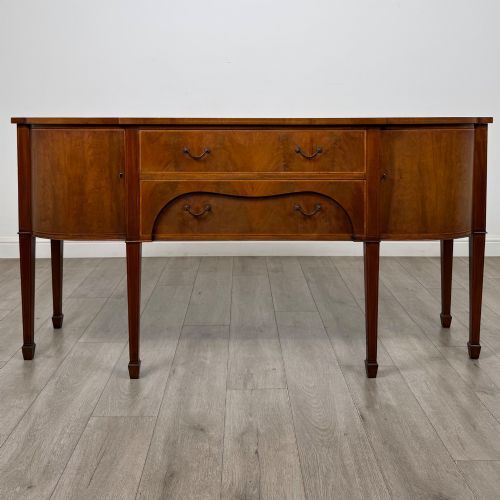
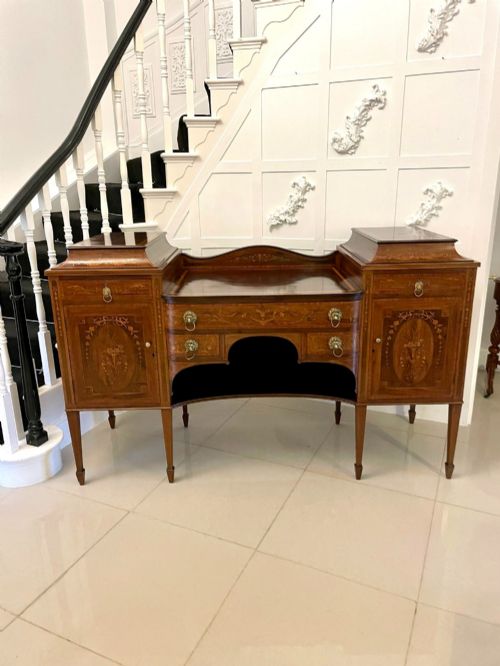
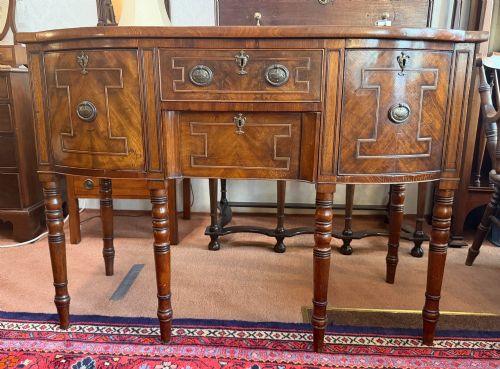
A brown wood sideboard server is a substantial dining room piece designed to hold tableware, linen, and food service items. When searching for a brown wood sideboard server, buyers encounter forms spanning the eighteenth, nineteenth, and early twentieth centuries, constructed primarily from timber such as mahogany and oak.
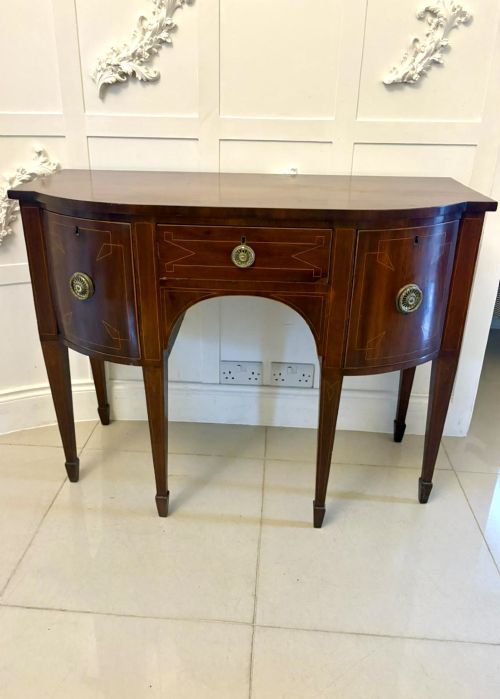
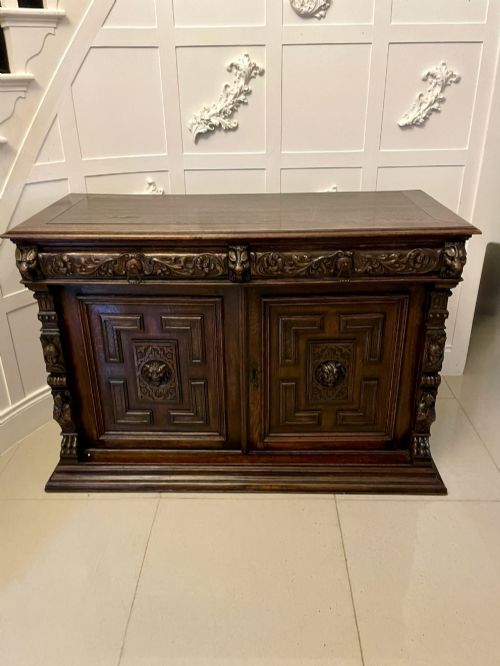
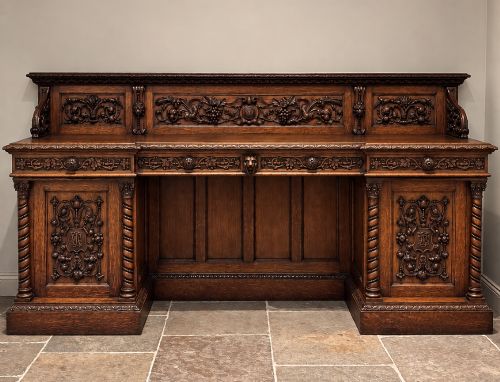
The most common formats on this page include bow-front and straight-front mahogany designs from the Georgian and Victorian eras, alongside robust oak dresser bases and Jacobean or Gothic revival cupboards. These range from compact side cabinets to large Scottish stage-back sideboards and servers.
Originating across British and French provincial workshops, these items serve as both functional storage units and focal points within a dining space. Their configurations adapt from simple cupboards and drawers to elaborate serpentine shapes and mirrored back cabinets.
Construction and Materials
Makers built these pieces using solid timbers and select veneers, predominantly mahogany and oak, occasionally incorporating secondary woods like elm and fruit wood. Cabinetmakers applied decorative elements such as satinwood and boxwood inlay, marquetry, and carved detailing to enhance the primary surfaces.
Hardware typically includes brass handles and drawer pulls, while structural assembly relies on traditional joinery methods suited to heavy domestic use. Surface finishes range from polished mahogany to waxed oak, highlighting the natural grain and colour of the wood.
Listings feature mahogany, oak, and satinwood pieces spanning the Georgian, Victorian, and Edwardian periods.
Evaluating Quality
Quality rests on the selection of timber figures, such as flame mahogany or burr walnut, and the precision of the cabinetmaker's joinery. Superior examples display balanced proportions, crisp carving, and harmonious inlay work rather than purely decorative additions.
The integrity of the original structure, including drawer linings, backboards, and brass hardware, distinguishes finer pieces from later altered examples. Master craftsmanship shows in the smooth operation of drawers and the seamless alignment of curved serpentine or bow fronts.
Hewetsons London
The Brown Wood Sideboard Server Glossary
- Bow-front
- A convex, curved front section popular in late eighteenth and nineteenth-century cabinet design. This shape softens the corners of a room while increasing interior storage capacity.
- Dresser base
- A low wooden unit featuring cupboards or drawers, often topped with a solid working surface. These pieces formed the lower section of traditional kitchen or dining room storage.
- Marquetry
- The art of applying decorative veneer pieces in wood to form intricate patterns and pictures. Craftsmen used contrasting timbers like satinwood and boxwood to achieve detailed motifs.
- Serpentine
- A front contour characterised by a concave central section flanked by two convex ends. This flowing line requires advanced woodworking skill to execute properly.
- Stage-back
- A raised tier at the rear surface of a sideboard used for displaying serving dishes and silver. This feature appears on larger formal dining pieces from the Georgian period.
- Chiffonier
- A small, low sideboard or cabinet featuring shelves or enclosed cupboards beneath. These items emerged during the Regency and Victorian periods for smaller dining spaces.
Brown Wood Sideboard Server: Frequently Asked Questions
What is a brown wood sideboard server used for?
These brown wood sideboard server pieces provide storage for dining room essentials like linen, cutlery, and serving dishes while offering a surface for food presentation.
They function as both practical utility furniture and decorative focal points in traditional and modern interiors.
How do I date a mahogany sideboard?
Dating relies on stylistic clues, construction methods, and timber choice, such as the distinct proportions of Georgian pieces versus later Victorian interpretations.
Secondary woods, drawer dovetailing, and hardware styles also help narrow down the decade of production.
What is the difference between a sideboard and a server?
Sideboards generally feature a combination of deep drawers and cupboards designed for heavy storage.
Servers tend to be lighter in proportion, often functioning as a surface specifically for dishing up meals during dinner service.
How do I care for antique wood furniture?
Protect the wood by keeping pieces away from direct heat sources and strong sunlight, which can dry out the timber and fade the polish.
Apply a traditional beeswax polish occasionally to nourish the surface and maintain the natural lustre of the mahogany or oak.