
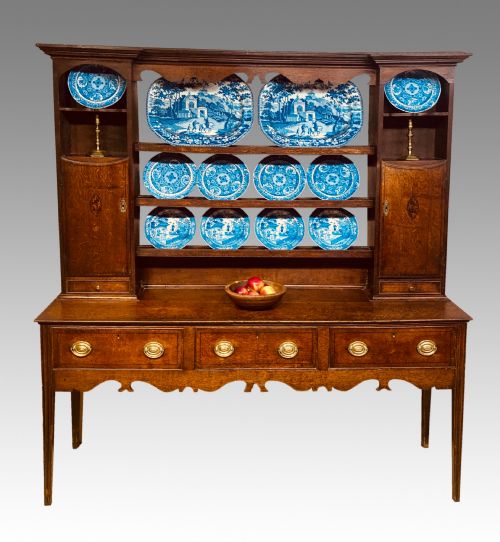


Brown Wood Plate Rack
These brown wood plate rack examples offer traditional storage, bringing timber warmth and utilitarian charm to any wall.
Brown Wood Plate Rack
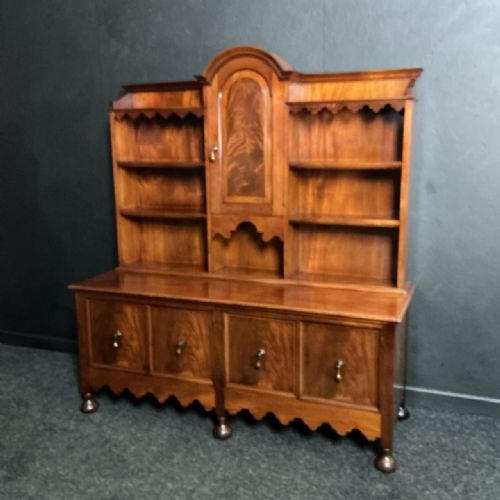
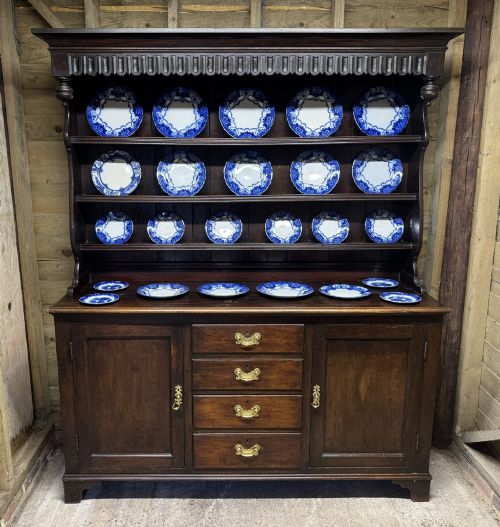
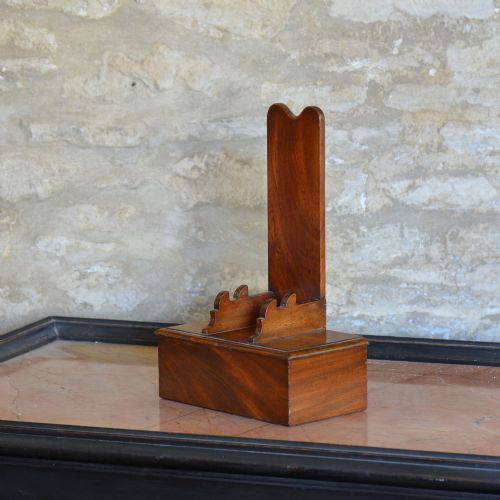
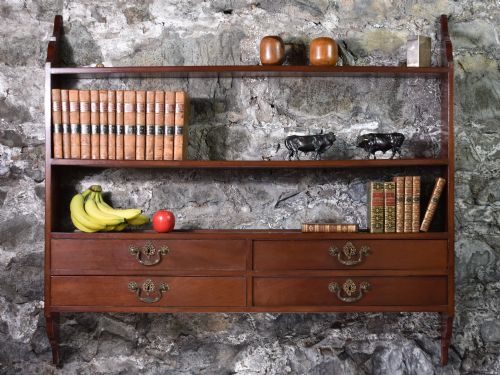
When you search for a brown wood plate rack, you are looking at functional timber furniture designed to display and store ceramics upright. The selection here spans the eighteenth and nineteenth centuries, taking the form of hanging shelves, wall hanging shelves, and plate stands alongside larger dresser bases with integrated shelving.
You are most likely to encounter oak pieces from the Georgian and nineteenth-century periods, often originating from English country houses or Wales. These range from simple wall-mounted hanging racks to substantial dressers incorporating display space for plates and platters.
The inventory also includes walnut, cherrywood, chestnut, and flame mahogany alternatives, representing periods such as the Edwardian era and the early twentieth century. Styles stretch from English Country and French Provincial to Jacobean Revival and George III designs.
How they were made
These items rely on solid timber construction, utilising hardwoods such as oak, mahogany, walnut, chestnut, and cherrywood selected for durability and grain character. Carpenters joined boards using traditional pegging and framing methods appropriate to each period, from eighteenth-century country workshops to Edwardian cabinet makers.
Metal elements appear where structural support or hanging is required, incorporating iron brackets and brass fixings. The surfaces display the natural tones and patination of the woods, sometimes enhanced by flame mahogany veneers or polished finishes.
Listings feature oak as the predominant material, accompanied by mahogany, walnut, cherrywood, chestnut, and flame mahogany.
What varies in quality
Quality in these pieces is dictated by the selection of timber and the integrity of the original construction. Superior examples exhibit well-figured grain, particularly in flame mahogany or quarter-sawn oak, and retain their original hanging mechanisms and backboards.
The sophistication of the mouldings and the balance of proportions distinguish standard utility items from finer country house or period pieces. Retaining original surfaces without unsympathetic modern alterations marks out the better specimens in this category.
The Brown Wood Plate Rack Glossary
- Plate Rack
- A wall-mounted or freestanding wooden fixture featuring horizontal slats or grooved shelves designed to hold plates upright. These structures allow ceramic tableware to dry or remain on display.
- Dresser
- A piece of furniture combining lower storage cupboards or drawers with an upper framework of open shelves. In older examples, the upper section functions as a plate rack.
- Hanging Shelves
- Open wooden shelving units fitted with brackets or fixing points to hang directly on a wall. They save floor space while displaying ceramics and small objects.
- Delft Rack
- A traditional open shelving unit specifically built to display tin-glazed earthenware and other ceramic plates. The design prevents the plates from sliding forward.
- Quarter-Sawn
- A method of cutting logs that produces timber with a distinctive medullary ray grain pattern. This technique increases dimensional stability in oak furniture.
Brown Wood Plate Rack: Frequently Asked Questions
How do I hang a heavy wooden plate rack safely?
These pieces require secure fixing directly into wall studs or masonry using appropriate heavy-duty brackets and screws. Because old timber racks carry considerable weight when loaded with ceramics, the mounting must match the wall type.
Distributing the load evenly across multiple fixing points prevents strain on the historical joints of the frame. Consulting a professional ensures the wall can bear the combined weight of the wood and the plates.
Can these racks hold modern heavy dinner plates?
Most historical plate racks accommodate standard earthenware and china, though very thick modern stoneware may not fit the historical groove spacing. Measuring the depth of the retaining ledge beforehand prevents issues with oversized tableware.
Lighter display plates and decorative platters sit securely in older racks without putting undue pressure on the wooden slats. Checking the angle of the shelf slope ensures items lean back safely against the wall.
How do I clean and maintain antique wood plate racks?
Maintenance involves dusting with a dry, soft cloth and occasionally applying a mild beeswax to nourish the timber surface. Avoid harsh chemical cleaners or excess moisture, which can damage aged oak, mahogany, and walnut finishes.
Keeping the racks away from direct heat sources and strong sunlight prevents the wood from warping or splitting over time. Regular gentle care preserves the natural patination developed over centuries.
What is the difference between a hanging shelf and a dresser?
A hanging shelf is a compact wall-mounted unit consisting solely of open display tiers without any lower cabinetry. It is designed to be fixed at eye level to display ceramics in smaller spaces.
A dresser combines this upper shelving rack with a substantial base of drawers, cupboards, or counters that rest on the floor. This larger furniture form provides enclosed storage alongside the open plate display area.