




Brown Wood Magazine Holder
These brown wood magazine holders span centuries of craftsmanship, offering divided compartments that bring refined order to periodicals and folios.
Brown Wood Magazine Holder
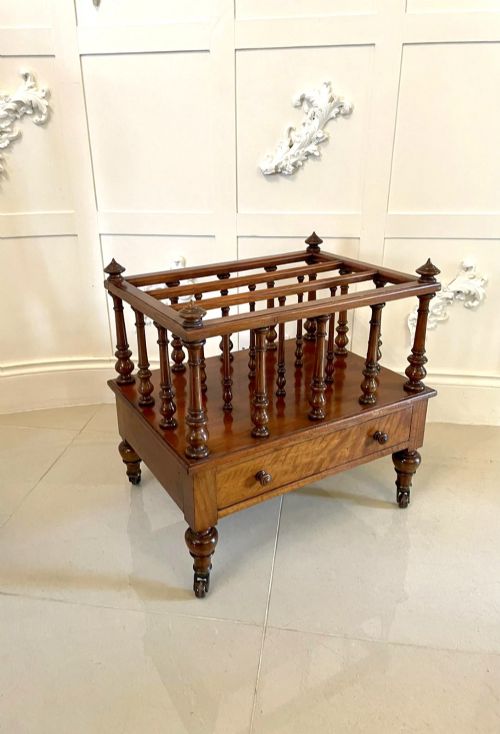
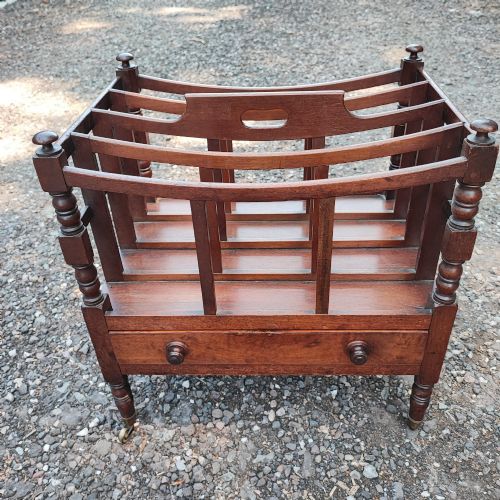
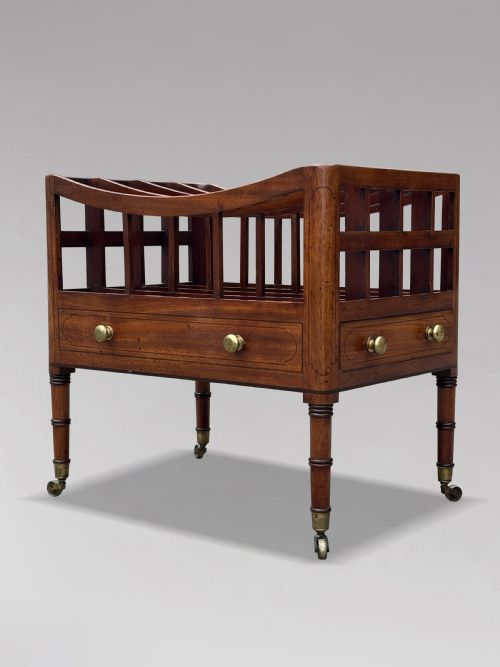
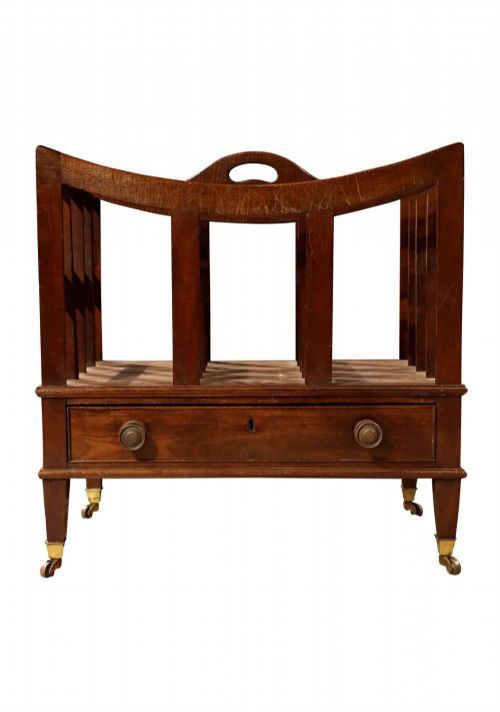
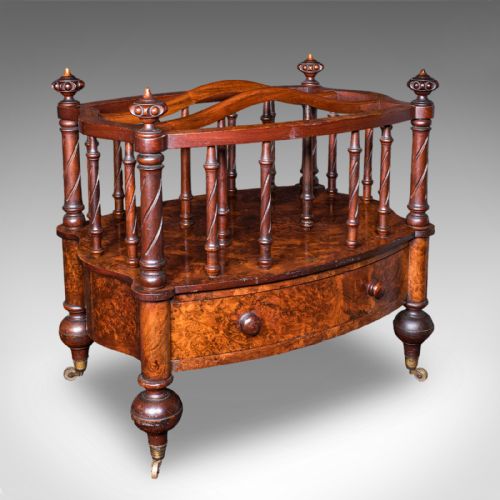
A brown wood magazine holder most commonly appears on this page as a Canterbury, a versatile piece of furniture designed in the eighteenth and nineteenth centuries to hold sheet music, newspapers, and periodicals. You will encounter forms originating from the Georgian, Regency, and Victorian eras, often taking the shape of low stands with slatted or divided partitions above a single drawer.
Beyond the traditional Canterbury, the selection includes folio stands, music racks, and occasional tables that serve a similar domestic purpose for paper storage. These pieces bridge the gap between utilitarian storage and elegant drawing-room furniture, reflecting the shifting domestic habits of the 1800s and surrounding periods.
Materials and construction
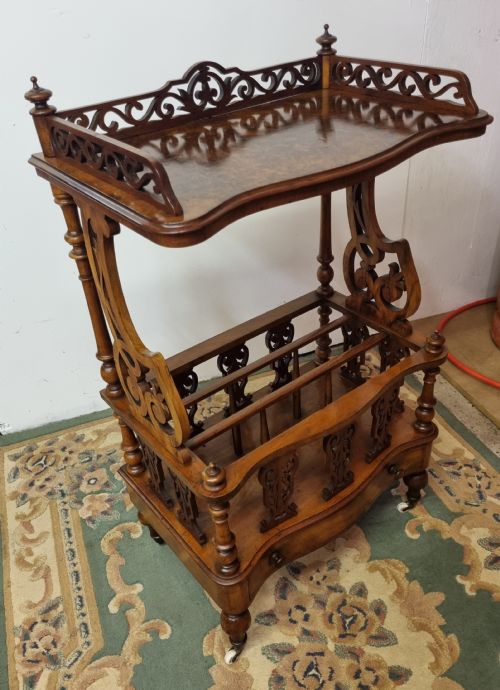
Cabinetmakers utilised rich timber varieties such as mahogany, walnut, and burr walnut, frequently selecting figured veneers to create striking visual movement across the surfaces. Brass details, ceramic castors, and delicate wood inlay or fretwork often accent the primary wooden structures, adding subtle contrast to the warm brown tones.
Joinery techniques from these periods rely on traditional framing for the dividers and dovetailed construction for the drawers beneath. Slats and spindles are carefully turned or shaped by hand to support the weight of heavy folios while maintaining a light, balanced appearance.
Brown Wood Magazine Holder Retail Price Guide 2026
Typical asking prices for brown wood magazine holder among the pieces listed under this phrase on Sellingantiques today, from the lower quarter to the upper quarter. They describe what is for sale here now, not the wider market.
Some nineteenth-century makers thoughtfully placed small ceramic castors beneath these stands so readers could slide their newspapers smoothly across the carpet.
Judging quality
Quality in a brown wood magazine holder rests in the choice of timber veneer and the crispness of any carved or inlaid decoration. Pieces featuring highly figured burr walnut or detailed wood inlay demonstrate a higher level of workshop ambition than plain mahogany versions.
The integrity of the structural divisions and the smoothness of the under-tier drawer action indicate superior cabinetmaking. Finer examples retain original brass castors and harmonious proportions that balance the upper partitions with the base.
Shoolbred·J.C.Loudon·Liberty London
The Brown Wood Magazine Holder Glossary
- Canterbury
- A low stand with three or four partitioned sections, originally designed for holding sheet music or books near a piano.
- Folio stand
- A piece of furniture with adjustable or fixed vertical frames specifically intended for storing large prints, maps, or unbound papers.
- Burr walnut
- A highly prized timber obtained from the wart-like growths on walnut trees, showing intricate, swirling grain patterns.
- Inlay
- A decorative technique where pieces of contrasting wood or other materials are inserted into depressions in the base timber to form patterns.
- Fretwork
- Openwork ornamentation carved or pierced through thin boards of wood, often seen on Victorian magazine racks.
Brown Wood Magazine Holder: Frequently Asked Questions
What were magazine holders originally used for?
These pieces were originally built to hold sheet music, daily newspapers, and unbound literary journals close to seating areas in formal sitting rooms.
Over time, changing domestic reading habits led to them being adopted specifically for the storage of modern magazines and periodicals.
How do I date a wooden magazine holder?
Dating relies upon observing the primary timber, structural style, and decorative details such as inlay or turned spindles. Regency examples often feature clean mahogany lines, whilst Victorian pieces frequently showcase burr walnut and fretwork.
Construction methods inside the drawer compartments and the presence of original castors also provide reliable clues to the exact period of manufacture.
Can I use these for modern magazines?
The divided partitions and sturdy wooden bases make these stands entirely suitable for holding contemporary periodicals, art books, and newspapers.
Their open structure allows you to browse through your reading material easily while adding traditional character to a modern interior.
How do I care for walnut and mahogany?
Maintenance involves keeping the wooden surfaces away from direct heat sources and strong sunlight to prevent the timber and veneers from drying out.
Occasional dusting with a soft, dry cloth helps preserve the natural lustre of the polished wood without damaging the antique finish.