
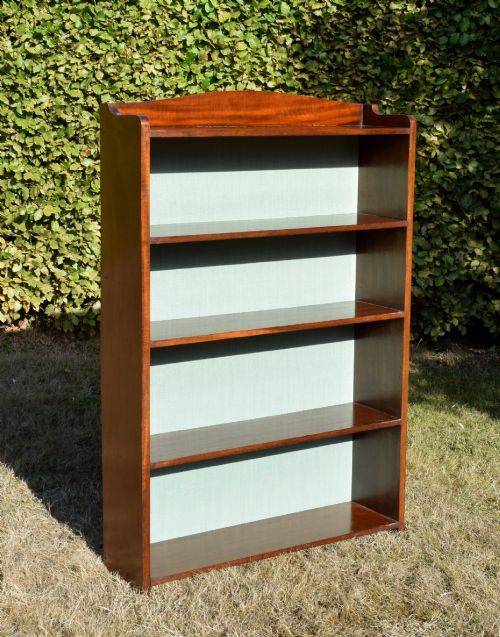
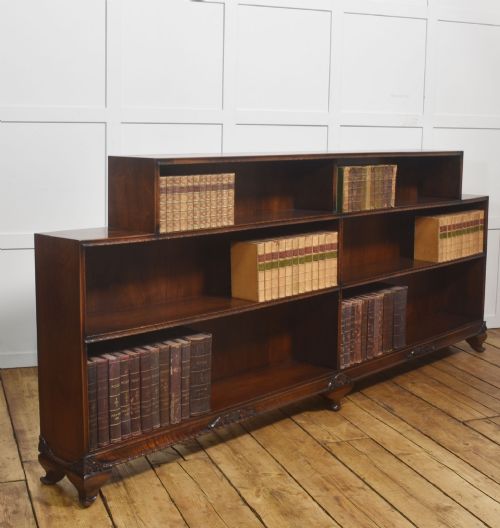
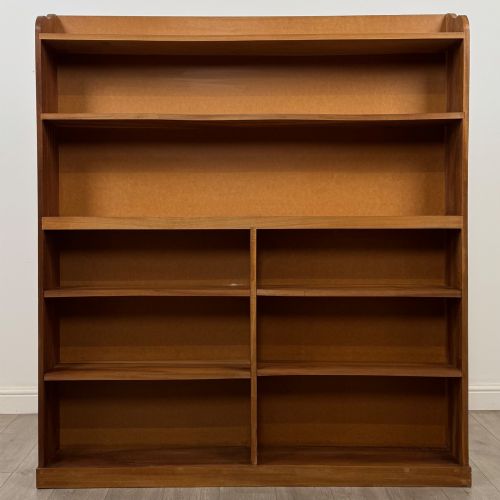
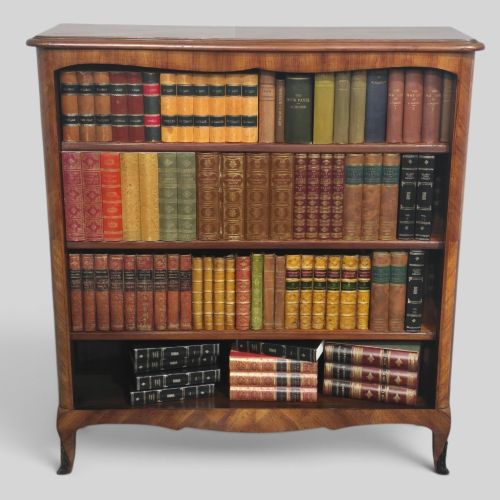

Brown Wood Library Shelves
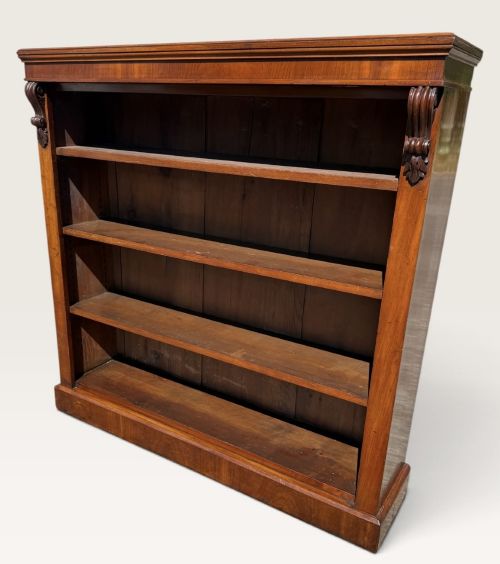
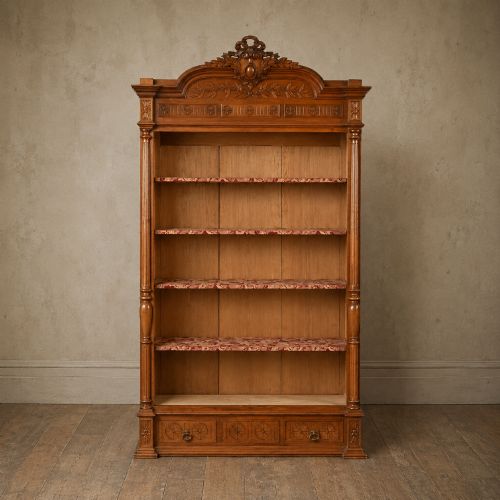
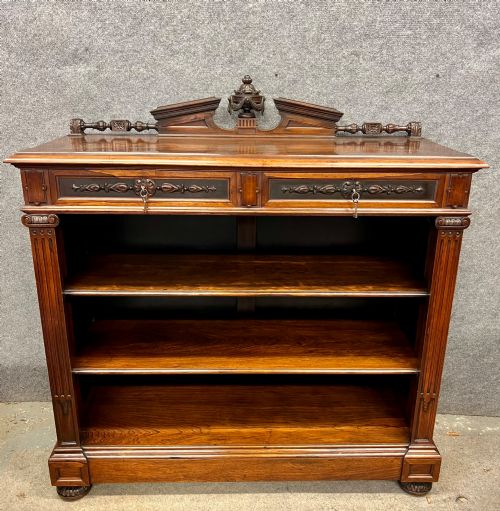
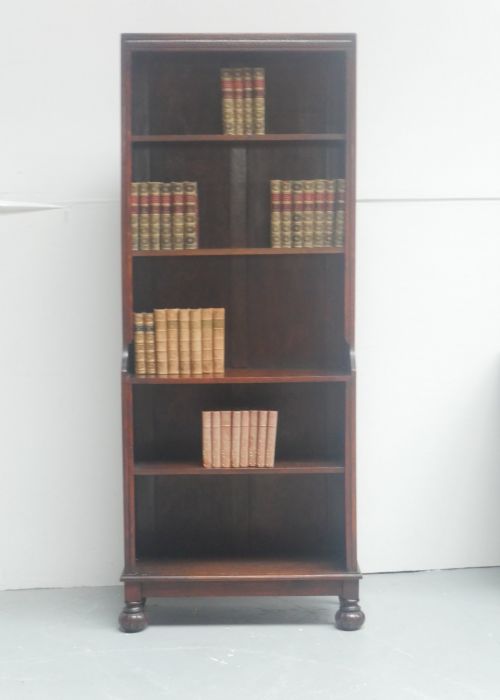
These brown wood library shelves bring order to a room, offering sturdy housing for volumes through open bookcases, cabinets, and etageres.
Brown Wood Library Shelves
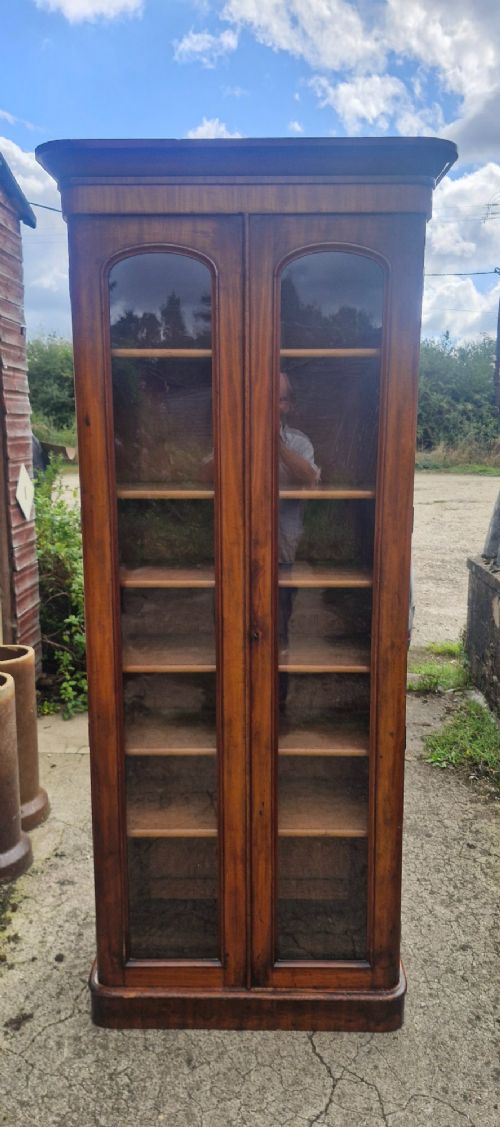
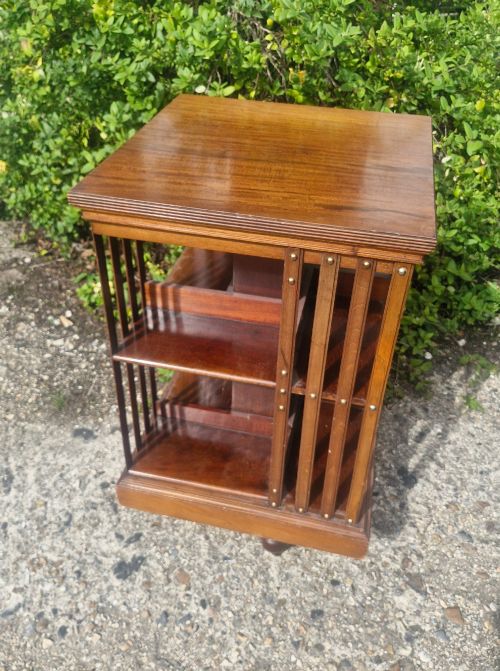
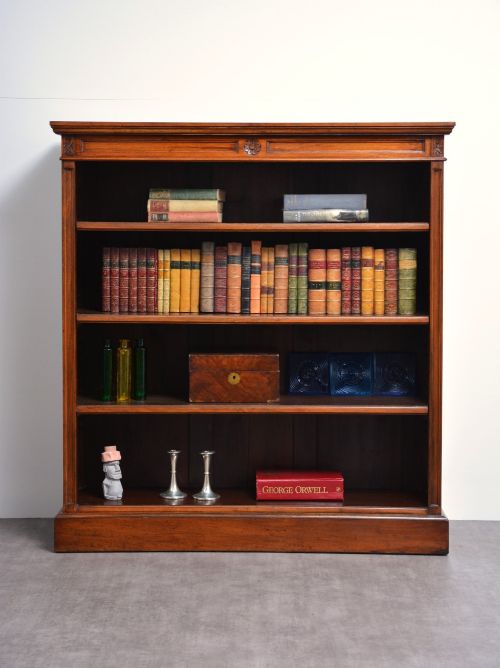
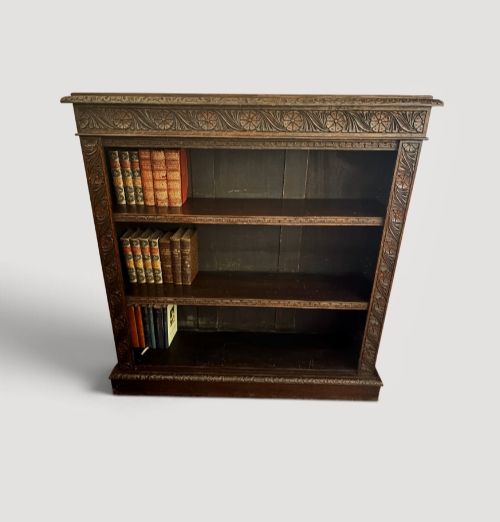
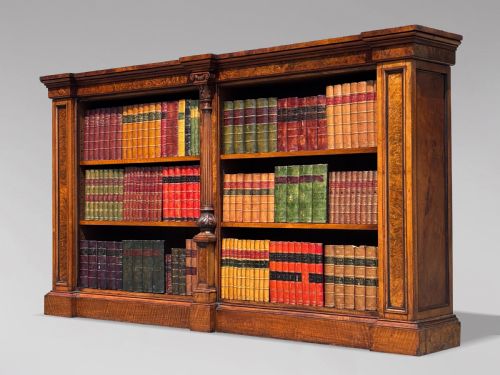
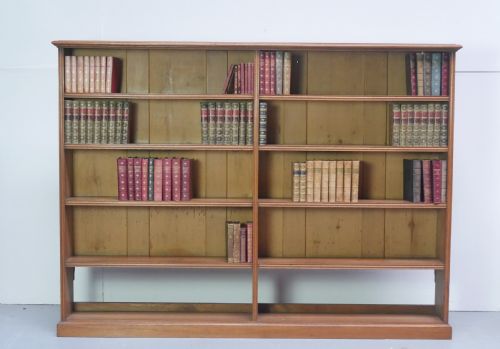
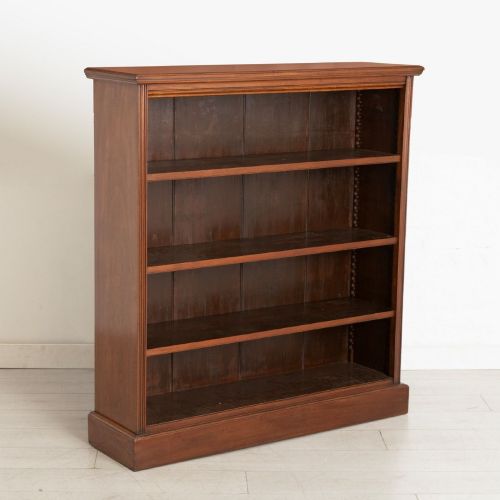
When searching for brown wood library shelves, buyers encounter traditional storage furniture built to hold books and display decorative objects in domestic interiors. The pieces span open bookcases, tall shelving units, breakfront designs, and revolving variants suited to different room proportions.
Victorian and Edwardian iterations dominate the selection, alongside items from the wider nineteenth and early twentieth centuries. These originate from British workshops as well as continental European makers, utilising dense hardwoods shaped for utility.
Open formats predominate, allowing direct access to volumes, while glazed cabinet doors or enclosed lower cupboards appear on larger format bookcases. Smaller etageres and whatnot stands provide multi-tiered platforms for display rather than heavy tome storage.
Materials and construction methods
Makers relied primarily on mahogany, walnut, and oak, selecting timber for strength and grain pattern. Burr walnut veneers and satinwood crossbanding appeared on finer items, adding decorative borders to otherwise plain shelf fronts.
Structural joinery prioritized load-bearing stability, utilising solid timber uprights alongside adjustable shelf supports to accommodate varying book heights. Brass castors frequently fitted to the base allowed heavy mahogany and oak carcasses to move across floorboards.
Carved ornamentation, beaded edges, and glazed upper sections required specialist carpentry, particularly on breakfront library bookcases and revolving shelf carousels.
Listings feature walnut, mahogany, oak, and yew wood across Victorian, Edwardian, and Regency periods.
Assessing construction and design standards
Superior examples display careful timber selection, matching grain patterns across large surfaces such as breakfront panels and open side panels. Finishes remain sympathetic to the wood, maintaining depth without obscuring natural figuring.
The integration of functional elements dictates practical success, particularly the smooth operation of adjustable shelf ratchets and the stability of rotating mechanisms on revolving bookcases. Solid backboards and tightly fitted joints ensure long-term durability under heavy book weights.
The Brown Wood Library Shelves Glossary
- Breakfront
- A piece of furniture where the central section projects forward from the flanking wings. This architectural layout gives large bookcases a commanding presence.
- Etagere
- A set of open shelves for displaying small objects, often freestanding. These tier upwards to create a light, decorative display space.
- Waterfall bookcase
- A shelving unit where each tier steps back sequentially from the one below, following a sloping profile. This form gained popularity during the Victorian and Edwardian periods.
- Crossbanding
- A border of veneer laid around the perimeter of a panel with the grain running perpendicular to the central field. It provides a neat contrasting frame.
- Whatnot
- A multi-shelved stand used for books or ornaments, developed during the nineteenth century. These items stand on slender upright supports.
Brown Wood Library Shelves: Frequently Asked Questions
How do I adjust the shelves?
Most period bookcases use wooden ratchets, brass studs, or movable shelf supports set into vertical slots inside the cabinet walls. Lift the shelf slightly to disengage the supports and reposition them into alternate slots.
Ensure both sides align evenly before placing books back onto the timber board to prevent warping.
Are these shelves suitable for heavy books?
Solid oak and mahogany open bookcases provide robust structural support for heavy volumes and reference sets. Thick timber boards resist sagging under sustained loads better than veneered alternatives.
Check that the upright supports and shelf pegs remain firmly seated before loading heavy folio editions.
What is a revolving bookcase?
A revolving bookcase is a compact, rotating shelving unit designed to sit on a floor or tabletop for easy access from an armchair. The internal pivot mechanism allows the entire tier of books to spin smoothly.
These compact units suit tight corners and smaller libraries where floor space is limited.
How do I care for walnut veneer?
Keep walnut furniture away from direct sunlight and heat sources to prevent the decorative veneer from drying out or lifting. Dust regularly with a dry cloth and apply occasional wax polish to maintain the finish.
Avoid excessive moisture and damp environments, which damage nineteenth-century polish and glue joints.