
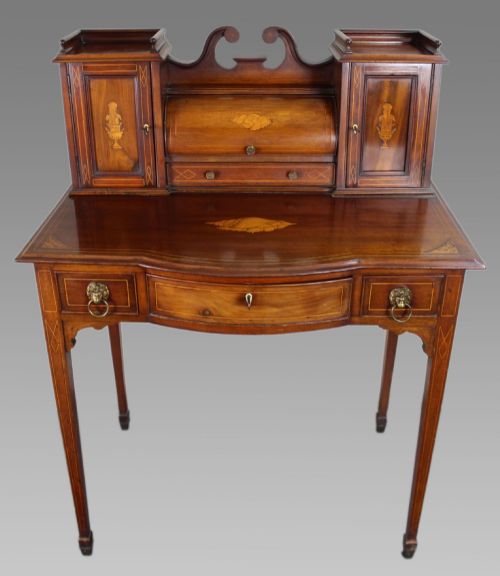
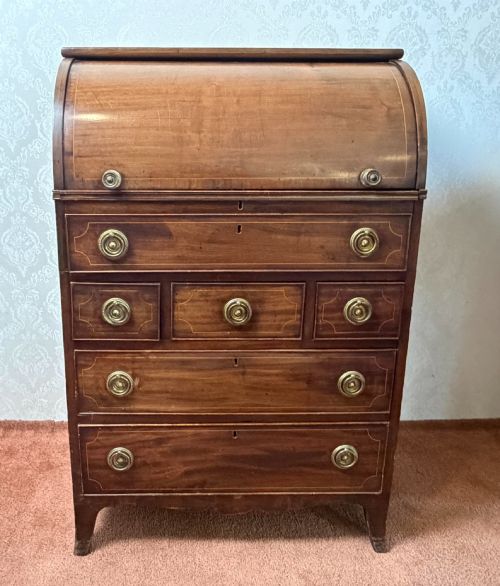
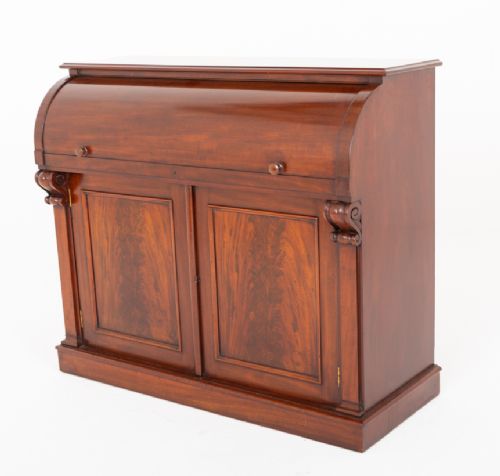
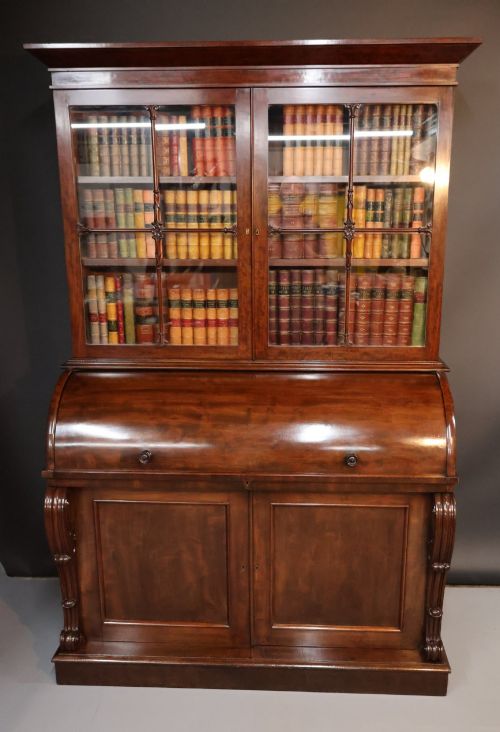
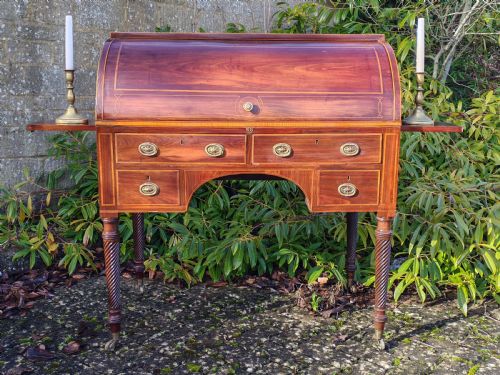


Brown Wood Cylinder Desk
A brown wood cylinder desk is a practical writing cabinet with a curved roll shutter concealing fitted drawers, offering a tidy surface for correspondence.
Brown Wood Cylinder Desk
A brown wood cylinder desk brings together the security of a cabinet and the workspace of a bureau through a curved wooden shutter that rolls back to reveal writing compartments. These pieces range from compact Edwardian examples to substantial Victorian pedestal formats and Georgian estate pieces.
Buyers will encounter various formats on this page, including cylinder bureau bookcases that combine upper shelving with a lower writing compartment. Woods such as mahogany, walnut, and yew dominate the selection across multiple nineteenth-century periods.
Materials and construction
Cabinet makers utilised solid timbers and veneers like flame mahogany, walnut, and satinwood over secondary woods, often adding contrasting stringing and marquetry inlays. The curved cylinder or tambour mechanism requires precise parallel slats or a curved solid panel running smoothly within side tracks.
Brass fittings, leather writing inserts, and fitted interior pigeonholes complete the construction of these writing surfaces, joining structural cabinet work with detailed internal joinery.
An antique Chinese brush pot sits amongst the British writing furniture, proving that desk accessories enjoy travelling far from home.
Distinctions in quality
The standard of a brown wood cylinder desk rests on the fluidity of the rolling mechanism and the precision of the internal stationery fittings. Superior examples display figured wood veneers matched across the curved shutter and drawer fronts, maintaining grain continuity when closed.
Finer pieces incorporate well-executed marquetry or inlay work, alongside secondary woods of high grade and robust drawer construction that operates smoothly without binding.
Boston Chair Company
The Brown Wood Cylinder Desk Glossary
- Cylinder top
- A curved wooden shutter that slides in a quarter circle track to cover the writing surface and interior compartments. This mechanism provides security without the folding flap of a standard bureau.
- Tambour
- A flexible shutter formed of narrow vertical strips of wood glued to a fabric backing, allowing the panel to curve around a radius. It functions similarly to a solid cylinder top.
- Bureau bookcase
- A dual-purpose cabinet featuring a fitted writing desk base beneath a glazed or panelled upper bookcase section. These taller pieces provide both storage and workspace.
- Marquetry
- Decorative patterns formed by fitting together small pieces of veneer into timber surfaces. It often creates floral or geometric motifs across drawer fronts and desk cylinders.
- Kneehole desk
- A freestanding desk with a central recess for the user's legs, flanked by pedestals of small drawers. This form allows the user to sit directly facing the writing surface.
Brown Wood Cylinder Desk: Frequently Asked Questions
How does a cylinder desk work?
The curved wooden shutter slides backward along internal tracks into the body of the desk, simultaneously pulling out the writing slide in some designs. This action uncovers pigeonholes and small drawers.
Closing the shutter secures the entire interior workspace in one movement, often locking automatically when fully lowered.
Where should I place a cylinder desk?
These desks suit studies, living rooms, or home offices where a traditional aesthetic is preferred. Because the back of the desk is often finished, many examples can sit away from a wall.
Ensure adequate clearance around the sides and front for the rolling mechanism and chair placement.
How do I care for the wood and leather?
Maintain the mahogany or walnut exterior with appropriate furniture wax applied sparingly and buffed gently. Avoid placing the desk in direct sunlight to prevent fading of the timber.
Treat leather writing inserts with specialist balms to keep the surface supple and prevent cracking over time.
How do I distinguish Victorian from Georgian desks?
Georgian examples often display finer proportions, lighter timber selections such as yew or figured mahogany, and restrained stringing. The hardware and internal drawer construction follow eighteenth-century cabinet-making traditions.
Victorian pieces tend to be heavier in scale, sometimes utilising bolder veneers, pedestal configurations, and machine-cut dovetails characteristic of later nineteenth-century production.