

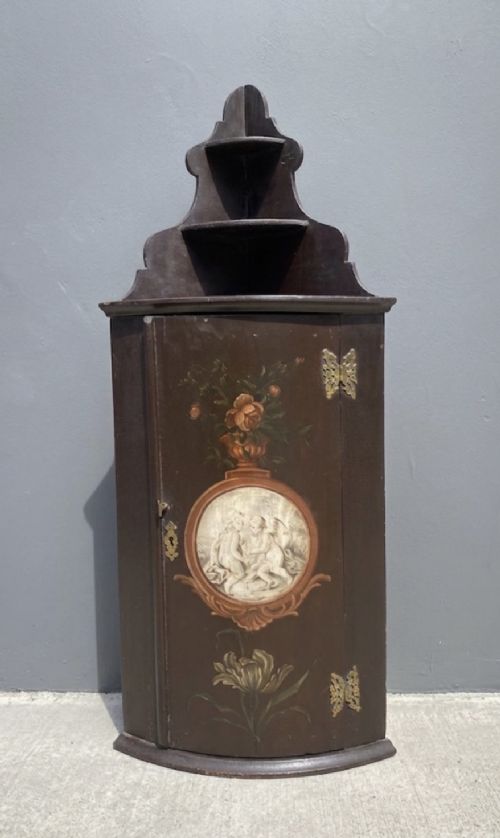


Brown Wood Corner Display
These brown wood corner display pieces turn neglected angles into practical storage, bringing timber warmth and period character straight to your rooms.
Brown Wood Corner Display
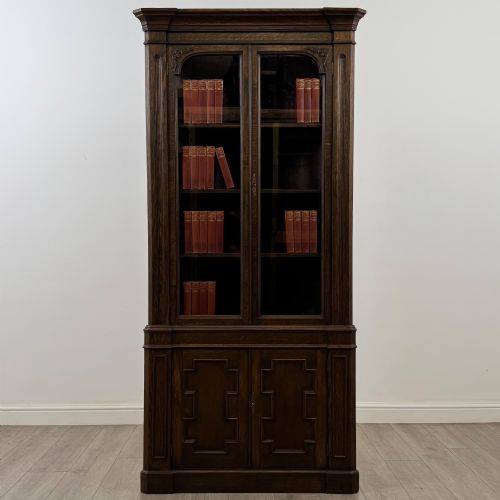
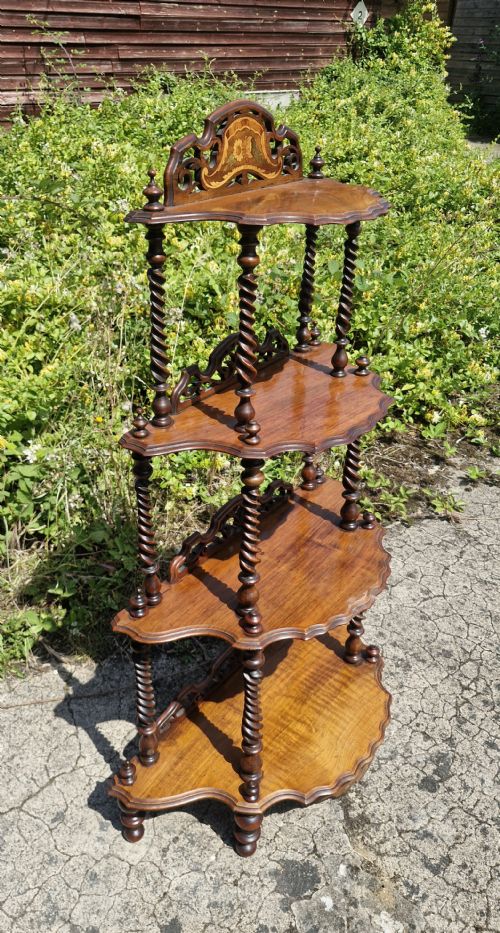
A brown wood corner display piece typically takes the form of a standing cabinet, a wall-hanging cupboard, or a multi-tiered open whatnot designed to fit snugly into a room angle. These items serve to utilise awkward spaces while providing surface area or enclosed shelving for cherished objects.
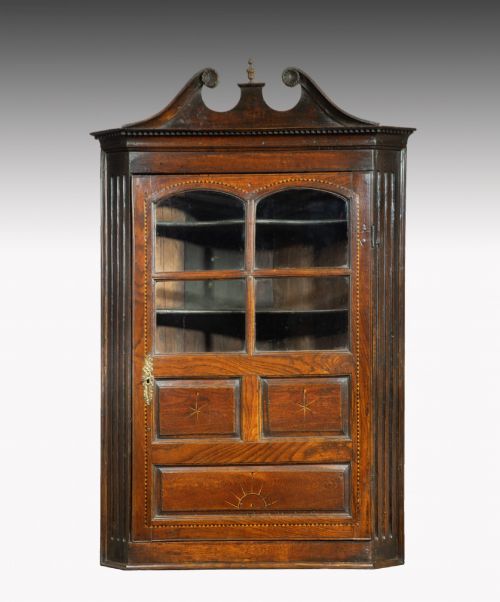
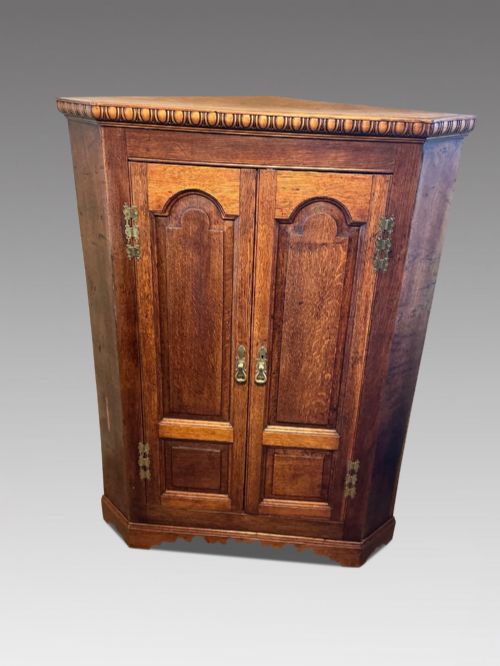
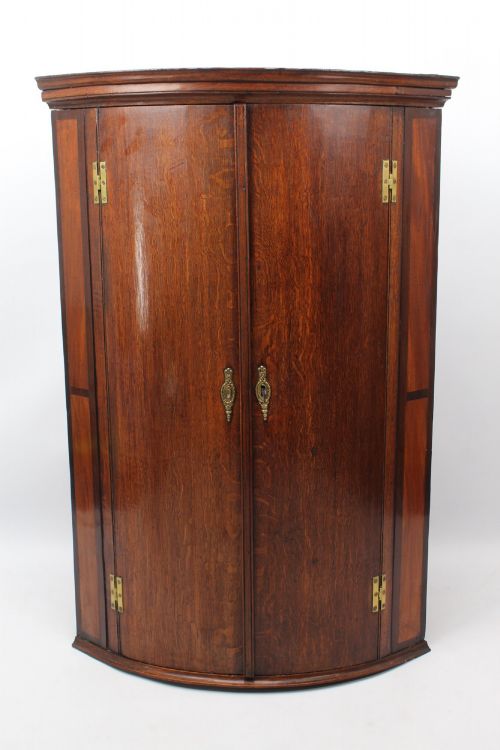
Most examples found here hail from the Georgian, Victorian, and Edwardian eras, constructed in enduring woods such as mahogany, oak, and walnut. Makers built them in both wall-mounted and floor-standing heights, incorporating glass doors, panelled timber, or open display tiers.
The assortment spans straightforward country oak pieces alongside finely inlaid mahogany specimens from the turn of the twentieth century. Buyers encounter everything from tall Regency cupboards to low, multi-tiered walnut display stands.
Materials and construction methods
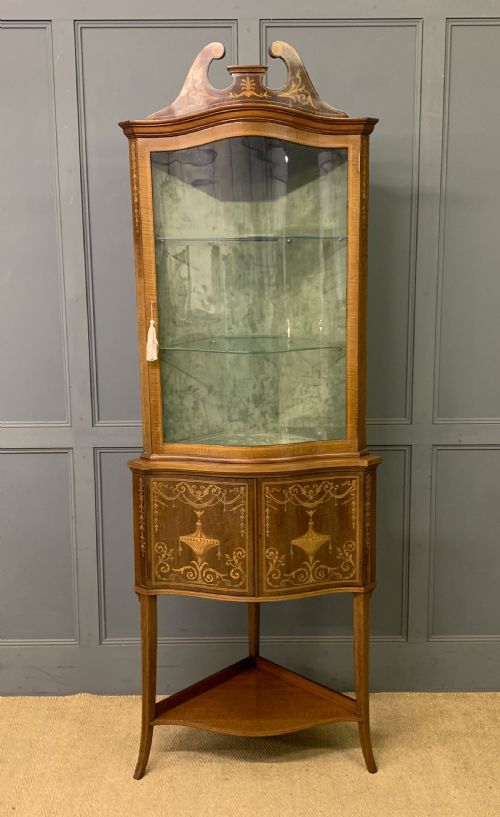
Cabinet makers relied heavily on solid hardwoods like mahogany, oak, and walnut, frequently applying burr veneers or contrasting crossbanding in satinwood to enhance the visual depth of cupboard doors and top surfaces. Structural framing often utilised secondary softwoods for internal carcases and backing boards.
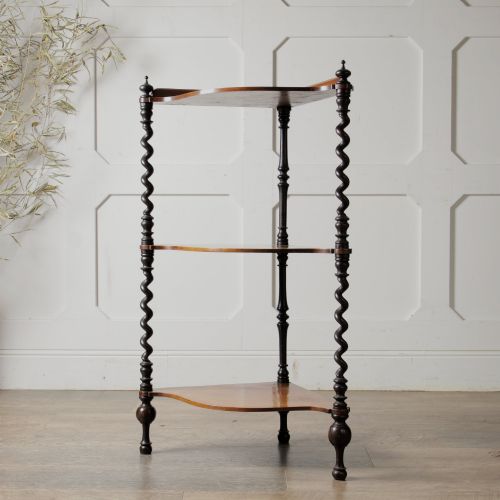
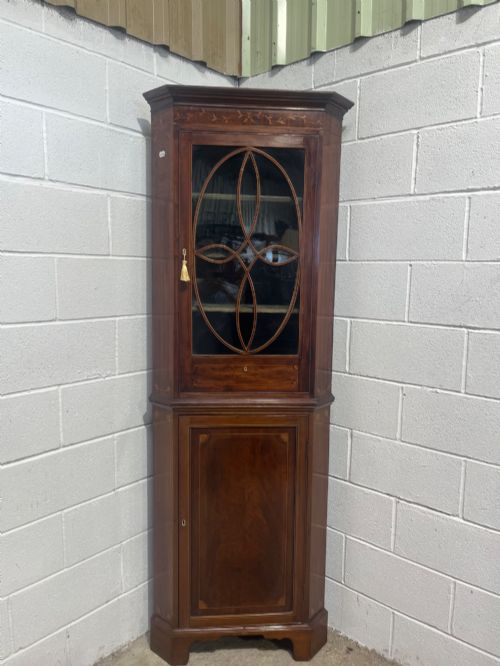
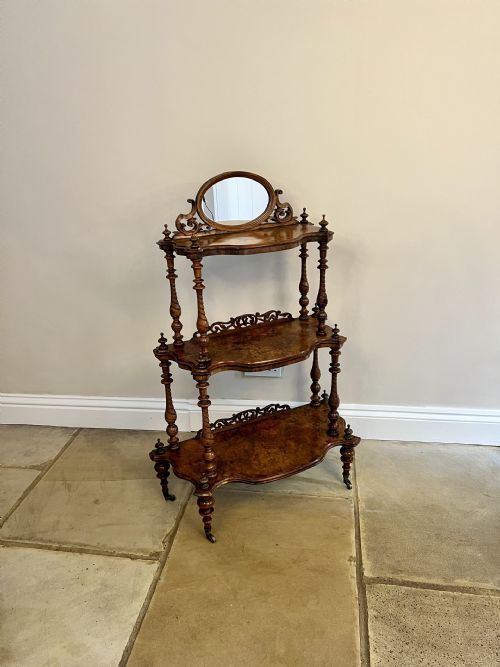
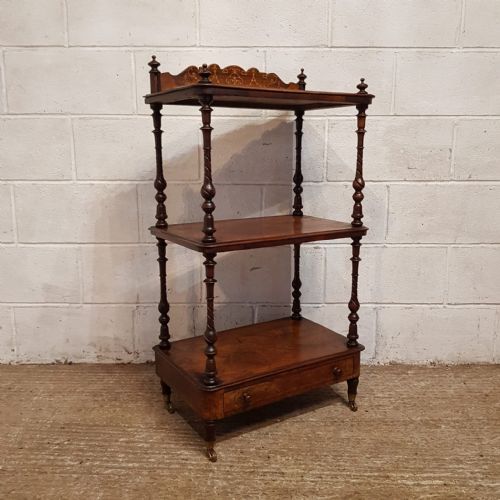
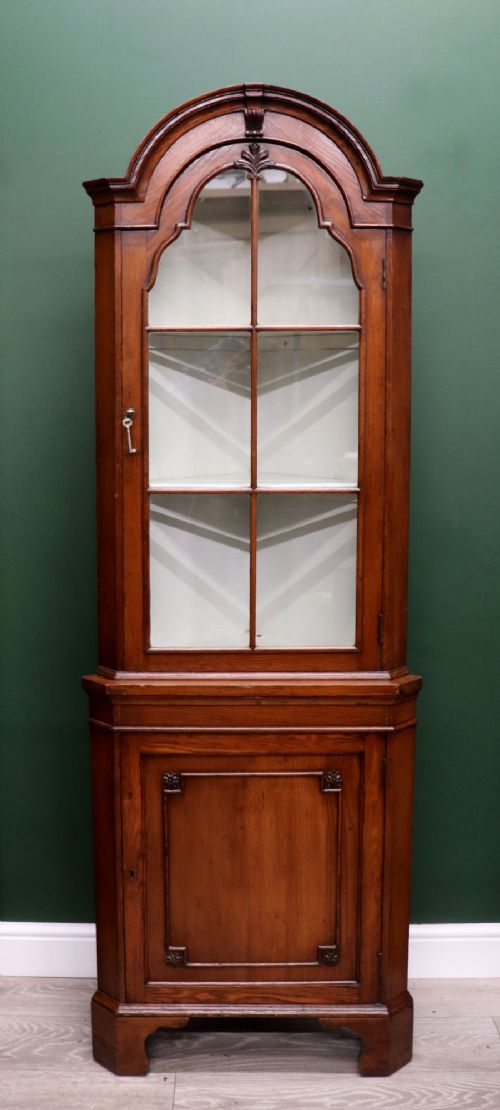
Glazing techniques employed small glass panes secured with timber glazing bars within cabinet doors, while open whatnots utilised turned uprights, barley twist columns, and carved supports to divide the individual display shelves.
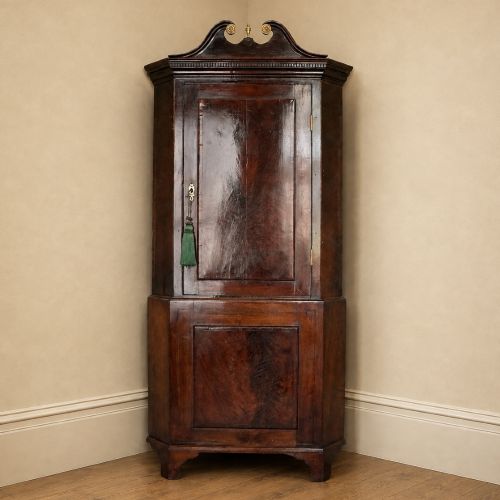
Brass hardware such as H-hinges, escutcheons, and working locks added functional detail, complemented by inlaid stringing and decorative marquetry panels seen on Edwardian and late Georgian pieces.
Several Victorian whatnots feature hollow barley twist columns, proving that nineteenth-century makers could not resist adding a playful spiral to everyday shelving.
Markers of quality and execution
Quality rests upon the selection of timber figures, such as highly figured burr walnut or dense, richly grained mahogany, matched with precise cabinet joints like dovetailing on drawer construction. Superior examples show careful attention to grain alignment across door panels and cornices.
The crispness of turned elements, such as barley twists or support columns, and the intricacy of inlaid stringing distinguish finer workshops from standard production. Original brass fittings and intact, well-fitted glass panes further elevate a piece's standing.
The Brown Wood Corner Display Glossary
- Whatnot
- An open set of multi-tiered shelves used for displaying ornaments and small objects. These pieces often feature turned vertical supports and date predominantly to the Victorian period.
- Crossbanding
- A decorative border technique where thin strips of veneer are laid perpendicular to the grain of the main surface. This method creates a framed effect on cabinet doors.
- Escutcheon
- A protective plate surrounding a keyhole, usually made of brass. It prevents the timber around the lock from wearing down through repeated use.
- Cornice
- The decorative moulded projection that crowns the top of a tall cabinet or cupboard. It provides a finished architectural transition to the ceiling.
- Stringing
- Thin inlaid lines of contrasting wood used to decorate furniture surfaces. This delicate technique is commonly found on Edwardian and Georgian mahogany pieces.
Brown Wood Corner Display: Frequently Asked Questions
How do I choose between a wall-hanging and floor-standing cabinet?
Wall-hanging corner cupboards free up floor space and work well above tables or desks, though their weight requires secure fixing to solid masonry or wall studs.
Floor-standing versions offer much greater storage capacity and a substantial presence, anchoring an empty corner with shelves or lower cupboards.
What is the best way to maintain walnut and mahogany timber?
Keep these timbers away from direct sunlight and heat sources to prevent the wood from drying out and the veneers from lifting.
Apply a traditional beeswax polish occasionally and buff with a soft cloth to maintain the natural lustre without building up heavy chemical residues.
How can I tell a Georgian corner cupboard from a Victorian one?
Georgian cupboards tend to feature simpler, architectural lines with solid panelled doors, brass H-hinges, and rich, dark mahogany or oak surfaces.
Victorian and Edwardian variants frequently incorporate glass-fronted display doors, elaborate burr walnut veneers, inlaid stringing, and turned barley twist supports.
Can these cabinets safely support heavy china and glassware?
Most antique corner cabinets feature fixed or adjustable timber shelves designed to hold everyday ceramics, books, or decorative glassware collections.
It remains wise to check the thickness of the shelf boards and the strength of their internal supports before placing exceptionally heavy lead crystal or large porcelain items inside.