
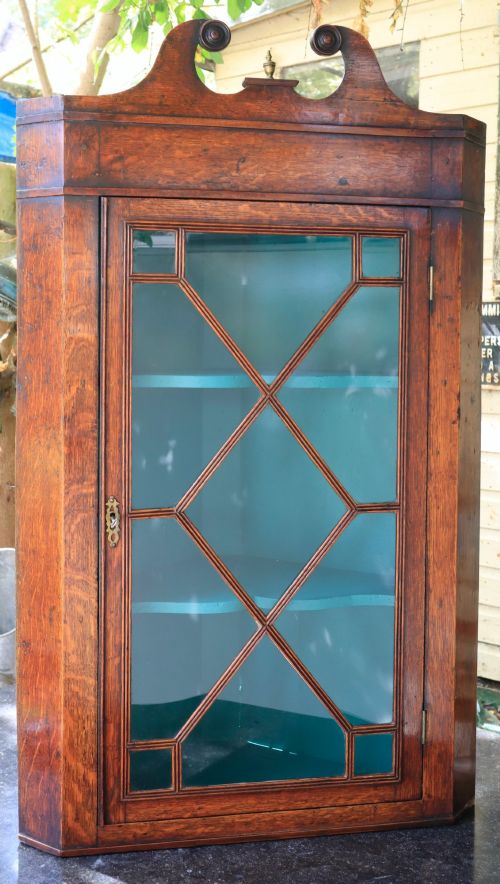
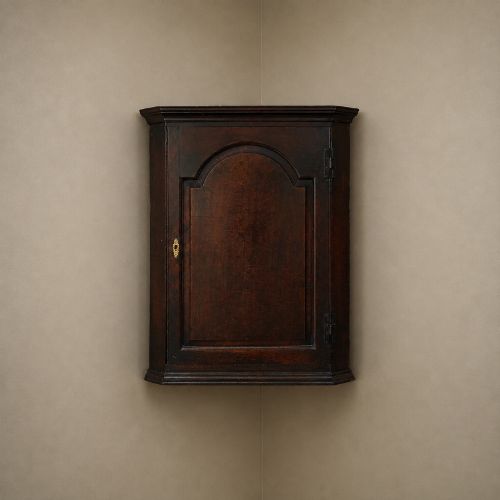
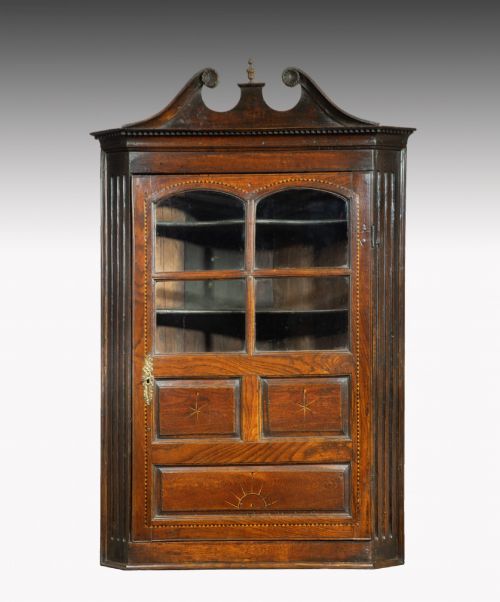
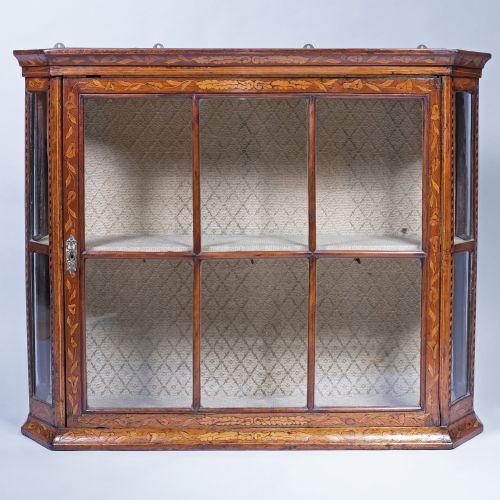
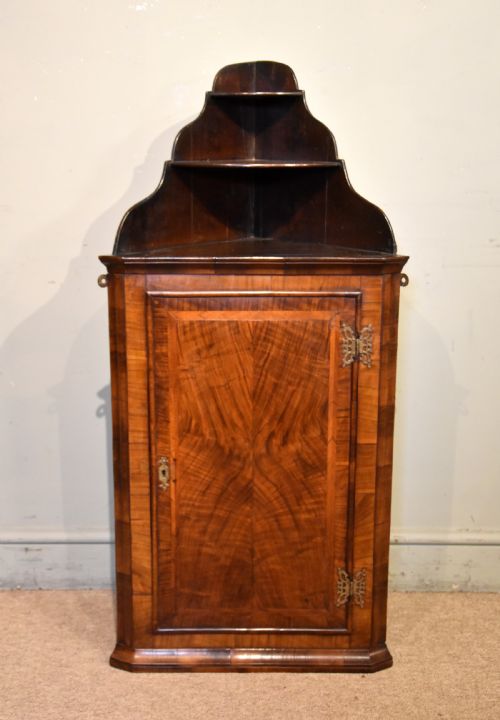
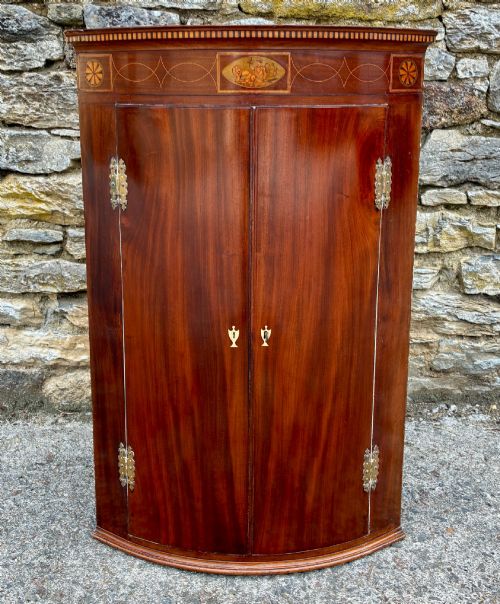
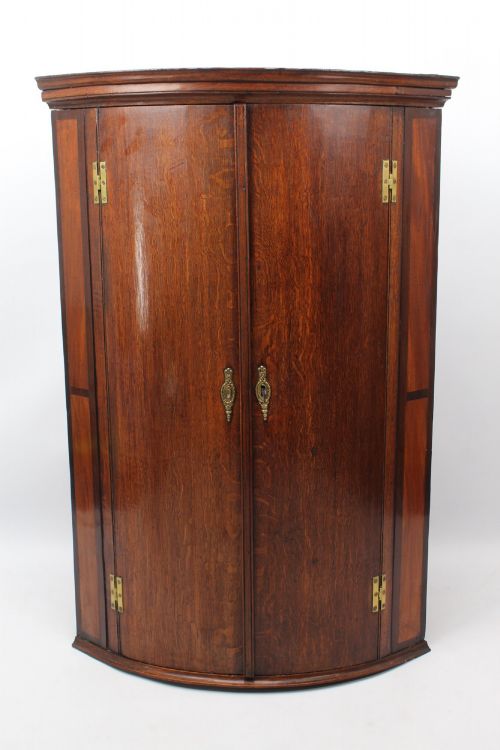

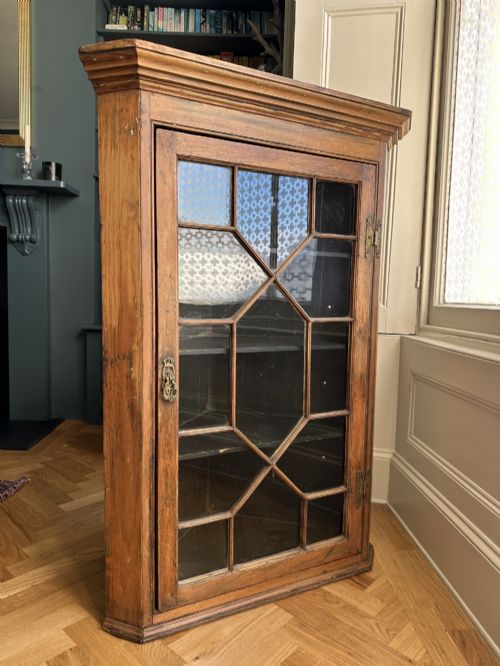
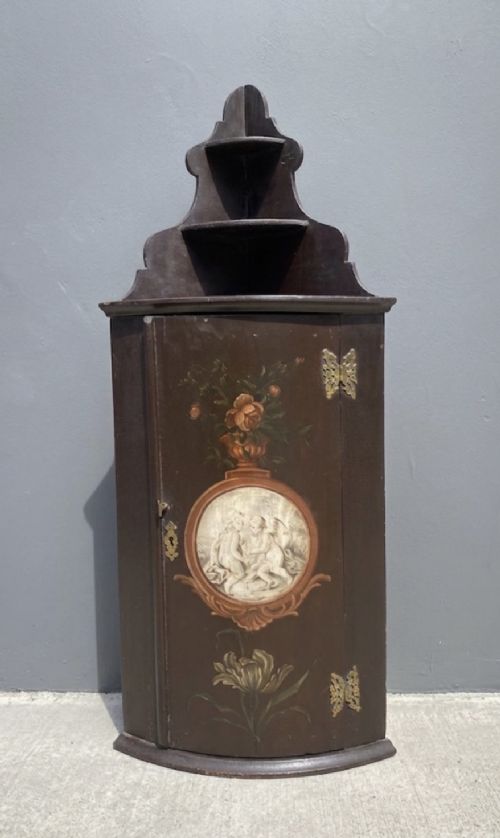

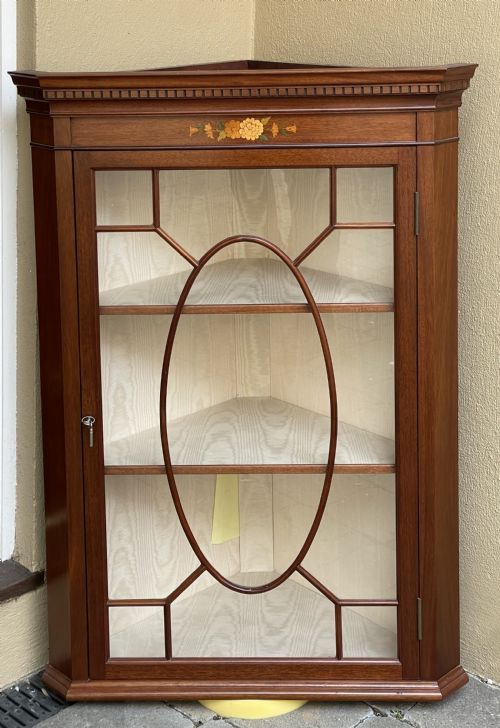


Georgian Hanging Display Cabinet
A georgian hanging display cabinet brings vertical storage to small rooms while framing ceramics and glass through original paned doors.
Georgian Hanging Display Cabinet
A georgian hanging display cabinet is principally found as a corner cupboard or wall cabinet designed to mount directly onto room plasterwork. The pieces on this page draw from the eighteenth and nineteenth centuries, alongside revival interpretations from later decades.
Most examples utilise a triangular footprint to fit snugly into unused room corners, featuring single glazed doors that protect the contents within. Wall-hanging variations and tiered shelves also appear, providing compact display space without claiming floor area.
Cabinetmakers constructed these pieces primarily during the Georgian era, though Edwardian workshops and mid-twentieth-century makers produced convincing revivals. Oak and mahogany dominate the structural forms, occasionally accented with bow fronts or architectural pediments.
Materials and Construction
Cabinetmakers relied on native oak and imported mahogany for the primary carcasses, frequently adding walnut, satinwood, and boxwood for decorative marquetry inlay and crossbanding. Pine served for internal carcases and secondary framing, while glass panes were hand-blown with characteristic surface ripples.
Joinery involved sturdy dovetail construction for drawers and frame joints, ensuring the heavy timber carcasses could support their own weight when wall-mounted. Brass hinges, escutcheons, and working locks secured the doors, often accompanied by original keys.
Distinctions in Quality
The refinement of the timber selection marks the difference between standard utility pieces and high-status examples. Finely figured mahogany, burr walnut, and complex crossbanding indicate workshops catering to affluent households.
Structural flourishes such as broken arch pediments, shaped shelving interiors, and original painted surfaces elevate certain specimens. Conversely, heavy alterations, replaced glazing, or stripped original finishes reduce the integrity of the piece.
The Georgian Hanging Display Cabinet Glossary
- Crossbanding
- A decorative border technique where veneer strips are laid across the grain of the primary wood. This frames drawer fronts and door panels on finer Georgian furniture.
- Bow front
- A convex curved cabinet face that softens harsh room corners and provides extra internal volume. It requires specialist joinery to bend the timber and glass.
- Pediment
- The decorative architectural structure mounted atop the cabinet cornice. Styles range from simple flat mouldings to elaborate broken arch designs.
- Escutcheon
- A small protective brass plate surrounding the keyhole. These plates prevent timber wear around the lock over centuries of use.
Georgian Hanging Display Cabinet: Frequently Asked Questions
Were these always corner cabinets?
While the majority of surviving examples utilise a triangular footprint to occupy room angles, flat-backed wall cabinets and hanging shelves also exist in the record. Corner placement solved the problem of awkward junction spaces in smaller Georgian chambers.
Flat wall versions served similar display functions but were designed for straight expanses of panelling or wallpaper.
How do I spot a revival piece?
Revival pieces from the Edwardian period or later decades often display machine-sawn timber marks, modern brass screws, and uniform flat glass panes. Genuine eighteenth-century cabinets show hand-planed surfaces, irregular handmade glass, and period secondary timbers like oak or deal.
Examining the interior linings and drawer dovetails provides clear evidence of the actual period of manufacture.
What was stored inside them originally?
Wealthy households utilised these hanging cupboards to display imported porcelain, drinking glasses, and silver items safely away from household bustle. The glazed doors kept dust off delicate wares while allowing guests to admire the collection.
Some cabinets feature specialised interior shelving profiles or small drawers specifically sized for tea canisters and drinking vessels.