


Brown Wood Bedroom Drawers
Brown wood bedroom drawers bring warmth and practical storage, spanning Georgian proportions to early twentieth-century designs in rich mahogany and walnut.
Brown Wood Bedroom Drawers
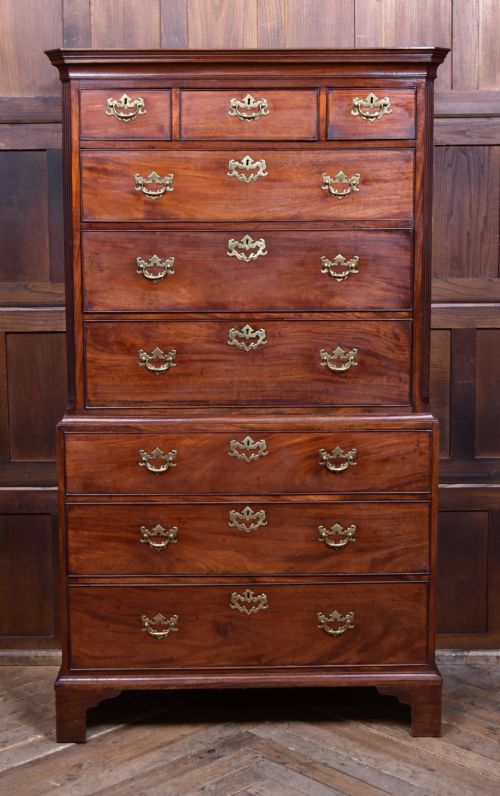
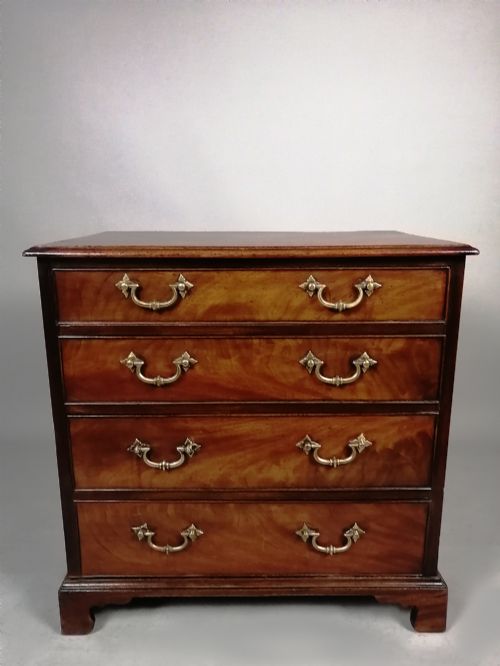
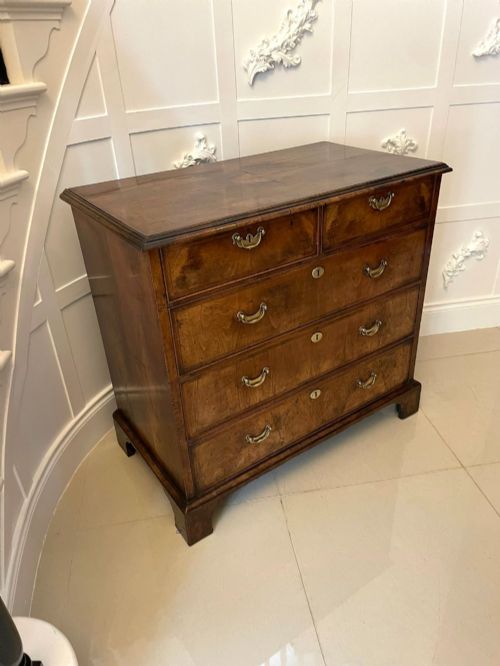
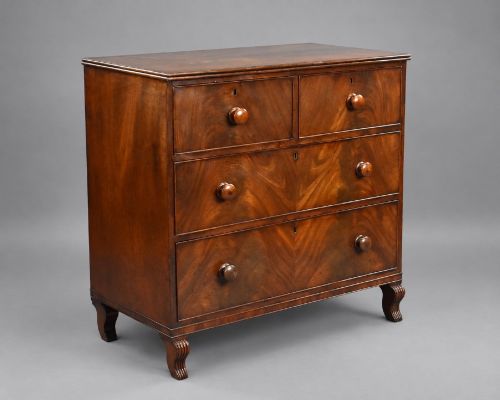
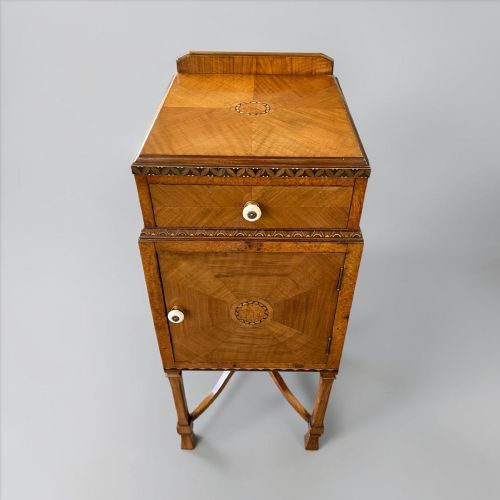
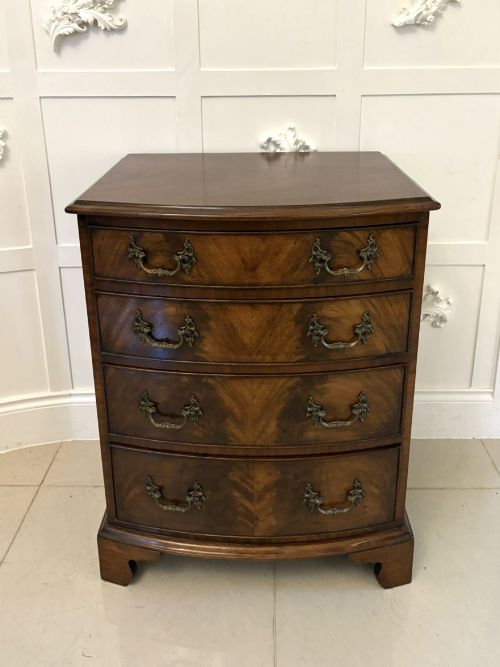
When you search for brown wood bedroom drawers, you encounter solid timber case pieces designed for domestic chambers, predominantly tall chests and compact bedside units. The selection here leans heavily toward mahogany and walnut chests of drawers from the Georgian, Regency, and Victorian periods, alongside Edwardian and later twentieth-century iterations.
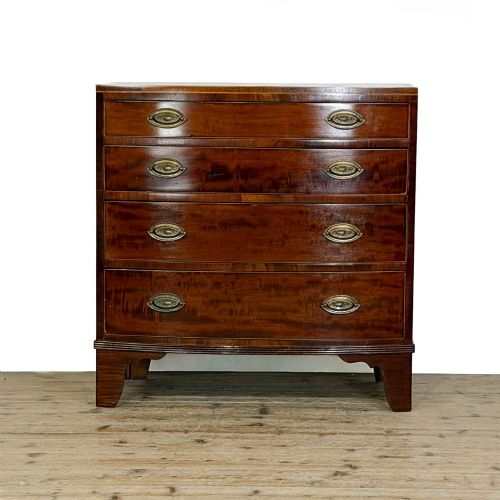
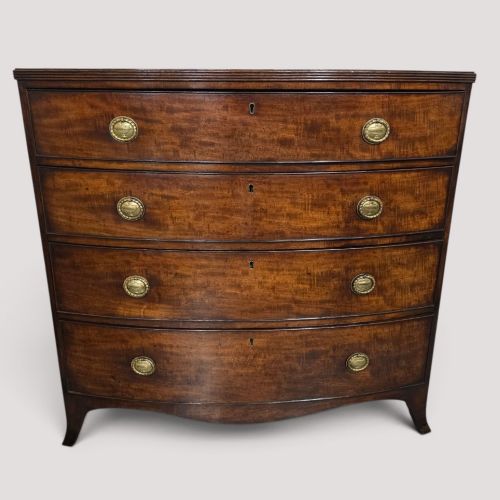
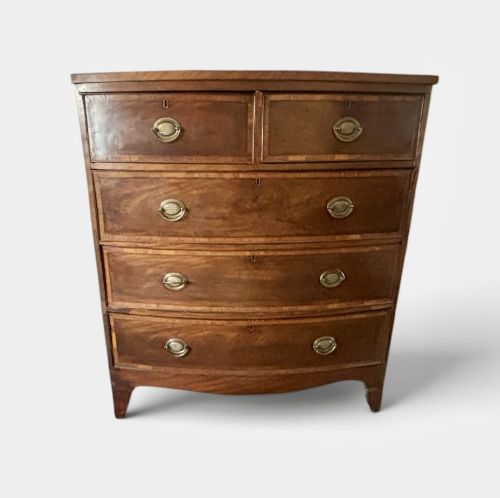
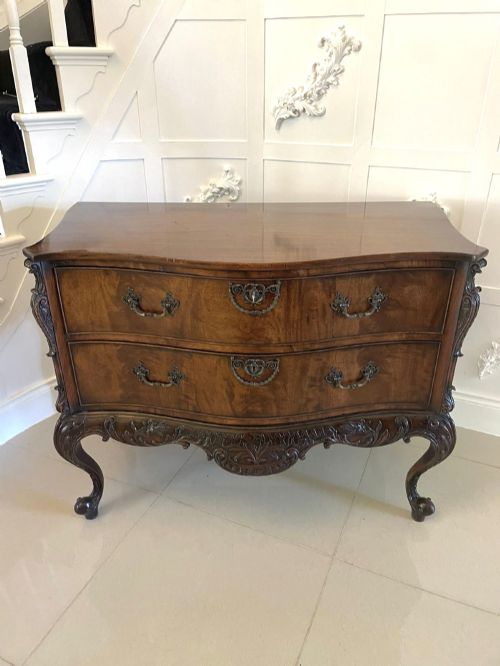
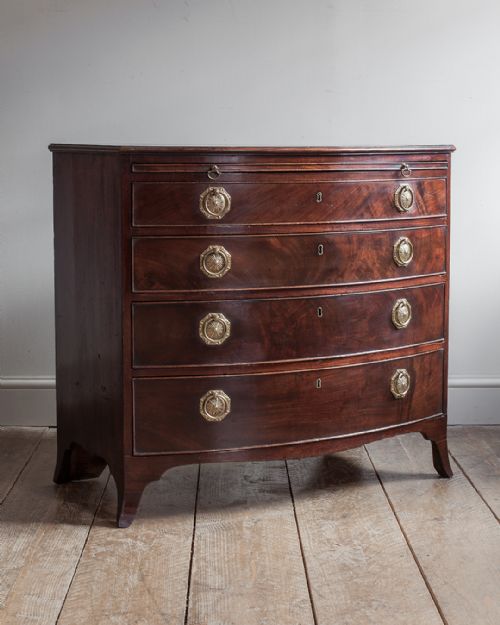
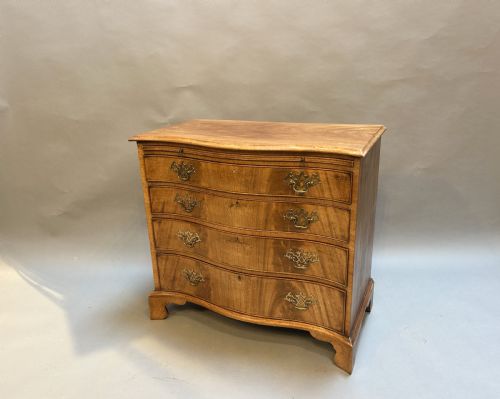
The form ranges from rectilinear four-height chests to bow front and serpentine outlines that soften the silhouette. Alongside standard drawer configurations, you find occasional dressing tables, mirrors, and smaller bedside chests suited to varied room dimensions.
How they were made
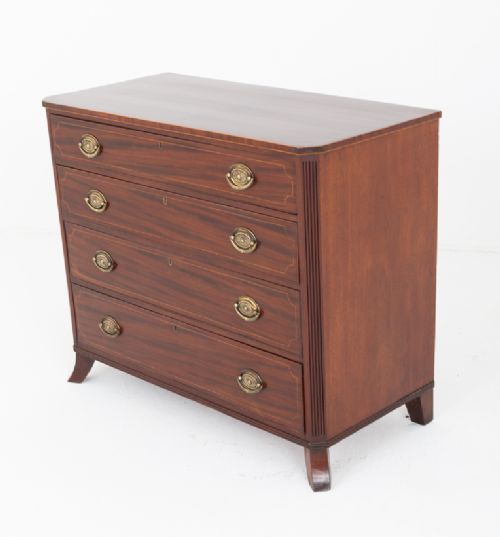
Cabinet makers utilised dense native and imported timbers, principally mahogany and oak, often applying figured veneers and flame mahogany to visible drawer fronts to create movement and depth. Satinwood banding and contrasting string lines frequently frame the primary wood surfaces on Regency and Georgian pieces.
Structural integrity relied on dovetailed drawer construction and solid secondary woods, paired with cast brass drop handles or knobs secured through the drawer face. Surface finishes were built up using traditional polishing methods that highlight the natural grain structure of the wood.
Listings feature timbers including mahogany, walnut, oak, and satinwood, spanning pieces from the eighteenth century to the 1930s.
What varies in quality
The distinction between standard items and superior examples rests on the choice of timber veneer and the precision of the cabinet work. Matched flame mahogany or figured walnut across multiple drawer fronts signals a higher tier of production.
Proportion and execution define the overall presence of the piece, particularly in curved bow front or serpentine outlines where smooth lines demand exact carpentry. Original brass hardware and clean interior drawer construction further elevate the standing of a chest.
The Brown Wood Bedroom Drawers Glossary
- Bow front
- A convex curved cabinet front that projects outward at the centre. This shape gained popularity during the Georgian and Regency periods.
- Serpentine outline
- A front configuration featuring a convex centre flanked by concave curves, or vice versa. It requires advanced woodworking skill to execute properly.
- Flame mahogany
- Timber cut from the fork of the mahogany tree, producing a distinctive flickering flame pattern. It is typically applied as a veneer on prominent drawer faces.
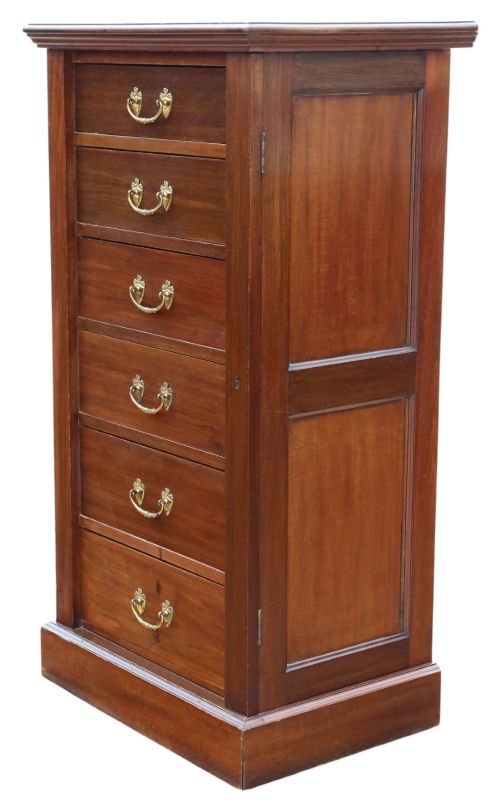
- Wellington chest
- A tall, narrow chest of drawers secured by a hinged locking stile on one side. This form originates from the nineteenth century.
- Satinwood banding
- A decorative inlay border using pale, lustrous satinwood to frame darker primary timbers. This technique defines many Regency pieces.
Brown Wood Bedroom Drawers: Frequently Asked Questions
How do I date a mahogany chest?
Dating relies on assessing construction methods, timber choice, and hardware styles. Earlier pieces from the eighteenth century often feature hand-cut dovetails and oak secondary linings.
Later Victorian and Edwardian examples display machine-sawn components and different carcass proportions. Comparing handles and drawer runner wear helps narrow down the decade of manufacture.
Are bedside chests common in older periods?
Matching pairs of dedicated bedside chests appear less frequently in early Georgian inventories, where smaller tables served multiple bedroom functions.
Purpose-built bedside chests become more prevalent by the Victorian and Edwardian periods. Many current listings include paired nineteenth and early twentieth-century bedside tables.
How should I care for antique wood drawers?
Keep wooden furniture away from direct heat sources and drastic humidity changes to prevent timber splitting and veneer lifting. Regular dusting with a dry cloth protects the polished surface.
Avoid silicone-based sprays and apply occasional traditional wax polish to nourish the antique finish.