


Brown Wood Banquet Table
A brown wood banquet table gathers a room around solid timber, built to seat large companies through centuries of dining.
Brown Wood Banquet Table
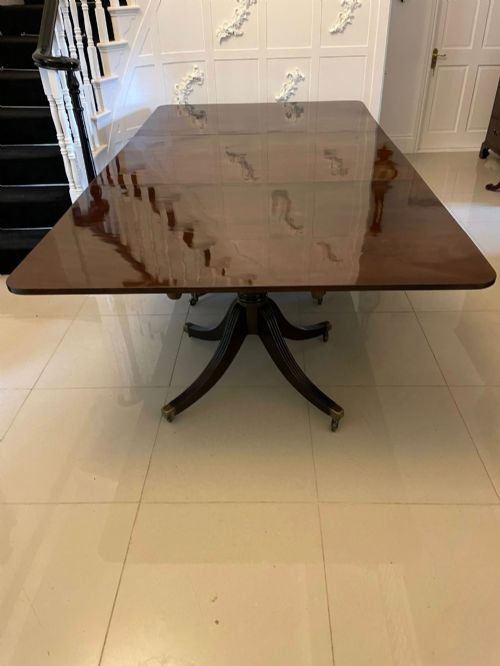
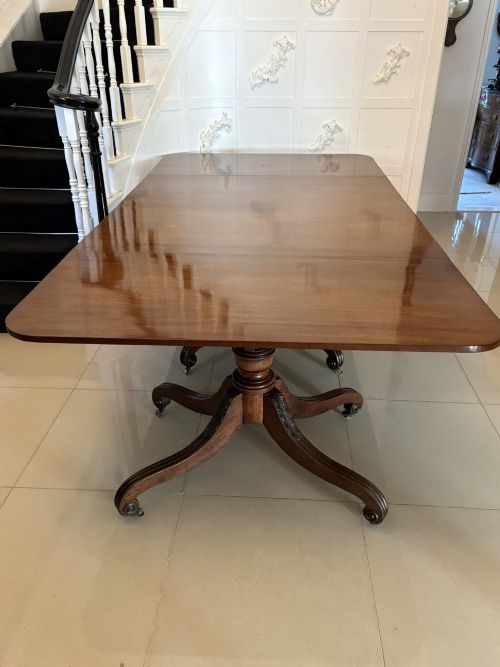
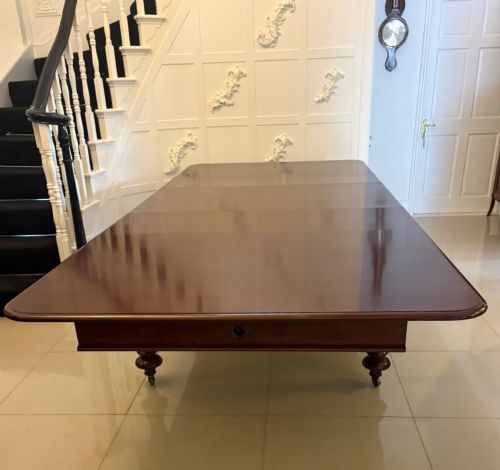
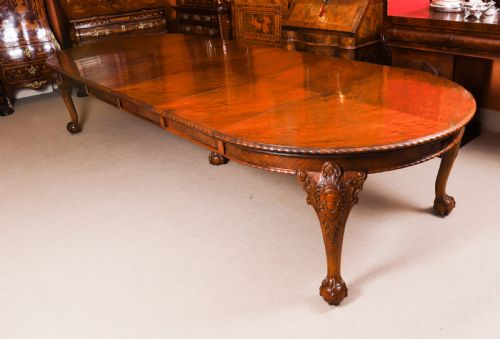
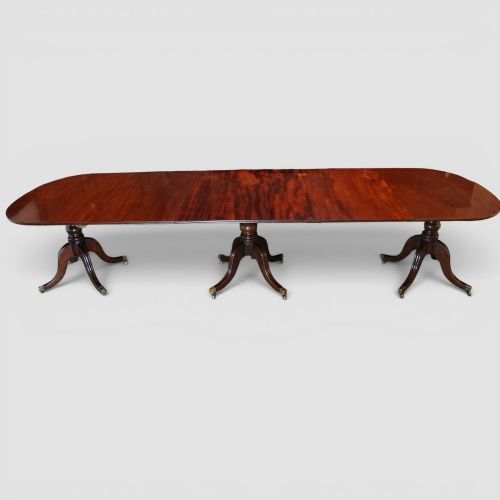
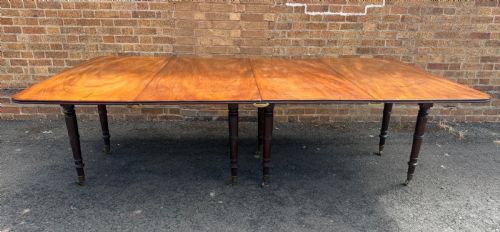
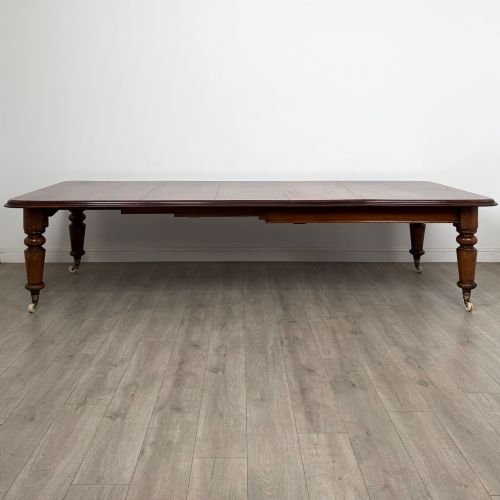
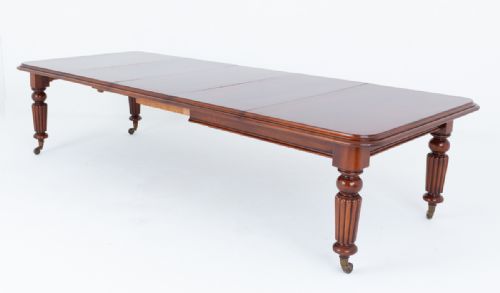
A brown wood banquet table serves as a substantial centrepiece for large gatherings, constructed primarily as extending dining tables across Georgian, Regency, William IV, and Victorian periods. Buyers seeking a brown wood banquet table encounter multi-pedestal bases or multiple leaf insertions designed to accommodate extended seating capacities.
The format spans twin and triple pedestal configurations alongside long refectory styles, reflecting the domestic scale of nineteenth-century townhouses and country houses. Most examples originate from the Georgian and Victorian eras, utilising timber grown and seasoned before modern industrial forestry.
Makers such as Gillows and Maple & Co produced formal dining furniture that survives in robust condition, often retaining winding mechanisms for leaves. These pieces range from restrained, narrow proportions to expansive multi-pillar tables capable of seating twenty guests.
How they were made
Makers relied on solid mahogany, burr walnut, and rosewood, frequently selecting figured or flame veneers for table tops to display rich grain patterns. Timber selection prioritised density and stability, ensuring wide boards could span large frames without excessive warping.
Pedestal bases incorporated turned or reeded columns supported by splayed legs, often finished with brass castors and toe caps for mobility. Extending mechanisms utilised wooden runners or metal screw actions to support removable leaves inserted to alter the overall length.
Listings feature mahogany, walnut, oak, and rosewood across Georgian, Regency, and Victorian periods.
What varies in quality
Quality rests in the selection of the timber and the precision of the joinery connecting the pedestals to the top. Superior tables employ matched flame mahogany boards across all sections, maintaining consistent grain direction when fully extended.
The engineering of the extending mechanism and the weight of the brass fittings dictate the daily utility of the table. Tables retaining their original winding handles, stable brass castors, and well-fitted leaves represent the higher tier of surviving production.
Gillows·Maple & Co·Waring and Gillow
The Brown Wood Banquet Table Glossary
- Pedestal
- A central column support resting on splayed legs rather than four corner vertical legs. This design allowed diners greater legroom around the perimeter of the table.
- Leaf
- A removable section of timber inserted into the centre of an extending table to increase its length. Multiple leaves allowed the table size to adjust according to the number of guests.
- Flame mahogany
- A veneer cut from the branch junction of a mahogany tree, producing a distinctive flickering flame pattern. It was prized for formal furniture surfaces.
- Imperial action
- A mechanical extending system that separates the table halves synchronously while operating internal runners. It allowed single operators to expand large dining surfaces smoothly.
- Reeded
- A decorative moulding formed of parallel convex semicircular curves carved into table legs or pedestals. This surface treatment was characteristic of Regency design.
Brown Wood Banquet Table: Frequently Asked Questions
How do I care for a mahogany dining table?
Maintain timber surfaces by applying beeswax periodically and avoiding placement near direct heat sources or strong sunlight. Use protective mats for hot dishes to preserve the polished finish.
Clean spills promptly with a dry or slightly damp cloth rather than chemical solvents. Regular gentle polishing preserves the natural lustre of the wood grain over decades of use.
How do extending leaves work?
Extending leaves are supported by internal wooden runners or a central frame that pulls apart to create a gap. Additional boards drop into this space and secure with brass pins or clips.
Older tables often require a detachable metal crank handle to turn the internal screw mechanism. Ensure the table is unloaded before operating the winding action to prevent strain on the runners.
How can I tell a Regency table from a Victorian one?
Regency tables, dating from the early nineteenth century, typically exhibit restrained classical lines, brass reeded details, and lighter mahogany tones. They often favour pedestal bases with sabre legs.
Victorian examples from the mid to late nineteenth century frequently feature heavier proportions, darker timber, and more elaborate carvings on the legs and skirts. They commonly employ six or more legs on larger extending formats.
Will these tables fit in a modern dining room?
Many historic dining tables were built with narrow proportions or removable leaves that allow them to scale down for daily use. Measuring both the room dimensions and the minimum table length is essential before purchase.
Consider chair clearance around the perimeter, accounting for pedestal bases and leg positions. A narrow Regency format often suits contemporary spaces better than a wide Victorian refectory table.