

Brown Wing Chair
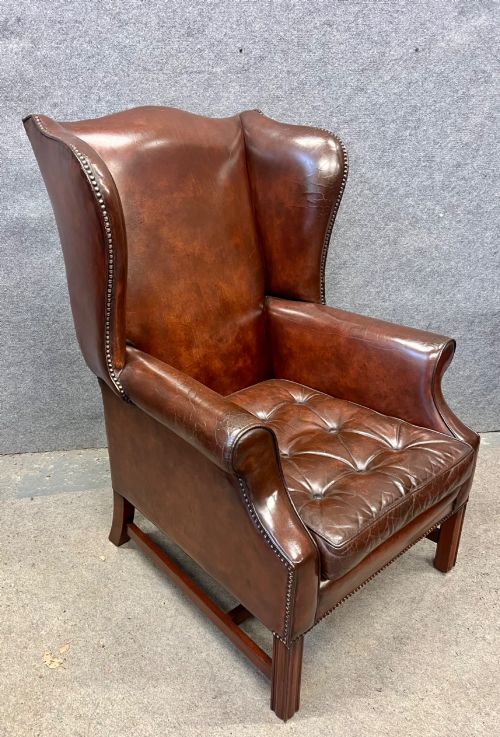
A brown wing chair brings deep comfort and formal presence to a room, offering high padded sides to block drafts and hold heat near the seated person.
Brown Wing Chair
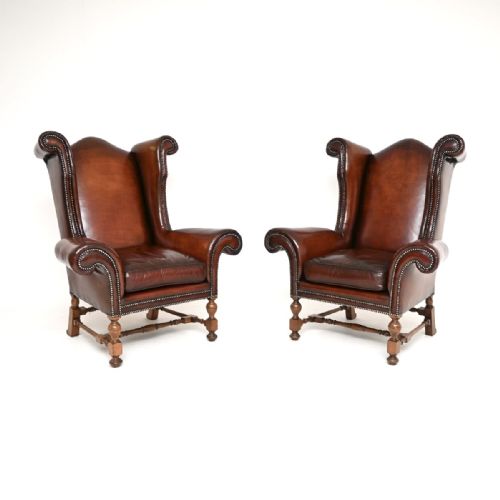
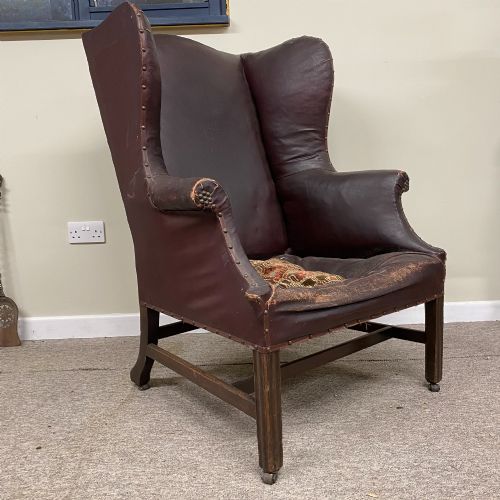
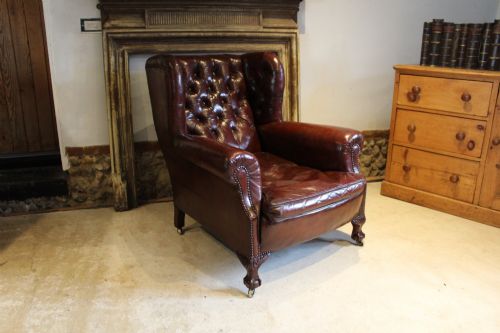
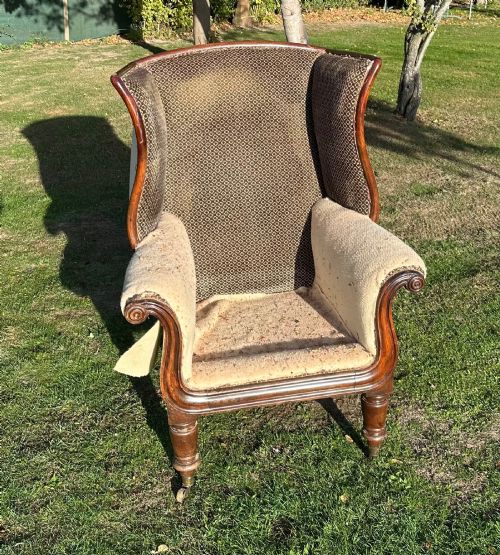
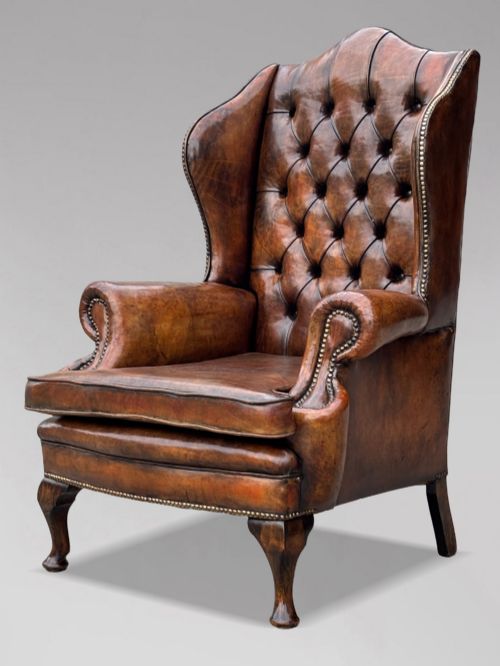
A brown wing chair is a classic fireside seating form designed to protect the occupant from household drafts while trapping warmth from an open grate. The listings here span several centuries, moving from early examples through the Victorian era to later revivals.
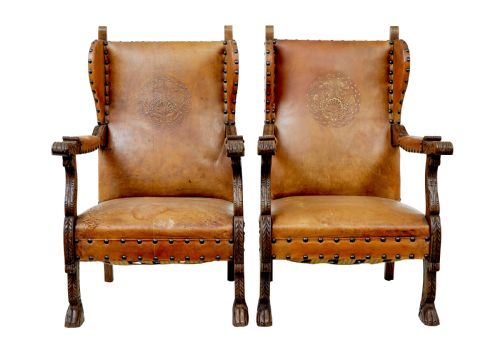
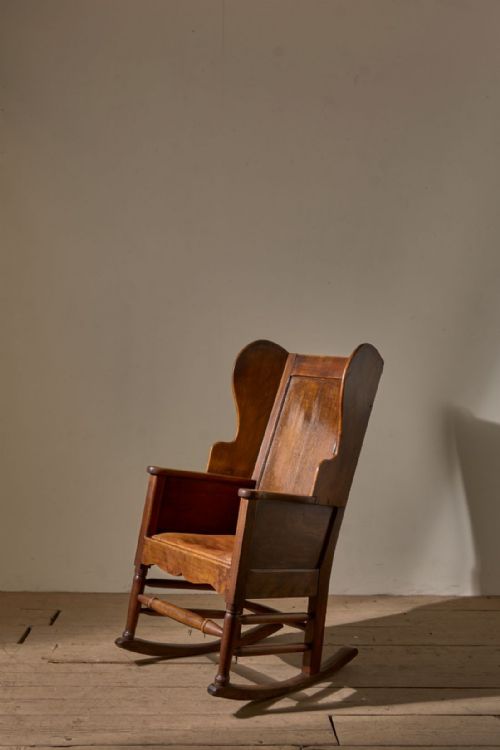
Buyers will encounter traditional leather upholstery alongside various fabric coverings, set upon frames shaped in oak, mahogany, and walnut. The forms range from standard library armchairs to child-sized versions and rocking seats.
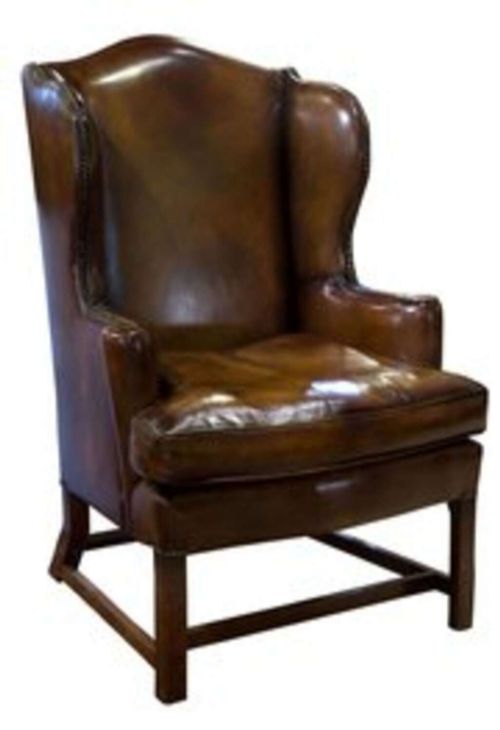
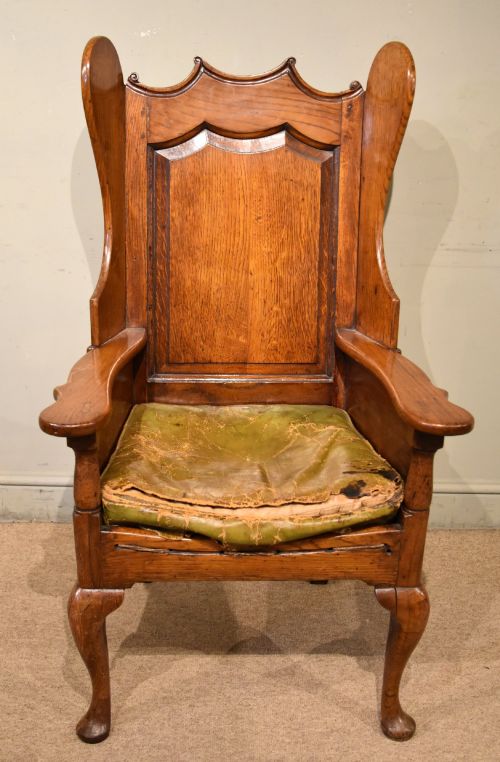
Pieces from Georgian and Victorian periods sit alongside twentieth-century revivals and mid-century designs, showing how the archetype adapted across eras. Each era brought distinct proportions and leg treatments, from cabriole supports to straight mahogany frames.
Materials and construction methods
Frames rely upon durable hardwoods including oak, mahogany, and walnut, selected for structural strength to support deep padding. Joinery techniques secure the upright wings and high backs to withstand daily use over generations.
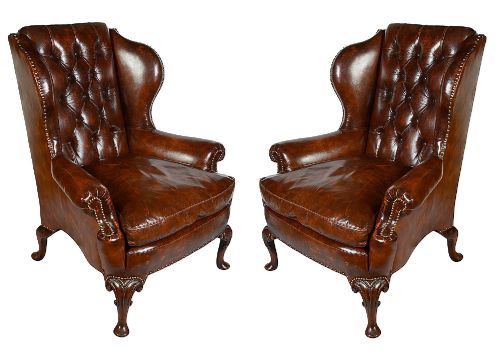
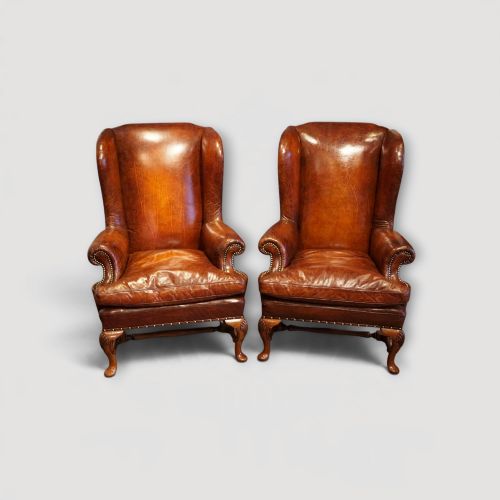
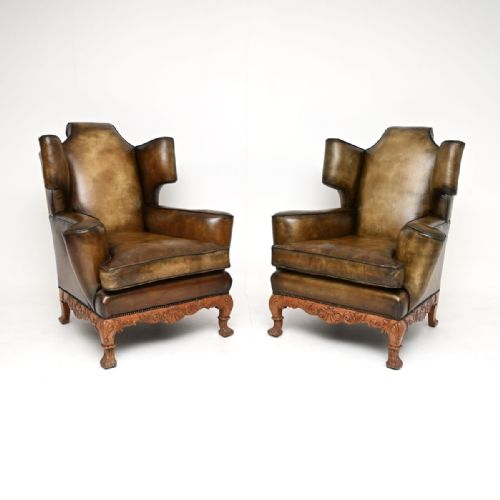
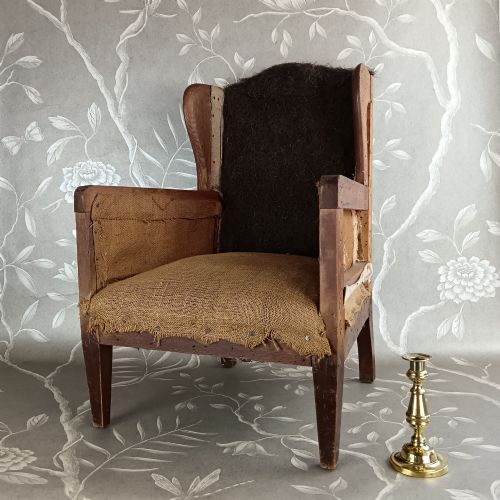
Support systems beneath the leather or fabric incorporate traditional stuffing methods within the arms and backrest. Cabriole legs in walnut or mahogany are frequently carved directly from the frame timber or dowelled securely into the base.
Brown Wing Chair Retail Price Guide 2026
Typical asking prices for brown wing chair among the pieces listed under this phrase on Sellingantiques today, from the lower quarter to the upper quarter. They describe what is for sale here now, not the wider market.
The inventory spans the eighteenth, nineteenth, and twentieth centuries, incorporating oak, mahogany, walnut, and brass alongside leather and fabric.
Factors that distinguish quality
The integrity of the underlying hardwood frame dictates the longevity and structural stability of the seating. Pieces retain greater value when the timber remains unaltered and the joinery stays firm without excessive modern reinforcement.
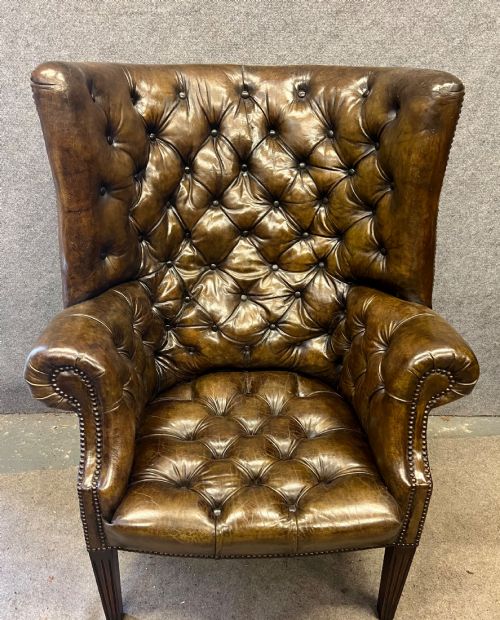
The treatment and condition of the leather define the visual appeal of the piece. Hand-dyed hides that show a rich natural patina and careful buttoning stand apart from flat, uniform surfaces.
Proportion and stylistic execution separate standard workshop output from exceptional examples. Refined carving on cabriole legs and well-balanced wing proportions reflect the skill of the original maker.
Fritz Hansen
The Brown Wing Chair Glossary
- Cabriole leg
- A furniture leg that curves outward at the knee and tapers inward to an ankle, common on walnut and mahogany frames from the eighteenth century onward.
- Wingback
- An upholstered armchair with side panels or wings attached to the backrest, originally designed to deflect draughts away from the user.
- Chesterfield
- A style of fully upholstered seating characterised by deep button tufting across the back and arms.
- Lambing chair
- An early vernacular wooden armchair, often featuring a high solid back or hood, historically used by shepherds or in farmhouses.
- Hessian
- A coarse woven fabric, typically made from jute fibres, used traditionally as a foundation layer beneath upholstery stuffing.
Brown Wing Chair: Frequently Asked Questions
How do I identify a Georgian brown wing chair?
Look for characteristic timber choices like mahogany and walnut, paired with understated proportions and hand-dyed leather upholstery.
Examine the legs for period details such as cabriole shaping, which ground the high-backed upholstered body in eighteenth-century design conventions.
What is the purpose of the wings on these chairs?
The prominent side panels were originally engineered to capture heat from a fireplace while shielding the occupant from cold draughts in older houses.
Over time, this functional feature evolved into a distinct stylistic hallmark that frames the sitter and dampens ambient room noise.
How should I care for antique leather upholstery?
Maintain the hide by keeping the chair away from direct sunlight and heat sources that can dry out and crack the natural material.
Apply specialist leather balms sparingly to nourish the surface and preserve the deep brown tones without clogging the grain.
Are twentieth-century revivals built differently?
Twentieth-century revivals often replicate earlier Georgian and Victorian silhouettes while incorporating updated internal padding and framing methods.
These pieces provide the aesthetic of an earlier era alongside the sturdiness associated with more recent cabinet-making standards.