



Brown Wheelback Chairs
Brown wheelback chairs bring sturdy country character to a dining room through traditional spindle-back construction and rich timber tones.
Brown Wheelback Chairs
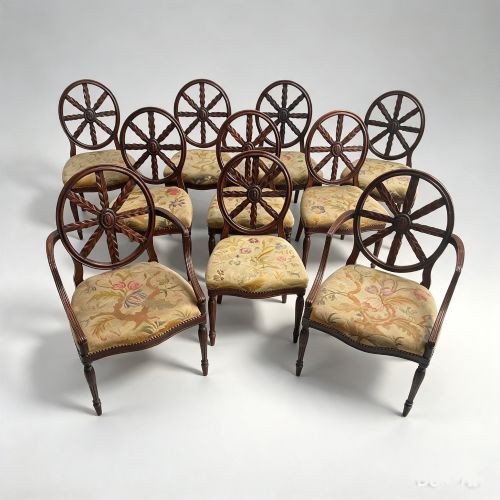
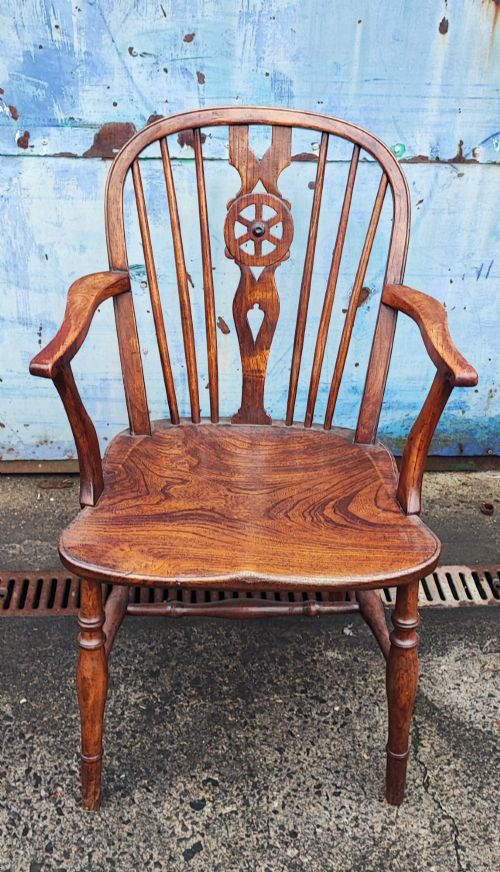
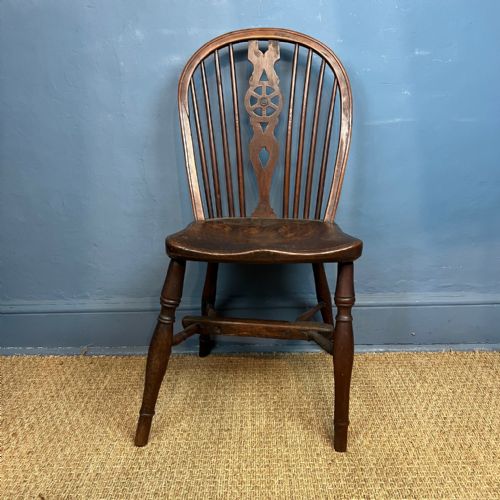
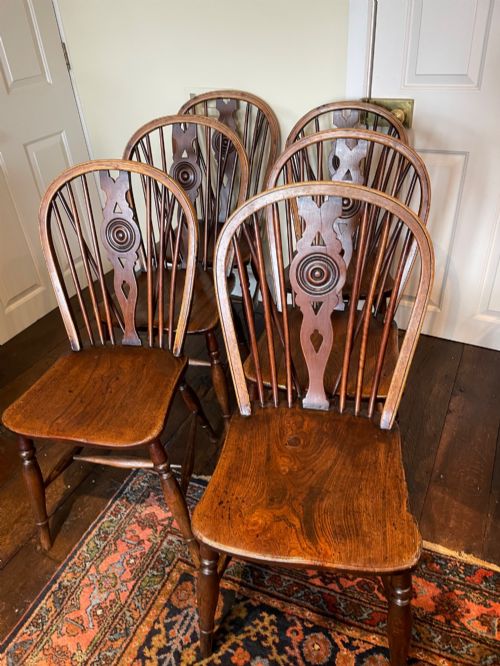
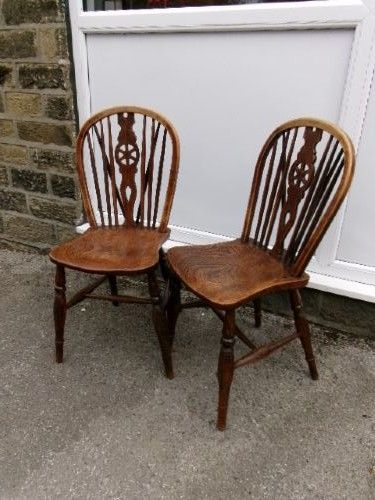
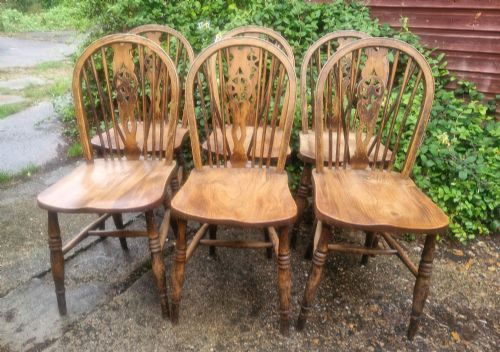
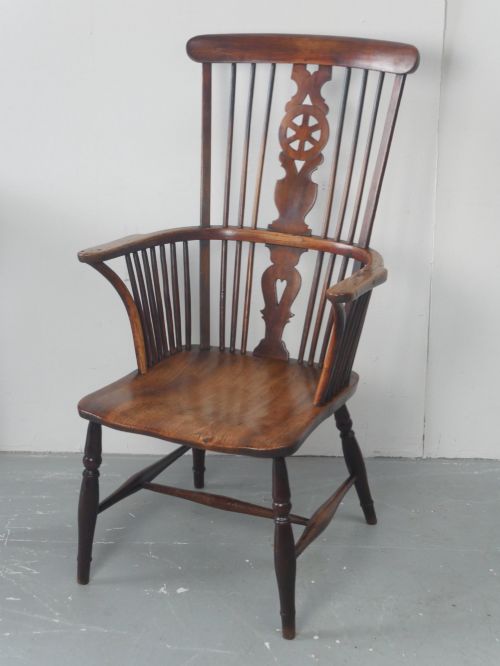
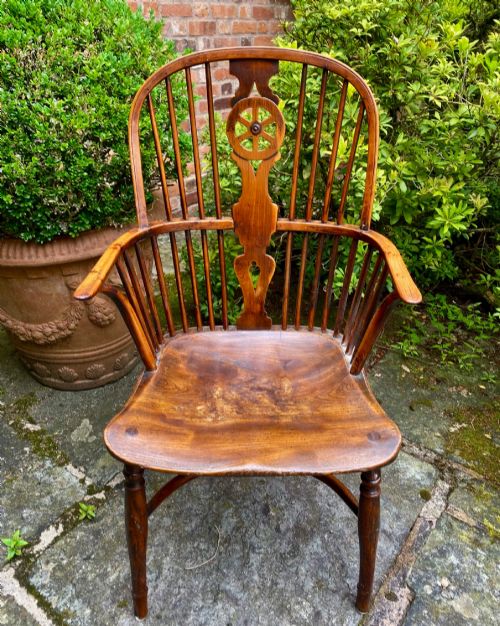
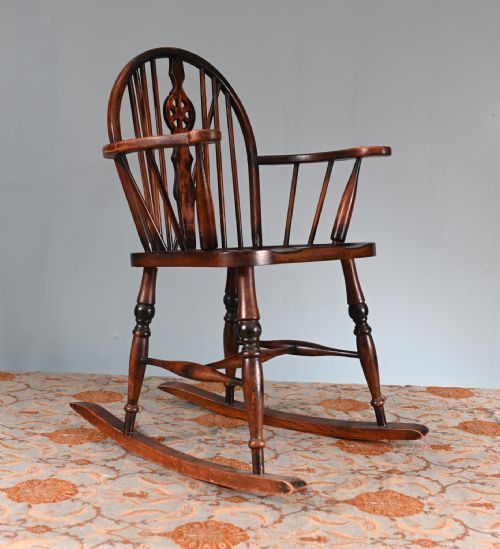
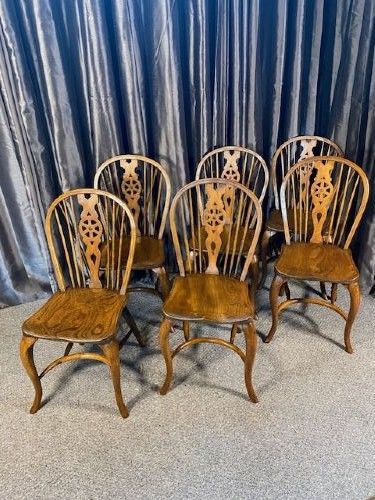
When you search for brown wheelback chairs, you encounter traditional seating defined by a pierced wooden splat shaped like a carriage wheel set into the centre of the backrest. These pieces span periods from the Georgian and Regency eras through the Victorian and Edwardian decades, appearing as single carvers, dining sets, or rocking chairs.
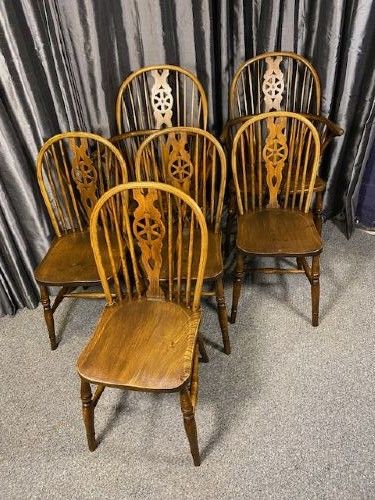
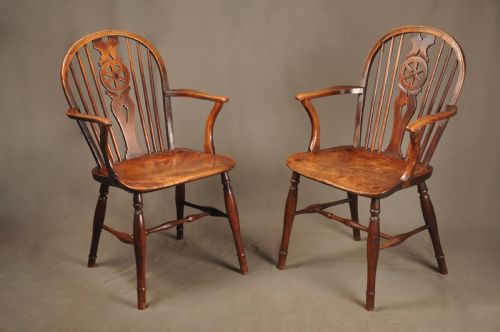
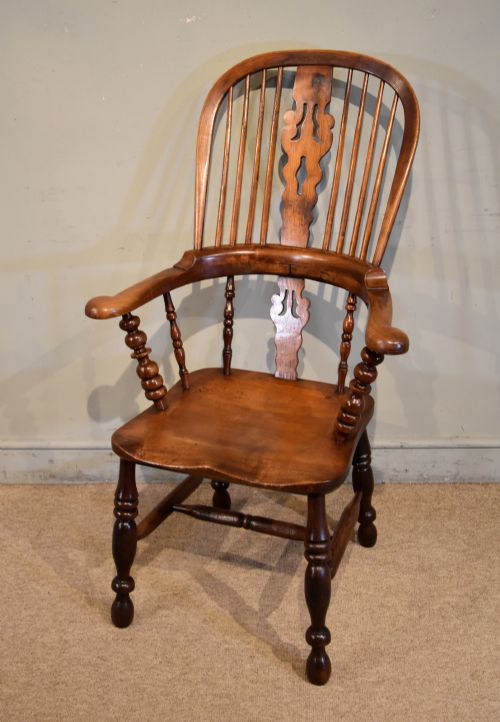
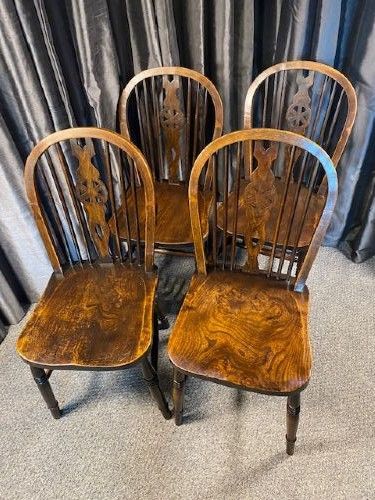
The most common examples on this page are kitchen and farmhouse dining chairs featuring solid timber seats paired with ash, beech, or elm frameworks. You will also find high-back Windsor armchairs and larger sets suited for larger dining tables, demonstrating the enduring utility of these country forms.
Materials and construction methods
These chairs rely on a combination of native timbers, utilising elm for comfortable, saddled solid seats while ash, beech, and fruitwood form the turned legs, spindles, and bow backs. Yew and oak also appear in select regional pieces, bringing varied grain patterns and robust density to the finished framework.
Constructors employed traditional greenwood and joinery techniques, turning legs on lathes and steaming back-bows into curved shapes before locking the components together with wedged tenons. This rigid peg-and-socket assembly creates durable seating without relying on metal fasteners.
Brown Wheelback Chairs Retail Price Guide 2026
Typical asking prices for brown wheelback chairs among the pieces listed under this phrase on Sellingantiques today, from the lower quarter to the upper quarter. They describe what is for sale here now, not the wider market.
Materials recorded across the inventory include elm, ash, beech, yew, oak, fruitwood, mahogany, and general hardwood.
Distinguishing quality in older seating
Quality rests in the selection and shaping of the timbers, where deeply sculpted elm seats and well-matched grain patterns across a dining set indicate superior craftsmanship. Heavier gauge spindles and substantial undercarriage stretchers also separate robust, enduring examples from lighter utility builds.
The definition of the wheel splat and the elegance of the arm-bows dictate the refinement of the piece, moving from simple utilitarian kitchen seating to more sculptural country house armchairs. Original surface patination and minimal timber replacement further elevate the standing of a chair.
Fred Walker
The Brown Wheelback Chairs Glossary
- Wheelback
- A wooden chair back featuring a central splat carved and pierced to resemble the wheel of a cart or carriage. This design gained popularity during the 19th century in English country workshops.
- Windsor chair
- A chair built with a solid wooden seat into which the legs and back spindles are bored directly. These pieces use bentwood bows and comb-backs for structural support.
- Carver armchair
- A dining armchair designed to sit at the head of a table or serve as an occasional seat. These versions include sturdy armrests integrated into the back assembly.
- Harlequin set
- A collection of dining chairs that match in general style and material but show subtle individual variations in turning or size. Such sets formed naturally as owners gathered chairs over time.
- Saddled seat
- A wooden chair seat hollowed out into a concave, ergonomic shape resembling a horse saddle. This technique provided comfort during long periods of sitting.
Brown Wheelback Chairs: Frequently Asked Questions
What is a brown wheelback chair?
A brown wheelback chair is a traditional wooden seat featuring a distinctive pierced splat shaped like a wheel set into the upper backrest. These chairs utilise woods like elm, ash, and beech to create sturdy dining and farmhouse seating.
They emerged strongly through the 18th and 19th centuries, evolving from vernacular country seating into popular dining room furniture across England.
How do I date an old wheelback chair?
Dating involves examining the construction methods, tool marks, and wood species visible beneath the finish. Earlier examples from the Georgian and Regency periods often display more substantial proportions and hand-turned components.
Later Victorian and Edwardian iterations show standardised turning patterns and slightly lighter framework proportions while retaining the classic wheel motif.
Are these chairs comfortable for daily dining?
Most of these chairs feature saddled wooden seats carved to fit the body, providing surprising support during meals. Adding loose squab cushions can further increase comfort for extended seating.
Their solid construction makes them durable enough for daily family use around a kitchen or dining table.
How do I care for antique wooden chairs?
Maintain the timber by feeding the surface occasionally with traditional beeswax to preserve the natural grain and prevent the wood from drying out. Keep the chairs away from direct heat sources and dramatic temperature shifts to avoid timber splitting.
Check the undercarriage stretchers periodically to ensure the joints remain tight and secure.