
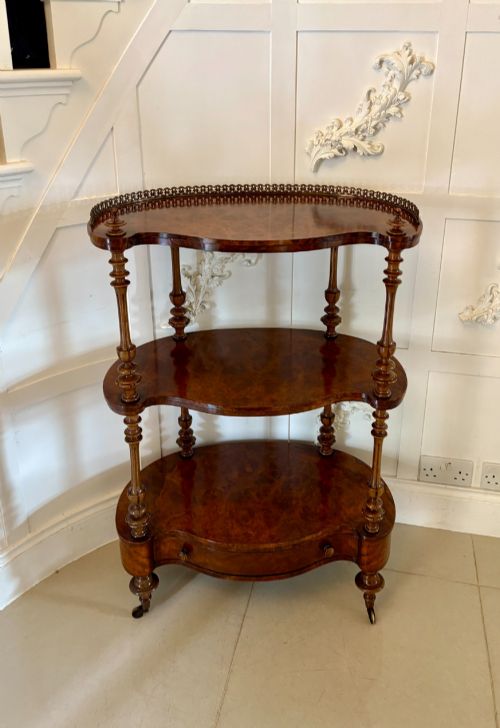
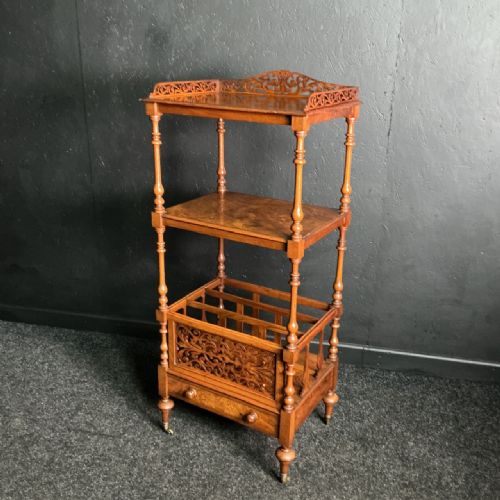
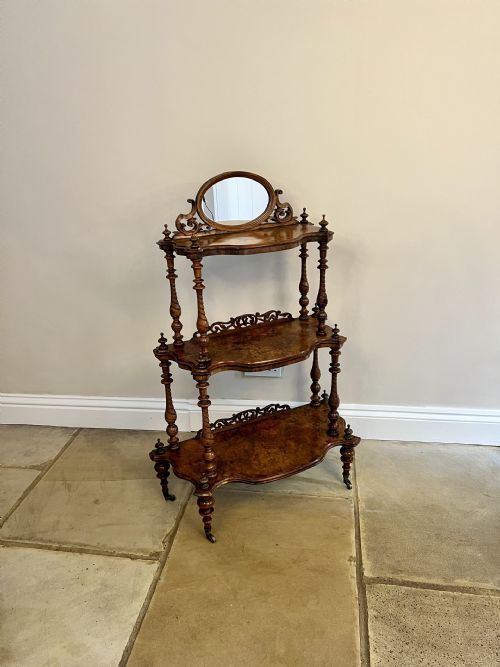
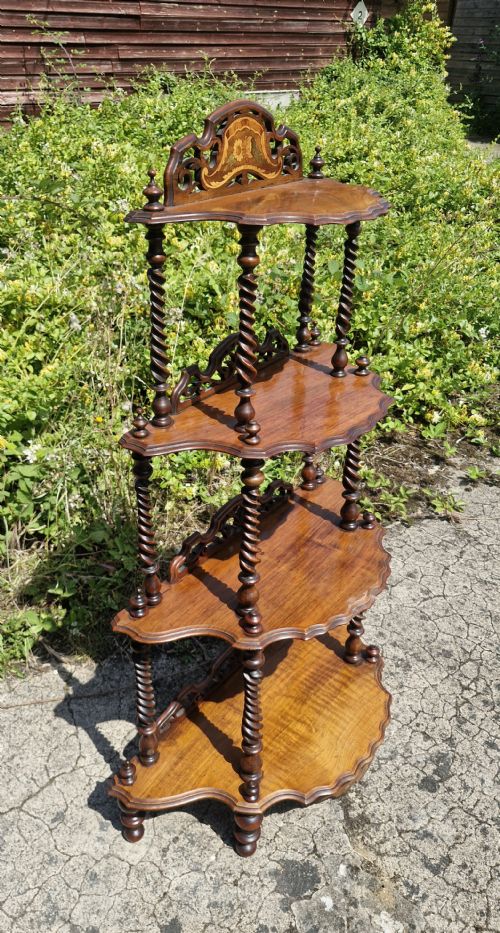



Brown Walnut Whatnot Shelf
A brown walnut whatnot shelf is a tiered display piece that brings warm timber tones and practical vertical storage to any room.
Brown Walnut Whatnot Shelf
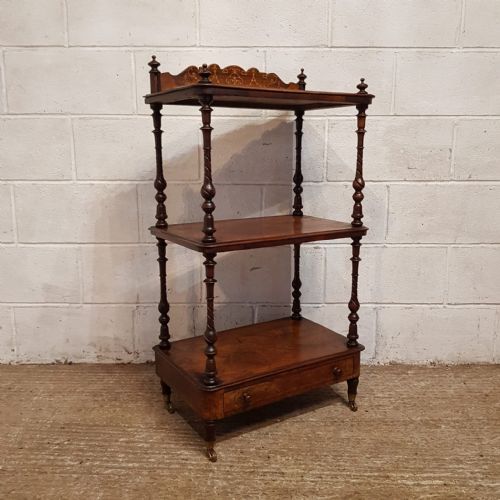
When you search for a brown walnut whatnot shelf, you encounter multi-tiered display pieces designed to hold books, ornaments and ornaments in nineteenth-century interiors. These items emerge primarily from the Victorian period, spanning the mid to late nineteenth century through to the Edwardian era.
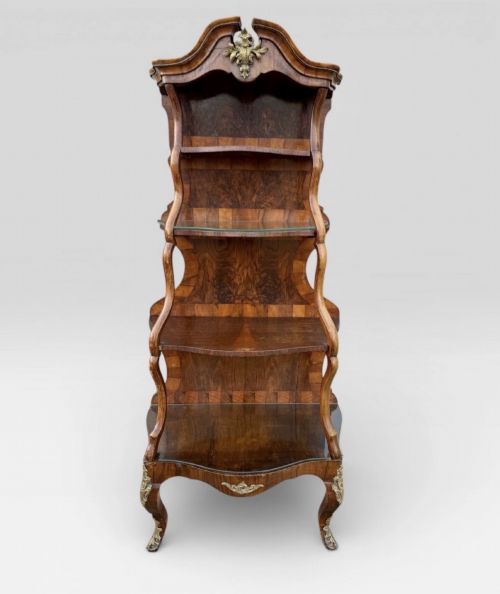
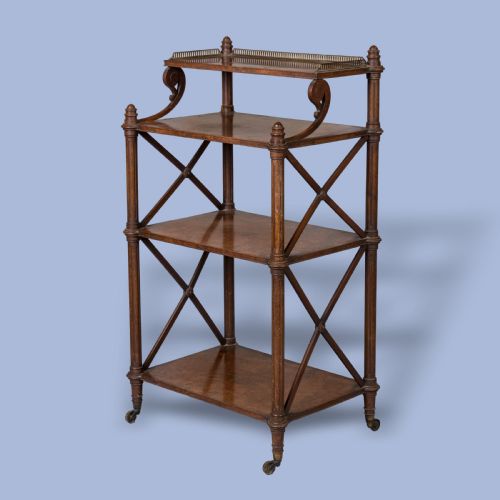
The versions most commonly met on this page include freestanding standing stands, corner models and low three or four-tier configurations. Makers shaped these walnut structures into serpentine, demi-lune, and rectangular formats to fit various drawing room layouts.
Beyond standard open shelving, certain examples integrate cabinets, music compartments, Canterbury sections or chiffonier bases beneath the tiers. Walnut, burr walnut and inlaid boxwood or marquetry details define the predominant aesthetic of these survivors.
How they were made
Cabinet makers utilised solid walnut and figured burr walnut veneers applied to secondary timbers to construct the tiers and upright supports. They often incorporated brass mounts, gilt metal accents, and mirror glass into the backboards or door panels of more elaborate display cabinets.
Surface decoration frequently relied on boxwood inlay and intricate marquetry patterns set into the rich timber grain. Structural turnings included hollow barley twist columns alongside slender supports that divided the horizontal shelves.
Some nineteenth-century makers hollowed out the barley twist columns on these shelves, creating an illusion of impossible lightness.
What varies in quality
The selection of timber grain largely dictates the visual merit of each piece, with highly figured burr walnut commanding particular attention. Finer examples display meticulous marquetry inlay, balanced proportions, and sophisticated serpentine or demi-lune timber framing rather than simple rectangular boards.
Construction complexity also separates standard tiers from superior items that incorporate specialised functions like music storage, pivoting Canterbury sections, or enclosed display cupboards with glass doors.
Gillows
The Brown Walnut Whatnot Shelf Glossary
- Whatnot
- An open multi-tiered piece of furniture designed for displaying ornaments and small objects. It originated in the eighteenth century and remained popular throughout the Victorian era.
- Étagère
- A French term for a piece of furniture consisting of a set of open shelves for displaying small articles. These frequently appear alongside or interchangeable with whatnots in nineteenth-century inventories.
- Burr Walnut
- A specialised timber cut from walnut tree growths that produces intricate, swirling grain patterns. Cabinet makers prized this veneer for high-status Victorian surfaces.
- Canterbury
- A low stand featuring slatted partitions originally built to hold sheet music or folios. When combined with a whatnot, it adds practical compartmentalized storage beneath the display shelves.
- Serpentine
- A furniture shape characterised by a curving front edge that undulates outward and inward in a gentle wave. This contour requires skilled carpentry to execute smoothly on walnut shelves.
Brown Walnut Whatnot Shelf: Frequently Asked Questions
What is a brown walnut whatnot shelf used for?
These tiered stands served as display furniture in Victorian drawing rooms and parlours for holding ceramics, small books, and decorative ornaments.
They allowed households to exhibit their prized possessions vertically without occupying excessive floor space.
How do I identify a Victorian whatnot?
Victorian examples typically feature walnut or burr walnut timbers, often accented with turned columns, marquetry inlay, or brass mounts.
They date from the nineteenth century and frequently employ multi-tiered open shelving or corner configurations.
What is the difference between a whatnot and an étagère?
While both terms describe multi-tiered display furniture, étagère originates from French terminology and often emphasises decorative display.
In British cabinet making, the two descriptors frequently overlap for open shelving units of the same period.
Where should I place a corner whatnot?
Corner whatnots fit directly into ninety-degree room angles to utilise under-occupied wall space efficiently.
They work well in reception rooms where standard rectangular furniture might block natural pathways.