

Brown Walnut Tilt Table
These brown walnut tilt table selections bring versatile timber surfaces into rooms, folding flat when not in service.
Brown Walnut Tilt Table
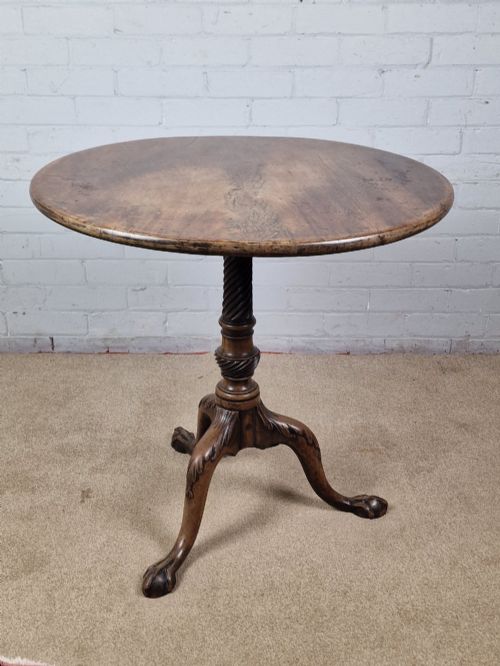
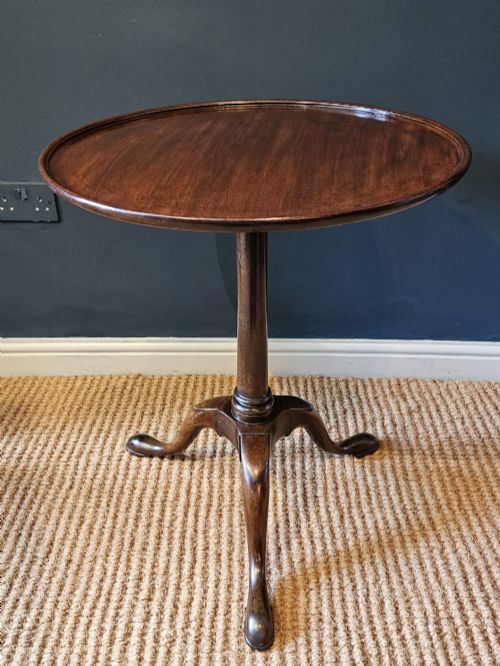
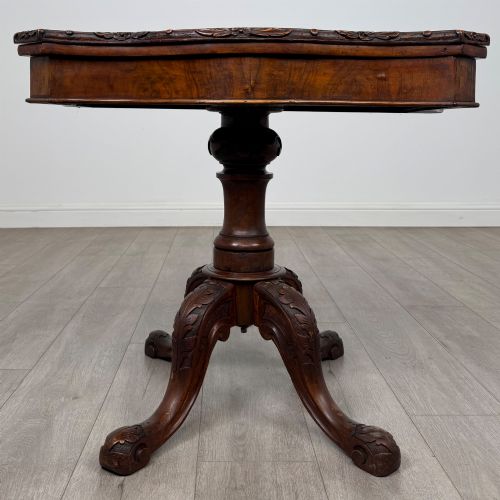
A brown walnut tilt table is an occasional, dining, or breakfast surface designed with a mechanism that pivots the top vertically. The selection spans 18th Century Georgian pieces through to Victorian examples, including George II red walnut designs and later Edwardian variations.
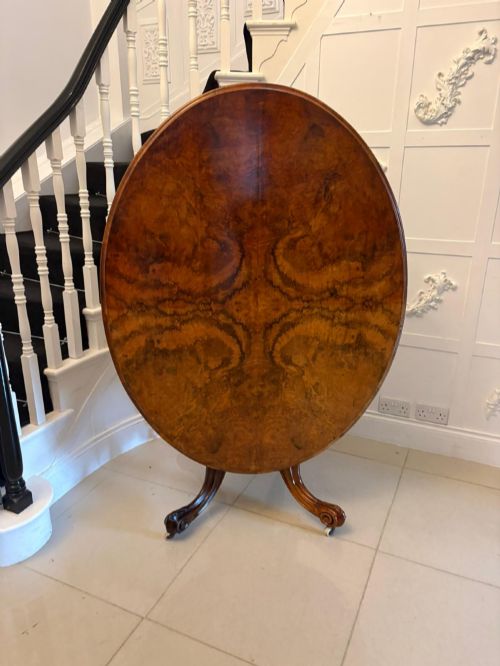
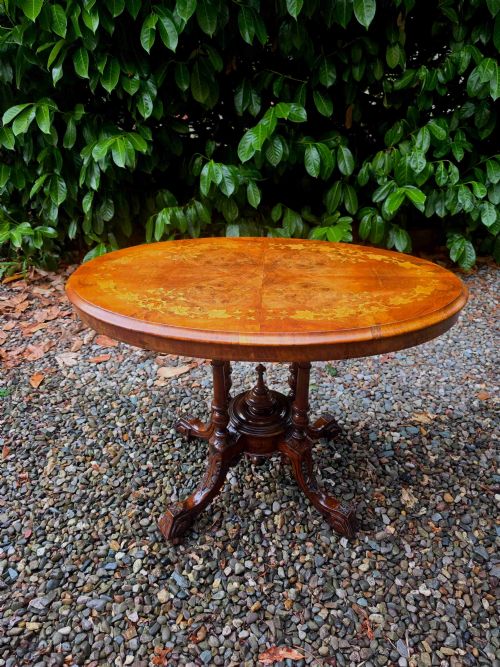
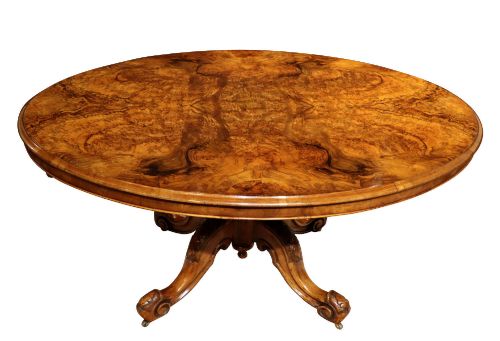
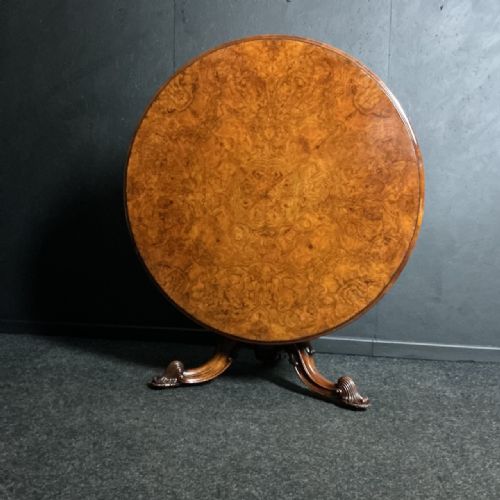
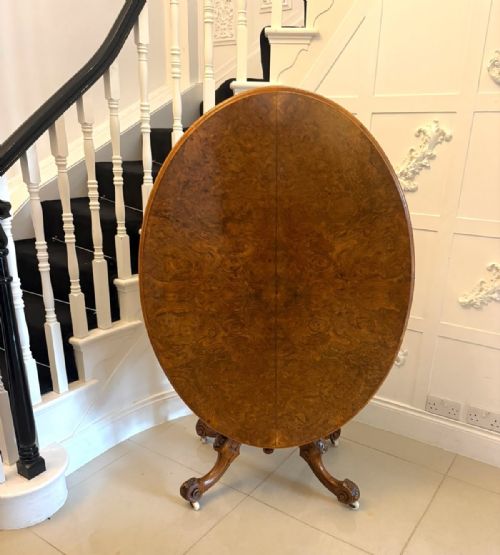
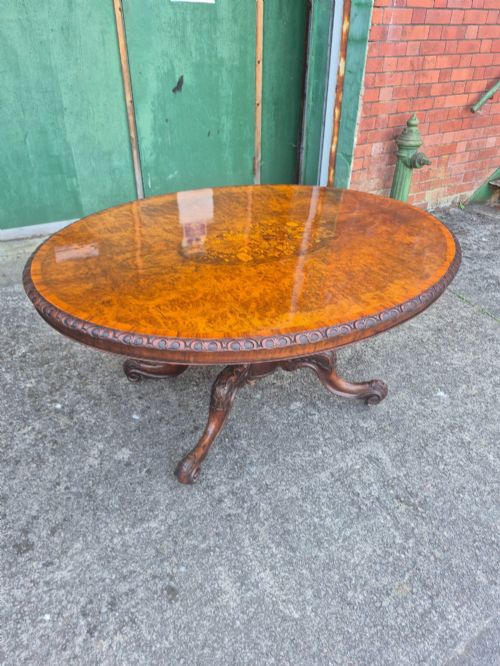
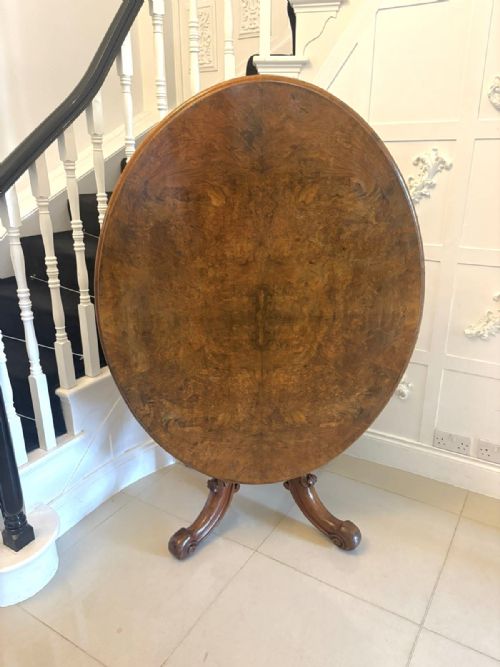
Most entries encountered on this page belong to the Victorian era, particularly the 1860s and 1870s, taking the form of oval loo tables, lamp tables, and centre tables. These items utilise burr walnut and feature tripod, pedestal, or quadrapod bases.
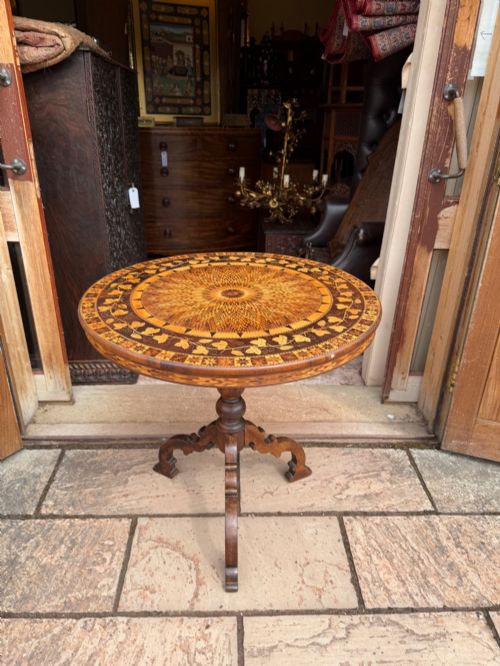
Regional variations appear alongside domestic English furniture, including Italian Sorrento tables, Swiss Black Forest pieces, and Irish 18th Century examples. Makers such as Holmes Baldock also contribute to the variety found within these listings.
Assessing the timber and bases
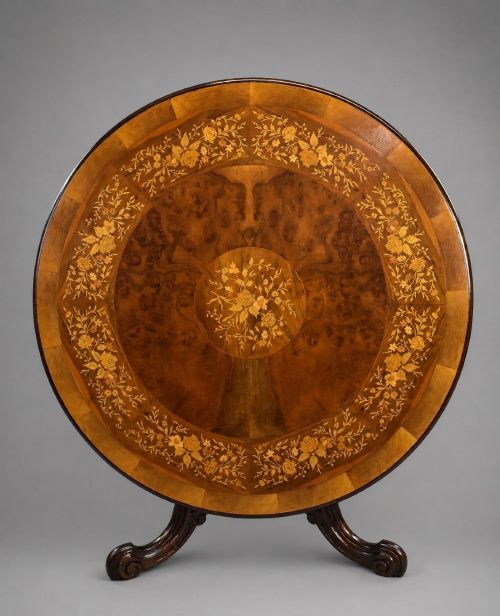
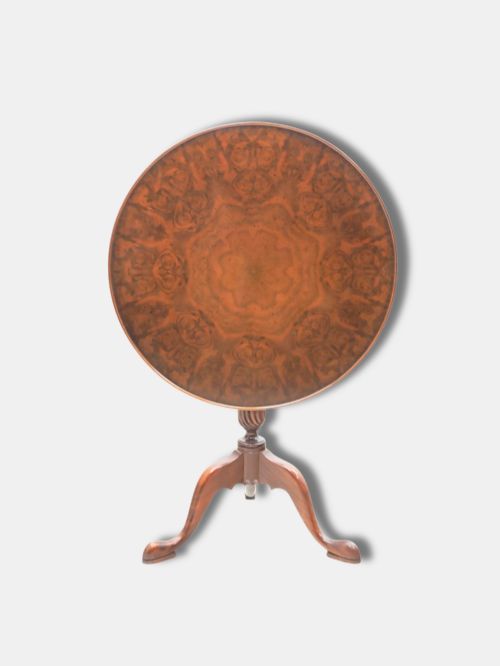
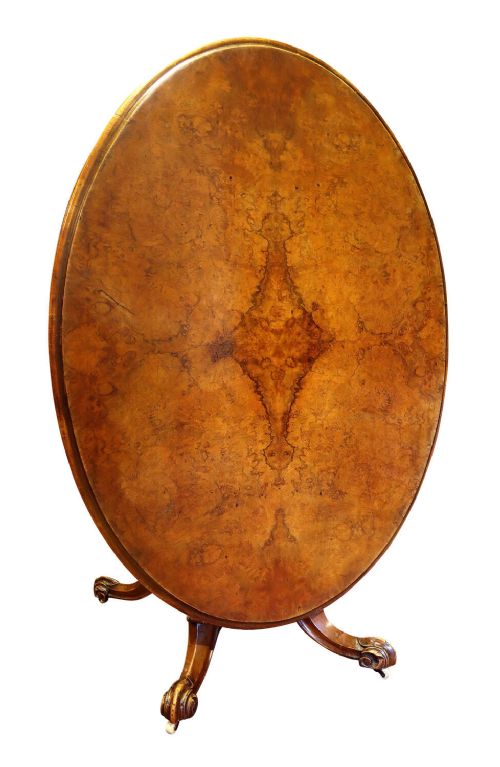
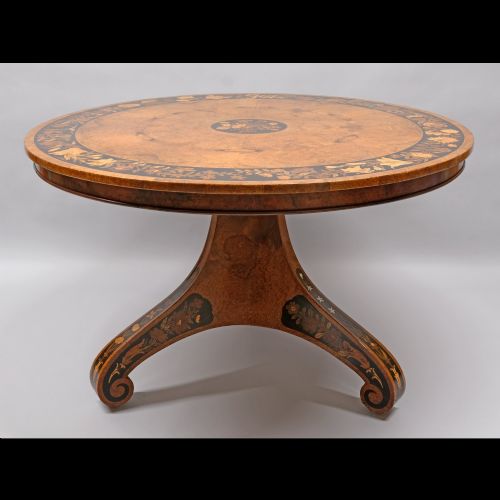
The degree of figure in the burr walnut veneer dictates much of the visual depth, with tightly patterned grain marking superior examples. Crisp execution in hand-carving on the bases and precise marquetry inlay separate standard productions from finer work.
The integrity of the tilting mechanism and the stability of the central pedestal or tripod legs determine the structural merit of each piece. Solid joints and unwarped timber tops maintain the utility of the table when locked flat.
Listings feature 19th Century, Victorian, Georgian, and 1920s periods, incorporating walnut, burr walnut, brass, and mahogany materials.
Holmes Baldock
The Brown Walnut Tilt Table Glossary
- Burr walnut
- A figured timber taken from the warted growths on walnut trees, prized for swirling grain patterns. It provides a highly decorative surface veneer on Victorian tables.
- Loo table
- A large round or oval parlour table popular in the Victorian period for card games. Many feature tilt-top mechanisms to save space.
- Marquetry inlay
- Decorative veneer work forming pictures or geometric patterns using various coloured woods. Boxwood is frequently utilised for contrast in these designs.
- Snap top
- An alternative term for a tilt top table featuring a catch mechanism that locks the horizontal board in place. This allows the surface to fold vertically when stored.
- Tripod base
- A three-legged support structure commonly found beneath pillar tables. It provides stability on uneven floors while allowing clearance for seating.
Brown Walnut Tilt Table: Frequently Asked Questions
What is a brown walnut tilt table?
A brown walnut tilt table is a freestanding timber table with a hinged top that pivots from horizontal to vertical. This design allows the furniture to be pushed against a wall when floor space is needed.
Examples span from 18th Century Georgian designs to Victorian burr walnut productions. They function variously as breakfast tables, centre tables, and lamp tables.
How do you use a tilt top table?
The table operates by releasing an under-top catch that allows the wooden surface to swivel upright on its pedestal. When needed for dining or display, the top lowers back down and locks securely horizontal.
Historically, this mechanism kept large surfaces out of the way in smaller living quarters. Today, they serve practical daily use while retaining their historic folding function.
How do I tell Victorian from Georgian tables?
Georgian tables, including George II examples, often feature simpler lines and red walnut timbers with tripod supports. They emphasise proportion and solid timber construction over heavy ornamentation.
Victorian pieces frequently employ burr walnut veneers, elaborate marquetry inlay, and carved quadrapod bases. The 19th Century items also lean towards oval loo and breakfast table formats.
Where did regional tilt tables originate?
Regional variations encompass English workshops alongside continental makers, including Italian Sorrento tables and Swiss Black Forest pieces. Irish 18th Century examples also contribute distinct regional cabinet-making characteristics.
These origins influence the decorative motifs, such as specialised marquetry inlay or specific carving styles on the pedestal bases.