

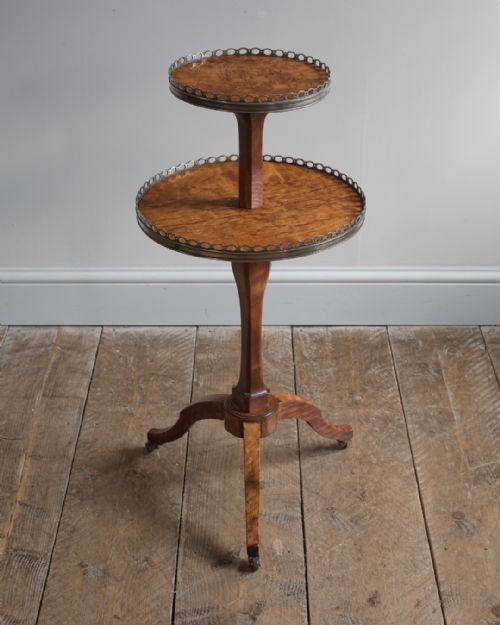
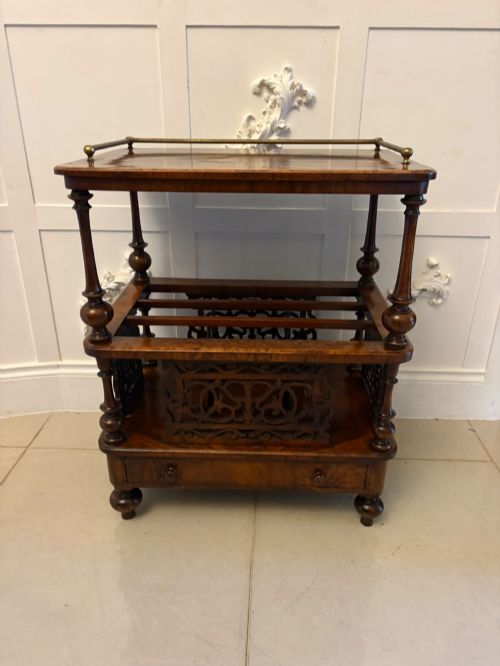
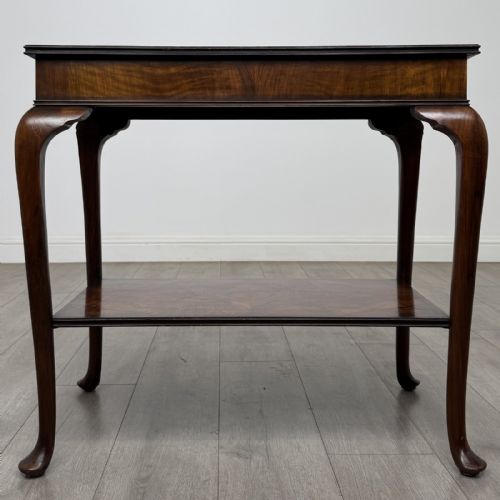
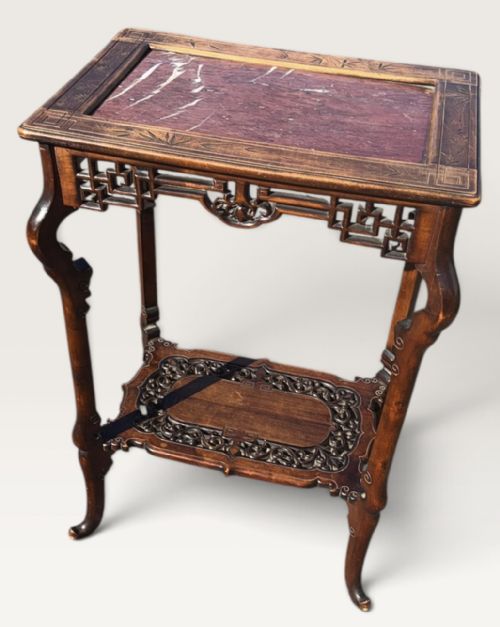
Brown Walnut Tier Table
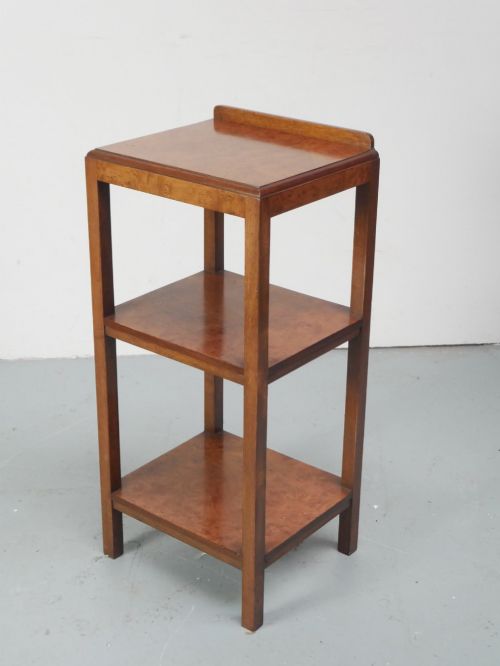
These brown walnut tier table pieces offer layered surfaces in rich timber, combining utility with distinct period craftsmanship.
Brown Walnut Tier Table
A brown walnut tier table provides multiple surfaces arranged vertically, appearing across forms such as occasional tables, etageres, and coffee tables. These pieces serve practical functions in domestic settings while displaying distinct character through varied shelf configurations.
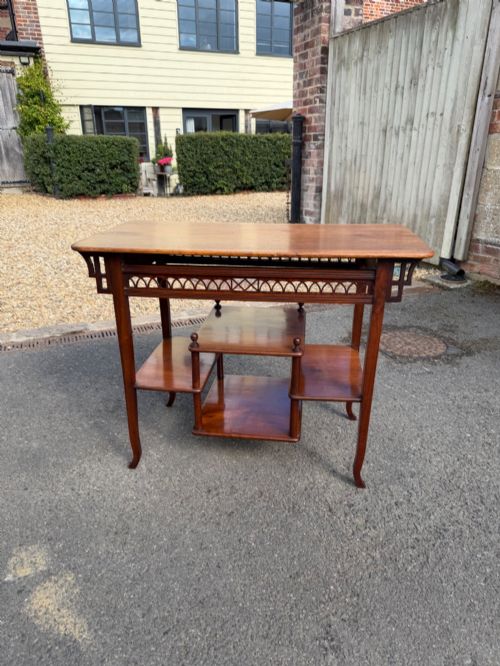
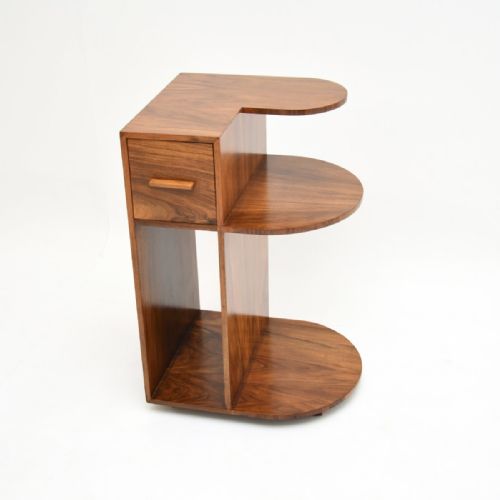
The selections span numerous periods, including Victorian, Edwardian, and Art Deco eras, with pieces originating from English, French, and Italian workshops. Buyers encounter constructions utilising multiple tiers for display and storage, often featuring shaped tops or circular platforms.
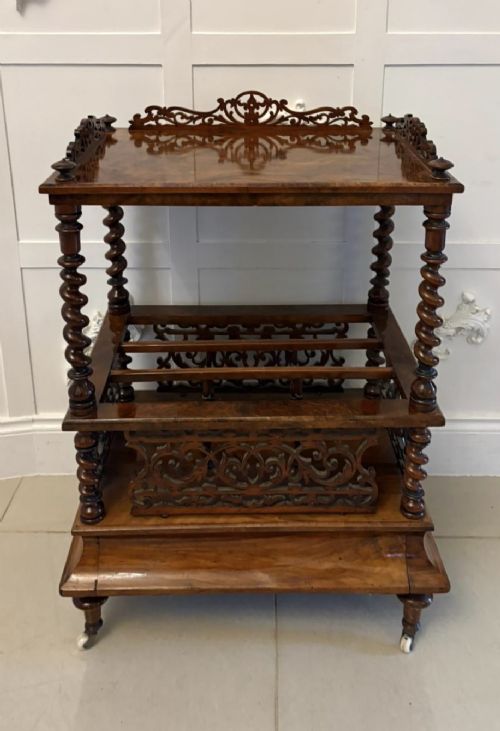
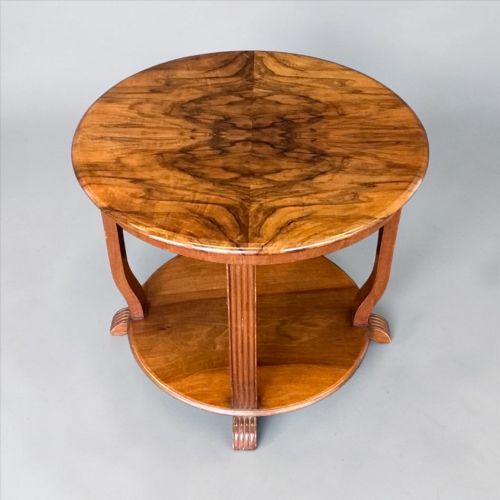
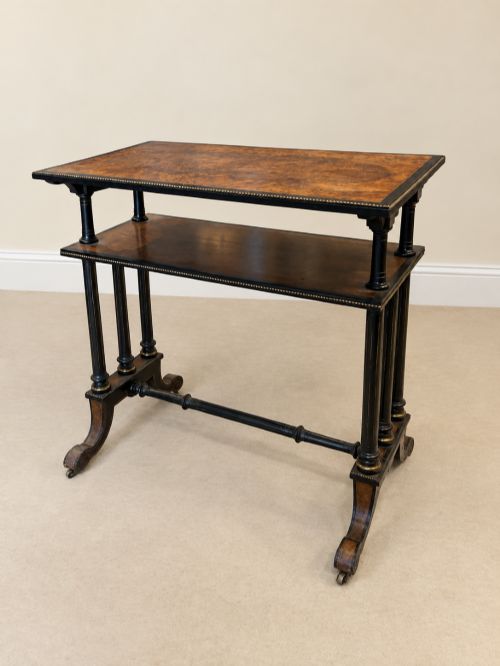
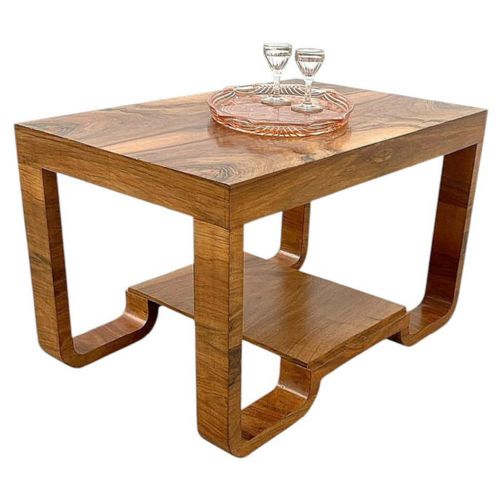
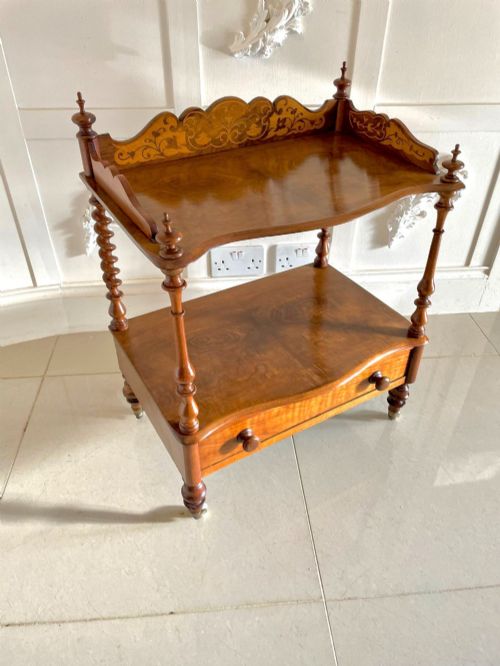
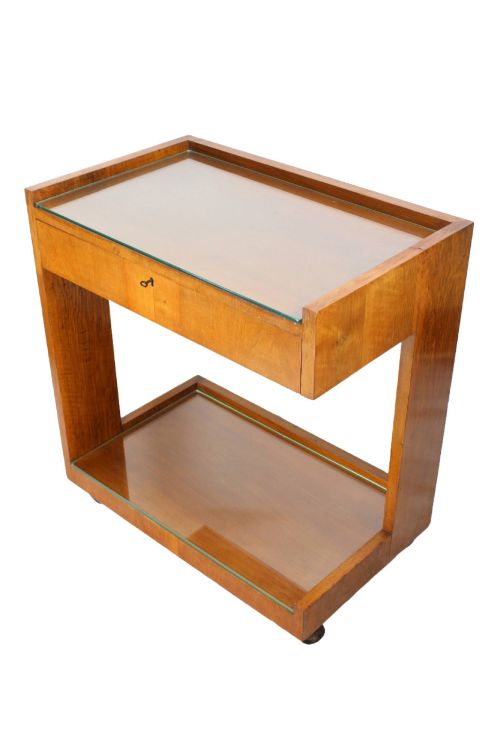
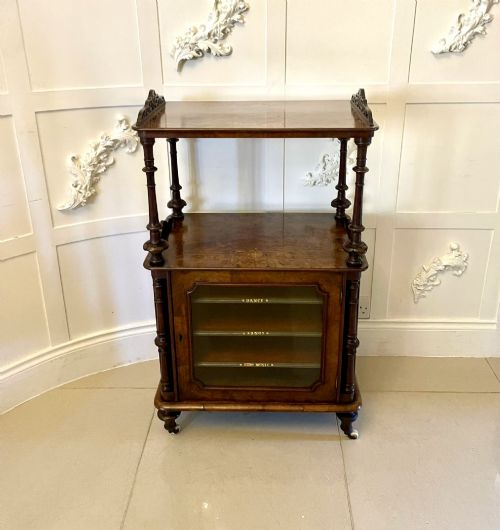
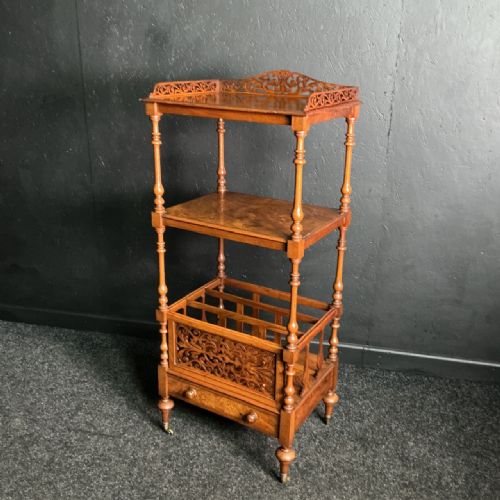
Victorian and nineteenth-century examples often present elaborate details like inlaid motifs or turned supports, whereas Art Deco interpretations favour streamlined figured grain and clean geometric tiers. Solid walnut and veneered surfaces dominate these offerings, paired with diverse leg styles from cabriole to straight turned supports.
Materials and construction methods
Makers utilised walnut timber alongside burr walnut and walnut veneer to achieve striking grain patterns across the visible surfaces of each brown walnut tier table. These woods provided both structural integrity and decorative appeal, frequently enhanced by contrasting inlay work or polished finishes.
Secondary materials such as brass, ormolu, marble, and ebonised wood appear as decorative accents, gallery rails, or structural mounts. Joinery techniques varied by period, supporting multi-tiered frameworks ranging from fixed etageres to nesting tables and articulated trolleys.
Brown Walnut Tier Table Retail Price Guide 2026
Typical asking prices for brown walnut tier table among the pieces listed under this phrase on Sellingantiques today, from the lower quarter to the upper quarter. They describe what is for sale here now, not the wider market.
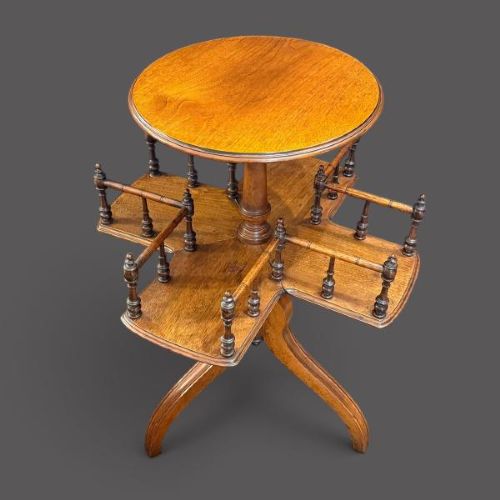
Some Victorian examples include fully adjustable folding mechanisms, letting tiers swivel out like secret pages in a wooden book.
Markers of construction and design quality
Superior examples of a brown walnut tier table demonstrate careful selection of figured or burr walnut veneers, matched symmetrically across the tiers. The depth of the timber's grain and the crispness of applied marquetry or carving distinguish finer workshop output from standard production.
Structural rigidity across multiple platforms indicates high-calibre joinery, ensuring stability without excessive reinforcement. Original hardware, such as brass castors or mounts, contributes significantly to the integrity of period pieces.
Gabriel Viardot·Liberty of London·Gilbert Rohde·Tehan
The Brown Walnut Tier Table Glossary
- Tier table
- A piece of furniture featuring two or more elevated surfaces arranged vertically for display or storage. These multi-level designs maximise floor space while providing distinct platforms for decorative items.
- Burr walnut
- A specialised timber cut from tree growths, producing intricate, swirling grain patterns highly valued in cabinet making. This material adds ornamental depth to table tops and panel surfaces.
- Etagere
- A set of open shelves or tiers used for displaying small objects or ornaments. Originating in France, these pieces rely on slender vertical supports.
- Marquetry
- The art of applying decorative pieces of veneer to a structure to form intricate designs or pictures. Craftsmen utilise varied wood tones to create contrasting pictorial motifs on table tops.
- Ormolu
- Gilded bronze ornamentation applied to furniture mounts, feet, and galleries. This technique imparts a metallic lustre that complements dark timber surfaces.
Brown Walnut Tier Table: Frequently Asked Questions
What is a brown walnut tier table used for?
These tables provide layered surfaces suited for holding lamps, books, and decorative objects within living spaces. The multiple platforms allow users to display items at varying heights without occupying extra floor area.
Historically, specific variants such as etageres or dumbwaiters served dining rooms and parlours for organising servingware or literature. Today, they function primarily as versatile accent furniture beside seating areas.
How do I identify an Art Deco tier table?
Art Deco examples typically date from the 1920s and 1930s, displaying figured walnut veneers with geometric or streamlined silhouettes. These pieces often feature clean lines and unadorned surfaces that highlight the natural grain of the timber.
Unlike ornate Victorian or Edwardian versions, Art Deco tier tables rely on proportion and polished finishes rather than carved details or inlaid motifs to create visual interest.
Are these tables made of solid walnut?
Construction methods vary, with many period pieces combining solid walnut frames with walnut veneer applied over secondary timbers. Veneering allowed cabinet makers to display striking figured or burr walnut grain patterns across large surfaces without risking the warping associated with solid boards.
Solid walnut appears frequently in structural elements, turned legs, and moulded edges, while veneers cover the expansive flat areas of the tiers.