




Brown Walnut Entry Table
A brown walnut entry table anchors a hallway with rich grain and proportion, offering a practical surface for daily use.
Brown Walnut Entry Table
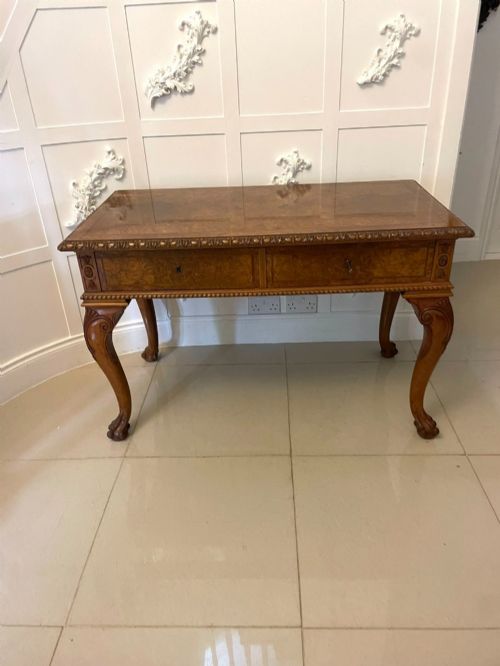
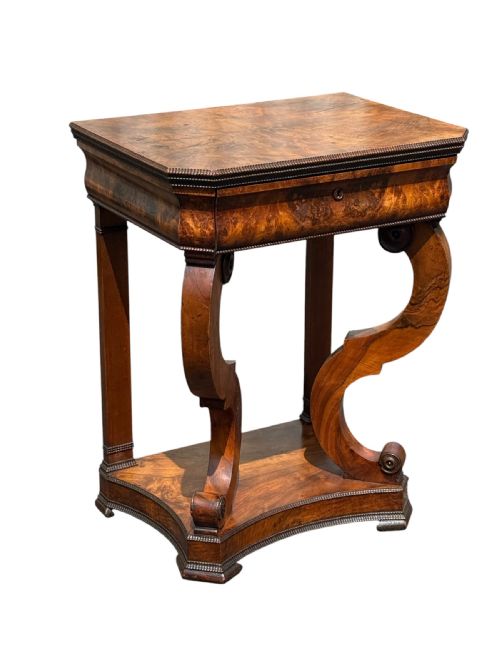
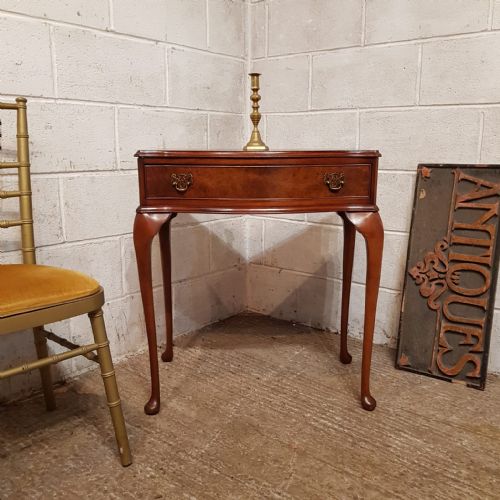
A brown walnut entry table bridges the gap between hallway utility and formal reception furniture. Buyers seeking this search phrase encounter console tables, side tables, and lowboys designed to sit against a wall or stand freely in a foyer. The pieces span from the eighteenth century through the Victorian era and into the Art Deco period, capturing revivals from Queen Anne to French Empire styles.
Console tables dominate the selection, often paired with pier mirrors or featuring serpentine and bow fronts. Makers utilised rich timbers, occasionally adding marble tops, glass, or brass mounts to elevate the design. These forms arrive from English, French, Italian, and Biedermeier workshops, reflecting diverse regional tastes in domestic furnishing.
Materials and construction
Cabinet makers built these tables using solid walnut and burr walnut veneer, selecting timber for deep colour and striking grain patterns. Marquetry and boxwood stringing frequently embellish the surfaces, while carved details adorn the legs and skirts.
Structural integrity relied on traditional joinery, with some examples incorporating brass hardware and inset marble slabs. Barley twist supports and carved cabriole legs define the profiles across different periods.
Listings feature walnut entry tables spanning the eighteenth, nineteenth, and twentieth centuries, incorporating marble, brass, and glass elements.
Distinctions in quality
Quality rests in the selection of the wood veneer and the crispness of the carving. Tables featuring burr walnut with balanced grain distribution and meticulous marquetry sit at the upper end of the range.
Execution of secondary details, such as boxwood stringing, fitted marble tops, and firm joinery, separates standard production from exceptional workshop output.
Maple and Co.·Epstein and Co
The Brown Walnut Entry Table Glossary
- Console table
- A table designed to stand against a wall, frequently secured with brackets or resting on front legs. These surfaces suited narrow spaces like hallways and entryways.
- Burr walnut
- Wood taken from a walnut tree outgrowth, producing intricate, swirling grain patterns. Cabinet makers prized this veneer for decorative tabletops.
- Lowboy
- A small side table with drawers, standing on relatively tall legs. They originated in the eighteenth century and served various domestic functions.
- Marquetry
- Inlaid patterns of wood veneer forming decorative pictures or geometric designs on furniture surfaces. Craftsmen used contrasting timbers to achieve tonal depth.
Brown Walnut Entry Table: Frequently Asked Questions
Where should I place a brown walnut entry table?
These tables suit narrow hallways, landings, and entrance foyers where surface space is needed without blocking passage. Their shallow depths allow them to sit flush against walls.
They pair well with wall mirrors or artwork above, creating a focal point immediately upon entering a home.
How do I identify the period of a walnut table?
Dating relies on stylistic clues, timber preparation, and construction methods. Pieces display characteristics of specific eras, such as Victorian proportions or Art Deco symmetry.
Secondary woods and hardware styles also offer reliable indicators of manufacture date.
What is the difference between a console and a side table?
Console tables traditionally stood against a wall, sometimes relying on the wall for structural support. Side tables are free-standing units with four legs designed to stand independently.
In modern usage, the terms often overlap, particularly for hall furniture.
How do I care for burr walnut surfaces?
Burr walnut benefits from gentle dusting with a dry, soft cloth to protect the delicate veneer. Avoid placing the timber in direct sunlight or near heat sources to prevent warping.
Occasional application of appropriate wax maintains the lustre of the wood.