



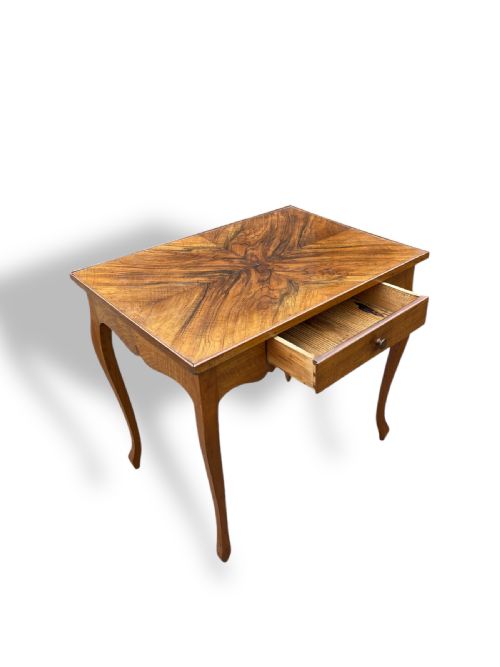


Brown Veneer Lamp Table
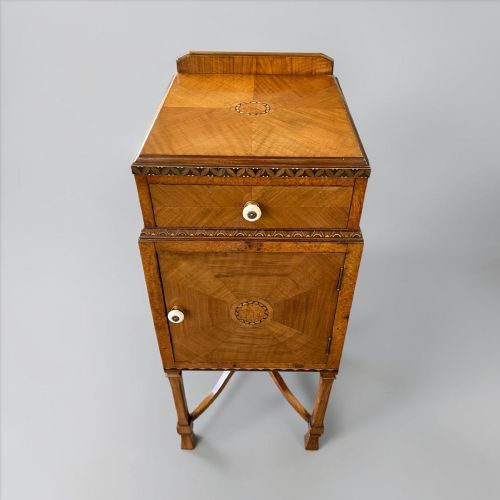
A brown veneer lamp table brings rich figure and warmth to a corner, and these pieces span from Georgian Revival to Art Deco.
Brown Veneer Lamp Table
A brown veneer lamp table is essentially a compact surface intended for a corner, beside a seating group, or next to a bed. When you search for a brown veneer lamp table, you find pieces functioning as occasional tables, side tables, and bedside tables.
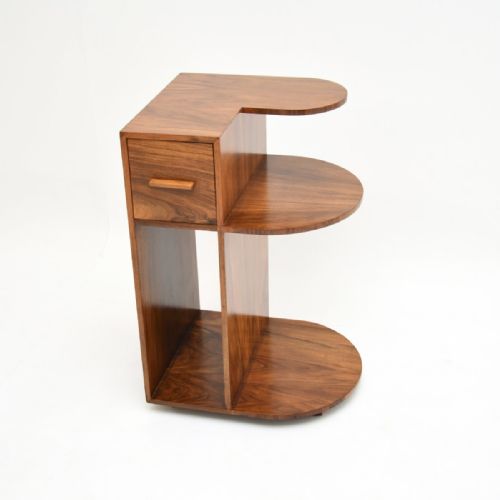
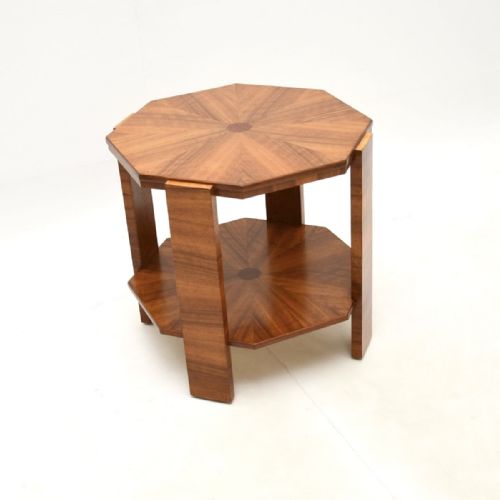
The versions you meet most frequently on this page belong to the Art Deco period, typically dating around nineteen thirty. These items present distinctive geometric forms or rounded tiers, relying on the visual interest of their timber surfaces rather than heavy carving.
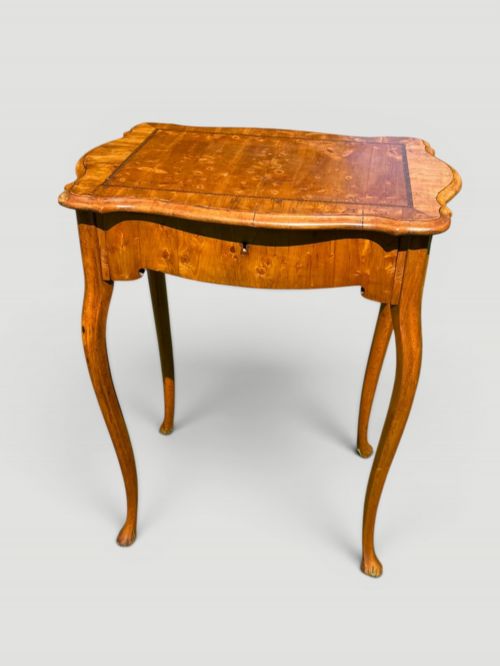
Earlier examples stretch back through the nineteenth century and Edwardian decades, offering softer proportions and vernacular charm. Alongside these stand revival pieces from the Georgian and Edwardian eras, combining traditional silhouettes with figured decorative layers.
What varies in quality
Quality rests primarily on the selection and matching of the veneer across the top surface. Highly figured burr timbers and symmetrical quartering demand superior craftsmanship from the cabinetmaker, creating depth that plain timber lacks.
Construction methods and timber selection for the underlying carcase define structural integrity. Tables that retain their original finish and show thoughtful grain placement across multiple tiers separate standard production from finer examples.
The listings span from nineteenth-century vernacular pieces through Edwardian designs to nineteen-thirties Art Deco.
The Brown Veneer Lamp Table Glossary
- Burr walnut
- A growth deformity in a walnut tree that produces intricate, swirling patterns when sliced into veneer. Cabinetmakers prize this material for its exceptional visual movement.
- Occasional table
- A versatile small table designed to be moved around a room as needed. These pieces serve multiple functions including lamp stands, coffee spots, and side surfaces.
- Art Deco
- A design style spanning the nineteen twenties and thirties characterised by geometric shapes, clean lines, and streamlined forms. Tables from this era often feature stepped bases and highly figured veneers.
- Quartered walnut
- Timber cut radially through the growth rings to produce straight, uniform grain lines. When arranged in segments, these cuts form symmetrical geometric patterns on tabletops.
Brown Veneer Lamp Table: Frequently Asked Questions
Where should I place a lamp table?
These compact tables suit corners, beside armchairs, or adjacent to a bed where surface space is limited. Their modest footprints allow them to fit easily into smaller rooms.
Because they provide a stable surface for lighting or small objects, they anchor a seating group while adding warmth through their wood tones.
How do I identify Art Deco tables?
Art Deco tables typically date from the nineteen twenties or thirties and feature geometric silhouettes, stepped tiers, or rounded profiles. They lean heavily on the natural figure of walnut veneer rather than applied ornament.
Many examples incorporate multiple tiers or contrasting grain arrangements across the top surface to create a modern aesthetic.
What is burr timber?
Burr timber comes from a tree growth that creates dense clusters of buds, resulting in swirling, erratic grain patterns when sliced. Walnut and ash burrs are especially valued for their rich texture.
Tables featuring this material showcase dramatic visual movement across the tabletop.
Are these tables sturdy enough for daily use?
These pieces were built as functional furniture intended to hold lamps, books, and decorative objects. Their solid wood carcases and veneer construction provide adequate strength for everyday placement.
Treating the wood surfaces with care ensures the veneer remains secure over time.