


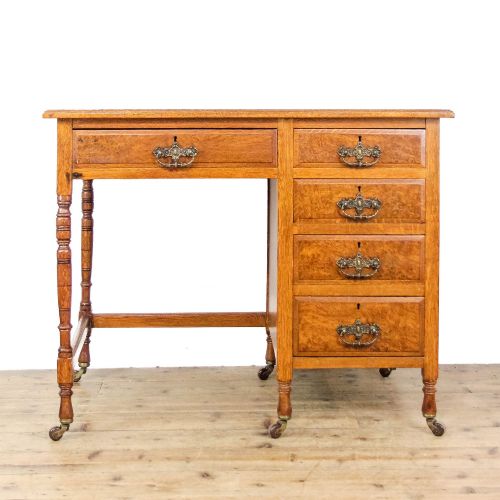
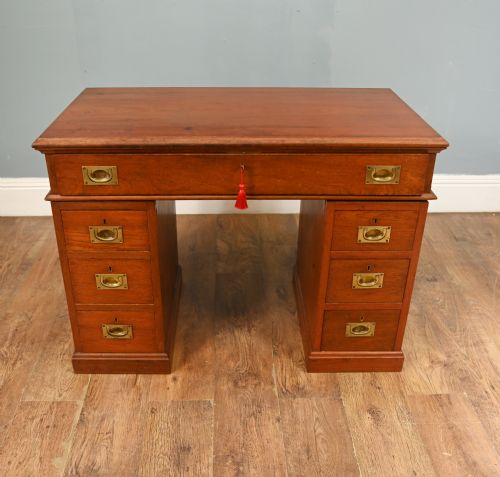

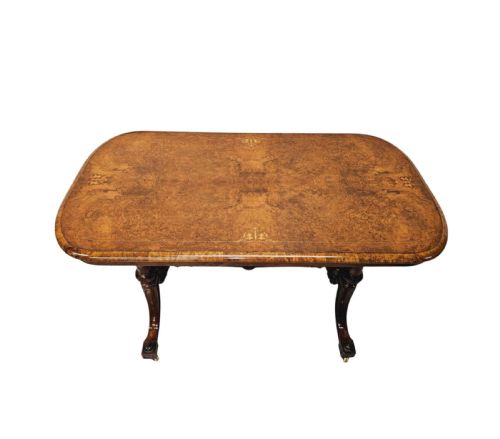


Brown Timber Writing Desk
A brown timber writing desk brings traditional warmth and solid utility to a study, built from enduring woods like mahogany, walnut and oak.
Brown Timber Writing Desk
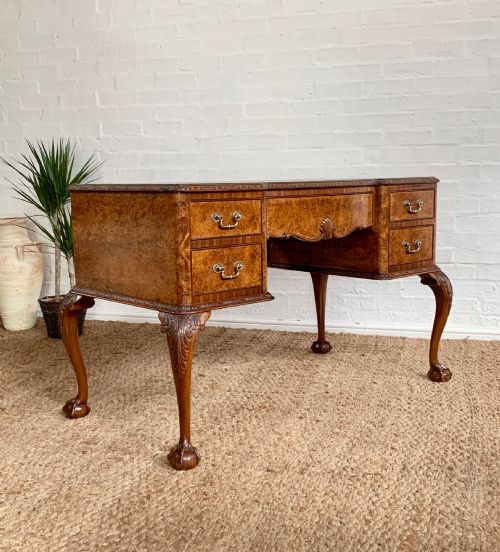
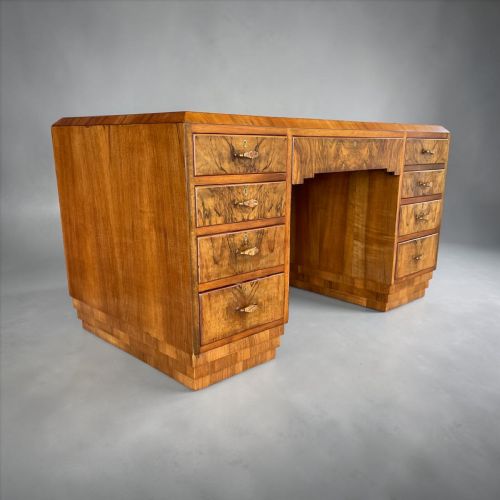
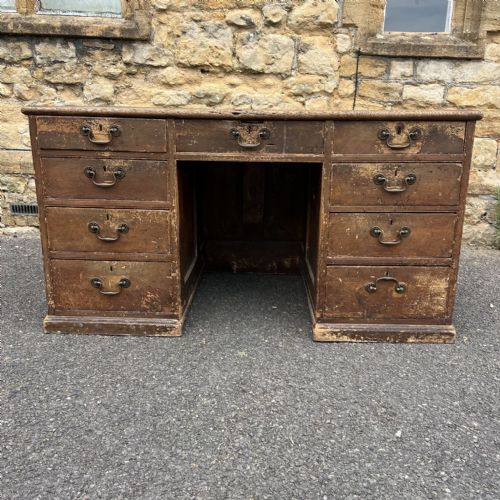
A brown timber writing desk encompasses a broad range of antique and period workspace furniture designed for correspondence and study. Buyers searching this phrase encounter everything from formal pedestal desks to modest side tables and kneehole forms.
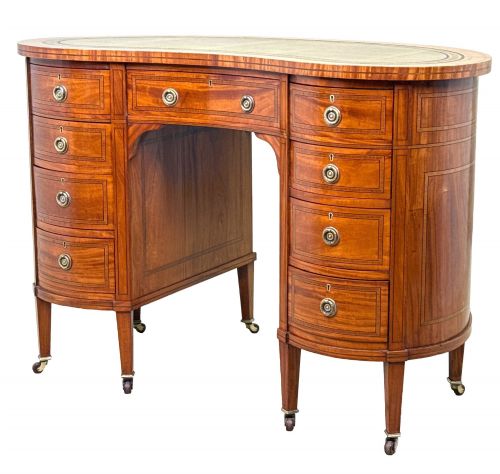
Victorian and Georgian pieces dominate the selection, often rendered in rich mahogany or walnut with inset leather surfaces. Regional and international variations appear too, including French styles, campaign furniture and Japanese calligraphy tables.
The assortment spans centuries of craftsmanship, connecting modern interiors with earlier traditions of domestic administration. Buyers find utilitarian estate pieces alongside finely figured walnut library tables intended for grand reception rooms.
Materials and construction
Cabinetmakers built these desks using sturdy timbers like mahogany, oak, walnut and pine, often selecting figured veneers such as burr walnut for decorative impact. Secondary woods provided structural stability inside drawers and carcases.
Writing surfaces frequently incorporated tooled leather inserts bordered by gilt tooling to create a durable, smooth area for pen work. Brass hardware, including drop handles and campaign mounts, added functional detail and structural reinforcement.
Joinery techniques relied on traditional dovetails for drawer construction and sturdy mortise and tenon frames. Surfaces were finished with polishes that highlighted the natural grain and colour of the timber.
Carved Black Forest inkwells depict industrious bears with logs and birds perched upon corn.
Judging quality and execution
Quality rests upon the selection of timber and the precision of the joinery rather than mere age or decorative flourish. Fine examples display carefully matched grain patterns across drawer fronts and harmonious proportions throughout the piece.
The refinement of internal elements, such as solid oak drawer linings and original brass hardware, separates standard workshop production from exceptional cabinet work. Superior execution shows in crisp mouldings and smooth mechanical action in drawers and writing flaps.
Trollope & sons
The Brown Timber Writing Desk Glossary
- Pedestal desk
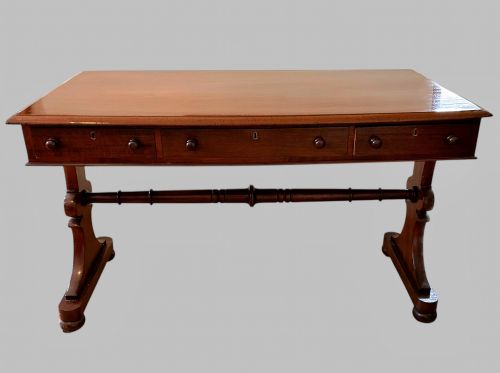
- A heavy freestanding desk comprising two supporting pedestals of drawers beneath a main writing top. This form provides substantial storage and a commanding presence in a room.
- Kneehole desk
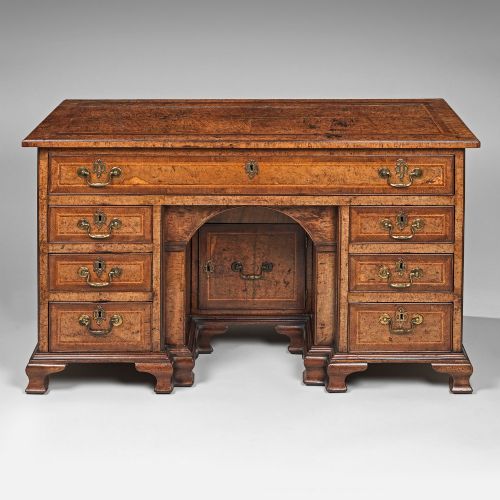
- A compact desk featuring a central recessed space for the user's legs, flanked by columns of smaller drawers. These pieces often date from the eighteenth or nineteenth century in walnut or mahogany.
- Lowboy
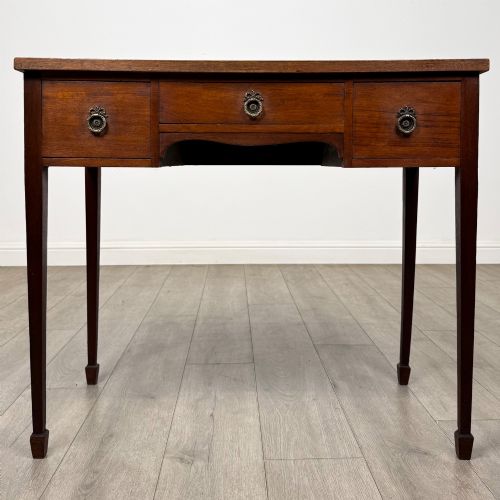
- A small seventeenth or eighteenth-century dressing or side table featuring one or more rows of drawers beneath the top. They function well as compact writing surfaces in smaller spaces.
- Campaign desk
- Portable military furniture designed to dismantle or fold for transport during campaigns. These pieces typically feature recessed brass handles and reinforced corners.
- Bureau plat
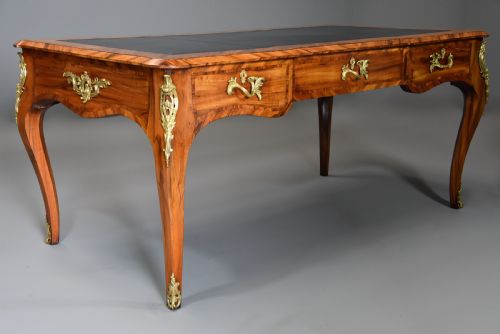
- A French freestanding writing table fitted with drawers and lacking a superstructure. They are often executed in exotic timbers with gilt-bronze mounts.
Brown Timber Writing Desk: Frequently Asked Questions
How do I choose the right size?
Measure your available floor space and consider how much surface area you need for daily work. Smaller kneehole desks and side tables fit tighter rooms, while nine-drawer pedestal models require ample clearance.
Ensure chairs fit comfortably beneath the kneehole height and check that drawers open fully without obstructing nearby furniture.
How do I care for leather writing surfaces?
Keep leather tops away from direct sunlight and excessive heat to prevent drying and cracking. Dust gently with a soft dry cloth and avoid harsh chemical cleaners.
Condition the leather occasionally with a suitable specialist balm to maintain suppleness and preserve any gilt tooling along the border.
Can I use an antique desk daily?
These pieces were originally built for daily administrative work and handle modern use well when treated with reasonable care. Use coasters for drinks and protective pads underneath modern writing implements.
Regular maintenance of the timber using appropriate wax preserves the finish against everyday wear and tear.
How do I distinguish between periods?
Examine the construction methods, hardware styles and timber choices characteristic of different eras. Georgian pieces often display restrained classical proportions and rich mahogany tones, while Victorian examples can be heavier with elaborate mouldings.
Drawer linings, backboards and fixings offer further clues to the manufacturing date and workshop origins.