

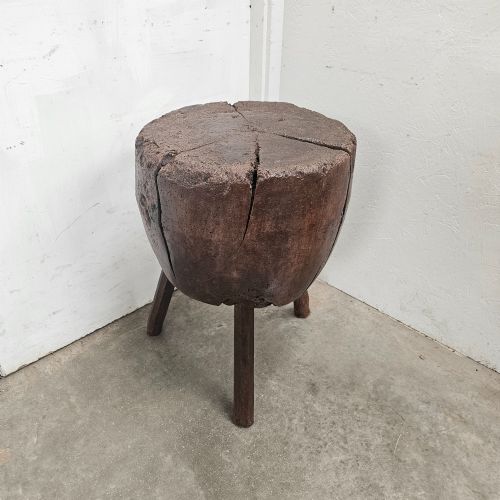


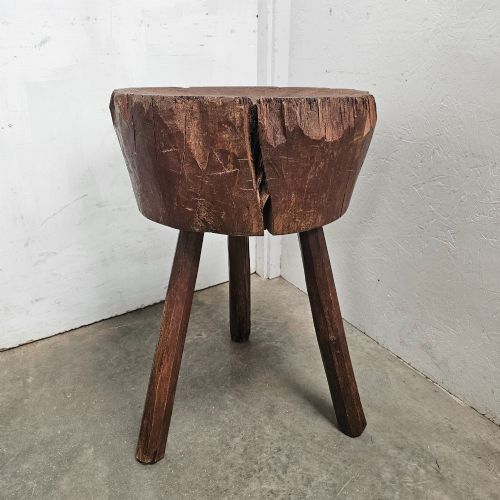


Brown Timber Tripod Stool
A brown timber tripod stool offers honest utility and rustic charm, shaped by working hands for everyday domestic or trade tasks.
Brown Timber Tripod Stool
A brown timber tripod stool represents utilitarian seating and working blocks rooted in vernacular tradition, spanning nineteenth century European and Chinese craftsmanship. Buyers seeking a brown timber tripod stool encounter solid wood construction designed for simplicity, stability on uneven floors, and daily labour.
Most examples appearing here belong to nineteenth century rural traditions, including English country stools, French game blocks, and primitive milking forms. These pieces rely on three legs to remain steady without rocking, a practical necessity in barns, dairies, and workshops.
Forms range from low three-legged milking seats and adjustable piano stools to sturdy butcher blocks and occasional tables. Their shared character lies in honest construction, visible grain, and patinated surfaces developed through decades of handling.
Materials and construction
These stools are constructed from robust domestic hardwoods such as elm, ash, beech, and oak, chosen for their toughness and resistance to splitting. Pegged tenons, wedged legs, and solid timber seats form the core of the construction.
Makers shaped heavy timber slabs using adzes and drawknives, inserting turned or cleft legs directly into bored holes beneath the seat. Surface decoration remains minimal, though occasional examples feature pokerwork detailing or carved adjustments.
Brown Timber Tripod Stool Retail Price Guide 2026
Typical asking prices for brown timber tripod stool among the pieces listed under this phrase on Sellingantiques today, from the lower quarter to the upper quarter. They describe what is for sale here now, not the wider market.
Assessing quality
Quality rests in the harmony of proportion, the weight of the timber, and the integrity of the joinery rather than ornate decoration. A superior piece displays thoughtful grain selection, comfortable seat contours, and legs splayed securely for balance.
Patina and wear distinguish working surfaces that have aged naturally through use from later alterations. The best examples retain their original structural timber without excessive replacement of legs or wedges.
The Brown Timber Tripod Stool Glossary
- Vernacular
- Everyday objects made by local craftspeople for practical use rather than high-style design. These pieces reflect regional traditions and readily available materials.
- Elm
- A tough, interlocking hardwood frequently used for stool seats because it resists splitting under heavy downward pressure. Its distinct grain adds visual texture to plain surfaces.
- Pokerwork
- A decorative technique using heated metal tools to burn designs into wood. This method creates dark, contrasting patterns on domestic objects.
- Cleft
- Wood split along the natural grain rather than sawn, producing stronger components for legs and stretchers. This traditional method preserves the integrity of the timber.
Brown Timber Tripod Stool: Frequently Asked Questions
What were these stools used for?
These stools served practical roles in dairies, workshops, and kitchens where stable, movable seating was essential.
Craftspeople and labourers relied on them for daily tasks, from milking animals to cutting meat.
How do I date a country stool?
Dating relies on tool marks, timber species, and construction methods rather than manufacturer stamps.
Nineteenth-century examples often display hand-turned legs and adzed seats showing the use of traditional drawknives.
Are three-legged stools stable?
Three legs naturally conform to uneven floors without rocking, which made them ideal for barns and rustic stone cottages.
This geometric stability explains their enduring popularity in vernacular furniture design.
How should I clean a timber stool?
Maintain the surface with a light application of beeswax to nourish the dry wood and preserve the historic patina.
Avoid harsh modern detergents or excessive water that can strip the aged finish from the hardwood.