

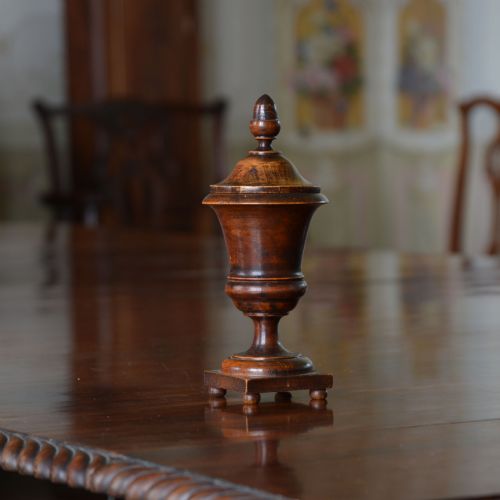


Brown Timber Treen
Brown timber treen consists of utilitarian wooden objects shaped by hand and lathe across the eighteenth and nineteenth centuries.
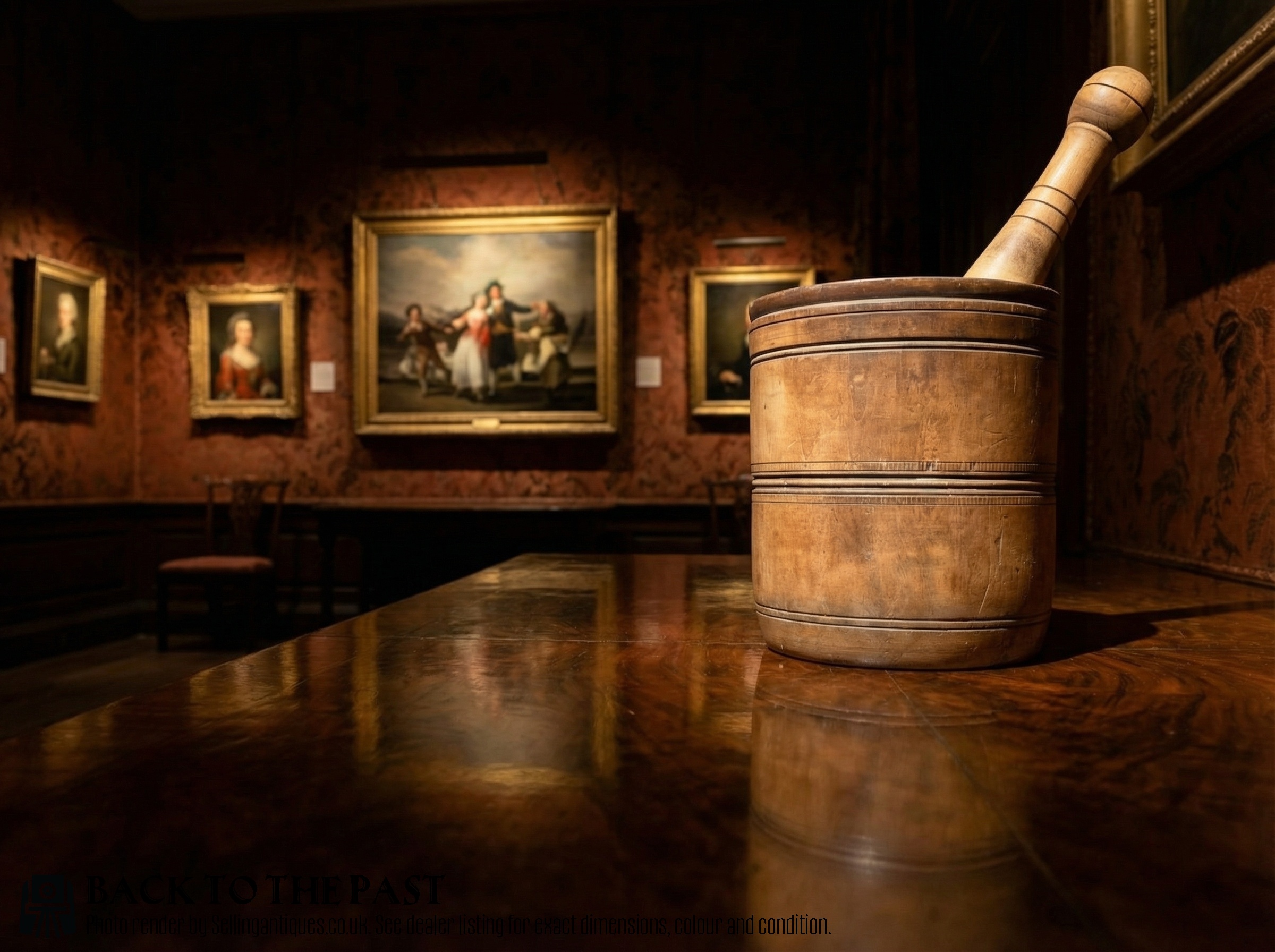
Brown Timber Treen
Brown timber treen encompasses small household objects, kitchenalia, and personal items made from various woods during the Georgian, Victorian, and early twentieth-century periods. These items range from turned bowls and spice towers to carved snuff boxes, spoons, and nutcrackers intended for daily domestic use.
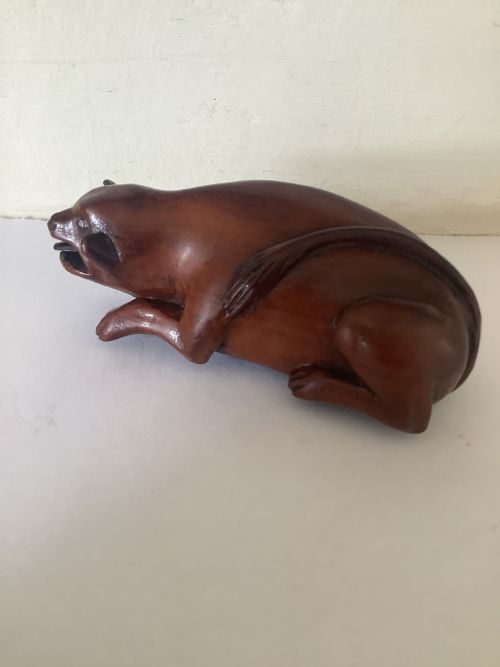
The pieces appearing on this page reflect both utilitarian rural life and decorative folk art traditions from Britain and Scandinavia. Buyers encounter everyday items shaped by local makers alongside novelty objects carved as love tokens or shoes.
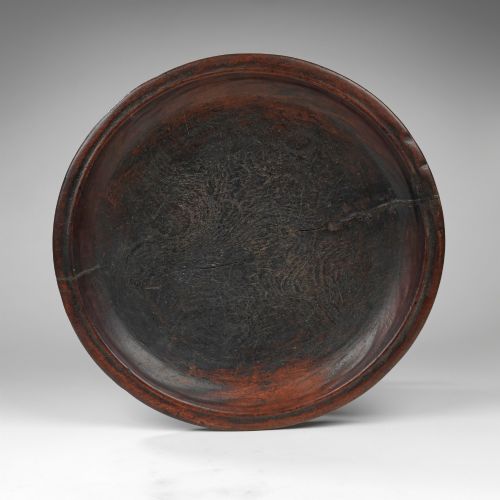
Vessels and utensils dominate the selection, including dairy bowls, ladles, and saltboxes alongside specialised items like lace folders and knitting sheaths. Each piece carries the marks of manual labour and long domestic service.
How brown timber treen was made
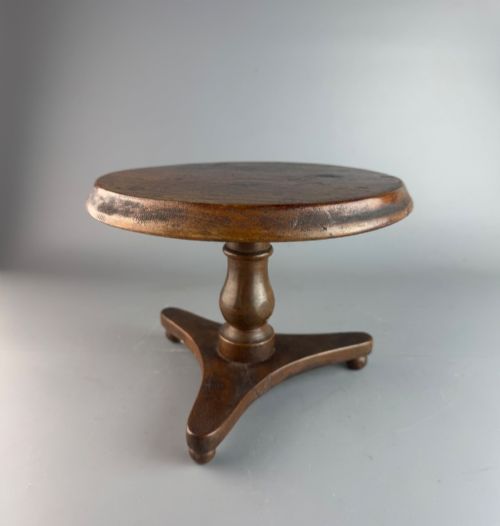
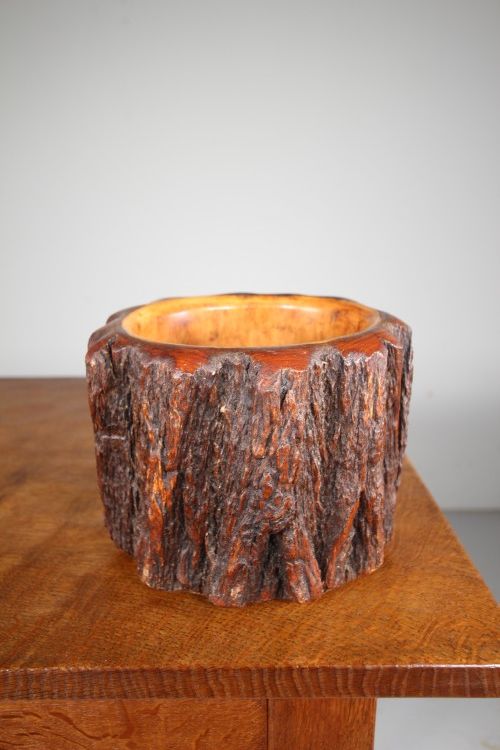
Craftsmen shaped these objects using a lathe for symmetrical forms such as bowls, egg cup stands, and goblets, or relied on hand-carving knives and gouges for figures, spoons, and snuff boxes. Woods were selected for their grain and density, utilising local hardwoods like fruitwood, walnut, mahogany, sycamore, cherrywood, yew, and oak.
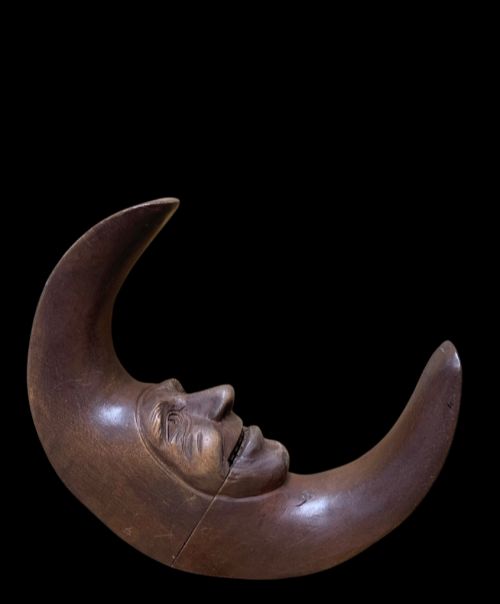
Turning required green or seasoned timber spun on a pole lathe or foot-powered lathe to achieve smooth circular profiles and hollow vessels. Carving allowed makers to work timber into figurative shapes, hinged boxes, and pierced love tokens.
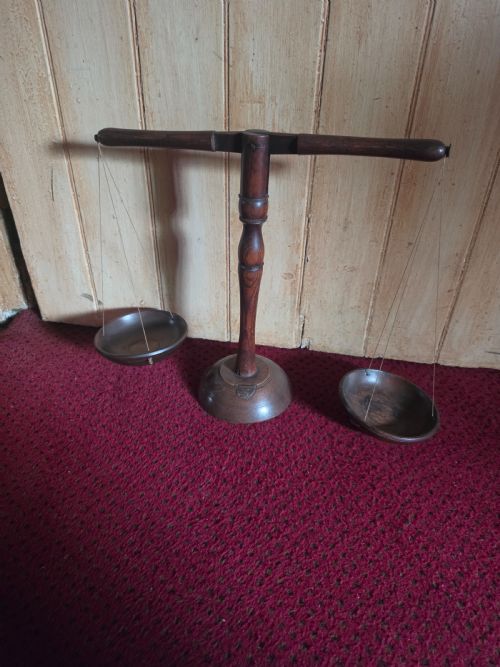
Surfaces were frequently finished with natural oils, wax, or sustained handling that developed a deep patina over decades. Metal pins, hinges, or hooks were occasionally incorporated into boxes, scales, and spoons for structural utility.
Among the carved novelties, a nineteenth-century bird call mimics the specific voice of a pigeon.
What varies in quality
Quality in these wooden objects rests upon the crispness of the turning, the harmony of the proportions, and the depth of the natural surface patina. Pieces that retain their original tool marks and unpolished warmth stand apart from those sanded down or heavily refinished in later years.
The skill of the individual maker dictates the distinction between standard utilitarian gear and pieces displaying refined folk art carving or intricate inlay work. Intact original mechanisms on boxes, nutcrackers, and spice towers further elevate the standing of a piece.
The Brown Timber Treen Glossary
- Treen
- Small handmade wooden objects for domestic or personal use. The term derives from the old word for tree.
- Fruitwood
- Timber sourced from fruit-bearing trees such as apple, pear, or cherry. It offers a dense, close grain favoured for detailed turning and carving.
- Spice tower
- A multi-tiered vertical container with stacking compartments for storing various culinary spices. These turned objects date predominantly to the nineteenth century.
- Love spoon
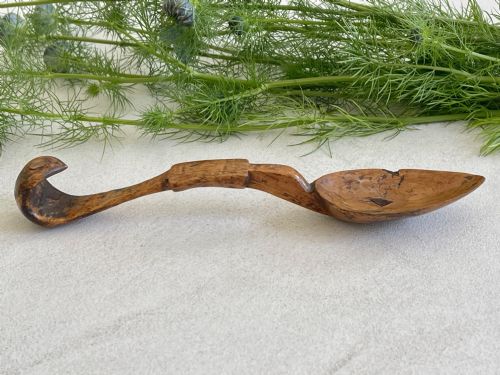
- A decorative wooden spoon carved as a token of affection or engagement. They often feature intricate pierced handles, chains, and initials.
- Patina
- The surface sheen and colour developed on timber over decades of handling, exposure to light, and application of oils. It indicates age and sustained use.
- Knitting sheath
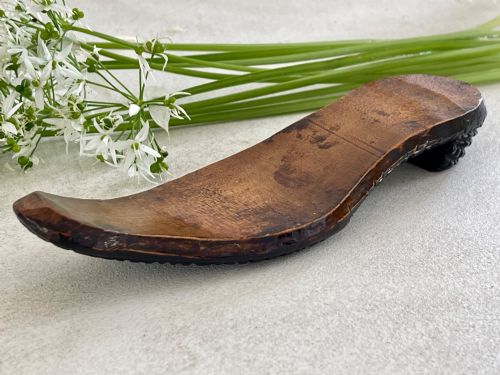
- A small carved holder tucked into a belt or apron to steady a single knitting needle while working. They often take imaginative forms such as shoes or animals.
Brown Timber Treen: Frequently Asked Questions
What is brown timber treen?
Brown timber treen comprises historical wooden items created for domestic utility, personal adornment, and kitchen use. These objects include bowls, spoons, boxes, and small decorative items fashioned from various hardwoods.
They reflect centuries of domestic craftsmanship across Britain and Europe, utilising timbers like mahogany, fruitwood, and walnut to serve everyday household needs.
How were these wooden items used?
Households used treen for food preparation, storage, dining, and personal pastimes. Items ranged from dairy bowls and spice towers to snuff boxes and knitting sheaths.
Many objects served practical daily functions in the kitchen or parlour, while others functioned as personal accessories or decorative tokens exchanged between individuals.
How do I care for wooden treen?
Wooden treen requires minimal intervention to preserve its historic surface and dry timber structure. Keeping pieces away from direct heat sources and sudden humidity changes prevents warping and splitting.
Applying a light coat of neutral beeswax occasionally helps maintain the lustre of the timber without building up a heavy modern gloss.
How can I tell the age of treen?
Dating treen involves examining the tool marks left by lathes or hand knives, the species of timber used, and the character of the surface wear. Georgian and Victorian pieces often exhibit distinct manufacturing methods and patination not found in modern reproductions.
Construction details, such as pegged joints, hand-cut threads on spice towers, and the presence of period hardware, provide further clues to a piece's era of origin.