



Brown Timber Bust
A brown timber bust brings carved humanity and rich grain into a room, spanning centuries of portraiture and sculpture.
Brown Timber Bust
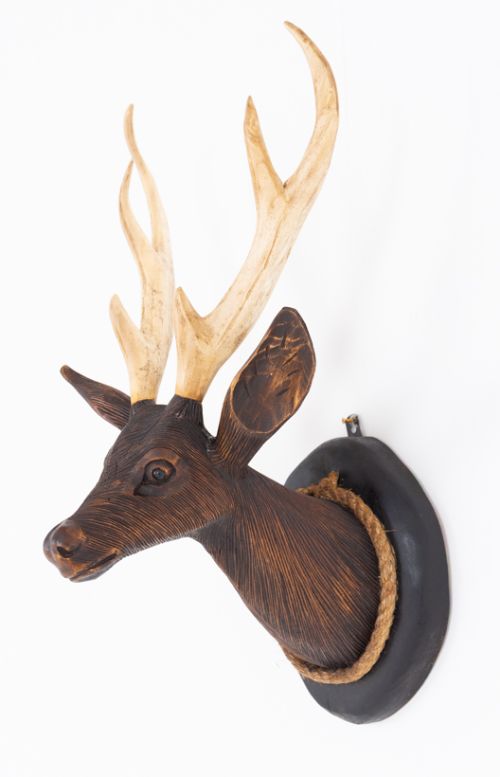
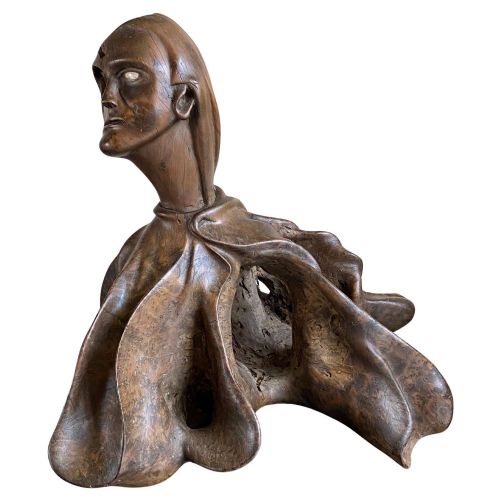
A brown timber bust captures the human form or head in three dimensions, shaped from dense woods like mahogany, walnut, oak, and yew burr. These portrait pieces range from life-sized folk art human forms and monastic studies to classical figures and milliner's display heads.
Examples on this page draw from distinct historical periods, including 18th century Italian polychrome statues and Russian noble carvings, alongside Victorian Gothic plaques and 1920s modernist works. Makers applied diverse stylistic approaches, moving between neoclassical realism, folk art, Black Forest detailing, and Art Deco lines.
Buyers encounter everything from wall plaques and bookends to standalone sculptures and support stands designed to elevate portraiture. The material palette relies heavily on timber, showcasing the natural warmth of walnut and mahogany grain.
Materials and carving techniques
Surfaces received careful hand finishing, sometimes incorporating polychrome paint layers or dark stains over birch and fruitwood to emulate aged patinas. Artisans worked with gouges and chisels to render expressive hair, drapery, and facial contours directly into the grain.
Periods represented span from the eighteenth century through the Art Deco era.
Judging sculptural quality
Quality rests in the anatomical precision and expressive depth of the carving, distinguishing master portraiture from simpler folk art or mass production. Skilled hands capture subtle tension in facial muscles and natural fall in hair or drapery.
The selection of the timber blank heavily influences desirability, with richly figured yew burr or finely grained walnut elevating the visual impact of the sculpture. Integration of signature marks or attribution to known workshops further separates exceptional portrait carvings from standard decorative objects.
V Ramirez·Boudewijn Tuerlinckx
The Brown Timber Bust Glossary
- Ecorche
- A figure drawn, painted, or sculpted showing the muscles of the limbs and torso without skin. This anatomical study aids in understanding human form.
- Caryatid
- A carved architectural figure acting as a support pillar in place of a column. These structural elements often take the form of draped human figures.
- Herm
- A sculpture with a head or bust atop a plain square pillar or pedestal. This classical form originates from ancient boundary markers.
- Polychrome
- The practice of decorating sculptural works in a variety of colours. Artisans applied pigments directly onto wood surfaces to increase realism.
- Burr
- A growth on a tree resulting in distorted grain patterns highly prized for turning and carving. Yew burr yields complex, swirling visual textures.
Brown Timber Bust: Frequently Asked Questions
How do I clean a wooden bust?
Dust the carved surfaces regularly with a soft, dry brush to prevent dirt accumulation in the crevices. Avoid liquid cleaners that can penetrate the grain and damage historical polishes.
Keep the timber away from direct sunlight and dramatic temperature shifts to prevent wood splitting over time. A light application of appropriate wax maintains the surface sheen without sealing moisture inside the material.
Where should I display my sculpture?
Position the piece at eye level on a stable surface or dedicated pedestal to appreciate the carved details fully. Good placement protects the work from accidental knocks in busy household walkways.
Ensure the room maintains stable humidity levels to protect older hardwoods from shrinking or expanding. Wall-mounted plaques require secure fixings suited to the substantial weight of dense timber.
How can I tell the period?
Examine the tool marks and the style of the carving for clues regarding the workshop era. Neoclassical and Georgian pieces often display restrained classical drapery, whereas Victorian works lean towards Gothic revival or heavy ornamentation.
Material choices also guide dating, as certain exotic hardwoods became more common during nineteenth-century trade expansion. Signatures or inscriptions carved into the base provide direct historical anchors.
Are these pieces always solid wood?
Most sculptures and portrait heads are carved from single blocks or constructed sections of solid timber. Walnut, mahogany, and oak provided the primary structural mass for these heavy works.
Secondary woods occasionally appear in backing boards or internal support structures on complex wall plaques. Artisans selected dense timbers to support intricate undercutting without fracturing.