


Brown Swivel Desk Chair
A brown swivel desk chair anchors a study with timber, leather and mechanical movement shaped across the nineteenth and early twentieth centuries.
Brown Swivel Desk Chair
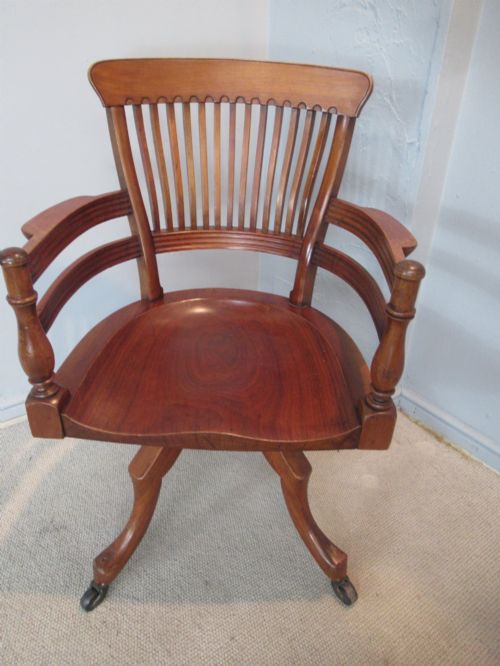
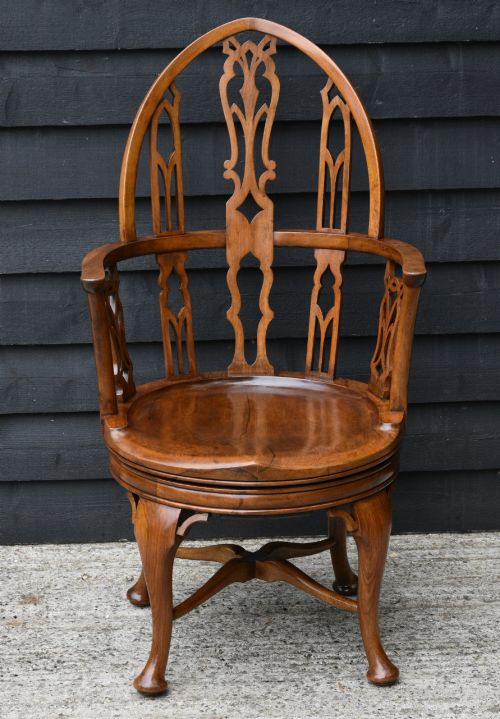
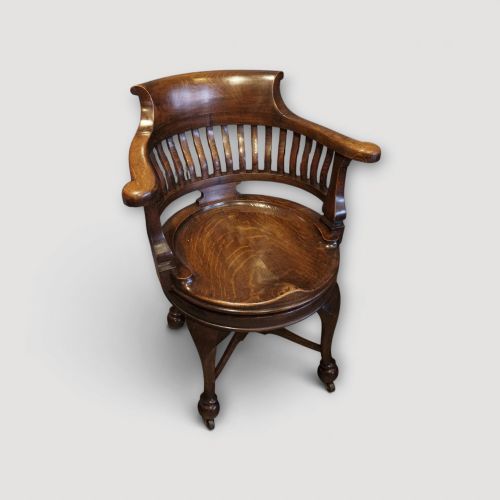
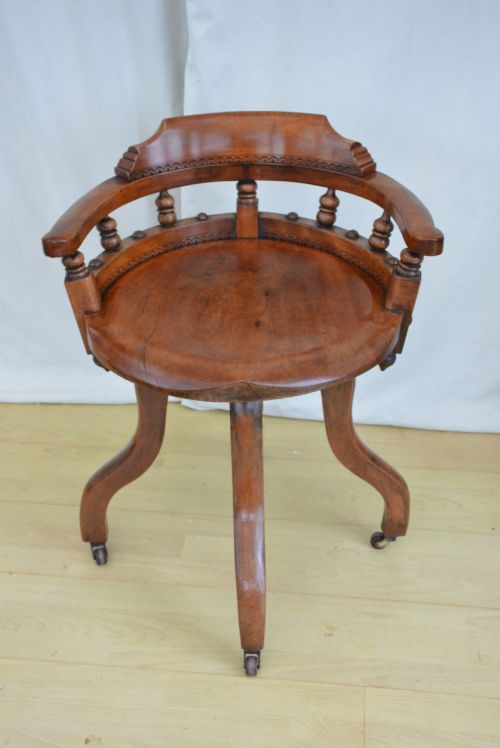
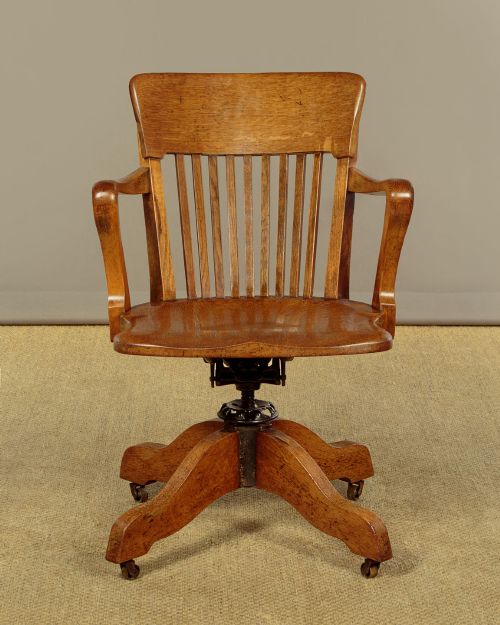
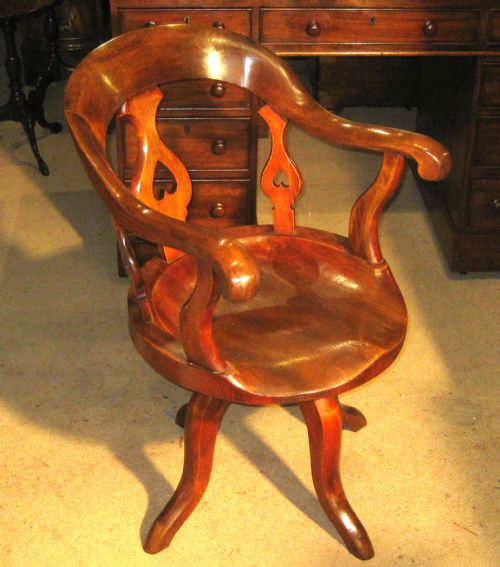
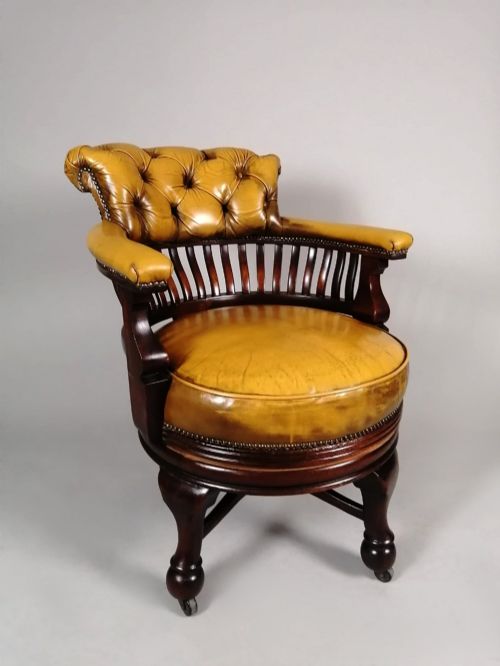
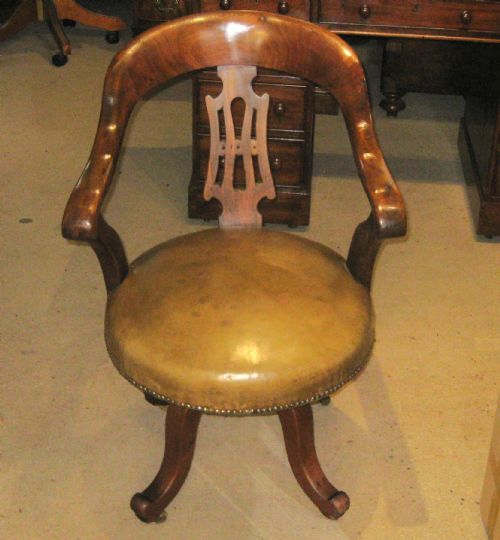
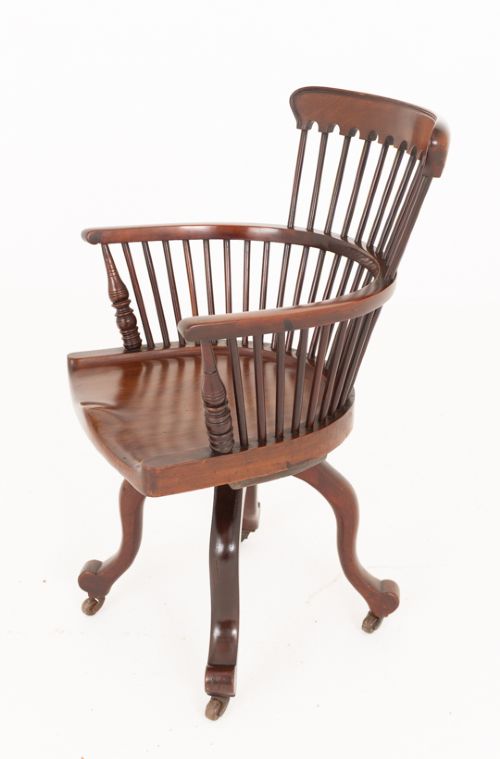
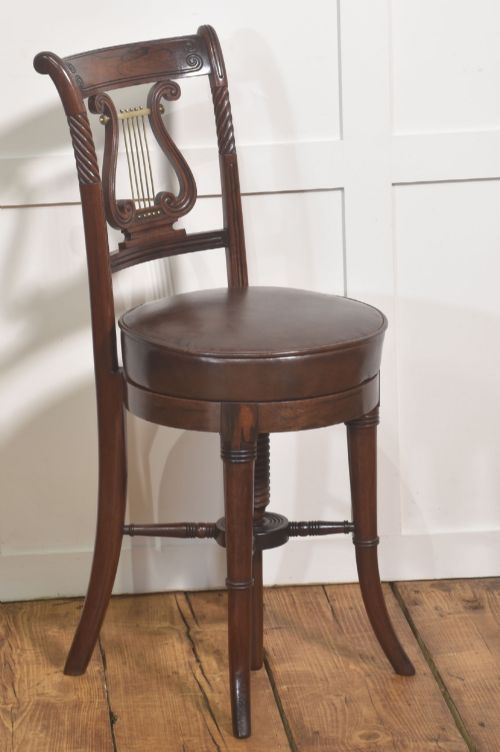
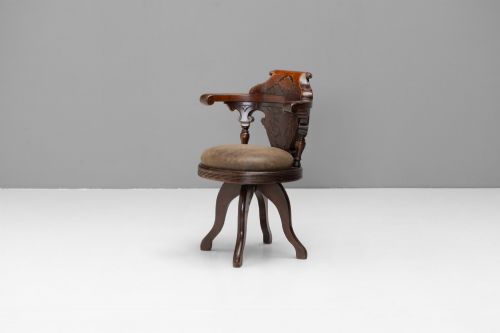
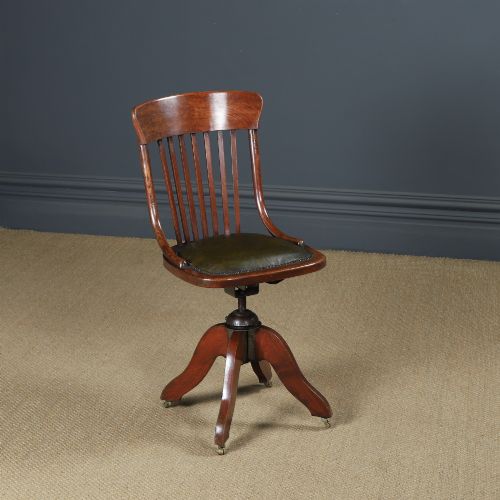
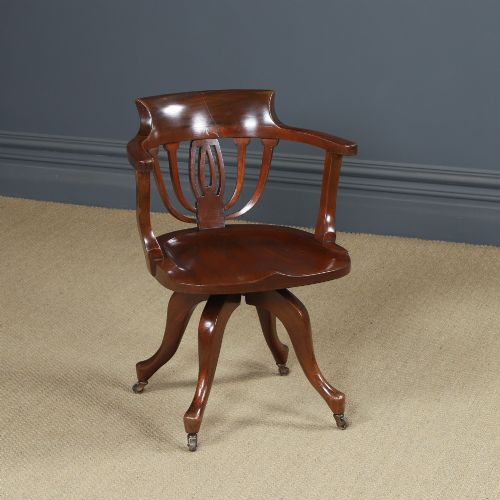
A brown swivel desk chair bridges utility and solid construction, designed for long hours at a merchant ledger or library table. The pieces found here span Victorian, Edwardian and George V periods, taking the form of revolving desk chairs, office armchairs and carved ships chairs.
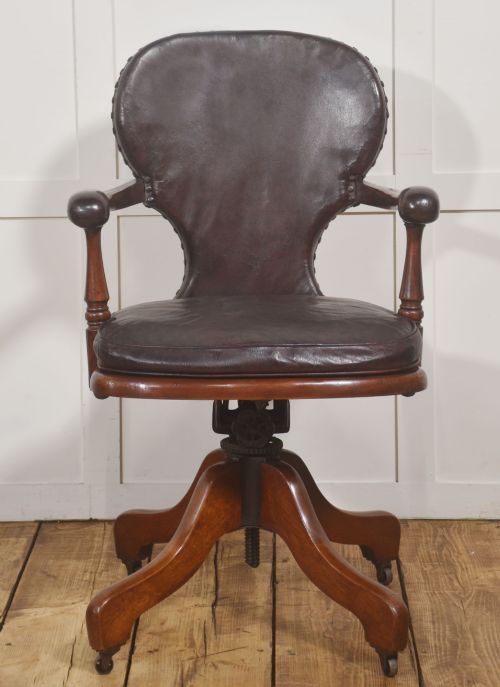
Oak and mahogany form the structural backbone of these survivors, often paired with inset leather seats and mounted on mechanical cast-iron swivel mechanisms. Examples range from simple ash and beech side chairs to heavily carved walnut and satinwood-inlaid iterations.
Buyers meet sturdy vernacular office seating alongside ambitious designs by makers such as Shoolbred, Kendrick & Jefferson, and George Bartholomew & Co. These chairs prioritize function through adjustable heights and pivoting seats without sacrificing period character.
How they were made
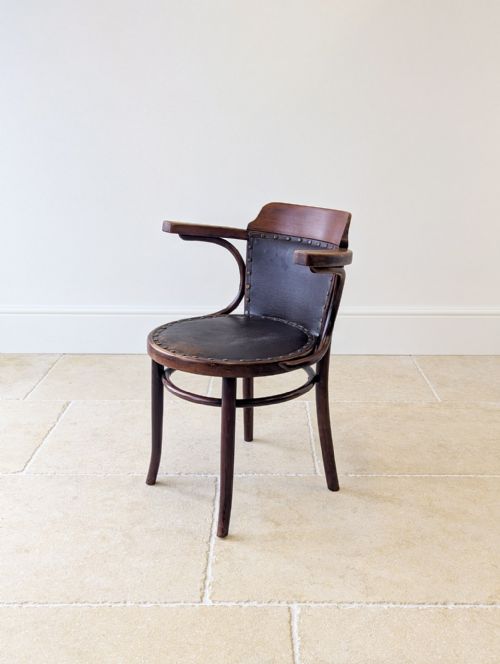
Joinery relies on solid hardwoods like oak, mahogany, walnut, ash and beech, shaped through turning, steam-bending for bentwood frames, and deep carving. Upholstery utilises durable leather inset into wooden seats or stretched across padded backs.
Mechanical ingenuity defines the swivel action, employing cast iron and brass spindles, threaded height adjusters and iron spider bases beneath the wooden seats.
Brown Swivel Desk Chair Retail Price Guide 2026
Typical asking prices for brown swivel desk chair among the pieces listed under this phrase on Sellingantiques today, from the lower quarter to the upper quarter. They describe what is for sale here now, not the wider market.
Listings feature oak, mahogany, walnut, ash and beech combined with cast iron and brass mechanisms across Victorian and Edwardian periods.
What varies in quality
The refinement of the timber carving and the complexity of the revolving mechanism determine the tier of a piece. Simple turned spindles on a beech frame sit at the accessible end, while heavily carved oak, figured mahogany and sophisticated brass-and-iron swivel movements occupy the upper range.
The choice of secondary woods, the weight of the cast iron undercarriage, and the integration of fine details like satinwood inlay or original leather upholstery separate standard commercial office seating from bespoke library armchairs.
Kendrick & Jefferson·SHOOLBRED·George Bartholomew & Co.
The Brown Swivel Desk Chair Glossary
- Revolving
- A seating design featuring a central spindle and undercarriage allowing the upper chair to turn full circle. This movement relies on concealed iron or brass pins.
- Ships Chair
- A heavy, often deeply carved wooden chair designed for maritime use with a stable base. These pieces frequently incorporate sturdy revolving mechanisms to counter movement.
- Bentwood
- Wood softened by steam and bent into curved structural components. This technique creates continuous graceful lines without weak joints.
- Bergere
- A traditional upholstered chair style featuring tight cane work woven into the frame. It adds textural contrast to solid timber office furniture.
- Aesthetic Movement
- A late nineteenth-century design focus prioritizing visual beauty over narrative meaning. Pieces from this movement display clean lines and artistic woodwork.
Brown Swivel Desk Chair: Frequently Asked Questions
How do I adjust the height?
Many period swivel chairs adjust via a central threaded spindle beneath the seat, which raises or lowers the user when the chair is rotated.
Other models rely on fixed mechanical collars secured with iron pins.
Were these used in ships?
Despite the traditional term ships chair, most heavy rotating oak seats were built for heavy-duty commercial offices, banks, and private libraries.
Their robust construction simply earned them nautical associations among nineteenth-century makers.
How do I clean the leather?
Period leather seating benefits from gentle dusting with a dry cloth and occasional treatment with appropriate conservation waxes to prevent drying.
Avoid modern chemical solvents that strip the original patina.
How do I date an oak swivel chair?
Dating relies on combining the timber choice, the style of the carving such as Arts and Crafts or Gothic Revival, and the complexity of the cast-iron undercarriage.
Edwardian and late Victorian pieces frequently display machine-tooled iron components alongside traditional hand joinery.