

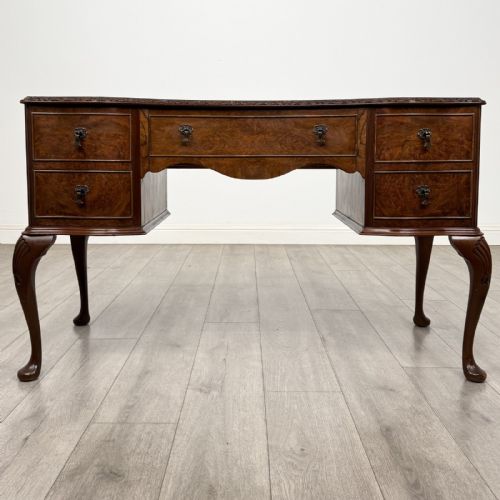
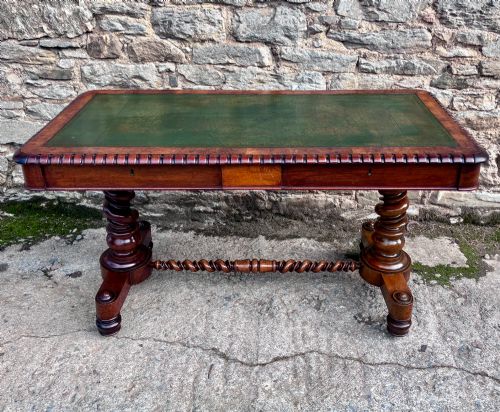
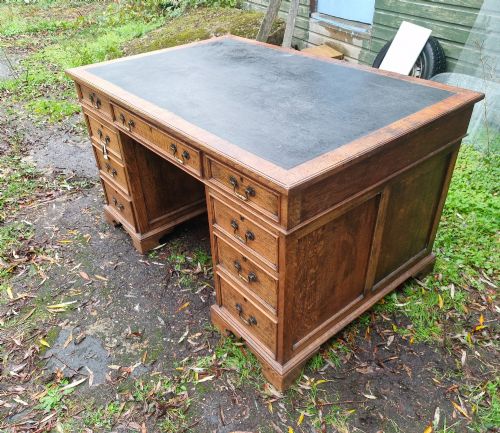
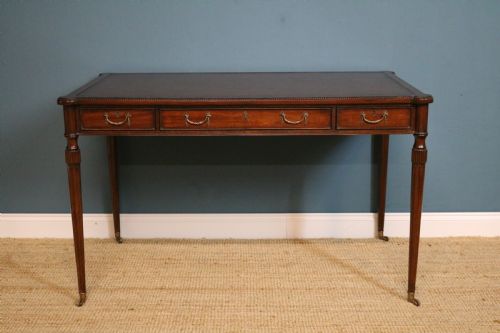
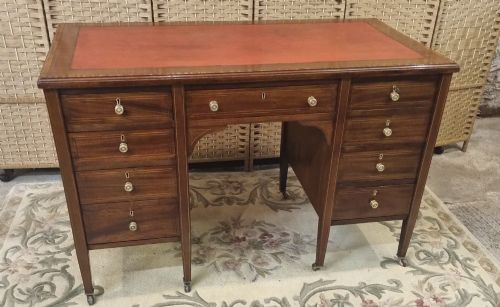
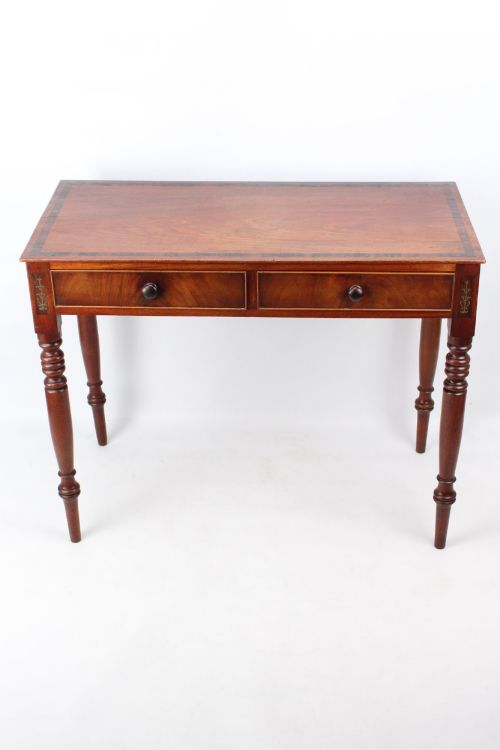
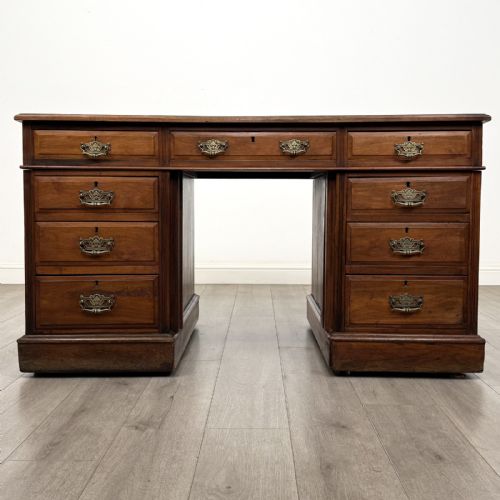
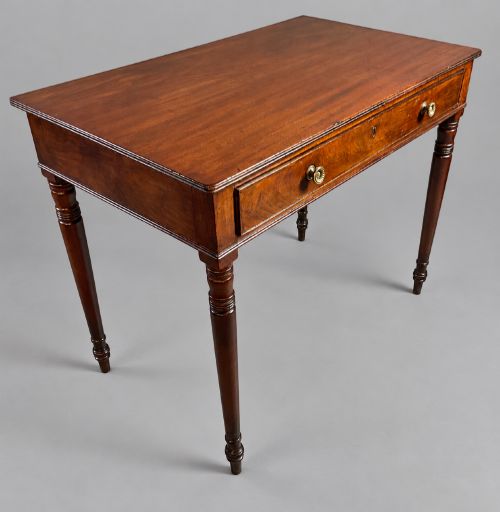
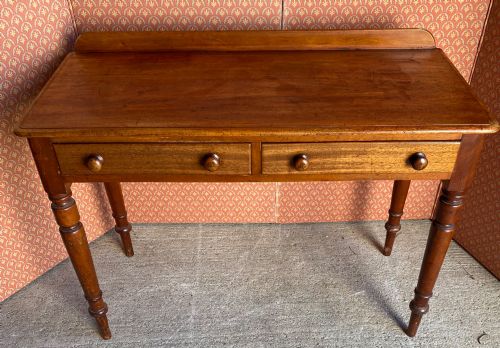
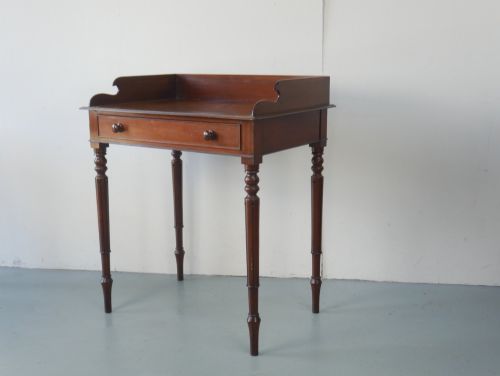
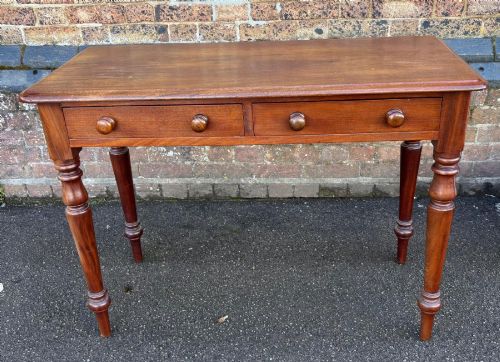
Brown Study Table
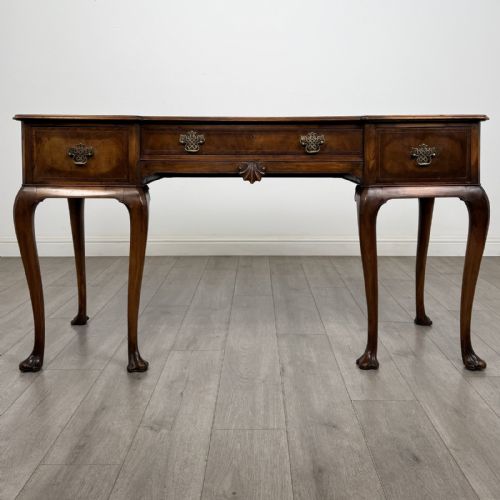
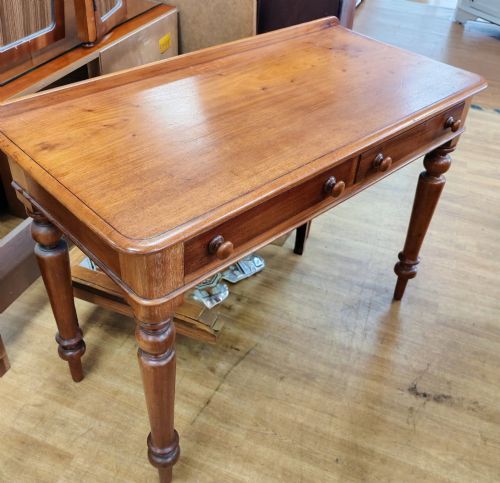
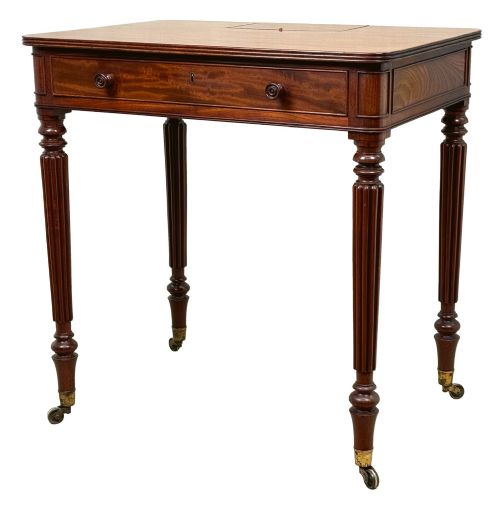
A brown study table is a solid place for private work, typically encountered here as a mahogany or walnut writing desk from the Victorian or Edwardian periods.
Brown Study Table
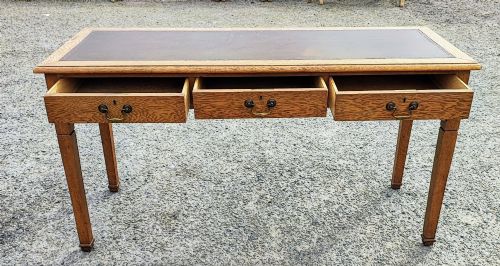
A brown study table serves primarily as a writing desk or library table, providing a designated workspace for correspondence and reading. When searching for a brown study table, buyers encounter forms ranging from simple Edwardian oak writing tables to elaborate Victorian pedestal desks and French bureau plat examples.
The pieces on this page span several centuries, with a strong representation of Victorian and Edwardian examples alongside 18th century and 19th century pieces. Materials such as mahogany, walnut, and oak dominate the selection, often complemented by leather inserts and brass fittings.
Makers and styles vary widely, incorporating Regency, Arts and Crafts, Art Deco, and Louis XV Revival aesthetics. Whether configured as a kneehole desk, a partners desk, or a simple two-drawer writing table, each item reflects the domestic and professional storage needs of its era.
How they were made
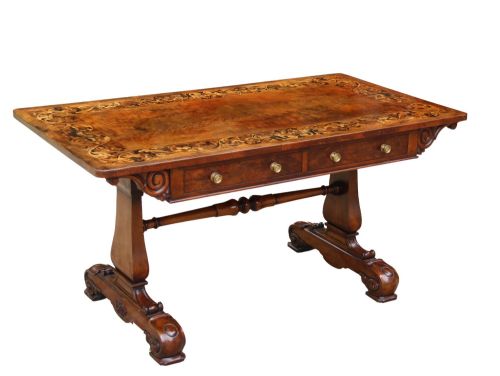
Cabinet makers constructed these tables using dense hardwoods like mahogany, oak, and walnut, frequently applying burr walnut or satinwood veneers to create patterned surfaces. Parquetry and marquetry inlay techniques added decorative geometric or floral motifs to the tops and drawers of finer examples.
Writing surfaces were frequently inset with panels of coloured leather, sometimes tooled in gold, to provide a durable and smooth plane for handwriting. Brass handles, escutcheons, and ormolu mounts finished the construction, securing drawers and accentuating the woodwork.
Brown Study Table Retail Price Guide 2026
Typical asking prices for brown study table among the pieces listed under this phrase on Sellingantiques today, from the lower quarter to the upper quarter. They describe what is for sale here now, not the wider market.
Listings feature mahogany, oak, walnut, burr walnut, satinwood, and kingwood across Victorian, Edwardian, and earlier periods.
What varies in quality
The distinction between standard and superior pieces rests on the selection of timber and the precision of decorative work. Tables featuring figured burr walnut, intricate marquetry inlay, or specialised parquetry demonstrate a higher level of craftsmanship than plain utility desks.
Construction details such as the integration of free-standing finished backs, robust pedestal framing, and the incorporation of branded maker elements elevate the standing of an individual writing table.
W Walker and Sons London·Edwards and Roberts·Howard and Sons
The Brown Study Table Glossary
- Pedestal desk
- A heavy freestanding desk comprising two supporting pedestals of drawers with a central writing surface across the top. These pieces often feature panelled sides and brass hardware.
- Kneehole desk
- A compact desk featuring a central recessed space for the legs, flanked by columns of drawers. This form allows the user to sit directly facing the centre of the table.
- Bureau plat
- A freestanding French writing table typically fitted with drawers and mounted with ormolu brass decorations. They originate from revival periods and display elaborate parquetry work.
- Partners desk
- A large double-sided desk designed for two people to work opposite one another, featuring drawers on both faces. These are traditionally finished on all sides so they can stand in the middle of a room.
- Marquetry
- The art of applying decorative pieces of veneer to a structure to form intricate pictorial designs. It appears on the tops and drawer fronts of select 18th century and Victorian desks.
Brown Study Table: Frequently Asked Questions
What is a brown study table?
A brown study table is a practical writing desk or library table made from dark woods like mahogany or walnut.
These pieces were traditionally used for private reading, writing letters, and managing household or business correspondence in a study.
How do I use one today?
These tables function effectively as home office desks or writing surfaces in a living space.
Their drawer configurations provide storage for modern stationery while maintaining a traditional aesthetic.
How do I date a wooden desk?
Dating relies on observing the primary timber, construction methods, and prevailing style characteristics.
Victorian and Edwardian pieces show distinct revival influences, whereas 18th century examples display simpler structural framing and distinct veneer patterns.
Are these desks freestanding?
Many larger pedestal and partners desks are finished on all four sides so they can sit in the middle of a room.
Smaller writing tables may be designed to back against a wall, though free-standing examples also appear frequently.