


Brown Stone Painting
These brown stone painting works bring the moody tones and quiet drama of historic architecture and landscapes straight to your wall.
Brown Stone Painting
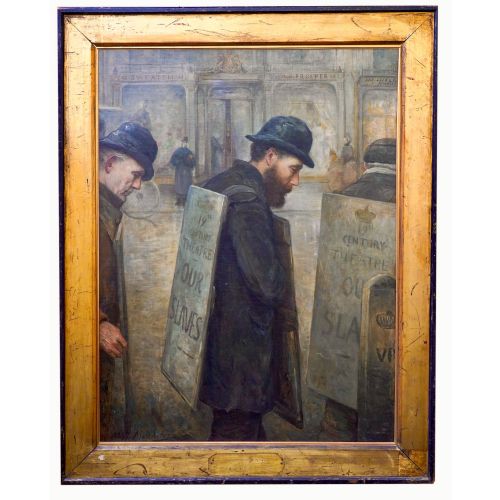
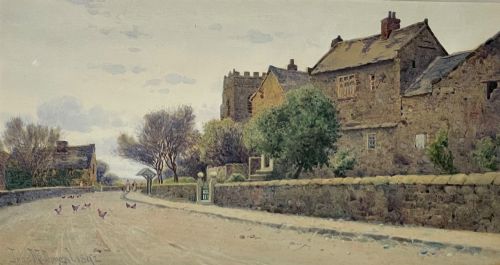
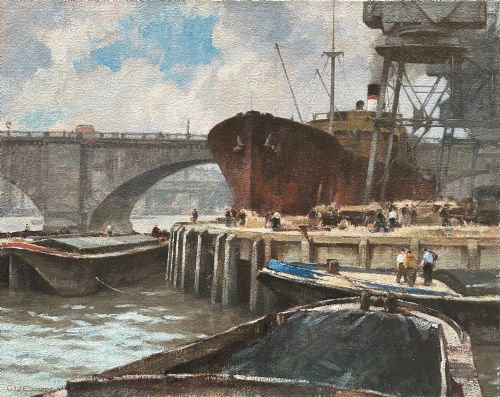
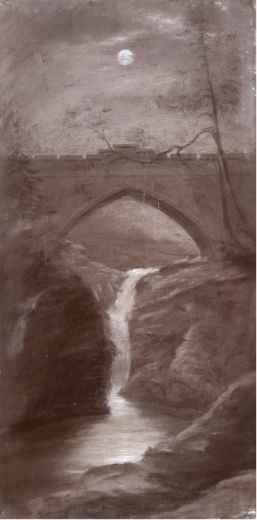
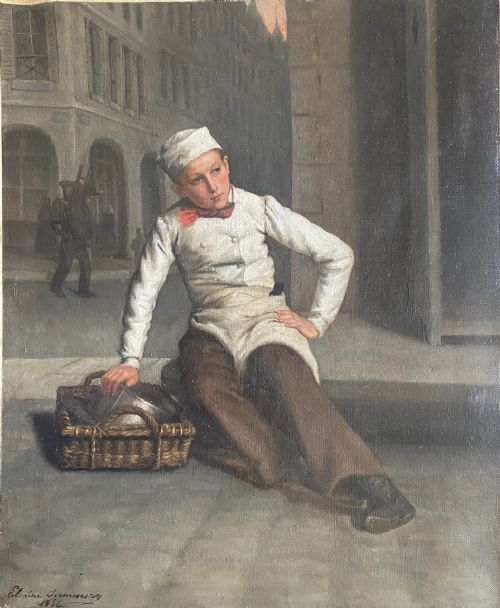
When you search for brown stone painting, you encounter works capturing masonry, bridges, and rugged terrain through muted earth pigments. The pieces seen here span the Victorian era up through the early twentieth century, showing architecture and landscapes rendered in sober palettes.
You are most likely to meet nineteenth-century watercolours and oils on canvas depicting bridges, village scenes, and rural structures. These artworks rely heavily on natural light and stone textures rather than bright, saturated hues.
The selection ranges from British impressionist interpretations to detailed Victorian social realism and regional landscapes. Each piece reflects how artists used earthy brown tones to anchor compositions built around stone subjects.
Materials and Methods
Artists executed these works primarily using oil paint on canvas or wood panel, alongside watercolours on paper. The choice of oil allowed for rich layering of dark earth tones, whilst watercolours captured translucent washes on stone surfaces.
Paintings on canvas utilise the weave of the fabric to add texture beneath thin glazes of pigment. Works on paper depend on careful preservation of the white ground to create highlights against deep brown washes.
Listings feature works created across the nineteenth and early twentieth centuries, utilising paper, canvas, and wood panels.
Judging Quality and Execution
Superior works demonstrate confident brushwork and a keen understanding of tonal values that give stone surfaces a genuine weight. Weaker pieces often rely on flat application and muddy washes that obscure the structural form.
The finest examples balance the darkness of the brown palette with subtle shifts in light that bring depth to architectural details. Execution in handling perspective and texture separates masterly compositions from routine student sketches.
Felix Stone Moscheles·John McDougal·Thomas Lound·Ernest Higgins Rigg·Herbert Royle·Charles Robert Leslie
The Brown Stone Painting Glossary
- Oil paint
- A slow-drying medium consisting of pigments suspended in a drying oil, typically linseed, allowing for rich blending and deep tones.
- Watercolour
- A paint wherein the colourants are suspended in a water-soluble vehicle, traditionally applied in transparent washes on paper.
- Canvas
- A closely woven heavy fabric used as a support surface for oil paintings, stretched tightly over a wooden frame.
- Social realism
- An artistic movement depicting the everyday conditions of the working classes and the poor, prominent in nineteenth-century Britain.
Brown Stone Painting: Frequently Asked Questions
How should I hang a brown stone painting?
These works suit rooms with neutral wall colours that allow the deep earthy tones of the pigment to stand out.
Keep them away from direct sunlight to protect watercolours and oils from fading or drying out over time.
How do I tell an oil from a watercolour?
Oils present a textured, sometimes glossy surface where the paint sits proud of the canvas or wood panel.
Watercolours display a flat finish behind glass where the pigment is absorbed directly into the paper fibres.
What periods do these paintings cover?
The available selection centres primarily on the nineteenth century and stretches into the early twentieth century.
Victorian pieces sit alongside later works influenced by British impressionism and regional realism.
How do I care for antique paintings?
Maintain a stable room temperature and avoid damp environments that can warp wooden panels or damage paper.
Dust oil paintings very gently with a soft, dry brush and leave professional cleaning to conservators.