




English Topographical Watercolour
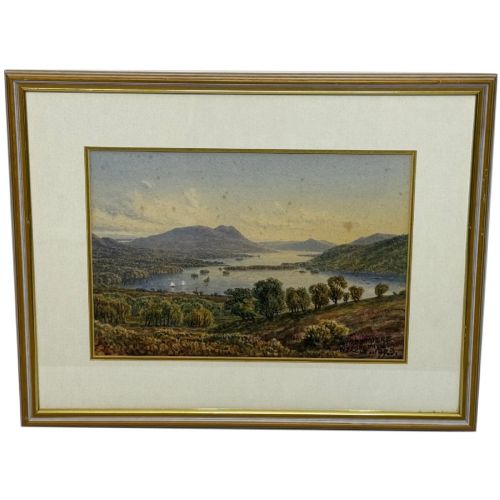
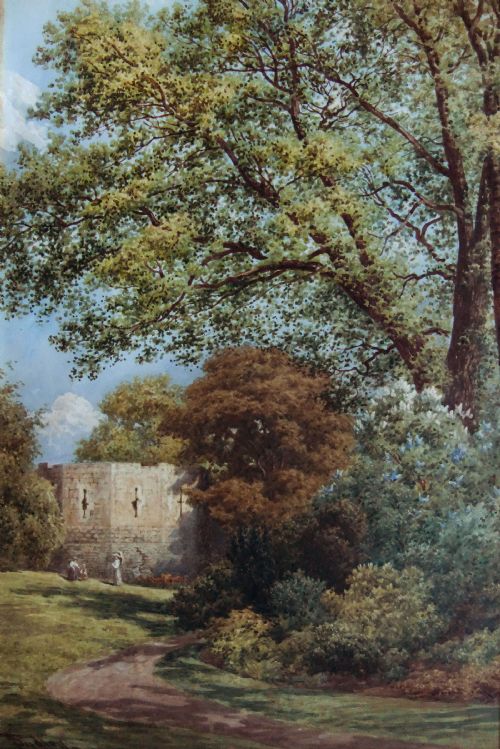
An english topographical watercolour captures the specific landscape, building or street of a place with careful brushwork.
English Topographical Watercolour
An english topographical watercolour records specific British locations, from the countryside of Yorkshire and the Lake District to city landmarks in London, Nottingham and York.
These works appear across several periods, stretching from the Georgian era through Victorian and Edwardian times into the mid-twentieth century.
Framed artworks on paper dominate the selection, often rendered in watercolour pigment and ink, sometimes combined with monochrome ink or gold leaf.
Materials and methods
Artists painted primarily with watercolour pigment and ink on paper supports, sometimes adding gold leaf or monochrome ink for detail.
Makers housed these works behind glass within wooden frames, frequently finished with gilt to complement the picture.
Materials recorded across these artworks include paper, watercolour pigment, ink, monochrome ink, gold leaf, glass, wood, and gilt.
Judging quality
The strength of the draughtsmanship and the precision in capturing architectural and landscape details set finer works apart from simpler topographical sketches.
The condition of the paper, the integrity of the pigments, and the quality of the original framing elements influence the overall character of a piece.
William Taylor Longmire·Thomas Cooper Moore·A. G. Hayward·Amos Green·Tom Dudley·Claude Muncaster·George De Paris·Herbert John Finn·J. D. Walker·T Fairfax
The English Topographical Watercolour Glossary
- Topographical watercolour
- A painting that depicts a recognizable geographical location, building, or townscape with descriptive accuracy. These works served as visual records before photography became widespread.
- Gilt frame
- A wooden picture frame coated with gold leaf or a gold-coloured finish. This traditional edging enhances the visual depth of the watercolour within.
- Watercolour pigment
- Ground colour mixed with a water-soluble binder, applied in translucent washes to paper. It allows artists to build up light and shadow through layered applications.
English Topographical Watercolour: Frequently Asked Questions
What is an english topographical watercolour?
These pieces are paintings on paper that portray specific places, towns, and country scenes across Britain. They served as accurate visual records of locations before the rise of photography.
Artists focused on distinct buildings, rivers, and streets, offering a window into past landscapes.
How were these watercolours displayed?
Artists and owners mounted these works on paper behind protective glass within wooden frames. Many received gilt surrounds to complement the tones of the painting.
This traditional method protected the delicate paper surface from dust and handling.
How do I date an antique watercolour?
Dating relies on the style of dress in figures, architectural changes in the landscape, and the framing materials. Signatures and inscriptions on the reverse often point to active dates for the artist.
Paper types and handwriting styles provide further clues to the decade of creation.
How do I care for a watercolour painting?
Keep these works away from direct sunlight to prevent the watercolour pigments from fading over time. Maintain a stable room temperature to protect the paper and the wooden frame from moisture.
Hanging them on interior walls away from direct heat sources ensures their preservation.