


Brown Stick Back Chair
A brown stick back chair brings utilitarian warmth to a room, offering sturdy seating shaped by centuries of English vernacular woodworking tradition.
Brown Stick Back Chair
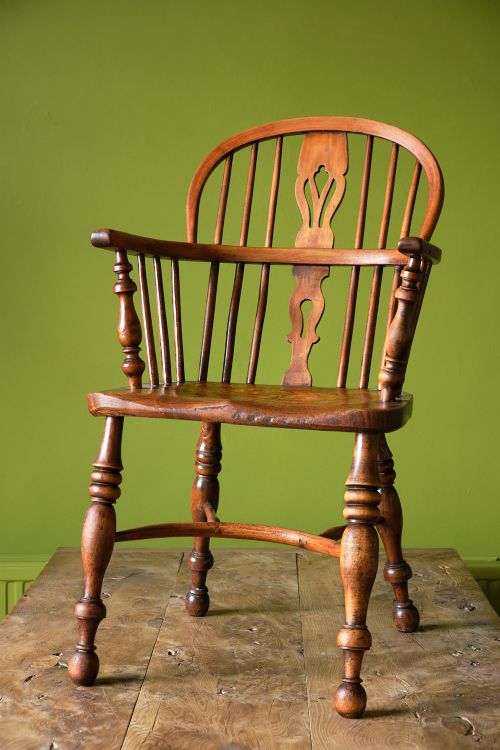
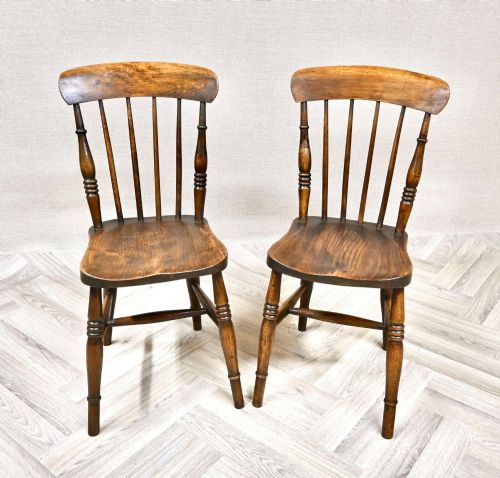
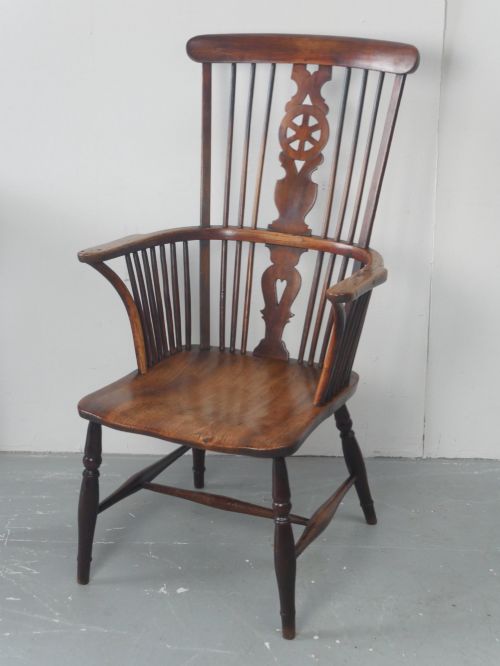
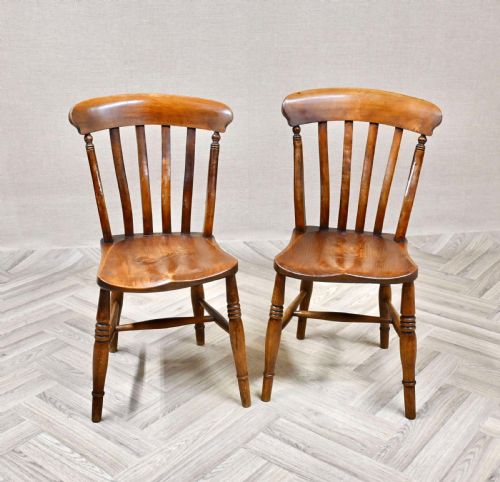
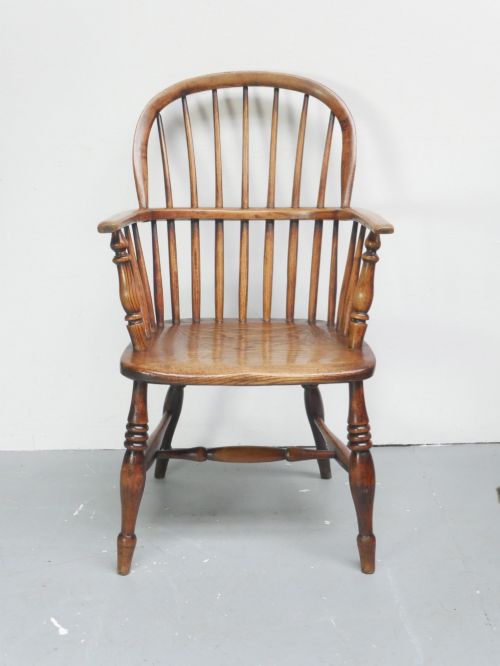
When you search for a brown stick back chair, you encounter regional English Windsor seating designed for practical utility rather than formal parlour use. These chairs emerge from 18th century, Georgian, and Victorian workshops across the Thames Valley, West Country, Wales, and Scotland.
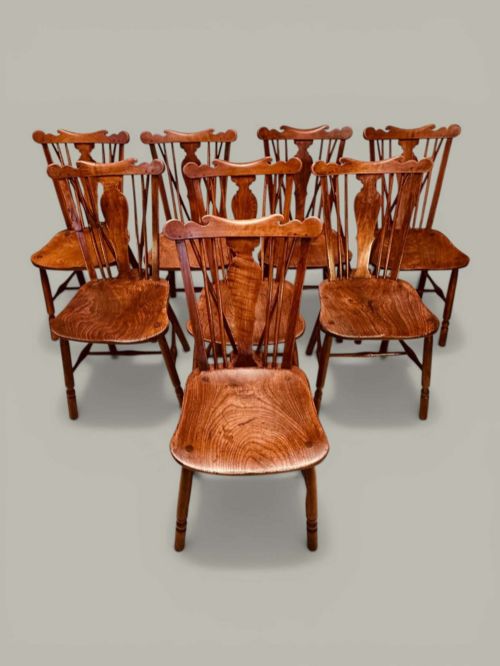
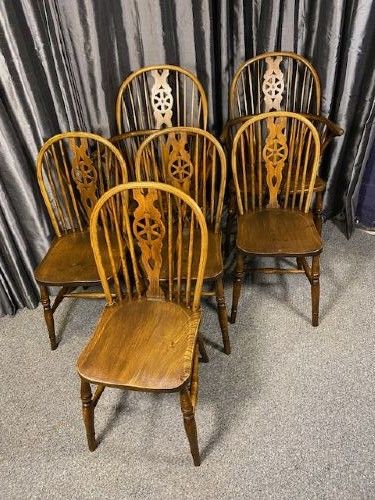
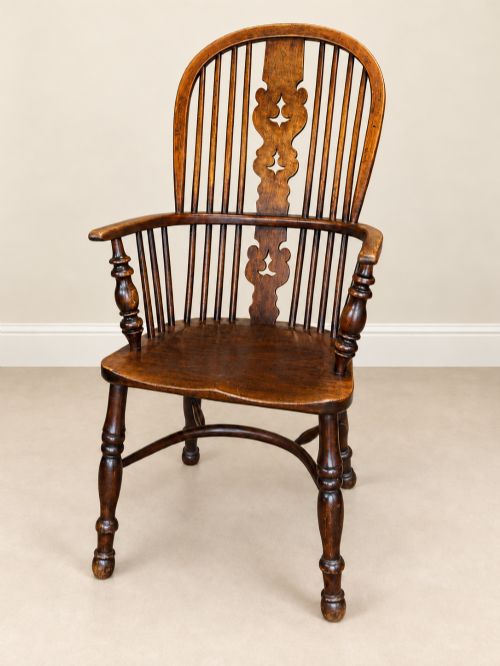
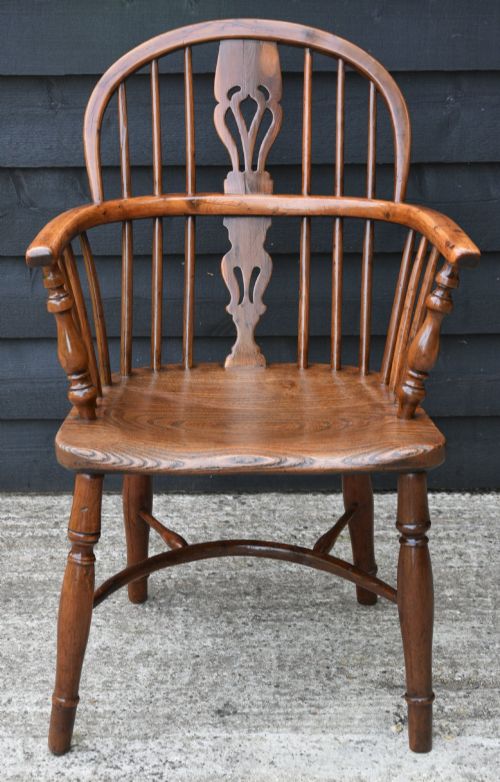
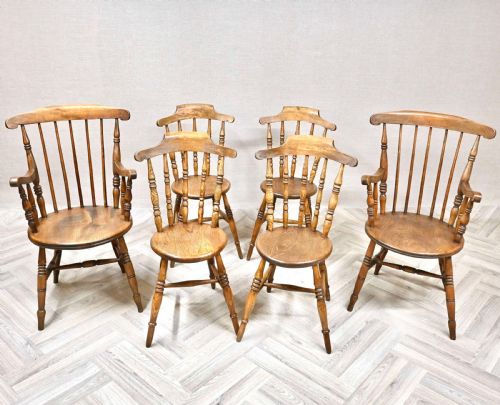
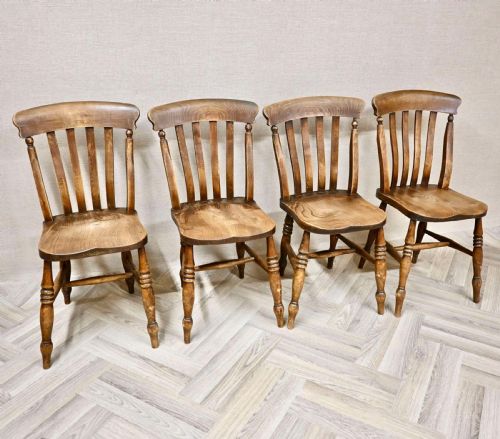
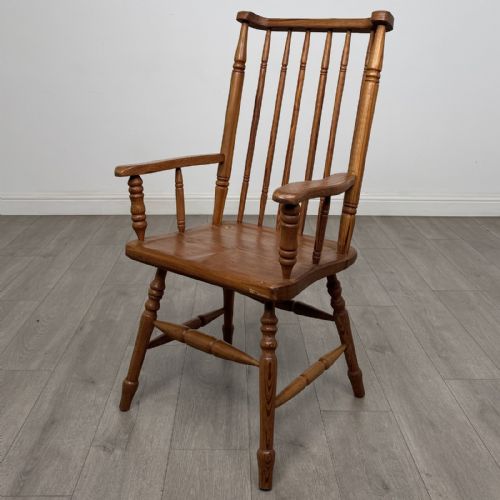
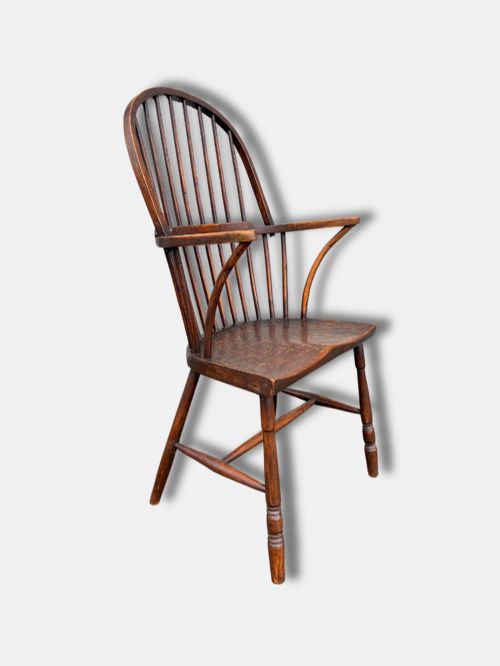
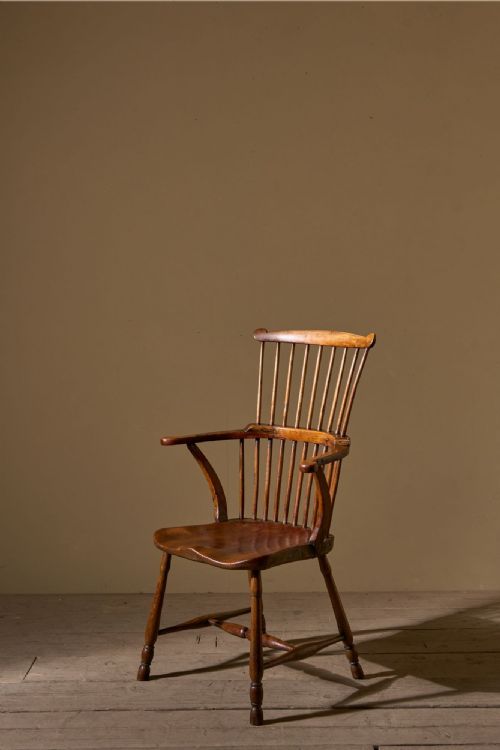
The versions most common on this page are kitchen dining chairs and spacious armchairs configured with hoop backs, comb backs, or lathbacks. They arrive singly, in pairs, or in larger sets spanning multiple centuries.
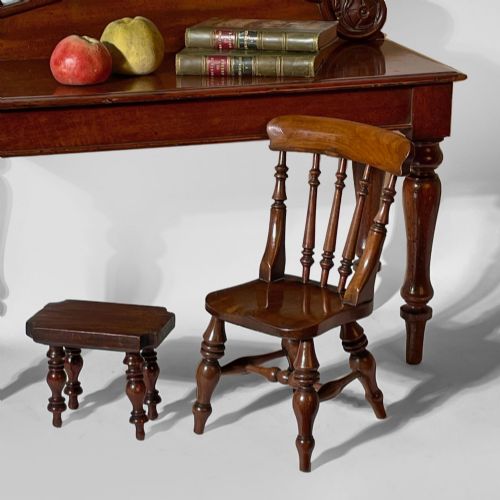
Makers shaped these brown stick back chair designs to handle daily domestic service, resulting in low backs, high backs, and children's sizes moulded for comfort over long hours.
How They Were Made
Constructors relied on a combination of native timbers, pairing solid elm seats with bent ash, beech, or fruitwood for the spindles and hoops. Yew wood appears in select regional examples, prized for its natural grain and rich tone.
The Windsor technique involves wedging individual turned sticks directly into a thick sculpted wooden seat rather than utilising a mortise and tenon frame. Selected early pieces retain their original brown paint or display patinated timber surfaces deepened by age.
Brown Stick Back Chair Retail Price Guide 2026
Typical asking prices for brown stick back chair among the pieces listed under this phrase on Sellingantiques today, from the lower quarter to the upper quarter. They describe what is for sale here now, not the wider market.
Many of these sturdy kitchen companions survived decades of dining table debates and children's homework sessions without losing their balance.
What Varies in Quality
Quality rests in the sculpting of the solid elm seat and the balance of the turned spindles supporting the back. Finer pieces display refined saddle seats and well-balanced crinoline stretchers that add structural integrity.
Sets vary in their matching uniformity, with harlequin groups offering organic variety while matched dining sets demonstrate disciplined provincial craftsmanship.
The Brown Stick Back Chair Glossary
- Windsor chair
- A wooden chair built with a thick solid seat into which the legs and back spindles are driven directly.
- Stick back
- A chair design utilising simple turned spindles inserted into the seat and top rail, forming a light yet sturdy support.
- Comb back
- A Windsor chair style where the central spindles rise to pierce a horizontal top rail resembling a traditional hair comb.
- Hoop back
- A continuous bentwood bow forming the arms and back rail of a chair in a single flowing arc.
- Crinoline stretcher
- An arched underframe connecting the legs of a chair to provide rigidity and strength.
Brown Stick Back Chair: Frequently Asked Questions
What is a brown stick back chair?
A brown stick back chair is a traditional wooden seat featuring turned spindles pegged into a solid carved timber base. They originate primarily from English provincial workshops during the Georgian and Victorian eras.
These pieces served as practical seating in kitchens and farmhouses, combining sturdy joinery with comfortable ergonomics shaped from native timbers.
How do I use them at home?
These chairs fit naturally around dining tables, desks, or as accent seating in living spaces. Their neutral wooden tones complement both modern and traditional interiors.
Mix single armchairs as reading seats or gather a set of matching side chairs around a kitchen table for daily use.
How can I tell different periods apart?
Eighteenth-century examples often feature comb backs and deep patination on ash and elm. Victorian and later pieces tend to show standardised turning and broader regional availability.
Examine the seat shaping and stretcher arrangement, as earlier chairs display more idiosyncratic hand-carved contours.
What woods were used to build them?
Cottage and rural makers utilised readily available local timbers for different parts of the structure. Seats are almost universally carved from solid elm for its resistance to splitting.
Spindles and legs typically consist of ash, beech, fruitwood, or yew, selected for their flexibility and strength when steam-bent.